

Antillentaube vs Rotschnabeltaube
Patagioenas squamosa gegen Patagioenas flavirostris
Ein Quiz mit Antillentaube und Rotschnabeltaube spielen
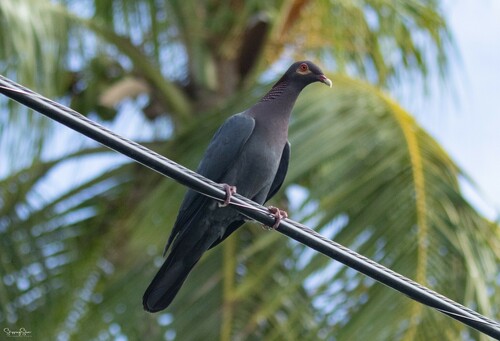 Antillentaube
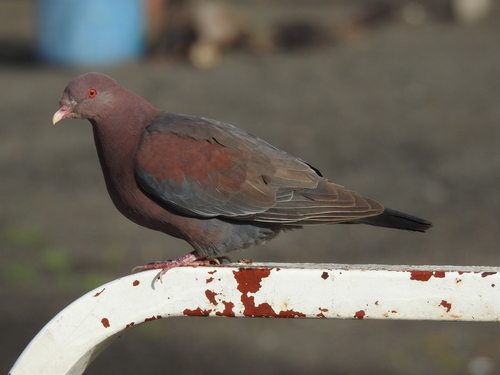 Rotschnabeltaube
Kurz gesagt
Das zuverlässigste Feldmerkmal zwischen Antillentaube und Rotschnabeltaube ist das Vorhandensein eines schuppenartigen Nackens und eines nackten rötlichen oder gelblichen Augenrings bei der Antillentaube, im Gegensatz zu einem glatteren kastanienbraunen Kopf und Hals mit einem ausgeprägten orangefarbenen Orbitalring bei der Rotschnabeltaube. Beide sind große, robuste Tauben mit ähnlicher Gesamtstruktur und schiefergrauen Körpern, aber subtile Unterschiede in der Farbe von Kopf, Hals und nackten Teilen sind entscheidend. Juvenile Rotschnabeltauben sind matter und brauner, was zu Verwirrung mit der Antillentaube führen kann, aber der schuppige Nacken und die rote Augenhaut der Antillentaube bleiben unverwechselbar. Die Farbe und das Muster des Schnabels sowie subtile Unterschiede in der Bauch- und Schwanzdeckfarbe helfen ebenfalls, sie zu unterscheiden. Der Lebensraum kann ein Hinweis sein, ist aber aufgrund von Überlappungen in einigen Regionen nicht immer zuverlässig.
Bestimmungstipps
- Schuppiger Nacken (nur Antillentaube): Achten Sie auf das schuppige oder karierte Aussehen am Nacken – dies fehlt bei der Rotschnabeltaube in allen Altersstufen.
- Farbe der nackten Augenhaut: Die Antillentaube zeigt einen nackten Hautbereich um das Auge, rötlich bei Männchen und gelblich bei Weibchen; die Rotschnabeltaube hat einen orangefarbenen Orbitalring, aber nicht denselben nackten Hautbereich.
- Farbe von Kopf und Hals: Die Rotschnabeltaube hat einen kastanienbraunen bis lila Kopf und Hals, der glatt ist und keine Irideszenz oder Schuppigkeit aufweist; das Kastanienbraun der Antillentaube ist mehr auf den Hals beschränkt und wird von dem schuppigen Nacken begleitet.
- Farbe und Muster des Schnabels: Beide haben rot an der Basis des Schnabels, aber die Rotschnabeltaube hat eine gelbe Spitze, während der Schnabel der Antillentaube an der Basis rot und an der Spitze hell (nicht gelb) ist.
- Bauch- und Schwanzdeckfedern: Die Rotschnabeltaube zeigt einen blau-grauen Bauch und Schwanzdeckfedern, die im Kontrast zu dem kastanienbraunen Kopf und Hals stehen; die Antillentaube ist unten gleichmäßiger schiefergrau.
- Verwirrung bei Juvenilen: Juvenile Rotschnabeltauben sind matter und brauner, mit dunklen Schultern, aber sie haben immer noch nicht den schuppigen Nacken und die nackte Augenhaut der Antillentaube. Unreife Antillentauben sollten den schuppigen Nacken und die nackte Augenhaut behalten.
- Geschlechtsunterschiede: Weibliche Antillentauben haben einen gelblicheren Augenring, während weibliche Rotschnabeltauben insgesamt nur matter sind.
- Flugansichten: Es sind keine ausgeprägten Unterschiede im Oberflügel oder Flugmuster für beide Arten beschrieben, daher sollte man sich auch im Flug auf die Farbe von Kopf, Hals und nackten Teilen verlassen.
- Lebensraum und Verbreitung: Wenn man sie in der Karibik sieht (außer Jamaika und den Bahamas), wird die Antillentaube erwartet; wenn man sie auf dem Festland von Südtexas bis Costa Rica sieht, ist die Rotschnabeltaube wahrscheinlich. Die Überlappung ist minimal.
- Stimme: Wenn Sie einen langen, hohen Ruf mit einem langgezogenen 'coooo' und drei 'cuk-c'-c'-coo'-Noten hören, ist es die Rotschnabeltaube. Die Lautäußerungen der Antillentaube sind hier nicht beschrieben.
- Farbe der Beine: Die Antillentaube hat rote Beine; die Farbe der Beine der Rotschnabeltaube ist nicht angegeben, ist aber kein primäres Unterscheidungsmerkmal.
- Farbe des Rückens: Die Rotschnabeltaube ist auf dem Rücken weniger braun als ähnliche Arten, aber dies ist kein starkes Unterscheidungsmerkmal zur Antillentaube.
- Gruppenverhalten: Beide Arten werden normalerweise allein oder in kleinen Gruppen gesehen; dies hilft nicht bei der Trennung.
- Schnabelform: Beide sind robuste Tauben mit ähnlicher Schnabelform; die Struktur ist kein zuverlässiges Unterscheidungsmerkmal.
- Saisonaler Kontext: Die Rotschnabeltaube ist in den meisten ihrer Verbreitung im Winter selten, während die Antillentaube das ganze Jahr über in der Karibik ansässig ist.
Größe
Beide Arten sind große Tauben. Die Antillentaube wiegt durchschnittlich etwa 312 g [wikidata], während die Rotschnabeltaube ein gemeldetes Gewicht von 230–425 g [wikipedia] hat, sodass es eine erhebliche Überlappung gibt. Beide sind in der Länge ähnlich (Antillentaube: 14–16 Zoll; Rotschnabeltaube: 12–15 Zoll). Im Feld ist die Größe allein kein zuverlässiges Unterscheidungsmerkmal.
Gefieder
- Juvenile/Unreife: Juvenile Rotschnabeltauben sind deutlich matter als Erwachsene, mit dunklen, grauen Schultern und einem brauneren Mantel und Flügeln. Dies kann sie der Antillentaube ähnlich machen, aber sie haben immer noch nicht das schuppige Nackenmuster und die nackte rot/gelbe Augenhaut der Antillentaube. Juvenile Antillentauben sind nicht im Detail beschrieben, aber der schuppige Nacken und die nackte Augenhaut sind konsistente Merkmale.
- Erwachsene: Die Antillentaube zeigt einen kastanienbraunen Fleck um den Hals und ein deutlich schuppiges Aussehen am Nacken. Die nackte Haut um das Auge ist bei Männchen rot, bei Weibchen gelblich. Der Schnabel ist an der Basis rot mit einer blassen Spitze. Die Rotschnabeltaube hat einen kastanienbraunen bis lila Kopf, Hals und Flügeldecken, mit einem blau-grauen Bauch und Schwanzdecken. Ihr Orbitalring ist orange, und der Schnabel ist rot mit einer gelben Spitze. Die Rotschnabeltaube hat nicht den schuppigen Nacken und hat einen glatteren, weniger braunen Rücken als ähnliche Arten. Beide Arten sind größtenteils schiefergrau, aber die Antillentaube ist gleichmäßiger, während die Rotschnabeltaube mehr Kontrast zwischen dem kastanienbraunen/lila Kopf und dem blau-grauen Bauch zeigt.
Verhalten
Beide Arten werden typischerweise allein oder in kleinen Gruppen gesehen. Die Antillentaube ist vorsichtig und schnell auf der Flucht, oft sowohl in Bäumen als auch am Boden fressend. Die Rotschnabeltaube ist ebenfalls robust und vorsichtig, mit einem charakteristischen Flügelschlaggeräusch beim Abheben. Es gibt kein starkes Verhaltensunterscheidungsmerkmal zwischen den beiden im Feld.
Lebensraum
Die Antillentaube ist in der gesamten Karibik verbreitet, insbesondere in Regenwäldern, aber auch in trockeneren Wäldern und in der Nähe von Siedlungen. Die Rotschnabeltaube kommt von Südtexas über Mexiko bis Costa Rica vor und bevorzugt trockene Wälder und Uferwälder, insbesondere in Küsten- und Tieflandgebieten. Während beide in einer Vielzahl von bewaldeten Lebensräumen vorkommen können, ist die Antillentaube streng karibisch, während die Rotschnabeltaube kontinental (Mexiko/Zentralamerika) ist. Daher ist der Standort ein starker Hinweis: Karibische Inseln deuten auf die Antillentaube hin, das Festland von Mittelamerika und Mexiko auf die Rotschnabeltaube.
Stimme
Die Rotschnabeltaube hat einen charakteristischen, langen, hohen Ruf: ein langgezogenes 'coooo', gefolgt von drei 'cuk-c'-c'-coo'-Noten, oft aufsteigend. Ihre Flügel erzeugen beim Abheben ein klatschendes Geräusch. Für die Antillentaube sind in den bereitgestellten Notizen keine spezifischen Lautäußerungen beschrieben, sodass die Stimme nur ein Unterscheidungsmerkmal ist, wenn der einzigartige Ruf der Rotschnabeltaube gehört wird.