

Witbuikbosral vs Cayennebosral
Aramides albiventris versus Aramides cajaneus
Speel een quiz met Witbuikbosral en Cayennebosral
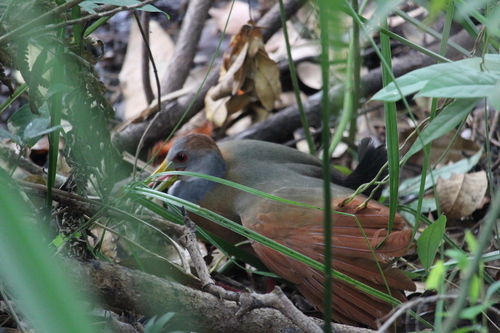 Witbuikbosral
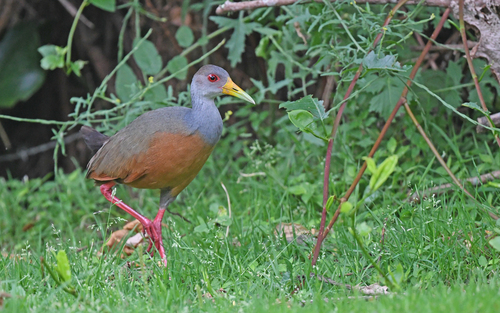 Cayennebosral
Kort gezegd
Het meest betrouwbare veldkenmerk tussen Witbuikbosral en Cayennebosral is de kleur en omvang van de nekvlek: Witbuikbosral toont een duidelijke kastanjebruine (russet) vlek op de achterkant van het hoofd en de nek, terwijl Cayennebosral een bruine vlek heeft die vaak doffer is of zelfs afwezig in sommige ondersoorten. Beide soorten zijn vergelijkbaar in grootte en structuur, maar subtiele verschillen in snavelkleur en de precieze tint van de bovenzijde en onderzijde kunnen helpen. Juvenielen zijn lastig, maar been- en snavelkleur, evenals het patroon op de buik, bieden aanwijzingen. Controleer altijd eerst het patroon van de nek en het hoofd, vooral bij zittende vogels.
Herkenningstips
- Nekvlek (Volwassenen): Witbuikbosral toont altijd een duidelijke kastanjebruine (russet) vlek op de nek en achterhals, scherp afgebakend van de leisteengrijze kroon en hals. Cayennebosral heeft een bruine nekvlek, vaak doffer, en in sommige ondersoorten (A. c. avicenniae) is deze vlek verminderd of afwezig. Controleer altijd de nek in goed licht.
- Hoofd- en Halskleur: Witbuikbosral heeft een leisteengrijze kroon, voorhoofd en achterhals, in contrast met de kastanjebruine nek. Het hoofd en de hals van Cayennebosral zijn middelgrijs, die meer soepel overgaan in de bruine nekvlek (indien aanwezig).
- Kin en Keel: Witbuikbosral toont een witte kin en bovenkeel, in contrast met de grijze hals en kastanjebruine borst. Cayennebosral mist deze witte kin; zijn keel is grijs, die overgaat in de roestkleurige borst.
- Snavelkleur: Witbuikbosral heeft een dikke, donkergele snavel met een lichtgroene punt. De snavel van Cayennebosral is over het algemeen een helderdere groenachtig-geel. Dit is subtiel en het beste te gebruiken bij dichtbijzicht.
- Been- en Oogkleur (Volwassenen): Beide hebben rode ogen en rode of koraalrode poten, maar die van Cayennebosral zijn vaak helderder. Juveniele Cayennebosral hebben doffe poten en bruinachtige ogen, terwijl volwassen Witbuikbosral roze tot rode poten en diep rode ogen hebben.
- Bovenzijde: De rug van Witbuikbosral is grijsachtig olijfkleurig, terwijl die van Cayennebosral olijfgroen tot donkerbruin is. Dit is subtiel en variabel, maar kan helpen in goed licht.
- Borst- en Flankkleur: De borst en flanken van Witbuikbosral zijn bleek kastanjebruin kaneel, gescheiden van de zwarte onderbuik door een bleke band. De borst en flanken van Cayennebosral zijn roestkleurig, maar de overgang naar de zwarte buik is minder scherp gemarkeerd.
- Buik en Onderstaart: Beide hebben een zwarte onderbuik, vent en onderstaartdekveren, maar bij juvenielen is Witbuikbosral donkergrijs met kastanjebruine vlekken, terwijl Cayennebosral roetzwart is met buffkleurige vlekken.
- Juveniele Snavel- en Been kleur: Juveniele Cayennebosral hebben doffe (donkere) snavels en poten, en bruinachtige ogen. De snavel en poten van juveniele Witbuikbosral worden niet als dof beschreven, en hun ogen zijn diep rood zoals bij volwassenen.
- Ondersoortenval: Als je een Cayennebosral van ondersoort A. c. avicenniae tegenkomt, kan de nekvlek sterk verminderd of afwezig zijn, waardoor hij minder op Witbuikbosral lijkt. In deze gevallen, vertrouw meer op de kleur van de keel en de snaveltint.
- Vluchtzicht: Er zijn geen onderscheidende verschillen in bovenvleugel of vluchtpatroon beschreven voor beide soorten, dus zittende uitzichten zijn betrouwbaarder voor scheiding.
- Verspreiding: Als je ten noorden van Costa Rica bent, is Witbuikbosral de verwachte soort. In Zuid-Amerika komt alleen Cayennebosral voor. In overlapzones (Centraal-Amerika), gebruik dan verenkleed en structuur.
- Geslacht en Seizoen: Beide soorten zijn seksueel monomorf en vertonen geen sterke seizoensgebonden verenkleedveranderingen, dus deze zijn niet nuttig voor scheiding.
- Gedragscontext: Beide soorten foerageren in dichte dekking maar kunnen in het open veld komen langs waterkanten. Gedrag is geen betrouwbare scheidingsfactor.
- Stem: Er zijn geen diagnostische vocale verschillen beschreven in de geleverde bronnen; vertrouw niet op stem voor scheiding.
Grootte
Beide soorten zijn vergelijkbaar in lengte (33–40 cm) en zijn groot voor bosralen. Witbuikbosral is meestal zwaarder (450–600 g) dan Cayennebosral (320–465 g), maar dit is niet waarneembaar in het veld. Ondersoorten van Cayennebosral (vooral A. c. avicenniae) kunnen iets kleiner zijn, maar de overlap is uitgebreid. Grootte is geen betrouwbare scheidingsfactor in het veld.
Verenkleed
- Juvenielen: De juvenielen van beide soorten zijn doffer dan volwassenen, maar Witbuikbosral mist wit op de buik en heeft donkergrijze onderdelen met kastanjebruine vlekken, terwijl juveniele Cayennebosral een roetzwart buik heeft met buffkleurige vlekken. Juveniele Cayennebosral tonen ook doffe snavels en poten, en bruinachtige ogen, in vergelijking met de rode of roze poten en rode ogen van volwassen Witbuikbosral.
- Volwassenen: Witbuikbosral heeft een prominente kastanjebruine vlek op de nek, leisteengrijze kroon en achterhals, en een witte kin en bovenkeel. Zijn bovenzijde is grijsachtig olijfkleurig, met een bleek kastanjebruin kaneelborst en flanken, en een zwarte onderbuik en onderstaart. Volwassen Cayennebosral hebben een middelgrijs hoofd en hals, een bruine (soms verminderde) nekvlek, olijfgroene tot donkerbruine bovenzijde, roestkleurige borst en flanken, en een zwarte buik, stuit en staart. De snavel is helder groenachtig-geel bij Cayennebosral, maar donkergeel met een lichtgroene punt bij Witbuikbosral. Beide hebben rode ogen en koraalrode tot roze poten, maar deze zijn helderder bij Cayennebosral.
Gedrag
Beide soorten zijn geheimzinnig en geven de voorkeur aan dichte vegetatie, maar zullen in het open veld voeden langs waterkanten of grasachtige gebieden. Er zijn geen consistente gedragsverschillen opgemerkt in de bronnen die zouden helpen om ze in het veld te scheiden.
Habitat
Witbuikbosral wordt aangetroffen van Mexico tot Costa Rica, terwijl Cayennebosral zich uitstrekt van Centraal- tot Zuid-Amerika, inclusief bossen, mangroven en moerassen. Hun verspreidingsgebieden overlappen in Centraal-Amerika, dus habitat alleen is niet diagnostisch. Beide geven de voorkeur aan natte, dichte habitats, maar Cayennebosral is waarschijnlijker in Zuid-Amerika.