

Motmot

シロハラモリクイナ 対 コンゴウモリクイナ

Aramides albiventris 対 Aramides cajaneus

シロハラモリクイナとコンゴウモリクイナのクイズ
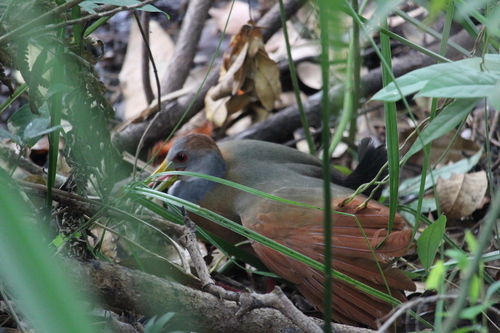
シロハラモリクイナ (Aramides albiventris) シロハラモリクイナ
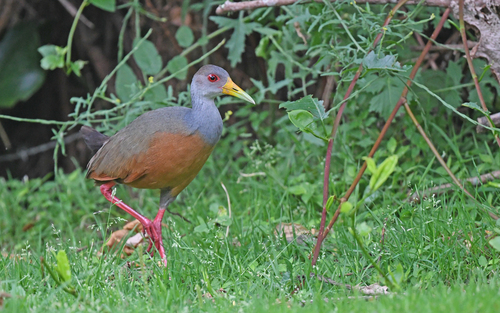
コンゴウモリクイナ (Aramides cajaneus) コンゴウモリクイナ

メディア

読み込み中…

要点

ルセットネイプモリクイナとグレイカウルドモリクイナの最も信頼できるフィールドマークは、後頭部のパッチの色と範囲です:ルセットネイプは頭の後ろと後頭部に明確な栗色(ルセット)のパッチを示し、グレイカウルドはしばしば鈍いか、いくつかの亜種では欠如している茶色のパッチを持っています。両種はサイズと構造が似ていますが、くちばしの色や上面と下面の正確なトーンの微妙な違いが役立つことがあります。幼鳥は難しいですが、脚とくちばしの色、ならびに腹部のパターンが手がかりを提供します。特に止まっている鳥では、まず後頭部と頭のパターンを確認してください。

識別のコツ

  1. 後頭部のパッチ(成鳥): ルセットネイプは常に後頭部と後首に明確な栗色(ルセット)のパッチを示し、スレートグレーの冠と首からはっきりと区別されます。グレイカウルドは茶色の後頭部パッチを持ち、しばしば鈍く、いくつかの亜種(A. c. avicenniae)ではこのパッチが減少または欠如しています。良い光の中で後頭部を常に確認してください。
  2. 頭と首の色: ルセットネイプはスレートグレーの冠、額、後首を持ち、栗色の後頭部と対照的です。グレイカウルドの頭と首は中間グレーで、茶色の後頭部パッチ(存在する場合)により滑らかに溶け込んでいます。
  3. 顎と喉: ルセットネイプは白い顎と上喉を示し、灰色の首と黄褐色の胸と対照的です。グレイカウルドはこの白い顎を欠き、喉は灰色で、赤褐色の胸に溶け込んでいます。
  4. くちばしの色: ルセットネイプは厚い暗い黄色のくちばしを持ち、先端は明るい緑色です。グレイカウルドのくちばしは全体的に明るい黄緑色です。これは微妙で、近くで見ると最も効果的です。
  5. 脚と目の色(成鳥): 両種は赤い目と赤またはコーラルレッドの脚を持っていますが、グレイカウルドの方がしばしば明るいです。幼鳥のグレイカウルドは暗い脚と茶色の目を持ち、成鳥のルセットネイプはピンクから赤の脚と深い赤の目を持っています。
  6. 上面: ルセットネイプの背中は灰色がかったオリーブ色ですが、グレイカウルドの背中はオリーブグリーンから暗い茶色です。これは微妙で変動がありますが、良い光の中で役立つことがあります。
  7. 胸と側面の色: ルセットネイプの胸と側面は淡い黄褐色のシナモン色で、黒い下腹部とは淡い帯で区切られています。グレイカウルドの胸と側面は赤褐色ですが、黒い腹部への移行はあまりはっきりしていません。
  8. 腹部と尾の下部: 両種は黒い下腹部、肛門、尾の下羽を持っていますが、幼鳥ではルセットネイプは暗い灰色で黄褐色の斑点があり、グレイカウルドはすすけた黒でバフの斑点があります。
  9. 幼鳥のくちばしと脚の色: 幼鳥のグレイカウルドは暗い(ダスキー)くちばしと脚、茶色の目を持っています。幼鳥のルセットネイプのくちばしと脚はダスキーとは記載されておらず、目は成鳥と同様に深い赤です。
  10. 亜種の落とし穴: グレイカウルドの亜種A. c. avicenniaeに出会った場合、後頭部のパッチは非常に減少または欠如している可能性があり、ルセットネイプに似ていないことがあります。この場合、喉の色とくちばしのトーンにより頼るべきです。
  11. 飛行時の視点: どちらの種にも特有の上翼や飛行パターンの違いは記載されていないため、止まっている視点が分離により信頼できます。
  12. 分布: コスタリカの北にいる場合、ルセットネイプが期待される種です。南アメリカでは、グレイカウルドのみが存在します。重複ゾーン(中央アメリカ)では、羽毛と構造を使用してください。
  13. 性別と季節: 両種は性別が同形であり、強い季節的な羽毛の変化を示さないため、これらは分離に役立ちません。
  14. 行動の文脈: 両種は密なカバーで餌を探しますが、水辺に出てくることがあります。行動は信頼できる分離要因ではありません。
  15. 声: 提供された情報源には診断的な声の違いは記載されていないため、分離に声を頼らないでください。

大きさ

両種は長さ(33–40 cm)が似ており、モリクイナとしては大きいです。ルセットネイプはグレイカウルドよりも重い傾向があり(450–600 g)、グレイカウルドは(320–465 g)ですが、これはフィールドでは識別できません。グレイカウルドの亜種(特にA. c. avicenniae)はやや小さいことがありますが、重複は広範です。サイズはフィールドでの信頼できる分離点ではありません。

羽色

行動

両種は秘密主義で密な植生を好みますが、水辺や草地でオープンに餌を探すことがあります。フィールドでの分離に役立つ一貫した行動の違いは情報源には記載されていません。

生息環境

ルセットネイプはメキシコからコスタリカまで見られ、グレイカウルドは中央アメリカから南アメリカにかけて分布し、森林、マングローブ、湿地を含みます。彼らの分布は中央アメリカで重なっているため、生息地だけでは診断的ではありません。両種は湿った密な生息地を好みますが、グレイカウルドは南アメリカで見られる可能性が高いです。

より良い説明を送る

比較と同じ項目を使ってください。文章はすぐに公開されます。

The most reliable field mark between Russet-naped and Grey-cowled Wood-Rails is the color and extent of the nape patch: Russet-naped shows a distinct chestnut (russet) patch on the back of the head and nape, while Grey-cowled has a brown patch that is often duller or even absent in some subspecies. Both species are similar in size and structure, but subtle differences in bill color and the precise tone of the upperparts and underparts can help. Juveniles are tricky, but leg and bill color, as well as belly pattern, offer clues. Always check the nape and head pattern first, especially in perched birds.

  1. Nape Patch (Adults): Russet-naped always shows a distinct chestnut (russet) patch on the nape and hindneck, sharply set off from the slate gray crown and neck. Grey-cowled has a brown nape patch, often duller, and in some subspecies (A. c. avicenniae) this patch is reduced or absent. Always check the nape in good light.
  2. Head and Neck Color: Russet-naped has a slate gray crown, forehead, and hindneck, contrasting with the chestnut nape. Grey-cowled's head and neck are medium-grey, blending more smoothly into the brown nape patch (if present).
  3. Chin and Throat: Russet-naped shows a white chin and upper throat, contrasting with the gray neck and tawny breast. Grey-cowled lacks this white chin; its throat is grey, blending into the rufous chest.
  4. Bill Color: Russet-naped has a thick, dark yellow bill with a light green tip. Grey-cowled's bill is a brighter greenish-yellow overall. This is subtle and best used in close views.
  5. Leg and Eye Color (Adults): Both have red eyes and red or coral-red legs, but Grey-cowled's are often brighter. Juvenile Grey-cowled have dusky legs and brownish eyes, while adult Russet-naped have pink to red legs and deep red eyes.
  6. Upperparts: Russet-naped's back is grayish olive, while Grey-cowled's is olive-green to dark brown. This is subtle and variable, but can help in good light.
  7. Breast and Flank Color: Russet-naped's breast and flanks are pale tawny cinnamon, separated from the black lower belly by a pale band. Grey-cowled's chest and flanks are rufous, but the transition to the black belly is less sharply marked.
  8. Belly and Undertail: Both have black lower belly, vent, and undertail coverts, but in juveniles, Russet-naped is dark gray with tawny flecks, while Grey-cowled is sooty-black with buff flecks.
  9. Juvenile Bill and Leg Color: Juvenile Grey-cowled have dusky (dark) bills and legs, and brownish eyes. Juvenile Russet-naped's bill and legs are not described as dusky, and their eyes are deep red as in adults.
  10. Subspecies Pitfall: If you encounter a Grey-cowled of subspecies A. c. avicenniae, the nape patch may be very reduced or absent, making it resemble Russet-naped less. In these cases, rely more on throat color and bill tone.
  11. Flight Views: No distinctive upperwing or flight pattern differences are described for either species, so perched views are more reliable for separation.
  12. Range: If you are north of Costa Rica, Russet-naped is the expected species. In South America, only Grey-cowled occurs. In overlap zones (Central America), use plumage and structure.
  13. Sex and Season: Both species are sexually monomorphic and do not show strong seasonal plumage changes, so these are not useful for separation.
  14. Behavioral Context: Both species forage in dense cover but may come into the open at water edges. Behavior is not a reliable separator.
  15. Voice: No diagnostic vocal differences are described in the sources provided; do not rely on voice for separation.

Both species are similar in length (33–40 cm) and are large for wood-rails. Russet-naped tends to be heavier (450–600 g) than Grey-cowled (320–465 g), but this is not discernible in the field. Subspecies of Grey-cowled (notably A. c. avicenniae) can be slightly smaller, but overlap is extensive. Size is not a reliable separation point in the field.

  • Juveniles: Both species' juveniles are duller than adults, but Russet-naped lacks white on the belly and has dark gray underparts with tawny flecks, while Grey-cowled juveniles have a sooty-black belly flecked with buff. Juvenile Grey-cowled also show dusky bills and legs, and brownish eyes, compared to the red or pink legs and red eyes of adult Russet-naped.
  • Adults: Russet-naped has a prominent chestnut patch on the nape, slate gray crown and hindneck, and a white chin and upper throat. Its upperparts are grayish olive, with a pale tawny cinnamon breast and flanks, and a black lower belly and undertail. Grey-cowled adults have a medium-grey head and neck, a brown (sometimes reduced) nape patch, olive-green to dark brown upperparts, rufous chest and flanks, and a black belly, rump, and tail. The bill is bright greenish-yellow in Grey-cowled, but dark yellow with a light green tip in Russet-naped. Both have red eyes and coral-red to pink legs, but these are brighter in Grey-cowled.

Both species are secretive and prefer dense vegetation, but will feed in the open along water edges or grassy areas. No consistent behavioral differences are noted in the sources that would help separate them in the field.

Russet-naped is found from Mexico to Costa Rica, while Grey-cowled ranges from Central to South America, including forests, mangroves, and swamps. Their ranges overlap in Central America, so habitat alone is not diagnostic. Both prefer wet, dense habitats but Grey-cowled is more likely in South America.

変更を破棄しますか?

保存していない編集があります。今離れると失われます。

シロハラモリクイナ · コンゴウモリクイナ · 苦手な鳥