

Roestrugoropendola vs Kuiforopendola
Psarocolius angustifrons versus Psarocolius decumanus
Speel een quiz met Roestrugoropendola en Kuiforopendola
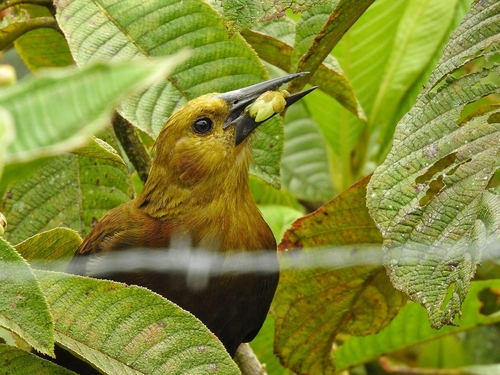 Roestrugoropendola
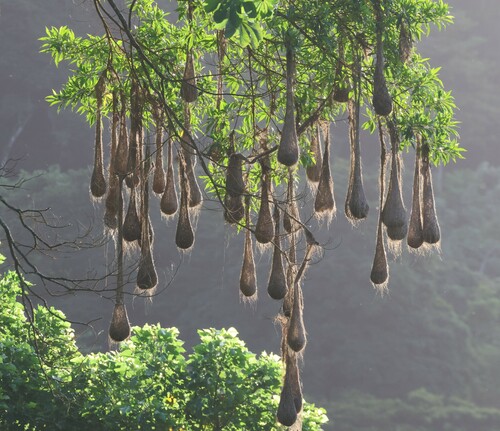 Kuiforopendola
Kort gezegd
Het meest betrouwbare veldkenmerk om Roestrugoropendola van Kuiforopendola te scheiden is de algehele kleur: Roestrug is voornamelijk bruin of olijfbruin met een roestkleurige of lichtere staart, terwijl Kuif glanzend zwart is met een rijke kastanjebruine staart en bovenstaartdekkveren. In alle verenkleed toont Kuiforopendola een veel bleker, gezwollen snavel (ivoor tot lichtgeel) en blauwe iris bij volwassenen, terwijl de snavel van Roestrug meestal zwartachtig is en de iris donker. Juveniele en vrouwelijke Kuiforopendola's zijn doffer maar nog steeds zwartachtig-bruin, nooit zo bruin of olijf als Roestrug. Beide soorten hebben gele staarten, maar de centrale staartveren van Kuif zijn zwart, terwijl die van Roestrug dofbruin zijn. Structuur en grootte overlappen, maar Kuif is gemiddeld iets groter en robuuster. Stem en habitat kunnen helpen, maar verenkleed en snavelkleur zijn de meest praktische veldkenmerken.
Herkenningstips
- Algehele kleur: Roestrug is bruin of olijfbruin, met een roestkleurige of lichtere staart; Kuif is glanzend zwart met een rijke kastanjebruine staart en bovenstaartdekkveren. Dit is het meest directe veldkenmerk in alle leeftijden en geslachten.
- Snavelkleur en -vorm: Kuiforopendola heeft altijd een grote, gezwollen, ivoor tot lichtgele snavel (zelfs bij juvenielen, hoewel met een bruinachtige tint); de snavel van Roestrug is zwartachtig (behalve bij sommige ondersoorten, die gele of groenachtige snavels kunnen hebben, maar nooit zo bleek of gezwollen als die van Kuif). Snavelkleur is zelfs op afstand zichtbaar.
- Iris kleur: Volwassen Kuiforopendola's hebben een opvallende blauwe iris; de iris van Roestrug is donkerbruin (behalve bij sommige ondersoorten, die blauw kunnen vertonen, maar dit is zeldzaam en regionaal).
- Staartpatroon: Beide soorten hebben gele staarten, maar de centrale staartveren van Kuif zijn zwart, terwijl die van Roestrug dofbruin zijn. Het geel is helderder en scherper gedefinieerd bij Kuif.
- Hoofd en kuif: Beide mannetjes hebben lange nekveren die een kuif vormen, maar die van Kuif is prominenter en beide geslachten vertonen een duidelijkere kuif door de snavel- en hoofdvorm. Vrouwelijke en juvenile Kuiforopendola's hebben een minimale kuif, maar zijn nog steeds zwartachtig-bruin, niet bruin of olijf.
- Geslachts- en leeftijdsverschillen: Vrouwelijke en juvenile Kuiforopendola's zijn doffer dan mannetjes maar nog steeds zwartachtig-bruin, nooit zo bruin of olijf als Roestrug. Juveniele Roestrug vogels zijn bruiner met een gelere kop en doffer gele staart.
- Grootte en structuur: Kuif is iets groter en robuuster, vooral in de snavel en het hoofd, maar de grootte overlapt en is niet alleen betrouwbaar.
- Vlucht en jizz: Beide zijn langstaartige en sterk vliegende vogels, maar Kuif lijkt zwaarder en robuuster, vooral in het hoofd en de snavel. Er is geen onderscheidend bovenvleugelpatroon opgemerkt voor beide soorten in elke leeftijd.
- Habitat en verspreiding: In Amazonia en de Andean voetheuvels kunnen beide voorkomen, maar Kuif is veel wijdverspreider en gebruikelijker, vooral in open gebieden en verstoorde habitats. Roestrug is meer beperkt tot het westelijke Amazonegebied en de voetheuvels.
- Stem: Beide hebben complexe, variabele zang, maar die van Kuif is uitgebreider en omvat hoge, snelle fluiten en een ratelende crescendo. De zang van Roestrug is eenvoudiger, met een vloeibare triller en holle roepen. Gebruik de stem alleen als je het lokale repertoire kent.
- Ondersoorten verwarring: Sommige ondersoorten van Roestrug (bijv. P. a. salmoni, P. a. neglectus) hebben geelachtige of groenachtige snavels en blauwe ogen, maar hun algehele kleur is nog steeds bruin of olijf, niet zwartachtig. Controleer altijd het algehele verenkleed en de snavelvorm, niet alleen de kleur.
- Zittend vs. in vlucht: Beide soorten tonen gele staarten in de vlucht, maar de zwarte centrale staartveren van Kuif en het glanzend zwarte lichaam contrasteren met de bruine tinten van Roestrug. Zittend zijn snavel- en iris kleur vaak zichtbaar.
- Valkuilen: Vertrouw niet alleen op grootte of staartlengte; de overlap is aanzienlijk. Snavelkleur en algeheel verenkleed zijn betrouwbaarder. Wees voorzichtig met ondersoorten met atypische snavel- of oogkleur.
- Geslacht: Alleen mannetjes tonen een volle, lange nekkuif; vrouwtjes hebben een minimale kuif in beide soorten, maar kleurverschillen blijven diagnostisch.
- Kolomgrootte: Kuiforopendola broedt vaak in grotere kolonies, vooral in Trinidad, maar dit is geen betrouwbaar veldkenmerk buiten het broedseizoen.
Grootte
Beide soorten zijn grote, langstaartige oropendola's, maar Kuiforopendola is gemiddeld iets groter. Volwassen mannelijke Kuiforopendola's bereiken ongeveer 47 cm en 285 g, met vrouwelijke vogels van 37 cm en 160 g. Roestrug mannetjes zijn 44–48 cm en 250–470 g, met vrouwelijke vogels van 34–38 cm en 170–230 g. De grootte overlap is aanzienlijk, maar Kuiforopendola is typisch robuuster, vooral in de snavel en het hoofd. In het veld is grootte alleen zelden diagnostisch vanwege deze overlap en het effect van houding.
Verenkleed
- Juvenielen en vrouwtjes: Beide zijn doffer dan volwassen mannetjes, maar juvenile en vrouwelijke Kuiforopendola's zijn nog steeds zwartachtig-bruin, nooit zo bruin of olijf als Roestrug. Juveniele Kuiforopendola's hebben een donkerbruinige oog en een snavel met een bruinachtige tint, maar behouden de bleke, gezwollen snavelvorm. Roestrug juvenielen zijn bruiner, met een gelere kop en doffer gele staart dan volwassenen.
- Volwassen mannetjes: Roestrug is voornamelijk olijfbruin met een roestkleurige tint, een lichtere staart en een zwartachtige snavel; Kuif is glanzend zwart met een rijke kastanjebruine staart en bovenstaartdekkveren, en een grote ivoor tot lichtgele snavel met een prominente casque. Beide hebben lange nekveren die een kuif vormen, maar dit is meer uitgesproken bij Kuif.
- Staart: Beide hebben gele staarten, maar de centrale staartveren van Kuif zijn zwart, terwijl die van Roestrug dofbruin zijn; de rest van de staart is geel bij beide, maar het geel is helderder en scherper afgebakend bij Kuif.
- Snavel en iris: Kuiforopendola toont altijd een bleke, gezwollen snavel en blauwe iris bij volwassenen (donker bij juvenielen); Roestrug heeft een zwartachtige snavel en donkere iris (behalve bij sommige ondersoorten).
Gedrag
Beide soorten zijn sociaal, foerageren en nestelen in groepen, en beide vertonen gedrag door te buigen, de staart op te tillen en met de vleugels te flapperen terwijl ze zingen. Kuiforopendola wordt beschouwd als de meest voorkomende en wijdverspreide oropendola, die vaak in grotere kolonies broedt (vooral in Trinidad). Beide soorten weven hangende nesten, maar de kolonies van Kuif kunnen groter zijn. In de vlucht zijn beide sterk en direct, maar Kuif kan robuuster en steviger lijken door zijn grotere snavel en hoofd.
Habitat
Roestrugoropendola wordt voornamelijk aangetroffen in het westelijke Amazonegebied en de Andean voetheuvels (Bolivia, Brazilië, Colombia, Ecuador, Peru, Venezuela), terwijl Kuiforopendola wijdverspreid is over het grootste deel van Zuid-Amerika (behalve Chili en Uruguay), tot zo ver noordelijk als Costa Rica en Trinidad. Waar de verspreidingsgebieden overlappen (bijv. Amazonia), is Kuif veel wijdverspreider en gebruikelijker. Beide gebruiken bosranden, open plekken en rivierhabitats, maar Kuif is waarschijnlijker in open land en verstoorde gebieden.
Geluid
Beide soorten hebben complexe vertoningszangen die door mannetjes worden gegeven tijdens buigvertoningen. De zang van Roestrug begint met lage noten en stijgt naar een crescendo, met roepen die worden beschreven als vloeibare trillers, holle klappen en miauwende noten. De zang van Kuif is nog complexer, begint met lage vloeibare noten, versnelt naar een ratelend crescendo en eindigt met ritmische vleugelklappen; het omvat hoge, snelle, staccato fluiten en vloeibare krullen. De zang van Kuif wordt vaak beschreven als variabeler en uitgebreider, maar in het veld is de stem zelden diagnostisch tenzij je het repertoire goed kent.