

Cacique Dorsirrufo vs Cacique Crestado
Psarocolius angustifrons frente a Psarocolius decumanus
Juega un quiz con Cacique Dorsirrufo y Cacique Crestado
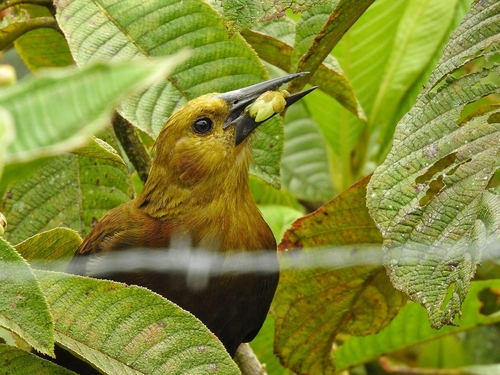 Cacique Dorsirrufo
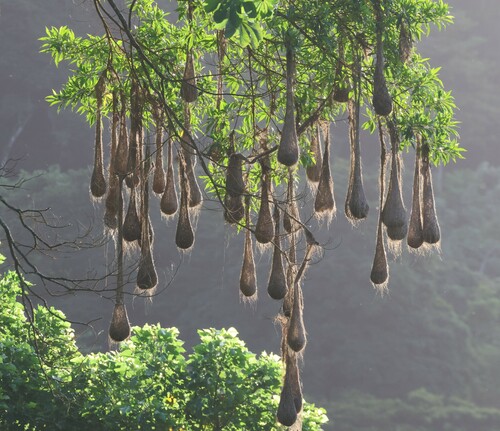 Cacique Crestado
En breve
La marca de campo más confiable para separar el Cacique Dorsirrufo del Cacique Crestado es el color general: el Dorsirrufo es mayormente marrón o marrón oliva con una rabadilla castaña o más clara, mientras que el Crestado es negro brillante con una rabadilla castaña rica y coberturas de la cola superior. En todos los plumajes, el Cacique Crestado muestra un pico mucho más pálido y hinchado (de marfil a amarillo pálido) y un iris azul en los adultos, mientras que el pico del Dorsirrufo es generalmente negruzco y su iris oscuro. Los juveniles y las hembras de Cacique Crestado son más apagados pero aún marrón negruzco, nunca tan marrones o oliva como el Dorsirrufo. Ambas especies tienen colas amarillas, pero las plumas centrales de la cola del Crestado son negras, mientras que las del Dorsirrufo son marrón oscura. La estructura y el tamaño se superponen, pero el Crestado es en promedio ligeramente más grande y robusto. La voz y el hábitat pueden ayudar, pero el plumaje y el color del pico son las marcas de campo más prácticas.
Consejos de identificación
- Color general: El Dorsirrufo es marrón o marrón oliva en general, con una rabadilla castaña o más clara; el Crestado es negro brillante con una rabadilla castaña rica y coberturas de la cola superior. Esta es la marca de campo más inmediata en todas las edades y sexos.
- Color y forma del pico: El Cacique Crestado siempre tiene un pico grande, hinchado, de marfil a amarillo pálido (incluso en juveniles, aunque con un tinte marrón); el pico del Dorsirrufo es negruzco (excepto en algunas subespecies, que pueden mostrar picos amarillentos o verdosos, pero nunca tan pálidos o hinchados como el del Crestado). El color del pico es visible incluso a distancia.
- Color del iris: Los adultos de Cacique Crestado tienen un iris azul llamativo; el iris del Dorsirrufo es marrón oscuro (excepto en algunas subespecies, que pueden mostrar azul, pero esto es raro y regional).
- Patrón de la cola: Ambas especies tienen colas amarillas, pero las plumas centrales de la cola del Crestado son negras, mientras que las del Dorsirrufo son marrón oscura. El amarillo es más brillante y más claramente definido en el Crestado.
- Cabeza y cresta: Ambos machos tienen plumas largas en la nuca que forman una cresta, pero la del Crestado es más prominente y ambos sexos muestran una cresta más obvia debido a la forma del pico y la cabeza. Las hembras y los juveniles de Cacique Crestado tienen una cresta mínima, pero aún son marrón negruzco, no marrón o oliva.
- Diferencias de sexo y edad: Las hembras y los juveniles de Cacique Crestado son más apagados que los machos pero aún son marrón negruzco, nunca tan marrones o oliva como el Dorsirrufo. Los juveniles del Dorsirrufo son más marrones con una cabeza más amarillenta y una cola amarilla más apagada.
- Tamaño y estructura: El Crestado es ligeramente más grande y robusto, especialmente en el pico y la cabeza, pero el tamaño se superpone y no es confiable por sí solo.
- Vuelo y apariencia: Ambos son oropendolas de cola larga y vuelo fuerte, pero el Crestado parece más pesado y robusto, especialmente en la cabeza y el pico. No se nota un patrón distintivo en el ala superior para ninguna de las especies en ninguna edad.
- Hábitat y rango: En la Amazonía y las estribaciones andinas, ambas pueden ocurrir, pero el Crestado es mucho más extendido y común, especialmente en áreas abiertas y hábitats perturbados. El Dorsirrufo está más restringido a la Amazonía occidental y las estribaciones.
- Voz: Ambas tienen canciones complejas y variables, pero la del Crestado es más elaborada e incluye flautas rápidas y altas y un crescendo ruidoso. La canción del Dorsirrufo es más simple, con un trino líquido y llamadas huecas. Usa la voz solo si conoces el repertorio local.
- Confusión de subespecies: Algunas subespecies del Dorsirrufo (por ejemplo, P. a. salmoni, P. a. neglectus) tienen picos amarillentos o verdosos y ojos azules, pero su color general sigue siendo marrón o oliva, no negruzco. Siempre verifica el plumaje general y la forma del pico, no solo el color.
- Posado vs. en vuelo: Ambas especies muestran colas amarillas en vuelo, pero las plumas centrales negras del Crestado y su cuerpo negro brillante contrastan con los tonos marrones del Dorsirrufo. Posados, el color del pico y el iris son a menudo visibles.
- Trampas: No confíes solo en el tamaño o la longitud de la cola; la superposición es considerable. El color del pico y el plumaje general son más confiables. Ten cuidado con las subespecies con colores de pico o ojos atípicos.
- Sexado: Solo los machos muestran una cresta larga y completa en la nuca; las hembras tienen una cresta mínima en ambas especies, pero las diferencias de color siguen siendo diagnósticas.
- Tamaño de la colonia: El Cacique Crestado a menudo cría en colonias más grandes, especialmente en Trinidad, pero esto no es una marca de campo confiable fuera de la temporada de cría.
Tamaño
Ambas especies son grandes oropendolas de cola larga, pero el Cacique Crestado es ligeramente más grande en promedio. Los machos adultos de Cacique Crestado alcanzan aproximadamente 47 cm y 285 g, con hembras de 37 cm y 160 g. Los machos del Dorsirrufo miden entre 44 y 48 cm y pesan entre 250 y 470 g, con hembras de 34 a 38 cm y 170 a 230 g. La superposición de tamaño es considerable, pero el Cacique Crestado es típicamente más robusto, especialmente en el pico y la cabeza. En el campo, el tamaño por sí solo rara vez es diagnóstico debido a esta superposición y al efecto de la postura.
Plumaje
- Juveniles y hembras: Ambos son más apagados que los machos adultos, pero los juveniles y hembras de Cacique Crestado siguen siendo marrón negruzco en general, nunca tan marrones o oliva como el Dorsirrufo. Los juveniles de Cacique Crestado tienen un ojo marrón oscuro y un pico con un tinte marrón, pero mantienen la forma de pico pálido y hinchado. Los juveniles del Dorsirrufo son más marrones, con una cabeza más amarillenta y una cola amarilla más apagada que los adultos.
- Machos adultos: El Dorsirrufo es mayormente marrón oliváceo con un tinte castaño, rabadilla más clara y pico negruzco; el Crestado es negro brillante con una rabadilla castaña rica y coberturas de la cola superior, y un pico grande de marfil a amarillo pálido con un casco prominente. Ambos tienen plumas largas en la nuca que forman una cresta, pero esto es más pronunciado en el Crestado.
- Cola: Ambas tienen colas amarillas, pero las plumas centrales de la cola del Crestado son negras, mientras que las del Dorsirrufo son marrón oscura; el resto de la cola es amarilla en ambas, pero el amarillo es más brillante y más claramente demarcado en el Crestado.
- Pico e iris: El Cacique Crestado siempre muestra un pico pálido y hinchado y un iris azul en los adultos (oscuro en los juveniles); el Dorsirrufo tiene un pico negruzco y un iris oscuro (excepto en algunas subespecies).
Comportamiento
Ambas especies son sociales, forrajeando y anidando en grupos, y ambas muestran comportamientos de exhibición inclinándose, levantando la cola y batiendo las alas mientras cantan. El Cacique Crestado es conocido como el oropendola más común y extendida, a menudo criando en colonias más grandes (especialmente en Trinidad). Ambas especies tejen nidos colgantes, pero las colonias del Crestado pueden ser más grandes. En vuelo, ambas son fuertes y directas, pero el Crestado puede parecer más robusto y robusto debido a su pico y cabeza más grandes.
Hábitat
El Cacique Dorsirrufo se encuentra principalmente en la Amazonía occidental y las estribaciones andinas (Bolivia, Brasil, Colombia, Ecuador, Perú, Venezuela), mientras que el Cacique Crestado está ampliamente distribuido por la mayor parte de Sudamérica (excepto Chile y Uruguay), llegando tan al norte como Costa Rica y Trinidad. Donde los rangos se superponen (por ejemplo, en la Amazonía), el Crestado es mucho más extendido y común. Ambas utilizan bordes de bosques, claros y hábitats ribereños, pero el Crestado es más probable que se encuentre en áreas abiertas y perturbadas.
Voz
Ambas especies tienen canciones de exhibición complejas que son dadas por los machos durante las exhibiciones de inclinación. La canción del Dorsirrufo comienza con notas bajas y asciende a un crescendo, con llamadas descritas como trinos líquidos, golpes huecos y notas de maullido. La canción del Crestado es aún más compleja, comenzando con notas líquidas bajas, acelerando hacia un crescendo ruidoso y terminando con aleteos rítmicos; incluye flautas rápidas y altas y bucles líquidos. La canción del Crestado a menudo se describe como más variable y elaborada, pero en el campo, la voz rara vez es diagnóstica a menos que conozcas bien el repertorio.