

Russet-backed Oropendola vs Crested Oropendola
Psarocolius angustifrons contro Psarocolius decumanus
Fai un quiz con Russet-backed Oropendola e Crested Oropendola
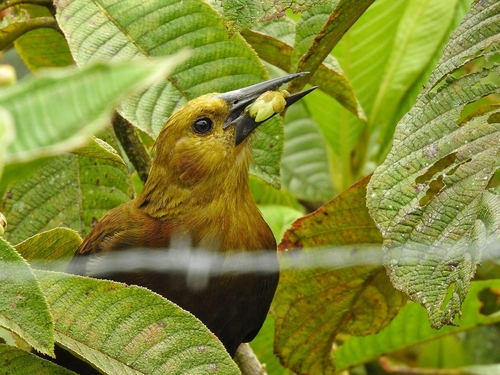 Russet-backed Oropendola
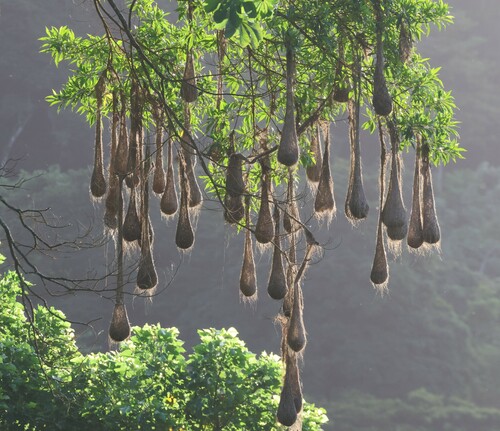 Crested Oropendola
In breve
Il segno distintivo più affidabile per separare la Russet-backed Oropendola dalla Crested Oropendola è il colore generale: la Russet-backed è per lo più marrone o marrone oliva con un sottocoda rossiccio o più chiaro, mentre la Crested è nera lucida con un sottocoda castano ricco e copritrici della coda superiore. In tutte le livree, la Crested Oropendola mostra un becco molto più chiaro e gonfio (avorio a giallo pallido) e un'iride blu negli adulti, mentre il becco della Russet-backed è solitamente nerastro e la sua iride è scura. Le Crested Oropendolas juvenile e femminili sono più opache ma ancora marrone-nerastre, mai così marroni o olive come la Russet-backed. Entrambe le specie hanno code gialle, ma le penne centrali della coda della Crested sono nere, mentre quelle della Russet-backed sono marrone scuro. Struttura e dimensioni si sovrappongono, ma la Crested è in media leggermente più grande e massiccia. La voce e l'habitat possono aiutare, ma il piumaggio e il colore del becco sono i segni distintivi più pratici.
Consigli di identificazione
- Overall color: La Russet-backed è marrone o marrone oliva nel complesso, con un sottocoda rossiccio o più chiaro; la Crested è nera lucida con un sottocoda castano ricco e copritrici della coda superiore. Questo è il segno distintivo più immediato in tutte le età e sessi.
- Bill color and shape: La Crested Oropendola ha sempre un becco grande, gonfio, da avorio a giallo pallido (anche nei juvenile, sebbene con una sfumatura marrone); il becco della Russet-backed è nerastro (eccetto in alcune sottospecie, che possono mostrare becchi giallastri o verdastri, ma mai così chiari o gonfi come quelli della Crested). Il colore del becco è visibile anche da lontano.
- Iris color: Gli adulti Crested Oropendolas hanno un'iride blu sorprendente; l'iride della Russet-backed è marrone scuro (eccetto in alcune sottospecie, che possono mostrare blu, ma questo è raro e regionale).
- Tail pattern: Entrambe le specie hanno code gialle, ma le penne centrali della coda della Crested sono nere, mentre quelle della Russet-backed sono marrone scuro. Il giallo è più brillante e più nettamente definito nella Crested.
- Head and crest: Entrambi i maschi hanno lunghe piume della nuca che formano una cresta, ma quella della Crested è più prominente e entrambi i sessi mostrano una cresta più evidente a causa della forma del becco e della testa. Le femmine e i juvenile Crested Oropendolas hanno una cresta minima, ma sono comunque marrone-nerastre, non marroni o olive.
- Sex and age differences: Le femmine e i juvenile Crested Oropendolas sono più opachi dei maschi ma ancora marrone-nerastre, mai così marroni o olive come la Russet-backed. Gli uccelli juvenile Russet-backed sono più marroni con una testa più gialla e una coda gialla più opaca.
- Size and structure: La Crested è leggermente più grande e massiccia, specialmente nel becco e nella testa, ma le dimensioni si sovrappongono e non sono affidabili da sole.
- Flight and jizz: Entrambi sono oropendole dalla coda lunga e volo forte, ma la Crested appare più pesante e più robusta, specialmente nella testa e nel becco. Non si nota un modello distintivo della parte superiore dell'ala per nessuna delle due specie in nessuna età.
- Habitat and range: In Amazonia e nelle pendici andine, entrambe possono verificarsi, ma la Crested è molto più diffusa e comune, specialmente in aree aperte e habitat disturbati. La Russet-backed è più ristretta all'Amazonia occidentale e alle pendici.
- Voice: Entrambi hanno canti complessi e variabili, ma quello della Crested è più elaborato e include flauti alti e rapidi e un crescendo tremolante. Il canto della Russet-backed è più semplice, con un trill liquido e richiami cavi. Usa la voce solo se conosci il repertorio locale.
- Subspecies confusion: Alcune sottospecie di Russet-backed (ad es., P. a. salmoni, P. a. neglectus) hanno becchi giallastri o verdastri e occhi blu, ma il loro colore generale è comunque marrone o oliva, non nerastro. Controlla sempre il piumaggio generale e la forma del becco, non solo il colore.
- Perched vs. in flight: Entrambe le specie mostrano code gialle in volo, ma le penne centrali nere della coda della Crested e il corpo nero lucido contrastano con le tonalità marroni della Russet-backed. In posizione per i, il colore del becco e dell'iride è spesso visibile.
- Pitfalls: Non fare affidamento solo sulla dimensione o sulla lunghezza della coda; la sovrapposizione è considerevole. Il colore del becco e il piumaggio generale sono più affidabili. Fai attenzione alle sottospecie con colori del becco o degli occhi atipici.
- Sexing: Solo i maschi mostrano una cresta lunga e piena sulla nuca; le femmine hanno una cresta minima in entrambe le specie, ma le differenze di colore rimangono diagnostiche.
- Colony size: La Crested Oropendola spesso nidifica in colonie più grandi, specialmente a Trinidad, ma questo non è un segno distintivo affidabile al di fuori della stagione di nidificazione.
Taglia
Both species are large, long-tailed oropendolas, but Crested Oropendola is slightly larger on average. Adult male Crested Oropendolas reach about 47 cm and 285 g, with females at 37 cm and 160 g. Russet-backed males are 44–48 cm and 250–470 g, with females at 34–38 cm and 170–230 g. The size overlap is considerable, but Crested Oropendola is typically bulkier, especially in the bill and head. In the field, size alone is rarely diagnostic due to this overlap and the effect of posture.
Piumaggio
- Juveniles and females: Both are duller than adult males, but Crested Oropendola juveniles and females are still blackish-brown overall, never as brown or olive as Russet-backed. Juvenile Crested Oropendolas have a dark brownish eye and a bill with a brown tinge, but retain the pale, swollen bill shape. Russet-backed juveniles are browner, with a yellower head and duller yellow tail than adults.
- Adult males: Russet-backed is mostly olivaceous-brown with a russet tinge, paler rump, and blackish bill; Crested is glossy black with a rich chestnut rump and uppertail coverts, and a large ivory to pale yellow bill with a prominent casque. Both have long nape feathers forming a crest, but this is more pronounced in Crested.
- Tail: Both have yellow tails, but Crested's central tail feathers are black, while Russet-backed's are dusky brown; the rest of the tail is yellow in both, but the yellow is brighter and more sharply demarcated in Crested.
- Bill and iris: Crested Oropendola always shows a pale, swollen bill and blue iris in adults (dark in juveniles); Russet-backed has a blackish bill and dark iris (except in some subspecies).
Comportamento
Entrambe le specie sono sociali, foraggiano e nidificano in gruppi, e entrambe si esibiscono inclinando il corpo, alzando la coda e battendo le ali mentre cantano. La Crested Oropendola è nota come l'oropendola più comune e diffusa, spesso nidificando in colonie più grandi (specialmente a Trinidad). Entrambe le specie tessono nidi appesi, ma le colonie della Crested possono essere più grandi. In volo, entrambe sono forti e dirette, ma la Crested può apparire più massiccia e robusta a causa del suo becco e della sua testa più grandi.
Habitat
La Russet-backed Oropendola si trova principalmente nell'Amazonia occidentale e nelle pendici andine (Bolivia, Brasile, Colombia, Ecuador, Perù, Venezuela), mentre la Crested Oropendola è diffusa in gran parte del Sud America (eccetto Cile e Uruguay), raggiungendo a nord fino alla Costa Rica e a Trinidad. Dove gli areali si sovrappongono (ad es., Amazonia), la Crested è molto più diffusa e comune. Entrambe utilizzano i margini delle foreste, le radure e gli habitat fluviali, ma la Crested è più probabile che si trovi in campi aperti e aree disturbate.
Voce
Entrambe le specie hanno canti complessi di esibizione emessi dai maschi durante le esibizioni di inchino. Il canto della Russet-backed inizia con note basse e sale a un crescendo, con richiami descritti come trilli liquidi, colpi cavi e note di miagolio. Il canto della Crested è ancora più complesso, iniziando con note liquide basse, accelerando in un crescendo tremolante e terminando con battiti d'ali ritmici; include flauti alti, rapidi e staccati e giri liquidi. Il canto della Crested è spesso descritto come più variabile ed elaborato, ma sul campo, la voce è raramente diagnostica a meno che tu non conosca bene il repertorio.
Russet-backed Oropendola · Crested Oropendola · I miei uccelli difficili