

Philadelphiavireo vs Yucatanvireo
Vireo philadelphicus versus Vireo magister
Speel een quiz met Philadelphiavireo en Yucatanvireo
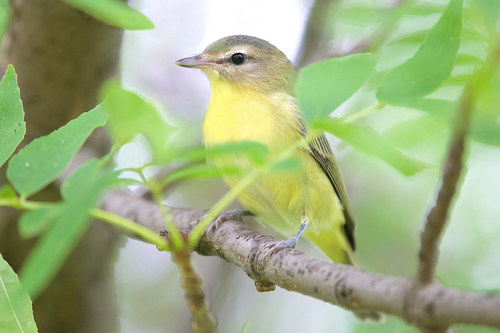 Philadelphiavireo
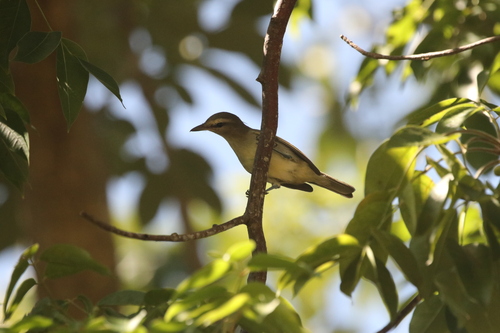 Yucatanvireo
Kort gezegd
Het meest betrouwbare veldkenmerk om de Philadelphiavireo van de Yucatanvireo te scheiden, is de kleur en omvang van de onderdelen: Philadelphiavireo toont duidelijk gele onderdelen, vooral op de borst en buik, terwijl Yucatanvireo veel bleker is aan de onderzijde, met buffy witte tot witachtige onderdelen en slechts een vage olijf- of grijze waas op de flanken. Philadelphiavireo heeft ook een donkerdere, meer contrasterende lijn door het oog (donkere lores) en een helderder witte supercilium, terwijl de lores van Yucatanvireo bleker bruin-grijs zijn en meer in het gezicht opgaan. Beide soorten missen vleugelstrepen en oogringen, maar Yucatanvireo is over het algemeen groter en robuuster, met een zwaardere snavel en langere staart. Deze verschillen zijn consistent bij volwassenen en onvolwassen vogels, en zijn zichtbaar zowel zittend als in de vlucht.
Herkenningstips
- Kleur van de onderdelen: Philadelphiavireo toont altijd heldergele onderdelen, vooral op de borst en buik, terwijl Yucatanvireo bleke buffy witte tot witte onderzijde heeft, met slechts een vage olijf- of grijze waas op de flanken. Dit is het enige meest betrouwbare veldkenmerk voor alle leeftijden en seizoenen.
- Gezichtspatroon: Philadelphiavireo heeft een sterke donkere lijn door het oog (donkere lores) en een scherpe witte supercilium, wat een hoogcontrast gezicht creëert. De lores van Yucatanvireo zijn bruin-grijs en gaan op in het gezicht, met een minder duidelijk, bleek bruin-wit supercilium. Gebruik dit kenmerk in alle verenkleed.
- Kleur van de bovenzijde: Philadelphiavireo is olijfbruin boven met een grijze kroon; Yucatanvireo is donkerder grijs-bruin met een olijfachtige tint, soms met een helderdere olijfachtige staart bij sommige ondersoorten. Als de vogel meer uniform donker grijs-bruin boven lijkt, vermoed dan Yucatanvireo.
- Snavelstructuur: Yucatanvireo heeft een zwaardere, robuustere grijze snavel met een blekere basis van de onderkaak, terwijl de snavel van Philadelphiavireo robuust maar proportioneel delicater is. De kleur van de snavel is niet sterk contrasterend in het veld, maar kan helpen bij close-ups.
- Grootte en bulk: Yucatanvireo is groter en robuuster, met een langere staart en zwaardere bouw. Philadelphiavireo is kleiner en compacter. Gebruik dit alleen wanneer je een goed gevoel hebt voor schaal of directe vergelijking.
- Kleur van de poten: Beide soorten hebben blauw-grijze tot blauwachtige poten en voeten, dus dit is geen nuttige scheiding.
- Vleugelstrepen en oogring: Beide soorten missen vleugelstrepen en oogringen, dus gebruik deze kenmerken niet om ze te scheiden.
- Jong/onvolwassen verenkleed: Er zijn geen onderscheidende leeftijdspecifieke bovenvleugel- of vluchtmerken beschreven voor beide soorten, dus vertrouw niet op het vleugelpatroon in de vlucht of zittende vogels.
- Habitat en verspreiding: Als je in Canada of het noorden van de VS bent tijdens de migratie, wordt Philadelphiavireo verwacht; als je op het Yucatán-schiereiland of Grand Cayman bent, is Yucatanvireo de standaard. Buiten deze gebieden, vooral in Texas, is Yucatanvireo extreem zeldzaam en moet zorgvuldig worden bekeken.
- Stem: Het lied van Philadelphiavireo is een serie duidelijke, gespreide noten; de stem van Yucatanvireo wordt hier niet beschreven, dus vertrouw niet op vocalisaties voor scheiding.
- Geslacht en seizoen: Beide soorten hebben vergelijkbaar verenkleed in beide geslachten en gedurende het jaar, dus geslacht en seizoen beïnvloeden de identificatie niet.
- Variatie in ondersoorten: Sommige ondersoorten van Yucatanvireo (bijv. stilesi, caymanensis) kunnen helderdere olijf- of blekere onderdelen vertonen, maar geen enkele komt overeen met de heldergele onderzijde van Philadelphiavireo.
- Contextuele aanwijzingen: Overweeg de omliggende vogelgemeenschap en habitat—Philadelphiavireo wordt vaak aangetroffen met andere gematigde vireo's en zangvogels, terwijl Yucatanvireo waarschijnlijker is met tropische soorten.
- Veelvoorkomende valkuilen: De grootste fout is het overschatten van gele tinten in slecht licht of op vervaagde Yucatanvireo's—controleer altijd de scherpte van het gezichtspatroon en de werkelijke omvang van het geel aan de onderzijde.
- Bij twijfel: Als de onderdelen niet duidelijk geel zijn en het gezicht een scherpe donkere lore mist, neig dan naar Yucatanvireo, vooral als de vogel groot en met een zware snavel lijkt.
Grootte
Yucatanvireo is merkbaar groter en zwaarder dan Philadelphiavireo. De Yucatanvireo meet ongeveer 15 cm in lengte en heeft een lichaamsgewicht van ongeveer 15,4 g (met een bereik tot 25 g), waardoor het een robuustere vogel is. Philadelphiavireo is kleiner en delicater, hoewel het exacte gewicht hier niet is gespecificeerd. In het veld zijn de grotere grootte, langere staart en zwaardere, robuustere snavel van Yucatanvireo duidelijk wanneer de twee naast elkaar worden gezien of met ervaring. Als het moeilijk is om de grootte te beoordelen vanwege afstand of gebrek aan directe vergelijking, vertrouw dan op verenkleed en gezichtspatroon.
Verenkleed
Er zijn geen onderscheidende leeftijdspecifieke bovenvleugelpatronen of vluchtmerken voor onvolwassen vogels beschreven voor beide soorten, dus concentreer je op het lichaam en het gezicht verenkleed. Philadelphiavireo van alle leeftijden toont olijfbruin boven, een grijze kroon en opmerkelijk gele onderdelen, met een scherpe donkere lijn door het oog (donkere lores) en een scherpe witte supercilium. Yucatanvireo, ongeacht leeftijd of ondersoort, is donkerder grijs-bruin boven met een olijfachtige tint, maar zijn onderdelen zijn veel bleker—buffy wit tot wit centraal, met slechts een vage olijf- of grijze waas op de flanken. De supercilium is bleek bruin-wit en minder scherp gedefinieerd, en de lores zijn bruin-grijs, die in het gezicht opgaan in plaats van op te vallen als een donkere lijn. Beide soorten missen vleugelstrepen en oogringen. Ondersoorten van Yucatanvireo kunnen subtiele verschillen vertonen (bijv. helderdere olijfachtige staart of blekere onderdelen), maar geen enkele benadert de heldergele onderzijde van Philadelphiavireo.
Gedrag
Beide soorten foerageren in bomen en struiken, en bewegen methodisch door het loof in typische vireo-stijl. Philadelphiavireo zweeft soms of jaagt op insecten, terwijl de foerageerstijl van Yucatanvireo minder specifiek is beschreven maar waarschijnlijk vergelijkbaar is. Geen van beide soorten heeft een uniek gedragskenmerk dat diagnostisch is in het veld wanneer ze direct worden vergeleken.
Habitat
Philadelphiavireo broedt aan de randen van loof- en gemengde bossen in Canada, en is het meest waarschijnlijk te vinden tijdens de migratie in het oosten en midden van de VS. Yucatanvireo wordt aangetroffen in kust- en laaglandhabitats op het Yucatán-schiereiland, in Belize, Honduras en Grand Cayman, en is slechts een zeldzame dwaalgast ten noorden van zijn verspreidingsgebied. Als het in Texas of de VS buiten de migratie wordt gezien, is Yucatanvireo extreem zeldzaam. Daarom zijn context en locatie sterke aanwijzingen: Philadelphiavireo wordt verwacht in gematigd Noord-Amerika, Yucatanvireo in de Neotropen.
Geluid
Het lied van Philadelphiavireo is een serie van drie tot vijf noten ("weeezh weeezh weeezh"), vergelijkbaar met Roodoogvireo maar met langere pauzes en een iets hogere toon. Er is geen vocale beschrijving voor Yucatanvireo in deze noten, dus de stem is geen betrouwbare scheiding tussen deze twee in het veld.