

Philadelphia Vireo vs Yucatan Vireo
Vireo philadelphicus contro Vireo magister
Fai un quiz con Philadelphia Vireo e Yucatan Vireo
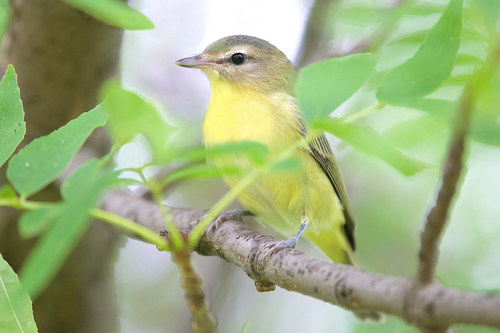 Philadelphia Vireo
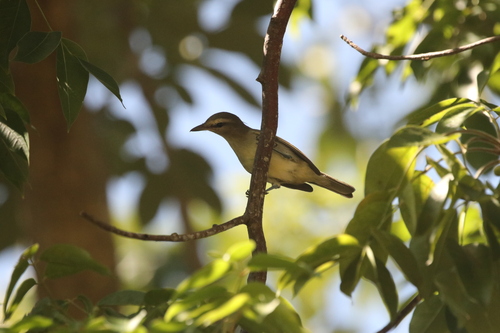 Yucatan Vireo
In breve
Il segno di campo più affidabile per separare il Philadelphia Vireo dallo Yucatan Vireo è il colore e l'estensione delle parti inferiori: il Philadelphia Vireo mostra parti inferiori di un giallo distintivo, specialmente sul petto e sull'addome, mentre lo Yucatan Vireo è molto più pallido sotto, con parti inferiori bianche buffe o biancastre e solo una leggera sfumatura oliva o grigia sui fianchi. Il Philadelphia Vireo ha anche una linea più scura e contrastante attraverso l'occhio (lori scuri) e un supercilio bianco più luminoso, mentre i lori dello Yucatan Vireo sono di un grigio-bruno più chiaro e si fondono di più con il viso. Entrambe le specie mancano di barre alari e anelli oculari, ma lo Yucatan Vireo è generalmente più grande e massiccio, con un becco più pesante e una coda più lunga. Queste differenze sono coerenti negli adulti e nei giovani, e sono visibili sia in posa che in volo.
Consigli di identificazione
- Underparts color: Il Philadelphia Vireo mostra sempre parti inferiori di un giallo brillante, specialmente sul petto e sull'addome, mentre lo Yucatan Vireo è di un bianco buffo pallido o bianco sotto, con solo una leggera sfumatura oliva o grigia sui fianchi. Questo è il segno di campo più affidabile per tutte le età e stagioni.
- Facial pattern: Il Philadelphia Vireo ha una forte linea scura attraverso l'occhio (lori scuri) e un supercilio bianco nitido, creando un viso ad alto contrasto. I lori dello Yucatan Vireo sono grigio-bruni e si fondono con il viso, con un supercilio di un bianco pallido bruno meno distinto. Usa questo segno in tutte le livree.
- Upperparts color: Il Philadelphia Vireo è di un marrone oliva sopra con una corona grigia; lo Yucatan Vireo è di un grigio-bruno più scuro con una sfumatura oliva, a volte con un dorso oliva più brillante in alcune sottospecie. Se l'uccello appare più uniformemente scuro grigio-bruno sopra, sospetta lo Yucatan Vireo.
- Bill structure: Lo Yucatan Vireo ha un becco grigio più pesante e robusto con una base più chiara della mandibola, mentre il becco del Philadelphia Vireo è robusto ma più delicato in proporzione. Il colore del becco non è altamente contrastante sul campo ma può aiutare con viste ravvicinate.
- Size and bulk: Lo Yucatan Vireo è più grande e massiccio, con una coda più lunga e una costruzione più pesante. Il Philadelphia Vireo è più piccolo e più compatto. Usa questo solo quando hai una buona percezione della scala o un confronto diretto.
- Leg color: Entrambe le specie hanno gambe e piedi blu-grigi o blu, quindi questo non è un separatore utile.
- Wing bars and eye ring: Entrambe le specie mancano di barre alari e anelli oculari, quindi non usare queste caratteristiche per separarli.
- Juvenile/immature plumage: Non sono descritti segni distintivi specifici per l'età sulle ali superiori o segni di volo per nessuna delle due specie, quindi non fare affidamento sul modello delle ali in volo o sugli uccelli in posa.
- Habitat and range: Se ti trovi in Canada o nel nord degli Stati Uniti durante la migrazione, ci si aspetta il Philadelphia Vireo; se nella Penisola dello Yucatan o a Grand Cayman, lo Yucatan Vireo è il default. Lontano da queste aree, specialmente in Texas, lo Yucatan Vireo è estremamente raro e dovrebbe essere esaminato attentamente.
- Voice: Il canto del Philadelphia Vireo è una serie di note chiare e distanziate; la voce dello Yucatan Vireo non è descritta qui, quindi non fare affidamento sulle vocalizzazioni per la separazione.
- Sex and season: Entrambe le specie hanno livree simili in entrambi i sessi e durante tutto l'anno, quindi sesso e stagione non influenzano l'identificazione.
- Subspecies variation: Alcune sottospecie di Yucatan Vireo (ad es., stilesi, caymanensis) possono mostrare parti inferiori più chiare o più brillanti, ma nessuna corrisponde al giallo brillante del Philadelphia Vireo.
- Contextual clues: Considera la comunità di uccelli circostante e l'habitat—il Philadelphia Vireo è spesso trovato con altri vireo temperati e warbler, mentre lo Yucatan Vireo è più probabile con specie tropicali.
- Common pitfalls: Il più grande errore è sovrastimare i toni gialli in scarsa luce o su Yucatan Vireo sbiaditi—controlla sempre la nitidezza del modello facciale e la vera estensione del giallo sotto.
- When in doubt: Se le parti inferiori non sono distintamente gialle e il viso manca di un lori scuro netto, inclina verso lo Yucatan Vireo, specialmente se l'uccello appare grande e con un becco pesante.
Taglia
Lo Yucatan Vireo è notevolmente più grande e pesante del Philadelphia Vireo. Lo Yucatan Vireo misura circa 15 cm di lunghezza e ha una massa corporea di circa 15,4 g (con un intervallo fino a 25 g), rendendolo un uccello complessivamente più massiccio. Il Philadelphia Vireo è più piccolo e più delicato, anche se la sua massa esatta non è specificata qui. Sul campo, la maggiore dimensione dello Yucatan Vireo, la coda più lunga e il becco più pesante e robusto sono evidenti quando i due sono visti fianco a fianco o con esperienza. Se è difficile giudicare la dimensione a causa della distanza o della mancanza di un confronto diretto, fai affidamento sulla livrea e sul modello facciale.
Piumaggio
Non ci sono modelli distintivi specifici per l'età sulle ali superiori o segni di volo descritti per nessuna delle due specie, quindi concentrati sulla livrea del corpo e del viso. Il Philadelphia Vireo di tutte le età mostra parti superiori di un marrone oliva, una corona grigia e parti inferiori di un giallo notevole, con una linea scura netta attraverso l'occhio (lori scuri) e un supercilio bianco nitido. Lo Yucatan Vireo, indipendentemente dall'età o dalla sottospecie, è di un grigio-bruno più scuro sopra con una sfumatura oliva, ma le sue parti inferiori sono molto più pallide—bianche buffe o bianche centralmente, con solo una leggera sfumatura oliva o grigia sui fianchi. Il supercilio è di un bianco bruno pallido e meno nettamente definito, e i lori sono grigio-bruni, fondendosi con il viso piuttosto che risaltare come una linea scura. Entrambe le specie mancano di barre alari e anelli oculari. Le sottospecie di Yucatan Vireo possono mostrare differenze sottili (ad es., dorso oliva più brillante o parti inferiori più chiare), ma nessuna si avvicina al giallo brillante del Philadelphia Vireo.
Comportamento
Entrambe le specie si nutrono in alberi e arbusti, muovendosi metodicamente attraverso il fogliame in tipico stile da vireo. Il Philadelphia Vireo a volte si libra o salta per gli insetti, mentre lo stile di foraggiamento dello Yucatan Vireo è meno specificamente descritto ma è probabilmente simile. Nessuna delle due specie ha un tratto comportamentale unico che sia diagnostico sul campo quando confrontato direttamente.
Habitat
Il Philadelphia Vireo nidifica ai margini di boschi decidui e misti in tutto il Canada, ed è più probabile incontrarlo durante la migrazione negli Stati Uniti orientali e centrali. Lo Yucatan Vireo si trova in habitat costieri e di pianura nella Penisola dello Yucatan, Belize, Honduras e Grand Cayman, ed è solo un raro vagabondo a nord del suo areale. Se visto in Texas o negli Stati Uniti al di fuori della migrazione, lo Yucatan Vireo è estremamente raro. Pertanto, il contesto e la posizione sono indizi forti: il Philadelphia Vireo è atteso in Nord America temperato, lo Yucatan Vireo nei Neotropici.
Voce
Il canto del Philadelphia Vireo è una serie di tre a cinque note ("weeezh weeezh weeezh"), simile al Vireo occhirossi ma con pause più lunghe e un tono leggermente più alto. Non c'è descrizione vocale per lo Yucatan Vireo in queste note, quindi la voce non è un separatore affidabile tra questi due sul campo.
Philadelphia Vireo · Yucatan Vireo · I miei uccelli difficili