

Bruinvleugeltiran vs Grijze koningstiran
Myiarchus oberi versus Tyrannus dominicensis
Speel een quiz met Bruinvleugeltiran en Grijze koningstiran
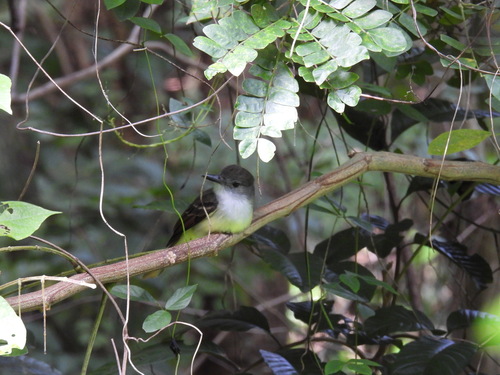 Bruinvleugeltiran
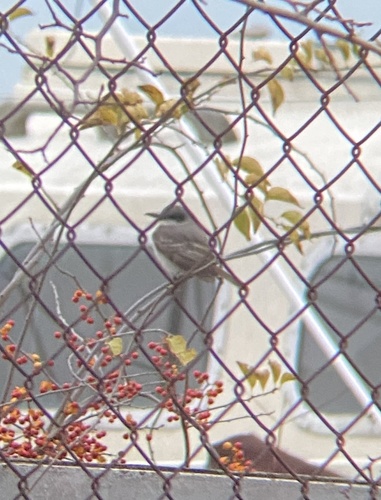 Grijze koningstiran
Kort gezegd
Het meest betrouwbare veldkenmerk zijn de onderdelen: Grijze koningstiran toont heldere witte onderdelen met alleen een vage grijze waas op de borst, terwijl Bruinvleugeltiran een grijze borst en keel heeft, met een gele buik en onderstaartdekken. Juveniele Grijze koningstiran tonen roestkleurige randen op de vleugelbedekking, stuit en staart, wat Bruinvleugeltiran mist. Structureel is de Grijze koningstiran robuuster, langer en heeft een zwaardere snavel. In de vlucht of zittend, let op het sterke grijs-witte contrast en de masker van de koningstiran versus de olijf- en gele tinten van de flycatcher. Beide kunnen in het Caribisch gebied verward worden, maar aandacht voor deze kenmerken zal ze in het veld scheiden.
Herkenningstips
- Kleur van de onderdelen: Grijze koningstiran heeft heldere witte onderdelen met alleen een vage grijze waas op de borst; Bruinvleugeltiran heeft een grijze keel en borst met een gele buik en onderstaartdekken. Dit is het beste kenmerk bij zittende vogels van alle leeftijden.
- Gezichtspatroon: Grijze koningstiran toont een gedurfde donkere masker rond het oog en een bleke grijze gezicht; Bruinvleugeltiran heeft een grijzere olijf-groene gezicht zonder een sterke masker.
- Bovenste delen: Bruinvleugeltiran is donker olijf-groen boven met roestkleurige randen op de vleugels en staart; Grijze koningstiran is grijs boven met bruinachtige vleugels en staart, zonder roestkleurige randen bij volwassenen.
- Juveniele/onvolwassen vleugel en staart: Juveniele Grijze koningstiran hebben roestkleurige randen op de vleugelbedekking, stuit en staart, wat Bruinvleugeltiran nooit toont. Als je roestkleurig ziet op de stuit of staart van een jonge vogel, is het een koningstiran.
- Vleugelstreepjes: Bruinvleugeltiran toont twee vage vleugelstreepjes van bleke of roestkleurige bedekkingen; Grijze koningstiran mist duidelijke vleugelstreepjes, vooral bij volwassenen.
- Staartpatroon: Bruinvleugeltiran heeft een brede roestkleurige streep op de binnenste vanen van de staartveren (behalve de sclateri ondersoort, die geen roestkleurig in de staart heeft); Grijze koningstiran's staart is bruinachtig en mist roestkleurig.
- Snavelgrootte en -vorm: Grijze koningstiran heeft een zwaardere, stevigere snavel vergeleken met de slanker snavel van Bruinvleugeltiran. Dit is het meest opvallend bij dichtbijzicht of foto's.
- Grootte en structuur: Grijze koningstiran is groter, robuuster, en langer (23 cm, 43.8 g) dan Bruinvleugeltiran (19–22 cm, 35 g). De robuuste uitstraling van de koningstiran is vooral merkbaar wanneer hij zit.
- Kruin: Bruinvleugeltiran heeft een donkere olijf-groene kroon die een kruin vormt, terwijl Grijze koningstiran's kroon grijs is en een merkbare kruin mist (hoewel het een verborgen gele kroonstreep heeft).
- Gedrag: Grijze koningstiran is agressiever en waarschijnlijk te zien terwijl hij grotere vogels aanvalt of zittend op zeer blootgestelde locaties. Bruinvleugeltiran is meer terughoudend en minder opvallend.
- Habitatcontext: Als gezien op een draad of in een zeer open, kustgebied, vooral in de Grote Antillen of wijdverspreide eilanden, vermoed dan Grijze koningstiran. Bruinvleugeltiran is meer beperkt tot de Kleine Antillen en minder waarschijnlijk in open, stedelijke omgevingen.
- Vocalisaties: Als je een luide, rollende 'pipiri, pipiri' triller hoort, is het Grijze koningstiran. Bruinvleugeltiran's stem is hier niet beschreven, dus deze roep is diagnostisch voor koningstiran.
- Voorzichtigheid met ondersoorten: Als je op Saint Lucia (sanctaeluciae) bent of een Bruinvleugeltiran ziet zonder roestkleurig in de staart (sclateri), vertrouw dan meer op de kleur van de onderdelen en structuur.
- Geslacht en seizoen: Beide soorten hebben vergelijkbare verenkleed in beide geslachten en het hele jaar door, dus geslacht en seizoen zijn niet nuttig voor scheiding.
- Valstrikken: Pas op voor juvenile Grijze koningstiran met roestkleurige randen op de vleugels en staart, wat kan suggereren dat het Myiarchus flycatchers zijn; controleer op witte onderdelen en de masker van de koningstiran om te bevestigen.
Grootte
Grijze koningstiran is duidelijk groter en zwaarder dan Bruinvleugeltiran. Grijze koningstiran heeft een gemiddelde lengte van ongeveer 23 cm en een massa van 43.8 g, terwijl Bruinvleugeltiran 19–22 cm en ongeveer 35 g is. De koningstiran lijkt ook robuuster, met een stevigere snavel en over het algemeen een meer robuuste uitstraling, vooral merkbaar wanneer hij zit of in directe vergelijking.
Verenkleed
- Juveniele/onvolwassen vogels: Juveniele Grijze koningstiran tonen roestkleurige randen op de vleugelbedekking, stuit en staart, een kenmerk dat niet aanwezig is in enige leeftijd van Bruinvleugeltiran. Dit is een belangrijk scheidingspunt voor jonge vogels, vooral in de vlucht of in rust.
- Volwassenen: Volwassen Grijze koningstiran hebben uniforme grijze bovenste delen, bruinachtige vleugels en staart, een gedurfde donkere masker, en een witte onderzijde met alleen een vage grijze borstwaas. Volwassen Bruinvleugeltiran hebben donkere olijf-groene bovenste delen met roestkleurige randen op de vleugels en staart, een grijzere olijf-groene gezicht, grijze keel en borst, en gele buik/onderstaartdekken. De vleugelstreepjes van de flycatcher zijn vaag en gevormd door grijs-witte of roestkleurige punten op de bedekkingen, terwijl de koningstiran duidelijke vleugelstreepjes mist maar een uniformere vleugeluiterlijk heeft.
- Staart: Bruinvleugeltiran toont een brede roestkleurige streep op de binnenste vanen van de staartveren (behalve de sclateri ondersoort, die geen roestkleurig in de staart heeft), terwijl de staart van de Grijze koningstiran bruinachtig is zonder een dergelijk roestkleurig patroon. Beide hebben donkere staarten, maar de staart van de koningstiran is meer uniform gekleurd.
Gedrag
Grijze koningstiran is opmerkelijk agressief en territoriaal, vaak gezien terwijl hij veel grotere vogels aanvalt, waaronder roofvogels. Hij zit vaak zeer opvallend op draden of blootgestelde takken en vliegt in gedurfde, directe vluchten. Bruinvleugeltiran is minder agressief en meer terughoudend, meestal foeragerend vanaf middelhoge zitplaatsen en niet betrokken bij opvallend aanvallend gedrag. Beide zijn flycatchers en jagen op insecten, maar het gedrag van de koningstiran is assertiever en zichtbaarder.
Habitat
Beide soorten komen voor in het Caribisch gebied, maar hun verspreiding overlapt alleen op sommige eilanden. Bruinvleugeltiran is beperkt tot de Kleine Antillen (Barbuda, Dominica, Guadeloupe, Martinique, Nevis, Saint Kitts, Saint Lucia), terwijl Grijze koningstiran wijdverspreid is in de regio. Beide kunnen worden gevonden in open bossen, bosranden, en soms nabij menselijke bewoning, maar de koningstiran is waarschijnlijker te zien in open, blootgestelde locaties zoals draden, wegen en kustgebieden.
Geluid
Grijze koningstiran heeft een luide, rollende triller die wordt beschreven als 'pipiri, pipiri,' wat kenmerkend is en aanleiding geeft tot veel van zijn lokale namen. De vocalisaties van Bruinvleugeltiran worden niet beschreven in de gegeven notities, dus de stem is alleen diagnostisch als de luide, getrilde roep van de koningstiran wordt gehoord.
Bruinvleugeltiran · Grijze koningstiran · Mijn lastige vogels