

Groene oropendola vs Paráoropendola
Psarocolius viridis versus Psarocolius bifasciatus
Speel een quiz met Groene oropendola en Paráoropendola
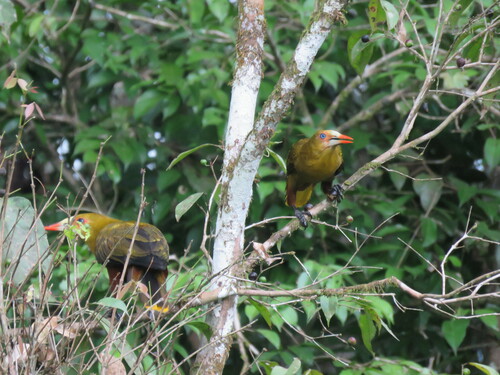 Groene oropendola
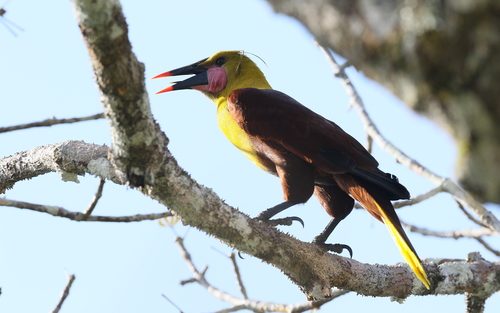 Paráoropendola
Kort gezegd
Het meest betrouwbare veldkenmerk tussen Groene oropendola en Paráoropendola is de kleur van het hoofd en de bovenborst bij volwassen vogels: Groene oropendola heeft een voornamelijk geelachtig-olijfkleurig hoofd en lichaam, terwijl de nominatieve Paráoropendola (P. b. bifasciatus) een opvallende zwartbruin 'kap' op het hoofd, de nek en de bovenborst vertoont, scherp afgebakend van het kastanjebruine lichaam. Ondersoorten van Paráoropendola (vooral P. b. yuracares en P. b. neivae) kunnen er meer olijfkleurig uitzien, maar zelfs dan is de overgang tussen hoofd en kastanjebruine onderdelen scherper en verschillen de gezichtsvlek en de kleur van de snavel. Beide soorten zijn grote, langstaartige icteridae met een vergelijkbare structuur en beide geslachten hebben een nekkuif bij mannetjes, maar subtiele verschillen in de kleur van de gezichtshuid, het patroon van de snavel en de kleur van de iris helpen. Juvenielen zijn doffer bij beide, maar de hoofdkleur en het contrast met het lichaam blijven essentieel. Grootte is niet betrouwbaar te scheiden in het veld, aangezien beide zeer groot zijn en overlappen in massa en lengte.
Herkenningstips
- Hoofd- en Bovenborstkleur (Volwassen nominatieve Paráoropendola): Let op de zwartbruin kap op het hoofd, de nek en de bovenborst van Paráoropendola (P. b. bifasciatus). Groene oropendola mist deze kap en is overal geelachtig-olijfkleurig op het hoofd en lichaam. Dit is het meest betrouwbare kenmerk bij volwassenen.
- Hoofd/Lichaam Contrast (Alle ondersoorten): Bij Groene oropendola zijn het hoofd en lichaam vergelijkbaar van kleur en vloeien ze soepel in elkaar over. Bij Paráoropendola (vooral P. b. yuracares en P. b. neivae) zijn het geel-olijfkleurige of olijf-groene hoofd en de bovenste delen scherp afgebakend van de kastanjebruine onderdelen.
- Gezichtshuid Vlek: Paráoropendola heeft een kale roze huidvlek op het gezicht (alle ondersoorten), terwijl Groene oropendola roze tot dof oranje huid rond het oog en de snavel vertoont, maar niet als een duidelijke vlek.
- Snavelkleur: Groene oropendola heeft een snavel met een erwtgroene basis en een oranje-rode punt. De snavel van Paráoropendola is voornamelijk zwart met een vermiljoen (rode) buitenste derde (nominatief), of een gele tot roest-oranje punt (P. b. yuracares), of rood (P. b. neivae). De basiskleur is donkerder bij Paráoropendola.
- Iriskleur: Volwassen Groene oropendola heeft een bleke blauwe iris, terwijl Paráoropendola een donkerbruine iris heeft. Juvenielen van beide hebben donkerbruine ogen, dus dit kenmerk is het beste voor volwassenen.
- Vleugelkleur (Zittend): De vleugels van Groene oropendola zijn dof olijfkleurig en vloeien samen met het lichaam. De vleugels van Paráoropendola zijn voornamelijk zwart met kastanjebruine randen (nominatief), of voornamelijk kastanjebruin met zwarte binnenranden (P. b. yuracares). Dit kan subtiel zijn, maar helpt wanneer goed gezien.
- Staartpatroon: Beide hebben gele staarten met centrale olijf/brown veren. Bij Paráoropendola zijn de centrale veren korter, waardoor de staart vaak helemaal geel lijkt van onderaf. Bij Groene oropendola zijn het centrale paar dof olijfkleurig en mogelijk beter zichtbaar.
- Kastanjebruine Verspreiding: Groene oropendola vertoont kastanjebruin op de rug, de bovenstaartdekkers, de buik, de dijen en de crissum, maar de kleur is minder scherp gedefinieerd dan bij Paráoropendola, waar de kastanjebruin uitgebreid is en scherp afgebakend van het hoofd/nek (vooral nominatief).
- Juveniele Pluimage: Beide zijn doffer dan volwassenen, maar juvenielen van Groene oropendola hebben een grijsachtige was onder en minder kastanjebruin. Hoofdkleur en contrast blijven de beste aanwijzingen.
- Seksueel Dimorfisme: Mannen van beide hebben een nekkuif; vrouwen missen deze maar lijken verder op mannen. Dit is geen scheiding tussen de soorten.
- Grootte: Beide soorten zijn zeer groot en overlappen in grootte en massa. Vertrouw niet op grootte voor scheiding.
- Habitat en Verspreiding: Beide komen voor in dezelfde Amazone laaglandbossen. Groene oropendola komt ook voor in de Guiana's, maar dit is niet nuttig binnen de belangrijkste overlapzone.
- Gedrag: Beide nestelen koloniaal en vertonen zich op vergelijkbare wijze. Gedrag is geen betrouwbare scheiding.
- Stem: Er zijn geen diagnostische vocale verschillen beschreven in de geleverde bronnen.
- Valstrikken: Ondersoorten van Paráoropendola (vooral P. b. yuracares en P. b. neivae) kunnen er meer olijfkleurig uitzien en dus dichter bij Groene oropendola komen. Focus in deze gevallen op hoofd/lichaam contrast, gezichtshuidkleur en snavelpatroon in deze gevallen.
Grootte
Beide soorten behoren tot de grootste oropendola's, met bijna identieke gemiddelde lichaamsmassa: Groene oropendola gemiddeld 310 g en Paráoropendola 314 g [wikidata]. Mannen van beide zijn ongeveer 48–53 cm lang, vrouwen 34–38 cm, dus lengte is geen betrouwbare scheiding. Paráoropendola wordt soms beschreven als 'spectaculair groot', maar in de praktijk is de grootte-overlap uitgebreid en geen veilig veldkenmerk. Beide hebben lange staarten en een zware, gezwollen snavel.
Verenkleed
- Volwassenen (nominatieve Paráoropendola vs Groene oropendola):
- Groene oropendola is voornamelijk geelachtig-olijfkleurig, met roze tot dof oranje snavel en orbitale huid, een bleke blauwe iris, dof olijfkleurige vleugels en kastanjebruin op de rug, buik, dijen en crissum. Het hoofd en lichaam vloeien soepel in kleur in elkaar over.
- Paráoropendola (P. b. bifasciatus) heeft een zwartbruin kap (hoofd, nek, bovenborst), scherp afgebakend van de kastanjebruine mantel, rug en onderdelen. Het gezicht heeft een kale roze huidvlek, de iris is donkerbruin en de snavel is voornamelijk zwart met een vermiljoen punt. De vleugels zijn voornamelijk zwart met kastanjebruine randen.
- Ondersoorten (P. b. yuracares, P. b. neivae):
- P. b. yuracares heeft een geel-olijfkleurig hoofd en bovenste delen met een scherpe grens naar kastanjebruine onderdelen, een roze gezichtsvlek en een snavel met een gele tot roest-oranje punt.
- P. b. neivae is over het algemeen donkerder en meer olijf-groen, met een diepe olijfkleurige kroon en gezicht, zwartachtige kuif en een rode snavelpunt.
- Juvenielen:
- De juvenielen van beide soorten zijn doffer dan volwassenen, met minder uitgebreide kastanjebruin en een grijsachtige was onder bij Groene oropendola. Iris is donkerbruin bij jonge Groene oropendola; juvenielen van Paráoropendola worden niet in detail beschreven, maar verwacht een vergelijkbare dofheid. De hoofdkleur en het contrast met het lichaam blijven de beste aanwijzingen.
- Staart:
- Bij beide zijn de centrale staartveren olijf of bruin, de rest is geel. Bij Paráoropendola maken de kortere centrale veren de staart vaak helemaal geel van onderaf.
Gedrag
Beide soorten zijn koloniale nestelaars, waarbij mannetjes zich tonen door te buigen en met hun vleugels te schudden vanuit een zitplaats. Mannetjes van Paráoropendola kunnen ook de staart omhoog houden en hun hangende vleugels laten trillen. Beide nestelen in hangende geweven zakken hoog in bomen, en beide foerageren in groepen, voornamelijk in de boomtoppen. Er zijn geen belangrijke gedragsverschillen opgemerkt die diagnostisch zijn in het veld.
Habitat
Beide soorten komen voor in laagland tropische bossen van het Amazonebekken, met uitgebreide overlap in het verspreidingsgebied in Brazilië, Bolivia, Colombia, Ecuador, Peru en Venezuela. Groene oropendola komt ook voor in Frans-Guyana, Guyana en Suriname. Habitatvoorkeuren worden niet beschreven als voldoende verschillend om ze betrouwbaar in het veld te scheiden.