

Green Oropendola vs Olive Oropendola
Psarocolius viridis contro Psarocolius bifasciatus
Fai un quiz con Green Oropendola e Olive Oropendola
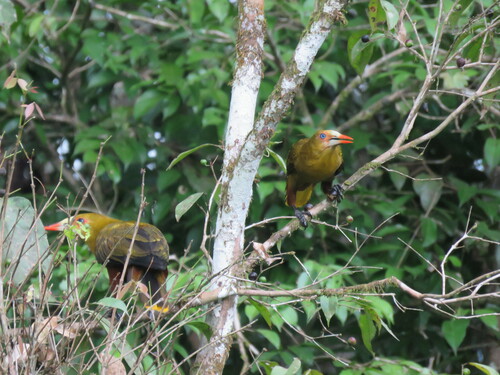 Green Oropendola
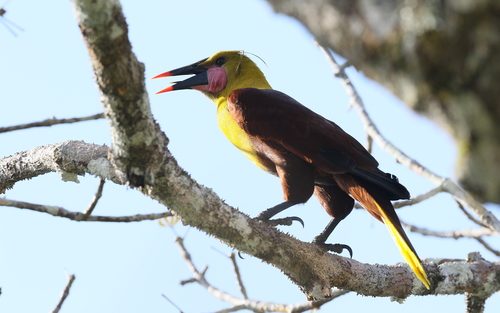 Olive Oropendola
In breve
Il segno distintivo più affidabile tra Green Oropendola e Olive Oropendola è la colorazione della testa e del petto superiore negli adulti: Green Oropendola ha una testa e un corpo per lo più giallo-oliva, mentre l'Olive Oropendola nominato (P. b. bifasciatus) mostra un sorprendente 'cappuccio' nero-bruno sulla testa, sul collo e sul petto superiore, nettamente distinto dal corpo castano. Le sottospecie di Olive Oropendola (soprattutto P. b. yuracares e P. b. neivae) possono apparire con una testa più oliva, ma anche in tal caso, la transizione tra la testa e le parti inferiori castane è più netta e la macchia facciale e il colore del becco differiscono. Entrambe le specie sono grandi icteridi dalla lunga coda con una struttura simile e entrambi i sessi hanno una cresta sulla nuca nei maschi, ma sottili differenze nel colore della pelle facciale, nel motivo del becco e nel colore dell'iride aiutano. I giovani sono più opachi in entrambe, ma il colore della testa e il contrasto con il corpo rimangono fondamentali. La dimensione non è separabile in modo affidabile sul campo, poiché entrambe sono molto grandi e si sovrappongono in massa e lunghezza.
Consigli di identificazione
- Colore della testa e del petto superiore (Olive Oropendola adulta nominata): Cerca il cappuccio nero-bruno sulla testa, sul collo e sul petto superiore dell'Olive Oropendola (P. b. bifasciatus). Green Oropendola non ha questo cappuccio, essendo giallo-oliva in tutta la testa e il corpo. Questo è il segno più affidabile negli adulti.
- Contrasto testa/corpo (Tutte le sottospecie): In Green Oropendola, la testa e il corpo sono simili nel colore, fondendosi senza soluzione di continuità. In Olive Oropendola (soprattutto P. b. yuracares e P. b. neivae), la testa e le parti superiori giallo-olive o verde-olive sono nettamente demarcate dalle parti inferiori castane.
- Macchia di pelle facciale: Olive Oropendola ha una macchia di pelle nuda di colore rosa sulla faccia (tutte le sottospecie), mentre Green Oropendola mostra pelle rosa a arancione opaco attorno all'occhio e alle lore, ma non come una macchia distinta.
- Colore del becco: Green Oropendola ha un becco con una base verde pisello e una punta arancio-rossa. Olive Oropendola ha un becco per lo più nero con un terzo esterno vermiglio (rosso) (nominato), o punta gialla a rosso-arancio (P. b. yuracares), o rossa (P. b. neivae). Il colore di base è più scuro in Olive Oropendola.
- Colore dell'iride: L'adulto Green Oropendola ha un'iride blu pallido, mentre Olive Oropendola ha un'iride marrone scuro. I giovani di entrambi hanno occhi marroni scuri, quindi questo segno è migliore per gli adulti.
- Colore delle ali (Posato): Le ali di Green Oropendola sono di un oliva scuro, fondendosi con il corpo. Le ali di Olive Oropendola sono per lo più nere con bordi castani (nominato), o per lo più castane con bordi interni neri (P. b. yuracares). Questo può essere sottile ma aiuta quando visto bene.
- Motivo della coda: Entrambi hanno code gialle con piume centrali olive/marroni. In Olive Oropendola, le piume centrali sono più corte, quindi la coda spesso appare tutta gialla dal basso. In Green Oropendola, la coppia centrale è di un oliva scuro e può essere più visibile.
- Distribuzione del castano: Green Oropendola mostra castano sul dorso, sulle copritrici della coda, sul ventre, sulle cosce e sul crissum, ma il colore è meno nettamente definito rispetto a Olive Oropendola, dove il castano è esteso e nettamente distinto dalla testa/collo (soprattutto nominato).
- Piumaggio giovanile: Entrambi sono più opachi degli adulti, ma i giovani di Green Oropendola hanno un lavaggio grigiastro sotto e meno castano. Il colore della testa e il contrasto rimangono i migliori indizi.
- Dimorfismo sessuale: I maschi di entrambi hanno una cresta sulla nuca; le femmine ne sono prive ma altrimenti somigliano ai maschi. Questo non è un separatore tra le specie.
- Dimensione: Entrambe le specie sono molto grandi e si sovrappongono in dimensione e massa. Non fare affidamento sulla dimensione per la separazione.
- Habitat e distribuzione: Entrambi si trovano nelle stesse foreste pluviali amazzoniche. Green Oropendola si trova anche nelle Guiane, ma questo non è utile all'interno della principale zona di sovrapposizione.
- Comportamento: Entrambi nidificano colonialmente e si esibiscono in modo simile. Il comportamento non è un separatore affidabile.
- Voce: Non sono state descritte differenze vocali diagnostiche nelle fonti fornite.
- Insidie: Le sottospecie di Olive Oropendola (soprattutto P. b. yuracares e P. b. neivae) possono apparire con una testa più oliva e quindi più vicine a Green Oropendola. Concentrati sul contrasto testa/corpo, sul colore della pelle facciale e sul motivo del becco in questi casi.
Taglia
Entrambe le specie sono tra le più grandi oropendole, con una massa corporea media quasi identica: Green Oropendola ha una media di 310 g e Olive Oropendola 314 g [wikidata]. I maschi di entrambe sono lunghi circa 48–53 cm, le femmine 34–38 cm, quindi la lunghezza non è un separatore affidabile. Olive Oropendola è talvolta descritta come 'spettacolarmente grande', ma in pratica, la sovrapposizione delle dimensioni è estesa e non è un segno di campo sicuro. Entrambe hanno code lunghe e un becco pesante e gonfio.
Piumaggio
- Adulti (Olive Oropendola nominata vs Green Oropendola):
- Green Oropendola è per lo più giallo-oliva nel complesso, con lore rosa a arancione opaco e pelle orbitale, un'iride blu pallido, ali di un oliva scuro e castano sul dorso, ventre, cosce e crissum. La testa e il corpo si fondono senza soluzione di continuità nel colore.
- Olive Oropendola (P. b. bifasciatus) ha un cappuccio nero-bruno (testa, collo, petto superiore), nettamente distinto dal mantello castano, dal dorso e dalle parti inferiori. La faccia ha una macchia di pelle nuda di colore rosa, l'iride è marrone scuro e il becco è per lo più nero con una punta vermiglia. Le ali sono per lo più nere con bordi castani.
- Sottospecie (P. b. yuracares, P. b. neivae):
- P. b. yuracares ha una testa e parti superiori giallo-olive con un confine netto verso le parti inferiori castane, una macchia facciale rosa e un becco con una punta gialla a rosso-arancio.
- P. b. neivae è complessivamente più scura e più verde-oliva, con una corona e una faccia di un oliva profondo, cresta nera e una punta rossa del becco.
- Giovani:
- I giovani di entrambe le specie sono più opachi degli adulti, con meno castano esteso e un lavaggio grigiastro sotto in Green Oropendola. L'iride è marrone scuro nei giovani Green Oropendola; i giovani di Olive Oropendola non sono descritti in dettaglio, ma ci si aspetta un'opacità simile. Il colore della testa e il contrasto con il corpo rimangono i migliori indizi.
- Coda:
- In entrambe, le piume centrali della coda sono olive o marroni, il resto è giallo. In Olive Oropendola, le piume centrali più corte fanno spesso sembrare la coda tutta gialla dal basso.
Comportamento
Entrambe le specie sono nidificatrici coloniali, con i maschi che si esibiscono piegandosi e scuotendo le ali da un posatoio. I maschi di Olive Oropendola possono anche alzare la coda e vibrare le ali pendenti. Entrambi nidificano in sacchi intrecciati appesi in alto sugli alberi e foraggiano in gruppi, principalmente nella chioma. Non sono state notate differenze comportamentali significative che siano diagnostiche sul campo.
Habitat
Entrambe le specie si trovano nelle foreste tropicali di pianura del bacino amazzonico, con una vasta sovrapposizione di distribuzione in Brasile, Bolivia, Colombia, Ecuador, Perù e Venezuela. Green Oropendola si trova anche nella Guiana Francese, in Guyana e in Suriname. Le preferenze di habitat non sono descritte come abbastanza distinte da separarle in modo affidabile sul campo.
Green Oropendola · Olive Oropendola · I miei uccelli difficili