

Eulertiran vs Witstuitfluittiran
Lathrotriccus euleri versus Sirystes albocinereus
Speel een quiz met Eulertiran en Witstuitfluittiran
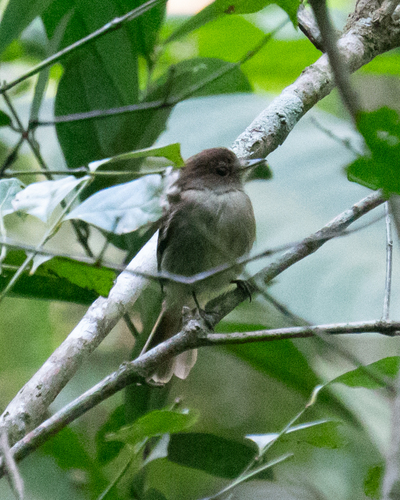 Eulertiran
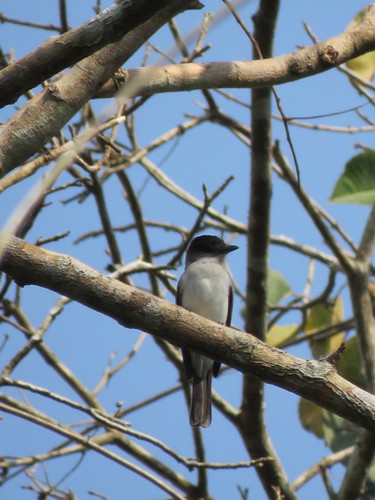 Witstuitfluittiran
Kort gezegd
Het meest betrouwbare veldkenmerk om deze twee te scheiden is de gedurfde witte stuitvlek van de Witstuitfluittiran, die duidelijk zichtbaar is in de vlucht en zelfs wanneer hij zit als de rug zichtbaar is. Eulertiran toont nooit een witte stuit en is over het algemeen veel kleiner en delicater. De fluittiran heeft ook een zwartachtige kroon met een lichte kuif en een contrasterend lichtgrijze gezicht, terwijl Eulertiran meer uniform olijfbruin is met een subtiele lichte oogring en geen kuif heeft. Beide soorten hebben vergelijkbare basisvormen van vliegenvangers, maar de fluittiran is robuuster en heeft een langere staart. Specifieke vleugelpatronen voor onvolwassen vogels zijn niet beschreven voor beide soorten, dus de focus ligt op het volwassen verenkleed en de structuur.
Herkenningstips
- Witte stuitvlek (alleen fluittiran): Zoek naar een gedurfde witte stuit, vooral zichtbaar in de vlucht of wanneer de vogel zich verzorgt of met zijn vleugels fladdert. Eulertiran toont nooit een witte stuit op enige leeftijd.
- Kroonkleur en kuif: Fluittiran heeft een zwartachtige kroon met een lichte kuif, wat het een spitse uitstraling geeft; Eulertiran heeft een warme olijfbruine kroon en is altijd gladhoofdig.
- Gezichtscontrast: Fluittiran toont een leisteengrijs gezicht met een lichtgrijze keel en borst, terwijl Eulertiran meer uniform olijfbruin is met een subtiele lichte oogring en een vage supercilium.
- Vleugelpatroon: Fluittiran heeft zwartachtige vleugels met lichtgrijze en witte randen, maar geen vleugelstreepjes. Eulertiran toont twee lichte buffkleurige vleugelstreepjes en buffkleurige randen op de secundair en tertiaal, maar toont nooit witte panelen.
- Staart: Fluittiran heeft een lange, vierkante, zwartachtige staart; Eulertiran heeft een kortere, doffe staart.
- Grootte en structuur: Fluittiran is veel groter en robuuster, met een langere staart en een robuustere uitstraling. Eulertiran is klein, compact en delicaat.
- Buik kleur: Fluittiran heeft een witte buik; Eulertiran varieert van lichtgeel tot wit, afhankelijk van de ondersoort, maar is nooit zo scherp wit als de fluittiran.
- Borst en keel: De borst en keel van de fluittiran zijn lichtgrijs, die overgaan in de witte buik. Eulertiran heeft een grijsachtige witte keel en een bruinachtige olijfkleurige was op de borst.
- Snavelkleur: Fluittiran heeft een zwarte snavel; Eulertiran heeft een zwarte bovenkaak en een dof roze of oranjeachtige roze onderkaak, maar dit is subtiel en zelden zichtbaar in het veld.
- Pootkleur: Beide hebben zwartachtige poten en voeten; niet nuttig voor scheiding.
- Iris kleur: Fluittiran heeft een koffiebruine iris; Eulertiran heeft een donkere iris. Dit is subtiel en meestal niet diagnostisch op afstand.
- Geslacht en leeftijd: Beide soorten zijn seksueel monomorf en missen beschreven leeftijdspecifieke vluchtkenmerken, dus alle veldkenmerken zijn van toepassing op alle leeftijden en geslachten.
- Bereik controle: Als je in Trinidad of buiten het Amazonebekken bent, is de fluittiran onwaarschijnlijk; Eulertiran is wijdverspreid.
- Zittende vs. vluchtzicht: De witte stuit van de fluittiran is het meest opvallend in de vlucht, maar kan ook worden gezien wanneer hij zit als de rug zichtbaar is. Eulertiran toont nooit dit kenmerk.
- Vleugelstreepjes (alleen Eulertiran): Als je twee lichte buffkleurige vleugelstreepjes ziet, kijk je naar Eulertiran, niet naar de fluittiran.
Grootte
Witstuitfluittiran is aanzienlijk groter, met een lengte van 18–19 cm en een gewicht van 24–32 g. In tegenstelling tot Eulertiran, dat veel kleiner is met 12,7–13,5 cm en 9–13,8 g. Dit formaatverschil is meestal duidelijk in het veld, vooral als je een gevoel van schaal hebt van nabijgelegen vogels of takken. De fluittiran lijkt ook langerstaartiger en robuuster, terwijl Eulertiran compact en delicaat is.
Verenkleed
- Volwassenen (alle seizoenen): De fluittiran heeft een opvallende witte stuitvlek die opvalt tegen zijn anders grijze en zwarte verenkleed, vooral in de vlucht of wanneer de rug zichtbaar is. Zijn kroon is zwartachtig met een lichte kuif, en het gezicht is leisteengrijs, contrasterend met de lichtgrijze keel en borst en de witte buik. De vleugels zijn zwartachtig met lichtgrijze en witte randen. In tegenstelling tot Eulertiran, dat warm olijfbruin is aan de bovenkant, met een subtiele witachtige oogring en een vage lichte supercilium, bruinachtige olijfkleurige borst en een lichtgele tot witte buik. Zijn vleugels zijn dof met lichte buffkleurige vleugelstreepjes en randen, maar tonen nooit witte panelen of een stuitvlek. Beide seksen lijken op elkaar in elke soort.
- Jong/onvolwassen: Er zijn geen onderscheidende leeftijdspecifieke bovenvleugel- of vluchtkenmerken beschreven voor beide soorten, dus scheiding is afhankelijk van dezelfde volwassen kenmerken.
Gedrag
Beide soorten zijn typische tyrant vliegenvangers, die vaak van zitplaatsen afvliegen om insecten te vangen. De fluittiran, die groter en langerstaartiger is, kan robuuster en rechter lijken wanneer hij zit, soms zijn lichte kuif tonend. Eulertiran is delicaat en heeft de neiging om lager en minder opdringerig te zitten. Gedragsverschillen zijn subtiel en niet altijd betrouwbaar voor scheiding.
Habitat
Beide soorten komen voor in Zuid-Amerikaanse bossen, maar hun verspreiding overlapt slechts gedeeltelijk. Eulertiran is wijdverspreid in Zuid-Amerika (behalve Chili), inclusief Trinidad, en wordt over het algemeen aangetroffen in een grotere verscheidenheid aan bos types. Witstuitfluittiran is meer beperkt tot het westelijke en centrale Amazonegebied (Bolivia, Brazilië, Colombia, Ecuador, Peru, Venezuela). Als je buiten het bereik van de fluittiran bent (bijv. Trinidad), is alleen Eulertiran mogelijk. Echter, alleen het habitat is niet diagnostisch waar beide voorkomen.