

Motmot

キスジメジロハエトリ 対 コシジロフエフキタイランチョウ

Lathrotriccus euleri 対 Sirystes albocinereus

キスジメジロハエトリとコシジロフエフキタイランチョウのクイズ
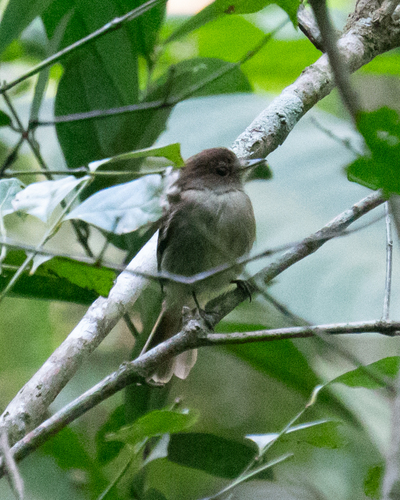
キスジメジロハエトリ (Lathrotriccus euleri) キスジメジロハエトリ
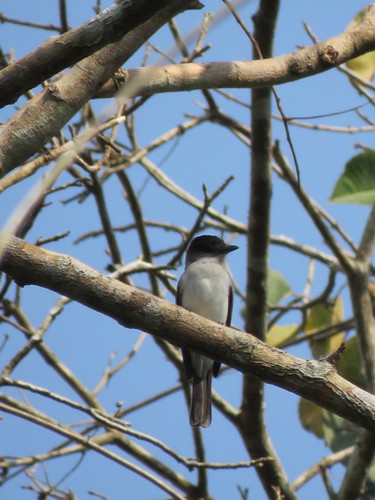
コシジロフエフキタイランチョウ (Sirystes albocinereus) コシジロフエフキタイランチョウ

メディア

読み込み中…

要点

これら二種を区別する最も信頼できるフィールドマークは、コシジロフエフキタイランチョウの大胆な白い尾羽の斑点で、飛んでいるときや、背中が見えるときに止まっているときでも明らかです。キスジメジロハエトリは白い尾羽を決して示さず、全体的にずっと小さく、繊細です。フエフキタイランチョウはわずかな冠を持つ黒っぽい頭頂と対照的な淡い灰色の顔を持ち、キスジメジロハエトリはより均一なオリーブブラウンで、微妙な淡いアイリングを持ち、冠はありません。両種は基本的に似たようなハエトリの形をしていますが、フエフキタイランチョウはよりがっしりしていて尾が長いです。未熟な特有の翼の模様はどちらの種にも記載されていないため、焦点は成鳥の羽毛と構造にあります。

識別のコツ

  1. 白い尾羽の斑点(フエフキタイランチョウのみ): 大胆な白い尾羽を探してください。特に飛んでいるときや、鳥が羽を整えているときに見えます。キスジメジロハエトリはどの年齢でも白い尾羽を示しません。
  2. 頭頂の色と冠: フエフキタイランチョウはわずかな冠を持つ黒っぽい頭頂を持ち、尖った外観を与えます。キスジメジロハエトリは温かみのあるオリーブブラウンの頭頂を持ち、常に滑らかな頭です。
  3. 顔のコントラスト: フエフキタイランチョウは淡い灰色の喉と胸と対照的なスレートグレーの顔を示しますが、キスジメジロハエトリは微妙な淡いアイリングと薄いスーパシリウムを持つより均一なオリーブブラウンです。
  4. 翼の模様: フエフキタイランチョウは淡い灰色と白の縁を持つ黒っぽい翼を持ちますが、翼のバーはありません。キスジメジロハエトリは二つの淡いバフの翼のバーと二次羽と三次羽のバフの縁を示しますが、白いパネルは決して示しません。
  5. 尾: フエフキタイランチョウは長く、四角い先端の黒っぽい尾を持ち、キスジメジロハエトリは短く、暗い尾を持ちます。
  6. サイズと構造: フエフキタイランチョウはずっと大きく、がっしりしていて、尾が長く、より頑丈な印象を与えます。キスジメジロハエトリは小さく、コンパクトで、繊細です。
  7. 腹の色: フエフキタイランチョウは白い腹を持ち、キスジメジロハエトリは亜種によって淡い黄色から白まで変化しますが、フエフキタイランチョウほどはっきりと白くはありません。
  8. 胸と喉: フエフキタイランチョウの胸と喉は淡い灰色で、白い腹に溶け込んでいます。キスジメジロハエトリは灰色がかった白い喉と胸にオリーブブラウンの洗いがかっています。
  9. くちばしの色: フエフキタイランチョウは黒いくちばしを持ち、キスジメジロハエトリは黒い上顎と鈍いピンクがかったまたはオレンジがかったピンクの下顎を持ちますが、これは微妙で、フィールドではめったに見えません。
  10. 足の色: 両方とも黒っぽい足と足を持ち、区別には役立ちません。
  11. 虹彩の色: フエフキタイランチョウはコーヒーブラウンの虹彩を持ち、キスジメジロハエトリは暗い虹彩を持ちます。これは微妙で、通常は遠くからの診断には役立ちません。
  12. 性別と年齢: 両種は性的に単形で、年齢特有の飛行マークは記載されていないため、すべてのフィールドマークはすべての年齢と性別に適用されます。
  13. 範囲の確認: トリニダードやアマゾン流域の外にいる場合、フエフキタイランチョウはあり得ません。キスジメジロハエトリはより広範囲に分布しています。
  14. 止まっているときと飛んでいるときの視点: フエフキタイランチョウの白い尾羽は飛んでいるときに最も明らかですが、背中が見えるときに止まっているときにも見ることができます。キスジメジロハエトリはこのマークを決して示しません。
  15. 翼のバー(キスジメジロハエトリのみ): 二つの淡いバフの翼のバーが見えたら、あなたはキスジメジロハエトリを見ているのです、フエフキタイランチョウではありません。

大きさ

コシジロフエフキタイランチョウはかなり大きく、全長18〜19 cm、体重24〜32 gです。それに対して、キスジメジロハエトリはずっと小さく、全長12.7〜13.5 cm、体重9〜13.8 gです。このサイズの違いは通常フィールドで明らかで、特に近くの鳥や枝からのスケール感がある場合に顕著です。フエフキタイランチョウはまた、尾が長く、より頑丈に見え、キスジメジロハエトリはコンパクトで繊細です。

羽色

行動

両種は典型的なタイランハエトリで、しばしば止まり木から飛び出して昆虫を捕まえます。フエフキタイランチョウは大きくて尾が長いため、止まっているときにより頑丈で直立して見えることがあり、時にはわずかな冠を見せることがあります。キスジメジロハエトリはより繊細で、低い位置に止まる傾向があり、目立たないようにします。行動の違いは微妙で、常に区別に役立つわけではありません。

生息環境

両種は南アメリカの森林に生息していますが、その範囲は部分的にしか重なりません。キスジメジロハエトリは南アメリカ全体(チリを除く)に広く分布し、トリニダードを含むさまざまな森林タイプで一般的に見られます。コシジロフエフキタイランチョウは、ボリビア、ブラジル、コロンビア、エクアドル、ペルー、ベネズエラの西部および中央アマゾンにより制限されています。フエフキタイランチョウの範囲の外にいる場合(例:トリニダード)、キスジメジロハエトリのみが可能です。ただし、両方が生息する場所では生息地だけでは診断には役立ちません。

より良い説明を送る

比較と同じ項目を使ってください。文章はすぐに公開されます。

The most reliable field mark to separate these two is the bold white rump patch of the White-rumped Sirystes, which is obvious in flight and even when perched if the back is visible. Euler's Flycatcher never shows a white rump and is much smaller and more delicate overall. The Sirystes also has a blackish crown with a slight crest and a contrasting pale gray face, while Euler's Flycatcher is more uniformly olive-brown with a subtle pale eye-ring and lacks any crest. Both species have similar basic flycatcher shapes, but the Sirystes is bulkier and longer-tailed. Immature-specific wing patterns are not described for either species, so the focus is on adult plumage and structure.

  1. White rump patch (Sirystes only): Look for a bold white rump, especially visible in flight or when the bird is preening or flicking its wings. Euler's Flycatcher never shows a white rump at any age.
  2. Crown color and crest: Sirystes has a blackish crown with a slight crest, giving it a peaked look; Euler's Flycatcher has a warm olive-brown crown and is always smooth-headed.
  3. Facial contrast: Sirystes shows a slate gray face with a pale gray throat and breast, while Euler's Flycatcher is more uniform olive-brown with a subtle pale eye-ring and faint supercilium.
  4. Wing pattern: Sirystes has blackish wings with pale gray and white edges, but no wing bars. Euler's Flycatcher shows two pale buff wing bars and buffy edges to secondaries and tertials, but never white panels.
  5. Tail: Sirystes has a long, square-tipped, blackish tail; Euler's Flycatcher has a shorter, dusky tail.
  6. Size and structure: Sirystes is much larger and bulkier, with a longer tail and more robust jizz. Euler's Flycatcher is small, compact, and dainty.
  7. Belly color: Sirystes has a white belly; Euler's Flycatcher varies from pale yellow to white, depending on subspecies, but is never as sharply white as Sirystes.
  8. Breast and throat: Sirystes' breast and throat are pale gray, blending into the white belly. Euler's Flycatcher has a grayish white throat and a brownish olive wash on the breast.
  9. Bill color: Sirystes has a black bill; Euler's Flycatcher has a black maxilla and a dull pinkish or orangish pink mandible, but this is subtle and rarely visible in the field.
  10. Leg color: Both have blackish legs and feet; not useful for separation.
  11. Iris color: Sirystes has a coffee-brown iris; Euler's Flycatcher has a dark iris. This is subtle and not usually diagnostic at a distance.
  12. Sex and age: Both species are sexually monomorphic and lack described age-specific flight marks, so all field marks apply to all ages and sexes.
  13. Range check: If in Trinidad or outside the Amazon basin, Sirystes is unlikely; Euler's Flycatcher is more widespread.
  14. Perched vs. flight views: The white rump of Sirystes is most obvious in flight, but can also be seen when perched if the back is visible. Euler's Flycatcher never shows this mark.
  15. Wing bars (Euler's only): If you see two pale buff wing bars, you are looking at Euler's Flycatcher, not Sirystes.

White-rumped Sirystes is significantly larger, measuring 18–19 cm in length and weighing 24–32 g. In contrast, Euler's Flycatcher is much smaller at 12.7–13.5 cm and 9–13.8 g. This size difference is usually obvious in the field, especially if you have a sense of scale from nearby birds or branches. The Sirystes also appears longer-tailed and more robust, while Euler's Flycatcher is compact and daintier.

  • Adults (all seasons): The Sirystes has a striking white rump patch that stands out against its otherwise gray and black plumage, especially in flight or when the back is exposed. Its crown is blackish with a slight crest, and the face is slate gray, contrasting with the pale gray throat and breast and white belly. The wings are blackish with pale gray and white edging. In contrast, Euler's Flycatcher is warm olive-brown above, with a subtle whitish eye-ring and faint pale supercilium, brownish olive breast, and pale yellow to white belly. Its wings are dusky with pale buff wing bars and edges, but never show white panels or a rump patch. Both sexes look alike in each species.
  • Juvenile/immature: No distinctive age-specific upperwing or flight marks are described for either species, so separation relies on the same adult features.

Both species are typical tyrant flycatchers, often sallying from perches to catch insects. The Sirystes, being larger and longer-tailed, may appear more robust and upright when perched, sometimes showing its slight crest. Euler's Flycatcher is more delicate and tends to perch lower and more unobtrusively. Behavioral differences are subtle and not always reliable for separation.

Both species occur in South American forests, but their ranges only partially overlap. Euler's Flycatcher is widespread across South America (except Chile), including Trinidad, and is generally found in a wider variety of forest types. White-rumped Sirystes is more restricted to the western and central Amazon (Bolivia, Brazil, Colombia, Ecuador, Peru, Venezuela). If you are outside the Sirystes' range (e.g., Trinidad), only Euler's Flycatcher is possible. However, habitat alone is not diagnostic where both occur.

変更を破棄しますか?

保存していない編集があります。今離れると失われます。

キスジメジロハエトリ · コシジロフエフキタイランチョウ · 苦手な鳥