

Euler's Flycatcher vs White-rumped Sirystes
Lathrotriccus euleri contro Sirystes albocinereus
Fai un quiz con Euler's Flycatcher e White-rumped Sirystes
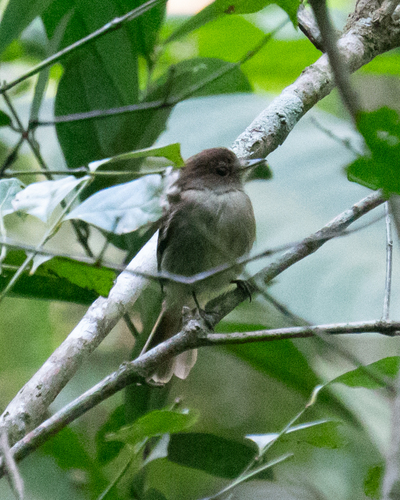 Euler's Flycatcher
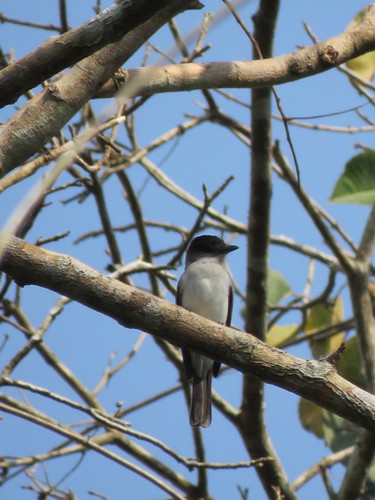 White-rumped Sirystes
In breve
Il segno distintivo più affidabile per separare questi due è la vivace macchia bianca sul dorso del White-rumped Sirystes, che è evidente in volo e anche quando è posato se la schiena è visibile. L'Euler's Flycatcher non mostra mai un dorso bianco ed è molto più piccolo e delicato nel complesso. Il Sirystes ha anche una corona nerognola con una leggera cresta e un volto grigio chiaro in contrasto, mentre l'Euler's Flycatcher è più uniformemente oliva-marrone con un sottile anello oculare chiaro e privo di cresta. Entrambe le specie hanno forme di cattura simili, ma il Sirystes è più robusto e ha una coda più lunga. I modelli di ali specifici per gli immaturi non sono descritti per nessuna delle due specie, quindi l'attenzione è rivolta al piumaggio e alla struttura degli adulti.
Consigli di identificazione
- White rump patch (Sirystes only): Cerca una vivace macchia bianca sul dorso, specialmente visibile in volo o quando l'uccello si sta pulendo o sbattendo le ali. L'Euler's Flycatcher non mostra mai un dorso bianco a nessuna età.
- Crown color and crest: Il Sirystes ha una corona nerognola con una leggera cresta, che gli conferisce un aspetto appuntito; l'Euler's Flycatcher ha una corona oliva-marrone caldo ed è sempre con la testa liscia.
- Facial contrast: Il Sirystes mostra un volto grigio ardesia con una gola e un petto grigio chiaro, mentre l'Euler's Flycatcher è più uniforme oliva-marrone con un sottile anello oculare chiaro e un debole supercilio.
- Wing pattern: Il Sirystes ha ali nerognole con bordi grigio chiaro e bianchi, ma senza barre alari. L'Euler's Flycatcher mostra due barre alari color crema chiaro e bordi color crema, ma non mostra mai pannelli bianchi.
- Tail: Il Sirystes ha una lunga coda nera a punta quadrata; l'Euler's Flycatcher ha una coda più corta e scura.
- Size and structure: Il Sirystes è molto più grande e robusto, con una coda più lunga e un aspetto più robusto. L'Euler's Flycatcher è piccolo, compatto e delicato.
- Belly color: Il Sirystes ha un ventre bianco; l'Euler's Flycatcher varia da giallo chiaro a bianco, a seconda della sottospecie, ma non è mai così bianco come il Sirystes.
- Breast and throat: Il petto e la gola del Sirystes sono grigio chiaro, fondendosi con il ventre bianco. L'Euler's Flycatcher ha una gola bianco-grigia e un lavaggio oliva-marrone sul petto.
- Bill color: Il Sirystes ha un becco nero; l'Euler's Flycatcher ha una mascella nera e una mandibola di un rosa opaco o aranciato, ma questo è sottile e raramente visibile sul campo.
- Leg color: Entrambi hanno zampe e piedi nerognoli; non utili per la separazione.
- Iris color: Il Sirystes ha un'iride marrone caffè; l'Euler's Flycatcher ha un'iride scura. Questo è sottile e di solito non è diagnostico a distanza.
- Sex and age: Entrambe le specie sono sessualmente monomorfiche e mancano di segni di volo specifici per età descritti, quindi tutti i segni sul campo si applicano a tutte le età e sessi.
- Range check: Se ti trovi a Trinidad o al di fuori del bacino amazzonico, il Sirystes è improbabile; l'Euler's Flycatcher è più diffuso.
- Perched vs. flight views: Il dorso bianco del Sirystes è più evidente in volo, ma può essere visto anche quando è posato se la schiena è visibile. L'Euler's Flycatcher non mostra mai questo segno.
- Wing bars (Euler's only): Se vedi due barre alari color crema chiaro, stai guardando l'Euler's Flycatcher, non il Sirystes.
Taglia
Il White-rumped Sirystes è significativamente più grande, misurando 18–19 cm di lunghezza e pesando 24–32 g. Al contrario, l'Euler's Flycatcher è molto più piccolo, con una lunghezza di 12,7–13,5 cm e un peso di 9–13,8 g. Questa differenza di dimensioni è di solito evidente sul campo, specialmente se hai un senso di scala da uccelli o rami vicini. Il Sirystes appare anche con una coda più lunga e più robusta, mentre l'Euler's Flycatcher è compatto e più delicato.
Piumaggio
- Adults (all seasons): Il Sirystes ha una vivace macchia bianca sul dorso che spicca contro il suo piumaggio altrimenti grigio e nero, specialmente in volo o quando la schiena è esposta. La sua corona è nerognola con una leggera cresta, e il volto è grigio ardesia, in contrasto con la gola e il petto grigio chiaro e il ventre bianco. Le ali sono nerognole con bordi grigio chiaro e bianchi. Al contrario, l'Euler's Flycatcher è di un oliva-marrone caldo sopra, con un sottile anello oculare bianco e un debole supercilio chiaro, petto oliva-marrone e ventre che varia da giallo chiaro a bianco. Le sue ali sono scure con barre alari color crema chiaro e bordi, ma non mostrano mai pannelli bianchi o una macchia sul dorso. Entrambi i sessi sembrano simili in ciascuna specie.
- Juvenile/immature: Non sono descritti segni distintivi specifici per età sulle ali superiori o sul volo per nessuna delle due specie, quindi la separazione si basa sulle stesse caratteristiche degli adulti.
Comportamento
Entrambe le specie sono tipici tyrant flycatchers, spesso lanciandosi da posatoi per catturare insetti. Il Sirystes, essendo più grande e con una coda più lunga, può apparire più robusto e eretto quando è posato, mostrando talvolta la sua leggera cresta. L'Euler's Flycatcher è più delicato e tende a posarsi più in basso e in modo meno appariscente. Le differenze comportamentali sono sottili e non sempre affidabili per la separazione.
Habitat
Entrambe le specie si trovano nelle foreste sudamericane, ma i loro areali si sovrappongono solo parzialmente. L'Euler's Flycatcher è diffuso in tutta l'America del Sud (eccetto il Cile), compresa Trinidad, e si trova generalmente in una varietà più ampia di tipi di foresta. Il White-rumped Sirystes è più ristretto all'Amazzonia occidentale e centrale (Bolivia, Brasile, Colombia, Ecuador, Perù, Venezuela). Se ti trovi al di fuori dell'areale del Sirystes (ad esempio, Trinidad), è possibile solo l'Euler's Flycatcher. Tuttavia, l'habitat da solo non è diagnostico dove entrambe le specie si trovano.
Euler's Flycatcher · White-rumped Sirystes · I miei uccelli difficili