

Spreeuw vs Grote lijster
Sturnus vulgaris versus Turdus viscivorus
Speel een quiz met Spreeuw en Grote lijster
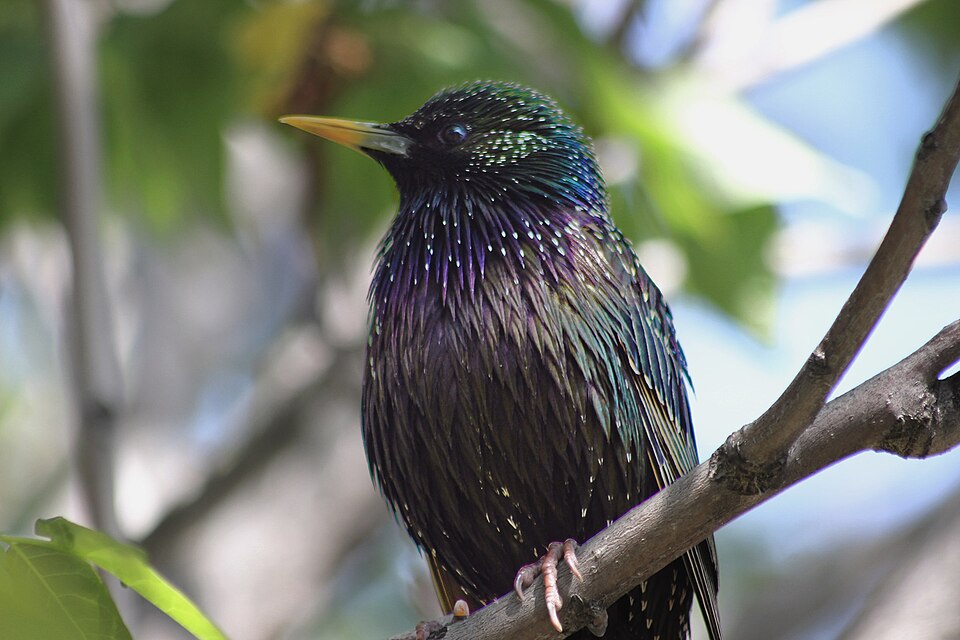 Spreeuw
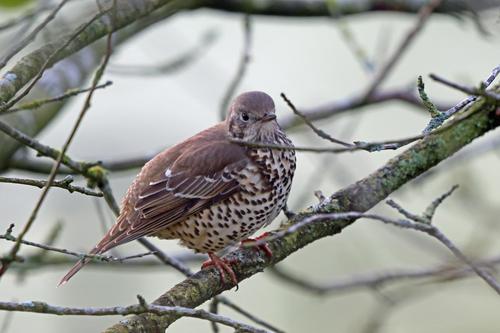 Grote lijster
Kort gezegd
Het meest betrouwbare veldkenmerk om de Spreeuw van de Grote lijster te scheiden, is de algehele verenkleed en structuur: spreeuwen zijn compact, kortstaartig en iriserend zwart met seizoensgebonden witte spikkels, terwijl grote lijsters veel groter, langstaartig en licht van onderen zijn met gedurfde, ronde zwarte vlekken. Juveniele spreeuwen zijn eenvoudig bruin-grijs en missen de gevlekte onderzijde van de lijster, maar zelfs onvolwassen vogels tonen een kortere staart en meer puntige vleugels in de vlucht. Spreeuwen hebben een scherpe, mesachtige snavel en roze poten, terwijl grote lijsters een meer typische lijstervorm, rechtopstaande houding en geelbruin poten hebben. In de vlucht lijken spreeuwen donker en driehoekig van vleugels, vaak in strakke groepen, terwijl grote lijsters lichte ondervleugels tonen en een stuiterende, golvende vlucht.
Herkenningstips
- Grootte en vorm: Grote lijster is veel groter, robuuster en langstaartiger dan Spreeuw. Als beide aanwezig zijn, is het verschil opvallend; spreeuwen lijken compact en kortstaartig in vergelijking. Grootte alleen is niet altijd betrouwbaar op afstand, maar de rechtopstaande houding en lange staart van de lijster zijn goede aanwijzingen.
- Snavel: Spreeuwen hebben een scherpe, mesachtige snavel die in het broedseizoen geel is en in de winter donker; grote lijsters hebben een meer typische lijstersnavel, zwartachtig met een geelachtige basis, nooit felgeel. De kleur van de snavel is het nuttigst in de lente/zomer.
- Pootkleur: Spreeuwen hebben roze of grijsachtig-rode poten, vooral in het broedseizoen; grote lijsters hebben geelbruin poten. Dit is subtiel maar kan helpen op korte afstand.
- Verenkleed (volwassen, winter): Spreeuwen zijn glanzend zwart met uitgebreide witte spikkeling, vooral op de borst en flanken. Grote lijsters zijn licht van onderen met gedurfde, ronde zwarte vlekken en een geelachtig-buffe borst. De lijster toont nooit iridescentie of uniform donker verenkleed.
- Verenkleed (volwassen, broed): Spreeuwen verliezen de meeste witte vlekken en worden meer uniform glanzend zwartachtig met een metallic glans, terwijl grote lijsters licht blijven en zwaar gevlekt zijn van onderen.
- Juveniel/eerste winter: Juveniele spreeuwen zijn eenvoudig grijs-bruin, zonder vlekken van onderen, terwijl juvenile grote lijsters lichtere bovenkanten hebben met romige veercentra en altijd minstens enige vlekken op de onderzijde tonen. Tegen de eerste winter kunnen spreeuwen wat bruin op het hoofd behouden, maar tonen nooit de gedurfde vlekken van de lijster.
- Vlucht silhouet: Spreeuwen hebben korte staarten en sterk puntige, driehoekige vleugels, wat een compacte, donkere uitstraling in de vlucht geeft. Grote lijsters tonen lange staarten met witte buitenste punten, brede vleugels en een lichtere, gemusterde uitstraling. De vlucht van de lijster is golvend en stuiterend, terwijl spreeuwen sterk en recht vliegen.
- Groepsgedrag: Spreeuwen komen vaak voor in dichte, gesynchroniseerde groepen die in unisono draaien en draaien, vooral in de winter. Grote lijsters zijn meer solitair of in losse groepen, zelden vormend in strakke groepen.
- Houding: Op de grond staan grote lijsters rechtop en hoppen, terwijl spreeuwen lopen of rennen met een meer horizontale, waggelen gang.
- Onderwing patroon: In de vlucht tonen grote lijsters witte ondervleugelbedekking en een lichte uitstraling; spreeuwen lijken donker van onderen, zonder sterke ondervleugelcontrast.
- Staart patroon: Grote lijsters hebben witte punten op de buitenste staartveren, zichtbaar in de vlucht en soms wanneer ze zitten. Spreeuwen hebben een korte, donkere staart zonder witte punten.
- Geslachtsverschillen: Spreeuwen kunnen geslacht worden op basis van iris kleur en snavelbasis kleur in het broedseizoen, maar dit is subtiel en niet nuttig voor het scheiden van de grote lijster.
- Seizoenscontext: In de winter worden spreeuwen waarschijnlijker gezien in grote, dichte groepen, terwijl grote lijsters zich kunnen verzamelen in losse groepen maar zelden zo talrijk of gesynchroniseerd zijn.
- Habitat: Spreeuwen zijn algemeen in stedelijke/suburbane omgevingen en op gazons; grote lijsters geven de voorkeur aan open bos, parkland, en grotere tuinen met volwassen bomen.
- Vocalisaties: Niet diagnostisch uit de gegeven notities, maar in de praktijk zijn spreeuwen zeer vocaal met een breed scala aan fluiten en klikken, terwijl grote lijsters een luide, fluitende zang en harde ratelende roepen hebben.
Grootte
Grote lijster is substantially larger: 27–28 cm in length with a 45 cm wingspan and average weight around 130 g [wikipedia], compared to Spreeuw's 19–23 cm length, 31–44 cm wingspan, and 58–101 g weight [wikipedia, avonet]. The thrush is not only longer but also bulkier and more robust, with a notably longer tail. Starlings are mid-sized among passerines, but look noticeably smaller and more compact next to a Grote lijster.
Verenkleed
- Juvenile/First-winter: Juvenile Common Starlings are uniform grey-brown without spots, sometimes retaining brown on the head into first winter, while juvenile Mistle Thrushes are paler above with creamy 'teardrop' feather centers and smaller, but still present, round spots on yellowish underparts [wikipedia]. By first winter, mistle thrushes are similar to adults but with more buffy underparts, always showing spots below. Starlings never show the thrush's bold spotting at any age.
- Adult non-breeding (winter): Starlings are glossy black with a metallic sheen, heavily speckled with white, especially on the breast and flanks. Mistle Thrushes are pale grey-brown above, yellowish-buff on the breast, off-white on the belly, and marked with round black spots that are densest on the lower chest. The thrush's underparts are always pale and spotted, never iridescent or uniform.
- Adult breeding (spring/summer): Starlings lose much of their white spotting as feather tips wear off, becoming more uniformly glossy blackish with purple or green gloss. Mistle Thrushes retain their pale, spotted underparts year-round. Starlings' bills turn yellow (with blue-grey base in males, pink in females), while mistle thrushes' bills remain blackish with a yellowish base.
- Flight: Starlings show strongly pointed, triangular wings and a short tail, appearing dark overall. Mistle Thrushes show a long tail with white outer tips, white underwing coverts, and a paler, more patterned appearance in flight.
Gedrag
Spreeuwen lopen of rennen op de grond met een enigszins waggelen gang, vaak foeragerend in dichte, gesynchroniseerde groepen die opstijgen en in strakke formaties draaien. Hun vlucht is snel, direct en afgewisseld met korte glijvluchten, waarbij de hele groep als één beweegt. Grote lijsters zijn meer solitair of in paren gedurende het grootste deel van het jaar, soms vormend in losse groepen in de late zomer of herfst. Ze hoppen op de grond met een rechtopstaande, alerte houding, waarbij ze hun vleugels en staart flicken wanneer ze opgewonden zijn. Hun vlucht is golvend, met stuiteren afgewisseld met glijvluchten, en ze vormen niet de strakke, draaiende groepen die typisch zijn voor spreeuwen.
Habitat
Beide soorten kunnen worden aangetroffen in open land, parken en tuinen, maar spreeuwen worden sterker geassocieerd met stedelijke en suburbane gebieden, vaak gezien in grote groepen op gazons of draden. Grote lijsters worden vaker aangetroffen in open bossen, parkland en grotere tuinen, vooral waar er volwassen bomen zijn. In de winter kunnen grote lijsters zich aansluiten bij losse groepen in open velden, maar bereiken zelden de dichte concentraties die typisch zijn voor spreeuwen.