

Storno vs Tordela
Sturnus vulgaris contro Turdus viscivorus
Fai un quiz con Storno e Tordela
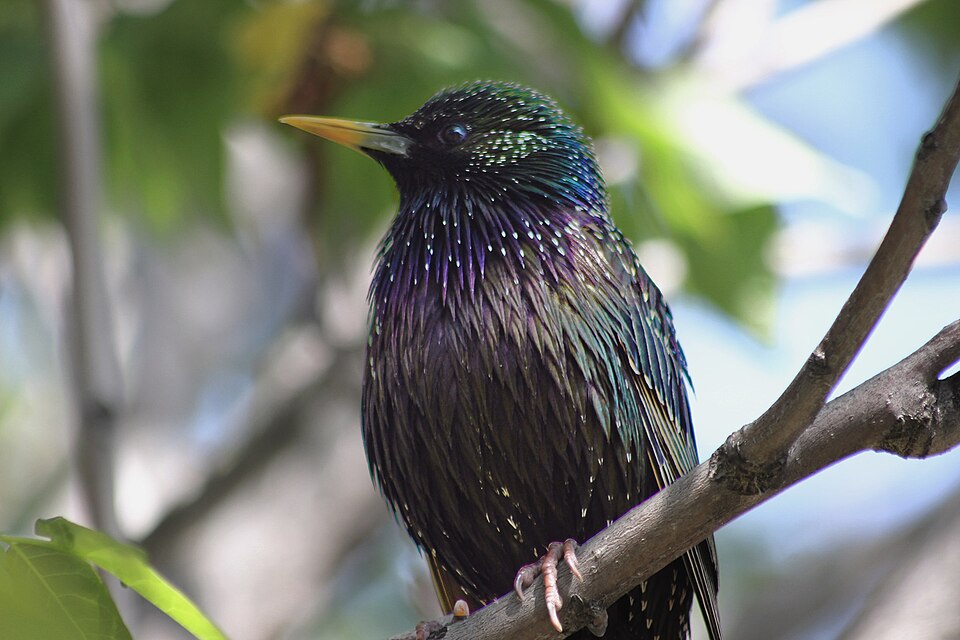 Storno
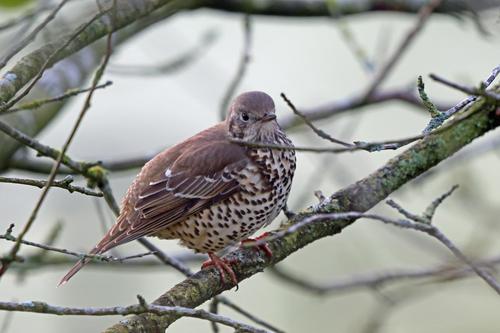 Tordela
In breve
Il segno distintivo più affidabile per separare lo Storno dalla Tordela è il piumaggio e la struttura complessivi: gli storni sono compatti, con la coda corta e di un nero iridescente con macchie bianche stagionali, mentre le tordele sono molto più grandi, con la coda lunga e chiare sotto con macchie nere rotonde e audaci. Gli storni giovani sono di un grigio-bruno uniforme e mancano delle parti inferiori macchiate della tordela, ma anche gli immaturi mostrano una coda più corta e ali più appuntite in volo. Gli storni hanno un becco affilato, simile a una lama, e gambe rossastre, mentre le tordele hanno una forma più tipica di tordo, una postura eretta e gambe giallo-brune. In volo, gli storni appaiono scuri e con ali triangolari, spesso in stormi compatti, mentre le tordele mostrano ali inferiori chiare e un volo ondulato e rimbalzante.
Consigli di identificazione
- Dimensione e forma: La Tordela è molto più grande, più robusta e con la coda più lunga rispetto allo Storno. Se entrambi sono presenti, la differenza è notevole; gli storni sembrano compatti e con la coda corta in confronto. La dimensione da sola non è sempre affidabile a distanza, ma la postura eretta e la coda lunga del tordo sono buoni indizi.
- Becco: Gli storni hanno un becco affilato, simile a una lama, che è giallo durante la stagione di riproduzione e scuro in inverno; le tordele hanno un becco più tipico da tordo, nerastro con una base giallastra, mai giallo brillante. Il colore del becco è più utile in primavera/estate.
- Colore delle gambe: Gli storni mostrano gambe rossastre o grigio-rossastre, specialmente durante la stagione di riproduzione; le tordele hanno gambe giallo-brune. Questo è sottile ma può aiutare a distanza ravvicinata.
- Piumaggio (adulto, inverno): Gli storni sono neri lucidi con ampie macchie bianche, specialmente sul petto e sui fianchi. Le Tordele sono chiare sotto con macchie nere rotonde e audaci e un petto giallo-bruno. Il tordo non mostra mai iridescenza o piumaggio scuro uniforme.
- Piumaggio (adulto, riproduzione): Gli storni perdono la maggior parte delle macchie bianche e diventano più uniformemente neri lucidi con una lucentezza metallica, mentre le tordele rimangono chiare e pesantemente macchiate sotto.
- Giovane/primo inverno: Gli storni giovani sono di un grigio-bruno uniforme, privi di macchie sotto, mentre le tordele giovani hanno parti superiori più chiare con centri di piume color crema e mostrano sempre almeno alcune macchie sulle parti inferiori. Entro il primo inverno, gli storni possono mantenere un po' di marrone sulla testa ma non mostrano mai le audaci macchie del tordo.
- Silhouette in volo: Gli storni hanno code corte e ali triangolari fortemente appuntite, dando un aspetto compatto e scuro in volo. Le Tordele mostrano code lunghe con punte bianche esterne, ali larghe e un aspetto più chiaro e patternato. Il volo del tordo è ondulato e rimbalzante, mentre gli storni volano in modo forte e diretto.
- Comportamento di stormo: Gli storni si trovano spesso in stormi densi e sincronizzati che ruotano e si muovono all'unisono, specialmente in inverno. Le Tordele sono più solitarie o in gruppi sciolti, raramente formando stormi compatti.
- Postura: A terra, le tordele stanno erette e saltellano, mentre gli storni camminano o corrono con una andatura più orizzontale e ondeggiante.
- Pattern delle ali inferiori: In volo, le tordele mostrano copritrici delle ali inferiori bianche e un aspetto chiaro; gli storni appaiono scuri sotto, privi di un forte contrasto delle ali inferiori.
- Pattern della coda: Le Tordele hanno punte bianche sulle piume esterne della coda, visibili in volo e a volte quando sono appollaiate. Gli storni hanno una coda corta e scura senza punte bianche.
- Differenze sessuali: Gli storni possono essere sessati dal colore dell'iride e dal colore della base del becco durante la stagione di riproduzione, ma questo è sottile e non utile per separare dalla tordela.
- Contesto stagionale: In inverno, gli storni sono più propensi a essere visti in grandi stormi densi, mentre le tordele possono radunarsi in gruppi sciolti ma raramente sono così numerose o sincronizzate.
- Habitat: Gli storni sono comuni in ambienti urbani/suburbani e sui prati; le tordele preferiscono boschi aperti, parchi e giardini più grandi con alberi maturi.
- Vocalizzazioni: Non diagnostico dalle note fornite, ma in pratica, gli storni sono molto vocali con una vasta gamma di fischi e clic, mentre le tordele hanno un canto forte e flautato e richiami aspri.
Taglia
Tordela is substantially larger: 27–28 cm in length with a 45 cm wingspan and average weight around 130 g [wikipedia], compared to Storno's 19–23 cm length, 31–44 cm wingspan, and 58–101 g weight [wikipedia, avonet]. The thrush is not only longer but also bulkier and more robust, with a notably longer tail. Starlings are mid-sized among passerines, but look noticeably smaller and more compact next to a Tordela.
Piumaggio
- Juvenile/First-winter: Juvenile Common Starlings are uniform grey-brown without spots, sometimes retaining brown on the head into first winter, while juvenile Mistle Thrushes are paler above with creamy 'teardrop' feather centers and smaller, but still present, round spots on yellowish underparts [wikipedia]. By first winter, mistle thrushes are similar to adults but with more buffy underparts, always showing spots below. Starlings never show the thrush's bold spotting at any age.
- Adult non-breeding (winter): Starlings are glossy black with a metallic sheen, heavily speckled with white, especially on the breast and flanks. Mistle Thrushes are pale grey-brown above, yellowish-buff on the breast, off-white on the belly, and marked with round black spots that are densest on the lower chest. The thrush's underparts are always pale and spotted, never iridescent or uniform.
- Adult breeding (spring/summer): Starlings lose much of their white spotting as feather tips wear off, becoming more uniformly glossy blackish with purple or green gloss. Mistle Thrushes retain their pale, spotted underparts year-round. Starlings' bills turn yellow (with blue-grey base in males, pink in females), while mistle thrushes' bills remain blackish with a yellowish base.
- Flight: Starlings show strongly pointed, triangular wings and a short tail, appearing dark overall. Mistle Thrushes show a long tail with white outer tips, white underwing coverts, and a paler, more patterned appearance in flight.
Comportamento
Gli storni camminano o corrono a terra con una andatura un po' ondeggiante, spesso cercando cibo in stormi densi e sincronizzati che decollano e ruotano in formazioni serrate. Il loro volo è rapido, diretto e intercalato da brevi planate, con l'intero stormo che si muove come uno. Le Tordele sono più solitarie o in coppie per la maggior parte dell'anno, a volte formando stormi sciolti in tarda estate o autunno. Saltellano a terra con una postura eretta e allerta, muovendo ali e coda quando sono agitate. Il loro volo è ondulato, con rimbalzi intervallati da planate, e non formano gli stormi serrati e vorticosi tipici degli storni.
Habitat
Entrambe le specie possono essere trovate in campagna aperta, parchi e giardini, ma gli storni sono più fortemente associati ad aree urbane e suburbane, spesso visti in grandi stormi su prati o fili. Le Tordele si trovano più spesso in boschi aperti, parchi e giardini più grandi, specialmente dove ci sono alberi maturi. In inverno, le tordele possono unirsi a stormi sciolti in campi aperti, ma raramente raggiungono le concentrazioni dense tipiche degli storni.