

Simeonmeeuw vs Japanse meeuw
Larus belcheri versus Larus crassirostris
Speel een quiz met Simeonmeeuw en Japanse meeuw
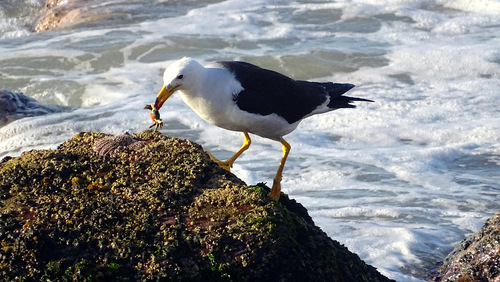 Simeonmeeuw
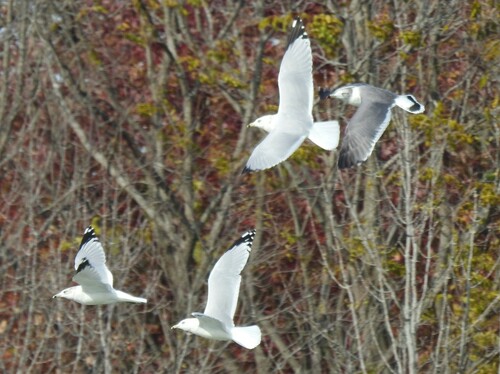 Japanse meeuw
Kort gezegd
Het meest betrouwbare veldkenmerk om de Simeonmeeuw van de Japanse meeuw te scheiden, is het staartpatroon: volwassen Simeonmeeuw toont een brede zwarte subterminale band op een anders witte staart, terwijl de Japanse meeuw een zwarte staart heeft met een witte terminale rand. In de vlucht is dit staartpatroon vaak zichtbaar, zelfs op afstand. Beide soorten hebben gele poten en een gele snavel met rode en zwarte markeringen aan de punt, maar subtiele verschillen in mantelkleur, koppatroon (vooral buiten het broedseizoen) en grootte kunnen helpen. Onvolwassen verenkleed is uitdagend, maar de staart- en vleugelpatronen blijven de beste aanwijzingen. Habitat en verspreiding zijn ook sterke scheidingselementen, aangezien deze soorten niet natuurlijk overlappen.
Herkenningstips
- Staartpatroon in vlucht (alle leeftijden): Zoek naar een brede zwarte subterminale band op een grotendeels witte staart (Simeonmeeuw) versus een zwarte staart met een witte terminale rand (Japanse meeuw). Dit is het meest nuttige veldkenmerk.
- Mantel- en rugkleur (volwassenen): Simeonmeeuw heeft een donkere, grijsachtige zwarte mantel en rug, terwijl de mantel van de Japanse meeuw niet als bijzonder donker wordt beschreven. Vergelijk als beide aanwezig zijn.
- Snavelpuntpatroon (volwassenen en onvolwassenen): Simeonmeeuw heeft een gele snavel met een duidelijke rode en zwarte punt in alle verenkleden, behalve bij verse juvenielen; de Japanse meeuw heeft ook een gele snavel met rood en zwart aan het einde, maar het patroon kan minder scherp gedefinieerd zijn. Gebruik met voorzichtigheid bij onvolwassenen.
- Koppatroon in niet-broedseizoen: Simeonmeeuw ontwikkelt een donkerbruine kop met een witte oogring, terwijl de kop van de Japanse meeuw het hele jaar door wit blijft. Dit is een sterke seizoensgebonden aanwijzing.
- Pootkleur: Beide soorten hebben gele poten, dus dit is geen scheidingselement.
- Oogkleur: Simeonmeeuw heeft een zwart oog; de oogkleur van de Japanse meeuw is niet gespecificeerd, maar is geen primair kenmerk.
- Juveniele/onvolwassen bovenvleugelpatroon: Niet volledig beschreven voor de Japanse meeuw, maar als je een gevlekte bruine en witte vogel ziet met een sterke zwarte staartband, is de Simeonmeeuw waarschijnlijker. Gebruik het staartpatroon als primair.
- Grootte en structuur: Simeonmeeuw is iets groter en zwaarder, maar dit is niet betrouwbaar tenzij beide soorten samen zijn.
- Gedrag: Als je een meeuw ziet die aalscholvers lastigvalt voor voedsel, is de Simeonmeeuw waarschijnlijker. De Japanse meeuw volgt vaker boten en gedraagt zich tam rond mensen.
- Vocalisatie: Een kat-achtige 'mew' roep is diagnostisch voor de Japanse meeuw.
- Habitat en verspreiding: Simeonmeeuw komt alleen voor aan de Pacifische kust van Zuid-Amerika; de Japanse meeuw komt alleen voor in Oost-Azië. Waarnemingen buiten het bereik zijn uitzonderlijk.
- Kolonie grootte/context: De Japanse meeuw nestelt vaak in zeer grote, dichte kolonies, vooral in Japan en Korea. Simeonmeeuw kolonies zijn kleiner (tot 100 paren).
- Seizoenscontext: Als je een donkerkopmeeuw met een witte oogring buiten het broedseizoen ziet, vermoed dan Simeonmeeuw. Als de kop altijd wit is, vermoed dan Japanse meeuw.
- Associatie met aalscholvers: Simeonmeeuw wordt vaak gezien met Guanay aalscholvers, soms voedsel steelt.
- Controleer op zwerfvogels: Als je buiten het normale bereik van een van beide soorten bent, controleer dan alle veldkenmerken en overweeg de mogelijkheid van een zeldzame zwerfvogel, maar ga uit van de verwachte soort.
Grootte
Beide zijn middelgrote meeuwen, maar de Simeonmeeuw is iets groter in lengte (48–54 cm) vergeleken met de Japanse meeuw (46 cm), hoewel de Japanse meeuw een iets bredere vleugelspanwijdte heeft (126–128 cm versus ongeveer 120 cm voor de Simeonmeeuw). De gemiddelde lichaamsmassa van de Japanse meeuw is ongeveer 556,5 g. In het veld is het grootteverschil subtiel en geen betrouwbare scheiding, tenzij beide soorten naast elkaar staan. De seksen zijn vergelijkbaar in beide, hoewel mannelijke Japanse meeuwen iets groter zijn dan vrouwelijke.
Verenkleed
- Juveniele en onvolwassen verenkleden: Beide soorten hebben meerdere jaren nodig om volwassen verenkleed te bereiken (Simeonmeeuw in drie, Japanse meeuw in vier). Juveniele Simeonmeeuw is gevlekt bruin en wit, terwijl het onvolwassen verenkleed van de Japanse meeuw hier niet in detail wordt beschreven, maar beide zullen het schone volwassen staartpatroon missen. De aanwezigheid van een sterke zwarte staartband (Simeonmeeuw) versus een meer extensief zwarte staart met een witte punt (Japanse meeuw) kan nog steeds nuttig zijn bij oudere onvolwassenen.
- Volwassen broedverenkleed: Simeonmeeuw heeft een witte kop, zeer lichte grijze nek, witte onderdelen en een donker grijsachtig zwarte mantel en rug. De staart is wit met een brede zwarte subterminale band en een witte achterrand. De Japanse meeuw heeft een vergelijkbare witte kop en onderdelen, maar de staart is zwart met een witte terminale rand. Beide hebben gele poten en een gele snavel met een rode en zwarte vlek aan de punt, maar de snavelpunt van de Simeonmeeuw is duidelijker rood en zwart, terwijl die van de Japanse meeuw rood en zwart aan het einde is.
- Niet-broedverenkleed: Simeonmeeuw ontwikkelt een donkerbruine kop met een witte oogring, terwijl de Japanse meeuw een witte kop behoudt.
Gedrag
Beide soorten zijn omnivoor en opportunistisch, voeden zich met vis, weekdieren, schaaldieren en aas. Simeonmeeuw staat bekend om het lastigvallen van aalscholvers voor teruggebrachte prooien, terwijl de Japanse meeuw vaak schepen en visserijvloten volgt en in sommige gebieden zeer tam is. Beide nestelen koloniaal, maar de Japanse meeuw is vooral bekend om grote, dichte kolonies op traditionele locaties in Japan en Korea. In het veld is gedrag geen sterk scheidingselement, tenzij je de unieke kleptoparasitaire gewoonten van de Simeonmeeuw met aalscholvers observeert.
Habitat
De Simeonmeeuw is strikt kustgebonden langs de Pacifische kust van Zuid-Amerika, geeft de voorkeur aan rotsachtige kusten, baaien en offshore-eilanden, en waagt zich zelden ver het binnenland in. De Japanse meeuw is inheems aan de kustlijnen van Oost-Azië, broedt op eilanden en kusten van Japan, Korea en nabijgelegen gebieden, en is zeer zeldzaam buiten dit bereik. Als je buiten deze gebieden bent, is zwerfvogels mogelijk maar uiterst onwaarschijnlijk. Habitat alleen kan vaak verwarring uitsluiten, tenzij je een zwerfvogel observeert.
Geluid
De Japanse meeuw is beroemd om zijn kat-achtige 'mew' roep, die onderscheidend is en vaak te horen is, vooral bij kolonies. De vocalisaties van de Simeonmeeuw worden hier niet in detail beschreven, maar worden niet als kat-achtig genoteerd. Als je een herhaald, nasaal gemiauw hoort, is de Japanse meeuw waarschijnlijk.