

Motmot

ペルーカモメ 対 ウミネコ

Larus belcheri 対 Larus crassirostris

ペルーカモメとウミネコのクイズ
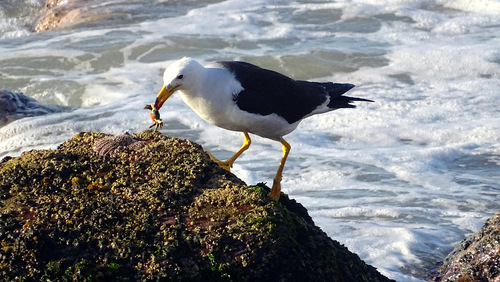
ペルーカモメ (Larus belcheri) ペルーカモメ
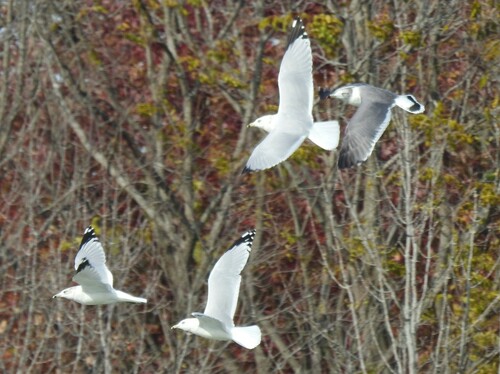
ウミネコ (Larus crassirostris) ウミネコ

メディア

読み込み中…

要点

ペルーカモメとウミネコを区別する最も信頼できるフィールドマークは尾のパターンです:成鳥のペルーカモメは、その他は白い尾に広い黒い亜端帯を示し、ウミネコは白い端のある黒い尾を持っています。飛行中、この尾のパターンは距離があってもよく見えます。両種は黄色い脚と先端に赤と黒の模様がある黄色いくちばしを持っていますが、背中の色、頭のパターン(特に繁殖期以外)、およびサイズの微妙な違いが役立ちます。未熟な羽毛は難しいですが、尾と翼のパターンが最良の手がかりです。生息地と範囲も強力な区別要因であり、これらの種は自然に重なりません。

識別のコツ

  1. Tail pattern in flight (all ages): 主に白い尾に広い黒い亜端帯(ペルーカモメ)と白い端のある黒い尾(ウミネコ)を探してください。これは最も有用なフィールドマークです。
  2. Mantle and back color (adults): ペルーカモメは暗い灰色がかった黒の背中を持ち、ウミネコの背中は特に暗いとは記述されていません。両方が存在する場合は比較してください。
  3. Bill tip pattern (adults and immatures): ペルーカモメはすべての羽毛で明確な赤と黒の先端を持つ黄色いくちばしを持ち、フレッシュな幼鳥を除きます。ウミネコも先端に赤と黒のある黄色いくちばしを持っていますが、パターンはあまりはっきりしていない場合があります。未熟な個体では注意して使用してください。
  4. Head pattern in non-breeding season: ペルーカモメは白いアイリングのある暗い茶色の頭を発達させ、ウミネコの頭は年間を通じて白のままです。これは強力な季節的手がかりです。
  5. Leg color: 両種は黄色い脚を持っているため、これは区別要因ではありません。
  6. Eye color: ペルーカモメは黒い目を持ち、ウミネコの目の色は指定されていませんが、主要なマークではありません。
  7. Juvenile/immature upperwing pattern: ウミネコについては完全には記述されていませんが、強い黒い尾帯を持つまだらの茶色と白の鳥を見た場合、ペルーカモメの可能性が高いです。尾のパターンを主な手がかりとして使用してください。
  8. Size and structure: ペルーカモメはわずかに大きくて重いですが、両種が一緒にいる場合でない限り、これは信頼できるものではありません。
  9. Behavior: 食べ物を求めてカワウにちょっかいを出しているカモメを見た場合、ペルーカモメの可能性が高いです。ウミネコはボートを追いかけたり、人間の周りでおとなしく行動することが多いです。
  10. Vocalization: ウミネコの診断的な鳴き声は猫のような「ミュー」という呼び声です。
  11. Habitat and range: ペルーカモメは南アメリカの太平洋沿岸にのみ生息し、ウミネコは東アジアにのみ生息します。範囲外の記録は例外的です。
  12. Colony size/context: ウミネコは特に日本と韓国で非常に大きく密集したコロニーを作ることが多いです。ペルーカモメのコロニーは小さく(最大100ペア)なります。
  13. Seasonal context: 繁殖期以外に白いアイリングのある暗い頭のカモメを見た場合、ペルーカモメを疑ってください。頭が常に白い場合はウミネコを疑ってください。
  14. Association with cormorants: ペルーカモメはグアナイカワウと一緒に見られることが多く、時には食べ物を盗むこともあります。
  15. Check for vagrancy: どちらの種の通常の範囲外にいる場合は、すべてのフィールドマークを再確認し、珍しい迷鳥の可能性を考慮してくださいが、期待される種に戻ってください。

大きさ

両方は中型のカモメですが、ペルーカモメはウミネコ(46 cm)に比べてわずかに長さが大きい(48–54 cm)ですが、ウミネコはわずかに広い翼幅(126–128 cm対ペルーカモメの約120 cm)を持っています。ウミネコの平均体重は約556.5 gです。フィールドでは、サイズの違いは微妙であり、両種が並んでいない限り信頼できる区別要因ではありません。両方の性別は似ていますが、オスのウミネコはメスよりわずかに大きいです。

羽色

行動

両種は雑食性で機会主義的であり、魚、軟体動物、甲殻類、死肉を食べます。ペルーカモメはカワウから再生された獲物を求めてちょっかいを出すことで知られ、ウミネコは船や漁船を追いかけることが多く、一部の地域では非常におとなしいです。両方ともコロニーで巣を作りますが、ウミネコは特に日本と韓国の伝統的な場所で大きく密集したコロニーで知られています。フィールドでは、ペルーカモメのカワウとの独特な盗み食いの習慣を観察しない限り、行動は強力な区別要因ではありません。

生息環境

ペルーカモメは南アメリカの太平洋沿岸に厳密に生息し、岩の多い海岸、湾、沖の島を好み、めったに内陸に入ることはありません。ウミネコは東アジアの海岸に生息し、日本、韓国、近隣地域の島や海岸で繁殖し、この範囲外では非常に珍しいです。これらの地域の外にいる場合、迷鳥の可能性はありますが、非常にありそうにありません。生息地だけで混乱を排除できることが多いですが、迷鳥を観察している場合は除きます。

声

ウミネコは猫のような「ミュー」という呼び声で有名で、これは特徴的で頻繁に聞かれ、特にコロニーでよく聞かれます。ペルーカモメの鳴き声はここでは詳細に記述されていませんが、猫のようなものとしては記載されていません。繰り返しの鼻にかかった鳴き声を聞いた場合、ウミネコの可能性があります。

より良い説明を送る

比較と同じ項目を使ってください。文章はすぐに公開されます。

The most reliable field mark to separate Belcher's Gull from Black-tailed Gull is the tail pattern: adult Belcher's shows a broad black subterminal band on an otherwise white tail, while Black-tailed Gull has a black tail with a white terminal edge. In flight, this tail pattern is often visible even at a distance. Both species have yellow legs and a yellow bill with red and black markings at the tip, but subtle differences in mantle color, head pattern (especially outside breeding season), and size can help. Immature plumages are challenging, but the tail and wing patterns remain the best clues. Habitat and range are also strong separators, as these species do not overlap naturally.

  1. Tail pattern in flight (all ages): Look for a broad black subterminal band on a mostly white tail (Belcher's) versus a black tail with a white terminal edge (Black-tailed). This is the single most useful field mark.
  2. Mantle and back color (adults): Belcher's has a darker, greyish-black mantle and back, while Black-tailed Gull's mantle is not described as particularly dark. Compare if both are present.
  3. Bill tip pattern (adults and immatures): Belcher's has a yellow bill with a distinct red and black tip in all plumages except fresh juvenile; Black-tailed Gull also has a yellow bill with red and black at the end, but the pattern may be less sharply defined. Use with caution in immatures.
  4. Head pattern in non-breeding season: Belcher's develops a dark brown head with a white eye-ring, while Black-tailed Gull's head remains white year-round. This is a strong seasonal clue.
  5. Leg color: Both species have yellow legs, so this is not a separator.
  6. Eye color: Belcher's has a black eye; Black-tailed Gull's eye color is not specified but is not a primary mark.
  7. Juvenile/immature upperwing pattern: Not fully described for Black-tailed, but if you see a mottled brown and white bird with a strong black tail band, Belcher's is more likely. Use tail pattern as primary.
  8. Size and structure: Belcher's is slightly larger and heavier, but this is not reliable unless both species are together.
  9. Behavior: If you see a gull pestering cormorants for food, Belcher's is more likely. Black-tailed is more likely to follow boats and act tame around humans.
  10. Vocalization: A cat-like 'mew' call is diagnostic for Black-tailed Gull.
  11. Habitat and range: Belcher's is only on the Pacific coast of South America; Black-tailed is only in East Asia. Out-of-range records are exceptional.
  12. Colony size/context: Black-tailed Gull often nests in very large, dense colonies, especially in Japan and Korea. Belcher's colonies are smaller (up to 100 pairs).
  13. Seasonal context: If you see a dark-headed gull with a white eye-ring outside the breeding season, suspect Belcher's. If the head is always white, suspect Black-tailed.
  14. Association with cormorants: Belcher's is often seen with Guanay cormorants, sometimes stealing food.
  15. Check for vagrancy: If you are outside the normal range of either species, double-check all field marks and consider the possibility of a rare vagrant, but default to the expected species.

Both are medium-sized gulls, but Belcher's Gull is slightly larger in length (48–54 cm) compared to Black-tailed Gull (46 cm), though Black-tailed Gull has a slightly broader wingspan (126–128 cm vs. about 120 cm for Belcher's). Black-tailed Gull's average body mass is around 556.5 g. In the field, size difference is subtle and not a reliable separator unless both species are side by side. Sexes are similar in both, though male Black-tailed Gulls are slightly larger than females.

  • Juvenile and immature plumages: Both species take several years to reach adult plumage (Belcher's in three, Black-tailed in four). Juvenile Belcher's is mottled brown and white, while Black-tailed Gull's immature plumage is not described in detail here, but both will lack the clean adult tail pattern. However, the presence of a strong black tail band (Belcher's) versus a more extensively black tail with a white tip (Black-tailed) can still be helpful in older immatures.
  • Adult breeding plumage: Belcher's has a white head, very pale grey neck, white underparts, and a dark greyish-black mantle and back. The tail is white with a broad black subterminal band and a white trailing edge. Black-tailed Gull has a similar white head and underparts, but the tail is black with a white terminal edge. Both have yellow legs and a yellow bill with a red and black spot at the tip, but Belcher's bill tip is more distinctly red and black, while Black-tailed's is red and black at the end.
  • Non-breeding plumage: Belcher's develops a dark brown head with a white eye-ring, while Black-tailed Gull retains a white head.

Both species are omnivorous and opportunistic, feeding on fish, molluscs, crustaceans, and carrion. Belcher's Gull is noted for pestering cormorants for regurgitated prey, while Black-tailed Gull often follows ships and fishing fleets and is very tame in some areas. Both nest colonially, but Black-tailed Gull is especially known for large, dense colonies at traditional sites in Japan and Korea. In the field, behavior is not a strong separator unless you observe Belcher's unique kleptoparasitic habits with cormorants.

Belcher's Gull is strictly coastal along the Pacific of South America, favoring rocky shores, bays, and offshore islands, rarely venturing far inland. Black-tailed Gull is native to East Asian shorelines, breeding on islands and coasts of Japan, Korea, and nearby regions, and is very rare outside this range. If you are outside these regions, vagrancy is possible but extremely unlikely. Habitat alone can often rule out confusion unless observing a vagrant.

Black-tailed Gull is famous for its cat-like 'mew' call, which is distinctive and frequently heard, especially at colonies. Belcher's Gull's vocalizations are not described in detail here, but are not noted as cat-like. If you hear a repeated, nasal mewing, Black-tailed Gull is likely.

変更を破棄しますか?

保存していない編集があります。今離れると失われます。

ペルーカモメ · ウミネコ · 苦手な鳥