

Bandstaartduif vs Oosterse tortel
Patagioenas fasciata versus Streptopelia orientalis
Speel een quiz met Bandstaartduif en Oosterse tortel
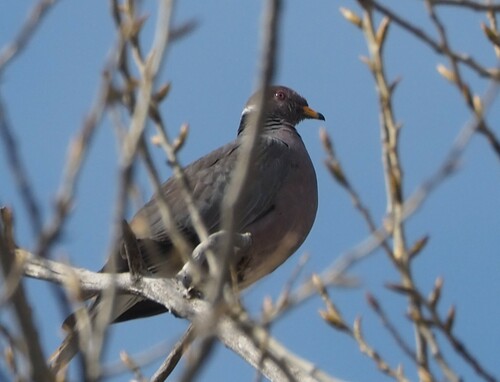 Bandstaartduif
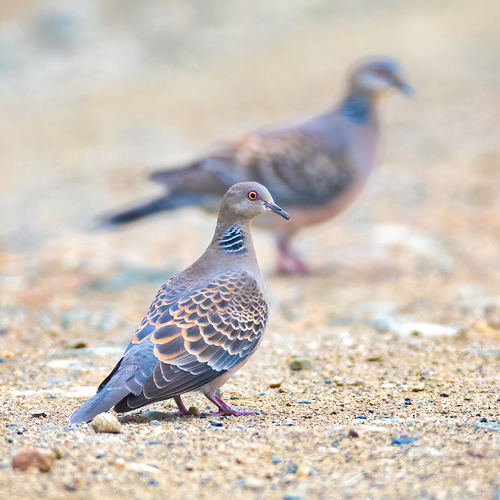 Oosterse tortel
Kort gezegd
Het meest betrouwbare veldkenmerk om de Bandstaartduif van de Oosterse tortel te scheiden, is de combinatie van de algehele structuur en belangrijke verenkleedkenmerken: de Bandstaartduif is een grote, stevige duif met een effen grijze lichaamskleur, een dunne witte kraag op de nek en een brede, lichtgekleurde staart met een donkere subterminal band. In tegenstelling tot de Oosterse tortel is de Bandstaartduif slanker, met een schubachtig patroon op de vleugelbedekking, een zwart-wit gestreepte vlek op de nek en een wigvormige staart met variabele maar vaak lichtere punten. Juveniele Bandstaartduiven missen de witte kraag en vertonen een schubachtige rug, wat verwarring kan veroorzaken, maar de meer roestkleurige tonen van de duif en de kenmerkende nekvlek zijn sterke aanwijzingen. De kleur van de snavel en poten (geel bij de Bandstaartduif, donker bij de tortel) kan de identificatie op korte afstand bevestigen.
Herkenningstips
- Algehele grootte en vorm: De Bandstaartduif is robuuster en langer dan de Oosterse tortel, met een dikkere nek en diepere borst. Als de vogel zwaar en groot lijkt, geef dan de voorkeur aan de Bandstaartduif.
- Staartvorm en patroon: De Bandstaartduif heeft een brede, afgeronde staart met een brede, lichte punt en een donkere subterminal band; de staart van de Oosterse tortel is wigvormig met een variabele lichte punt (wit of grijs) en minder duidelijke bandering. Dit is vooral zichtbaar in de vlucht of wanneer de staart is uitgespreid.
- Nekmarkeringen: Volwassen Bandstaartduiven tonen een dunne, complete witte kraag op de nek, omzoomd door groene iridescentie. De Oosterse tortel heeft een zwart-wit gestreepte vlek aan de zijkant van de nek, geen volledige kraag, en mist groene iridescentie.
- Vleugelbedekking: Oosterse tortels van alle leeftijden tonen donkergecentreerde, roestkleurige randen op de vleugelbedekking, wat een sterk schubachtig effect geeft. Juveniele Bandstaartduiven kunnen er schubachtig uitzien, maar het effect is lichter, minder roestkleurig en niet zo scherp gedefinieerd of uitgebreid als bij de tortel.
- Kleur van snavel en poten: De Bandstaartduif heeft een gele snavel en poten (met sommige ondersoorten die een zwarte punt op de snavel tonen), terwijl de Oosterse tortel een donkerder snavel en poten heeft. Dit is een belangrijke aanwijzing op korte afstand.
- Kleur van de borst: De borst van de Bandstaartduif is grijs met een lichte roze tint (vooral bij mannetjes); de borst van de Oosterse tortel is minder roze en neutraler.
- Hoofd en gezicht: De Bandstaartduif heeft een effen grijs hoofd; het hoofd van de Oosterse tortel is roestkleuriger, vooral bij sommige ondersoorten, en mist de eenvoud van de duif.
- Oogring: De Oosterse tortel mist een kale huidplek rond het oog, terwijl sommige verwante tortels dat wel hebben. De Bandstaartduif heeft ook geen prominente kale oogring, dus dit is geen sterke scheiding tussen deze twee.
- Vluchtstijl: De Bandstaartduif vliegt met sterke, directe vleugelslagen en lijkt zwaar; de vlucht van de Oosterse tortel is meer ontspannen en direct, met een slanker profiel.
- Juveniele verwarring: Juveniele Bandstaartduiven kunnen worden verward met de Oosterse tortel vanwege de schubachtige bovenzijde, maar controleer op de afwezigheid van een sterke roestkleurige toon en het ontbreken van een zwart-wit nekvlek.
- Geslacht/leeftijdseffecten: De roze borst van de Bandstaartduif is het meest uitgesproken bij volwassen mannetjes; vrouwtjes en juvenielen zijn doffer. De schubachtige vleugelbedekking van de Oosterse tortel is aanwezig bij alle leeftijden en geslachten.
- Context: Als je in de Amerika's bent, vooral in het westen van Noord-Amerika, is de Bandstaartduif veel waarschijnlijker; de Oosterse tortel is daar zeldzaam. In Azië, vooral in open bossen, wordt de Oosterse tortel verwacht.
- Variatie in ondersoorten: Sommige ondersoorten van de Oosterse tortel (bijv. erythrocephala) hebben een roodbruine kop zonder grijs op het voorhoofd of de kroon; de Bandstaartduif vertoont dit nooit.
- Staart in de vlucht: De lichte staartpunt en donkere band van de Bandstaartduif zijn van onderaf zichtbaar in de vlucht; de staart van de Oosterse tortel toont een wigvorm en minder contrast in de staartbandering.
- Habitat aanwijzingen: De Bandstaartduif wordt vaak gezien in associatie met eiken of fruitbomen in Noord-Amerika; de Oosterse tortel is algemener in beboste Aziatische habitats.
Grootte
De Bandstaartduif is opmerkelijk groter en robuuster, met een lengte van 33–40 cm en een gewicht van 226–460 g, met een spanwijdte van ongeveer 66 cm [wikipedia]. De Oosterse tortel is iets kleiner, ongeveer de grootte van een Turkse tortel, en lijkt slanker en minder zwaar. Hoewel beide grote duiven/tortels zijn, valt de grootte en stevige bouw van de Bandstaartduif op, vooral in directe vergelijking. De geslachten overlappen in grootte voor beide, maar de Bandstaartduif is gemiddeld zwaarder.
Verenkleed
- Juveniele/onvolwassen vogels: Juveniele Bandstaartduiven tonen lichte veerranden boven, wat een schubachtig uiterlijk creëert, en missen de witte nek kraag en nek iridescentie. Dit schubachtige effect kan oppervlakkig lijken op de vleugelbedekking van de Oosterse tortel, die altijd donkergecentreerd is met roestkleurige randen, wat een sterk schubachtig uiterlijk geeft in alle leeftijden. Echter, het schubachtige patroon van de tortel is uitgebreider en rijker van kleur, vooral op de vleugelbedekking, en is ook aanwezig bij volwassenen.
- Volwassenen: Volwassen Bandstaartduiven zijn over het algemeen effen grijs, met een lichte roze tint op de borst (sterker bij mannetjes), een dunne witte kraag op de nek, groene nek iridescentie, en een brede, lichte staartpunt met een donkere subterminal band. Volwassen Oosterse tortels hebben een zwart-wit gestreepte vlek aan de zijkant van de nek (geen volledige kraag), een minder roze borst, en een wigvormige staart met variabele lichte punten (wit of grijs, afhankelijk van de ondersoort), en een meer roestbruin, schubachtig uiterlijk van de vleugelbedekking. De tortel mist de groene nek iridescentie en de volledige witte kraag van de duif.
- Staart: De staart van de Bandstaartduif is breed en afgerond met een lichte punt en een duidelijke donkere band aan de basis van het lichte gebied. De staart van de Oosterse tortel is wigvormig, met de kleur van de terminale band (wit of grijs) en de hoeveelheid zwart in de buitenste staartveren variërend per ondersoort, maar toont nooit dezelfde brede lichte punt met een donkere subterminal band als de Bandstaartduif.
Gedrag
De Bandstaartduif lijkt vaak zwaar en doelbewust in de vlucht, met sterke, directe vleugelslagen en een dikgebouwde, puntige vleugelvorm. Hij zit rechtop en kan er behoorlijk groot en stevig uitzien. De Oosterse tortel heeft een meer ontspannen, directe vlucht, en lijkt slanker en wendbaarder zowel in de vlucht als wanneer hij zit. Tijdens de balts kan de tortel luid fladderen en glijden met uitgespreide staart, een gedrag dat niet is beschreven voor de Bandstaartduif.
Habitat
De Bandstaartduif is inheems in de Amerika's en wordt het vaakst aangetroffen in bossen, vooral die met eiken of fruitbomen, en soms in voorstedelijke gebieden met geschikte voedselbronnen. De Oosterse tortel is inheems in Azië en bezet een breed scala aan beboste habitats, van open bossen tot bosranden, en is waarschijnlijker te zien in een verscheidenheid aan beboste of semi-open habitats in zijn verspreidingsgebied. Hoewel beide gebruik kunnen maken van bos, is de Bandstaartduif meer verbonden met Noord-Amerikaanse eiken- en naaldbossen, en is de Oosterse tortel meer Aziatisch van context.