

Band-tailed Pigeon vs Tortora orientale
Patagioenas fasciata contro Streptopelia orientalis
Fai un quiz con Band-tailed Pigeon e Tortora orientale
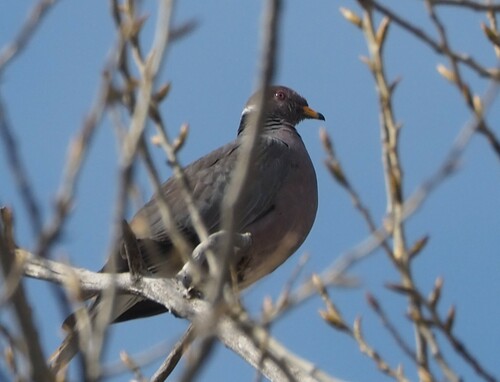 Band-tailed Pigeon
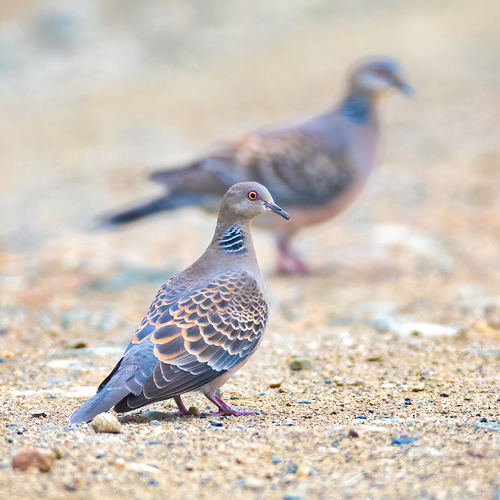 Tortora orientale
In breve
Il segno di campo più affidabile per separare il Band-tailed Pigeon dalla Tortora orientale è la combinazione di struttura generale e caratteristiche chiave del piumaggio: il Band-tailed Pigeon è un grande piccione robusto con un corpo grigio uniforme, un sottile collare bianco sulla nuca e una coda ampia con punte chiare e una banda subterminale scura. Al contrario, la Tortora orientale è più snella, con un motivo squamoso sulle copritrici delle ali, una macchia striata bianco-nera sul collo e una coda a forma di cuneo con punte variabili ma spesso più chiare. I giovani Band-tailed Pigeons mancano del collare bianco e mostrano un dorso squamoso, il che può causare confusione, ma i toni più rufous della tortora e la distintiva macchia sul collo sono indizi forti. Il colore del becco e delle zampe (giallo nel Band-tailed, scuro nella Tortora) possono confermare l'identificazione a distanza ravvicinata.
Consigli di identificazione
- Overall size and shape: Il Band-tailed Pigeon è più robusto e lungo della Tortora orientale, con un collo più spesso e un petto più profondo. Se l'uccello appare pesante e grande, preferisci il Band-tailed.
- Tail shape and pattern: Il Band-tailed Pigeon ha una coda ampia e arrotondata con una punta chiara e una banda subterminale scura; la coda della Tortora orientale è a forma di cuneo con una punta chiara variabile (bianca o grigia) e una banda meno distinta. Questo è particolarmente visibile in volo o quando la coda è aperta.
- Neck markings: L'adulto Band-tailed Pigeon mostra un sottile collare bianco completo sulla nuca, bordato da iridescenza verde. La Tortora orientale ha una macchia striata bianco-nera sul lato del collo, non un collare completo, e manca di iridescenza verde.
- Wing coverts: La Tortora orientale di tutte le età mostra copritrici delle ali scure al centro e con bordi rufous, dando un forte effetto squamoso. Il giovane Band-tailed Pigeon può sembrare squamoso sopra, ma l'effetto è più chiaro, meno rufous e non così nettamente definito o esteso come nella tortora.
- Bill and feet color: Il Band-tailed Pigeon ha un becco e zampe gialli (con alcune sottospecie che mostrano una punta nera sul becco), mentre la Tortora orientale ha un becco e zampe più scuri. Questo è un elemento decisivo a distanza ravvicinata.
- Breast color: Il petto del Band-tailed Pigeon è grigio con una leggera sfumatura rosata (soprattutto nei maschi); il petto della Tortora orientale è meno rosa e più neutro.
- Head and face: Il Band-tailed Pigeon ha una testa grigia uniforme; la testa della Tortora orientale è più rufous, soprattutto in alcune sottospecie, e manca della semplicità del piccione.
- Eye ring: La Tortora orientale manca di una macchia di pelle nuda attorno all'occhio, mentre alcune tortore correlate ce l'hanno. Anche il Band-tailed Pigeon non ha un anello oculare nudo prominente, quindi questo non è un forte separatore tra i due.
- Flight style: Il Band-tailed Pigeon vola con forti battiti d'ali diretti e appare pesante; il volo della Tortora orientale è più rilassato e diretto, con un profilo più snello.
- Juvenile confusion: Il giovane Band-tailed Pigeon può essere scambiato per la Tortora orientale a causa delle parti superiori squamose, ma controlla l'assenza di un forte tono rufous e la mancanza di una macchia sul collo bianco-nera.
- Sex/age effects: Il petto rosato del Band-tailed Pigeon è più pronunciato nei maschi adulti; le femmine e i giovani sono più opachi. Le copritrici delle ali squamose della Tortora orientale sono presenti in tutte le età e sessi.
- Context: Se nelle Americhe, soprattutto nel nord-ovest dell'America, il Band-tailed Pigeon è di gran lunga più probabile; la Tortora orientale è rara lì. In Asia, soprattutto nelle foreste aperte, ci si aspetta di vedere la Tortora orientale.
- Subspecies variation: Alcune sottospecie di Tortora orientale (ad es., erythrocephala) hanno una testa marrone-rossiccia senza grigio sulla fronte o sulla corona; il Band-tailed Pigeon non mostra mai questo.
- Tail in flight: La punta chiara della coda del Band-tailed Pigeon e la banda scura sono visibili dal basso in volo; la coda della Tortora orientale mostra una forma a cuneo e meno contrasto nella banda della coda.
- Habitat clues: Il Band-tailed Pigeon è spesso visto in associazione con querce o alberi da frutto in Nord America; la Tortora orientale è più generalista negli habitat boschivi asiatici.
Taglia
Il Band-tailed Pigeon è notevolmente più grande e robusto, misurando 33–40 cm di lunghezza e pesando 226–460 g, con un'apertura alare di circa 66 cm [wikipedia]. La Tortora orientale è leggermente più piccola, circa delle dimensioni di una Tortora dal collare eurasiatica, e appare più snella e meno corpulenta. Anche se entrambi sono grandi piccioni/tortore, la dimensione e la struttura robusta del Band-tailed spiccano, soprattutto in confronto diretto. I sessi si sovrappongono in dimensione per entrambi, ma il Band-tailed Pigeon è mediamente più pesante nel complesso.
Piumaggio
- Juvenile/immature birds: I giovani Band-tailed Pigeons mostrano bordi di piume chiari sopra, creando un aspetto squamoso, e mancano del collare bianco sulla nuca e dell'iridescenza del collo. Questo effetto squamoso può superficialmente assomigliare alle copritrici delle ali della Tortora orientale, che sono sempre scure al centro con bordi rufous, dando un forte aspetto squamoso in tutte le età. Tuttavia, il motivo squamoso della tortora è più esteso e ricco di colore, soprattutto sulle copritrici delle ali, ed è presente anche negli adulti.
- Adults: Gli adulti del Band-tailed Pigeon sono grigi uniformi, con una leggera sfumatura rosata sul petto (più forte nei maschi), un sottile collare bianco sulla nuca, iridescenza verde sul collo e una punta di coda ampia e chiara con una banda subterminale scura. Gli adulti della Tortora orientale hanno una macchia striata bianco-nera sul lato del collo (non un collare completo), un petto meno rosa e una coda a forma di cuneo con punte chiare variabili (bianche o grigie, a seconda della sottospecie), e un aspetto più marrone-rossiccio e squamoso delle copritrici delle ali. La tortora manca dell'iridescenza verde del collo e del collare bianco completo del piccione.
- Tail: La coda del Band-tailed Pigeon è ampia e arrotondata con una punta chiara e una banda scura distintiva alla base dell'area chiara. La coda della Tortora orientale è a forma di cuneo, con il colore della banda terminale (bianca o grigia) e la quantità di nero nelle piume esterne della coda che varia a seconda della sottospecie, ma non mostra mai la stessa ampia punta chiara con una banda subterminale scura come il Band-tailed.
Comportamento
Il Band-tailed Pigeon appare spesso pesante e deliberato in volo, con forti battiti d'ali diretti e una forma di ala appuntita e robusta. Si posiziona eretto e può sembrare piuttosto grande e massiccio. La Tortora orientale ha un volo più rilassato e diretto, e appare più snella e agile sia in volo che quando è posata. Durante il corteggiamento, la tortora può battere le ali rumorosamente e planare con la coda aperta, un comportamento non descritto per il Band-tailed Pigeon.
Habitat
Il Band-tailed Pigeon è nativo delle Americhe e si trova più spesso nelle foreste, soprattutto quelle con querce o alberi da frutto, e talvolta in aree suburbane con fonti di cibo adatte. La Tortora orientale è nativa dell'Asia e occupa una vasta gamma di habitat boschivi, dalle foreste aperte ai margini delle foreste, ed è più probabile vederla in una varietà di habitat boschivi o semi-aperti nel suo areale. Anche se entrambi possono utilizzare il bosco, il Band-tailed è più legato alle foreste di querce e conifere nordamericane, mentre la Tortora orientale è più asiatica nel contesto.
Band-tailed Pigeon · Tortora orientale · I miei uccelli difficili