

Motmot

オビオバト 対 キジバト

Patagioenas fasciata 対 Streptopelia orientalis

オビオバトとキジバトのクイズ
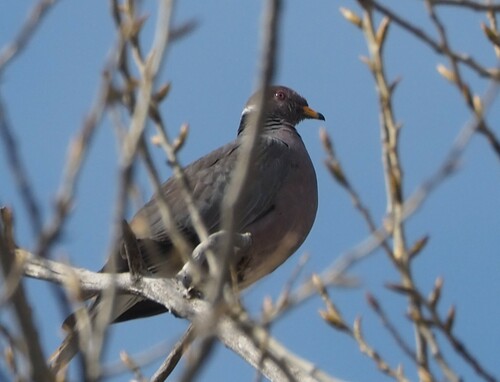
オビオバト (Patagioenas fasciata) オビオバト
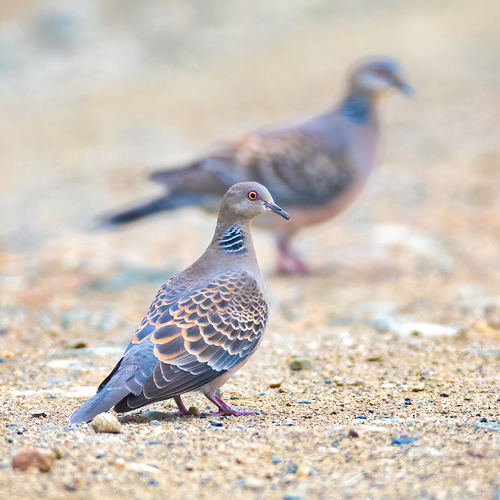
キジバト (Streptopelia orientalis) キジバト

メディア

読み込み中…

要点

オビオバトとキジバトを区別する最も信頼できるフィールドマークは、全体的な構造と主要な羽毛の特徴の組み合わせです:オビオバトは、プレーンな灰色の体、首の後ろに薄い白い襟、暗い亜端帯のある広くて淡い先端の尾を持つ大きくてがっしりした鳩です。それに対して、キジバトはスリムで、翼の覆羽に鱗状の模様があり、首に黒と白のストライプのパッチがあり、先端が変動するがしばしば淡い色合いのくさび形の尾を持っています。幼鳥のオビオバトは白い襟がなく、鱗状の背中を示し、混乱を引き起こす可能性がありますが、鳩のより赤褐色のトーンと特徴的な首のパッチは強い手がかりです。くちばしと足の色(オビオバトは黄色、キジバトは暗色)は、近距離での識別を確実にします。

識別のコツ

  1. Overall size and shape: オビオバトはキジバトよりもがっしりしていて長く、首が太く胸が深いです。鳥が重そうで大きく見える場合は、オビオバトを優先してください。
  2. Tail shape and pattern: オビオバトは広くて丸みを帯びた尾を持ち、広い淡い先端と暗い亜端帯があります;キジバトの尾はくさび形で、変動する淡い先端(白または灰色)とあまり明確でない帯模様があります。これは特に飛行中や尾を広げたときに目立ちます。
  3. Neck markings: 成鳥のオビオバトは、首の後ろに薄い完全な白い襟を示し、緑の虹色で縁取られています。キジバトは首の側に黒と白のストライプのパッチがあり、完全な襟はなく、緑の虹色も欠いています。
  4. Wing coverts: すべての年齢のキジバトは、暗い中心と赤褐色の縁のある翼の覆羽を示し、強い鱗状の効果を与えます。幼鳥のオビオバトは上面が鱗状に見えることがありますが、その効果は淡く、赤褐色が少なく、鳩のように鋭く定義されているわけでも広範でもありません。
  5. Bill and feet color: オビオバトは黄色いくちばしと足を持ち(いくつかの亜種はくちばしの先端が黒い)、一方、キジバトは暗いくちばしと足を持っています。これは近距離での決定的な要素です。
  6. Breast color: オビオバトの胸は灰色で、わずかにピンクがかった色合いがあります(特にオスで強く);キジバトの胸はピンクが少なく、より中立的です。
  7. Head and face: オビオバトはプレーンな灰色の頭を持っています;キジバトの頭はより赤褐色で、特にいくつかの亜種では、鳩の単調さが欠けています。
  8. Eye ring: キジバトは目の周りに裸の皮膚のパッチがなく、いくつかの関連するタートルダブはそれを持っています。オビオバトも目の周りに目立つ裸の目の輪はありませんので、これはこの二つの間の強い区別要素ではありません。
  9. Flight style: オビオバトは強く、直接的な翼の打撃で飛び、重そうに見えます;キジバトの飛行はよりリラックスして直接的で、スリムなプロファイルを持っています。
  10. Juvenile confusion: 幼鳥のオビオバトは、鱗状の上面のためにキジバトと間違われることがありますが、強い赤褐色のトーンがないことと、黒と白の首のパッチがないことを確認してください。
  11. Sex/age effects: オビオバトのピンクがかった胸は成鳥のオスで最も顕著です;雌と幼鳥は鈍い色合いです。キジバトの鱗状の翼の覆羽はすべての年齢と性別に存在します。
  12. Context: アメリカ大陸、特に北アメリカ西部にいる場合、オビオバトの方が圧倒的に可能性が高いです;キジバトはそこでは稀です。アジアでは、特に開けた森林では、キジバトが期待されます。
  13. Subspecies variation: 一部のキジバトの亜種(例:erythrocephala)は、額や頭頂に灰色がない赤褐色の頭を持っています;オビオバトはこれを示すことはありません。
  14. Tail in flight: オビオバトの淡い尾の先端と暗い帯は、飛行中に下から見えます;キジバトの尾はくさび形で、尾の帯模様のコントラストが少なくなります。
  15. Habitat clues: オビオバトは北アメリカのオークや果樹と関連してよく見られます;キジバトはアジアの森林生息地でより一般的です。

大きさ

オビオバトは特に大きく、がっしりしており、長さ33〜40 cm、重さ226〜460 g、翼幅は約66 cmです [wikipedia]。キジバトはやや小さく、ユーラシアシラコバトと同じくらいの大きさで、よりスリムで重さが少ないように見えます。どちらも大きな鳩ですが、オビオバトのサイズとがっしりした体型は、特に直接比較すると際立っています。性別は両方でサイズが重なりますが、オビオバトは全体的に平均して重いです。

羽色

行動

オビオバトは、強く直接的な翼の打撃で飛ぶとき、しばしば重くて意図的に見え、太く尖った翼の形を持っています。直立して止まり、かなり大きくてがっしりして見えます。キジバトはよりリラックスした直接的な飛行を持ち、飛行中や止まっているときにスリムでより敏捷に見えます。ディスプレイでは、鳩は騒がしく羽ばたき、尾を広げて滑空することがありますが、これはオビオバトには記載されていません。

生息環境

オビオバトはアメリカ大陸に生息し、特にオークや果樹のある森林で最もよく見られ、時には適切な食物源のある郊外地域にも見られます。キジバトはアジアに生息し、開けた森林から森林の端まで、広範な森林生息地を占め、範囲内のさまざまな森林または半開放の生息地で見られる可能性が高いです。どちらも森林を利用できますが、オビオバトは北アメリカのオークや針葉樹の森林により結びついており、キジバトはよりアジア的な文脈です。

より良い説明を送る

比較と同じ項目を使ってください。文章はすぐに公開されます。

The most reliable field mark to separate Band-tailed Pigeon from Rufous (Oriental) Turtle Dove is the combination of overall structure and key plumage features: Band-tailed Pigeon is a large, thickset pigeon with a plain gray body, a thin white collar on the nape, and a broad, pale-tipped tail with a dark subterminal band. In contrast, Rufous Turtle Dove is slimmer, with a scaly pattern on the wing coverts, a black-and-white striped patch on the neck, and a wedge-shaped tail with variable but often paler tips. Juvenile Band-tailed Pigeons lack the white collar and show a scaly back, which can cause confusion, but the dove’s more rufous tones and distinctive neck patch are strong clues. Bill and leg color (yellow in Band-tailed, dark in Turtle Dove) can clinch the ID at close range.

  1. Overall size and shape: Band-tailed Pigeon is bulkier and longer than Rufous Turtle Dove, with a thicker neck and deeper chest. If the bird looks hefty and large, favor Band-tailed.
  2. Tail shape and pattern: Band-tailed Pigeon has a broad, rounded tail with a wide, pale tip and a dark subterminal band; Rufous Turtle Dove’s tail is wedge-shaped with a variable pale tip (white or gray) and less distinct banding. This is especially visible in flight or when the tail is spread.
  3. Neck markings: Adult Band-tailed Pigeon shows a thin, complete white collar on the nape, bordered by green iridescence. Rufous Turtle Dove has a black-and-white striped patch on the side of the neck, not a full collar, and lacks green iridescence.
  4. Wing coverts: Rufous Turtle Dove of all ages shows dark-centered, rufous-edged wing coverts, giving a strong scaly effect. Juvenile Band-tailed Pigeon can look scaly above, but the effect is paler, less rufous, and not as sharply defined or extensive as in the dove.
  5. Bill and feet color: Band-tailed Pigeon has a yellow bill and feet (with some subspecies showing a black tip to the bill), while Rufous Turtle Dove has a darker bill and feet. This is a clincher at close range.
  6. Breast color: Band-tailed Pigeon’s breast is gray with a faint pinkish cast (especially in males); Rufous Turtle Dove’s breast is less pink and more neutral.
  7. Head and face: Band-tailed Pigeon has a plain gray head; Rufous Turtle Dove’s head is more rufous, especially in some subspecies, and lacks the plainness of the pigeon.
  8. Eye ring: Rufous Turtle Dove lacks a bare patch of skin around the eye, while some related turtle doves have it. Band-tailed Pigeon does not have a prominent bare eye ring either, so this is not a strong separator between these two.
  9. Flight style: Band-tailed Pigeon flies with strong, direct wingbeats and appears heavy; Rufous Turtle Dove’s flight is more relaxed and direct, with a slimmer profile.
  10. Juvenile confusion: Juvenile Band-tailed Pigeon can be mistaken for Rufous Turtle Dove due to scaly upperparts, but check for the absence of a strong rufous tone and the lack of a black-and-white neck patch.
  11. Sex/age effects: The pinkish breast of Band-tailed Pigeon is most pronounced in adult males; females and juveniles are duller. Rufous Turtle Dove’s scaly wing coverts are present in all ages and sexes.
  12. Context: If in the Americas, especially western North America, Band-tailed Pigeon is vastly more likely; Rufous Turtle Dove is rare there. In Asia, especially open woodlands, Rufous Turtle Dove is expected.
  13. Subspecies variation: Some Rufous Turtle Dove subspecies (e.g., erythrocephala) have a reddish-brown head with no gray on the forehead or crown; Band-tailed Pigeon never shows this.
  14. Tail in flight: Band-tailed Pigeon’s pale tail tip and dark band are visible from below in flight; Rufous Turtle Dove’s tail shows a wedge shape and less contrast in the tail banding.
  15. Habitat clues: Band-tailed Pigeon is often seen in association with oaks or fruiting trees in North America; Rufous Turtle Dove is more generalist in wooded Asian habitats.

Band-tailed Pigeon is notably larger and bulkier, measuring 33–40 cm in length and weighing 226–460 g, with a wingspan around 66 cm [wikipedia]. Rufous Turtle Dove is slightly smaller, about the size of a Eurasian Collared Dove, and appears more slender and less heavy-bodied. While both are large pigeons/doves, the Band-tailed’s size and thickset build stand out, especially in direct comparison. Sexes overlap in size for both, but Band-tailed Pigeon averages heavier overall.

  • Juvenile/immature birds: Juvenile Band-tailed Pigeons show pale feather edges above, creating a scaly look, and lack the white nape collar and neck iridescence. This scaly effect can superficially resemble the Rufous Turtle Dove’s wing coverts, which are always dark-centered with rufous edges, giving a strong scaly appearance in all ages. However, the dove’s scaly pattern is more extensive and richer in color, especially on the wing coverts, and is present in adults as well.
  • Adults: Band-tailed Pigeon adults are plain gray overall, with a faint pinkish cast on the breast (stronger in males), a thin white collar on the nape, green neck iridescence, and a broad, pale tail tip with a dark subterminal band. Rufous Turtle Dove adults have a black-and-white striped patch on the side of the neck (not a full collar), a less pink breast, and a wedge-shaped tail with variable pale tips (white or gray, depending on subspecies), and a more rufous-brown, scaly appearance to the wing coverts. The dove lacks the green neck iridescence and the full white collar of the pigeon.
  • Tail: Band-tailed Pigeon’s tail is broad and rounded with a pale tip and a distinct dark band at the base of the pale area. Rufous Turtle Dove’s tail is wedge-shaped, with the terminal band color (white or gray) and amount of black in the outer tail feathers varying by subspecies, but never showing the same broad pale tip with a dark subterminal band as Band-tailed.

Band-tailed Pigeon often appears heavy and deliberate in flight, with strong, direct wingbeats and a thick-based, pointed wing shape. It perches upright and can look quite large and chunky. Rufous Turtle Dove has a more relaxed, direct flight, and appears slimmer and more agile both in flight and when perched. In display, the dove may flap noisily and glide with outspread tail, a behavior not described for Band-tailed Pigeon.

Band-tailed Pigeon is native to the Americas and is most often found in forests, especially those with oaks or fruiting trees, and sometimes in suburban areas with suitable food sources. Rufous Turtle Dove is native to Asia and occupies a wide range of wooded habitats, from open woodlands to forest edges, and is more likely to be seen in a variety of wooded or semi-open habitats across its range. While both can use woodland, Band-tailed is more tied to North American oak and conifer forests, and Rufous Turtle Dove is more Asian in context.

変更を破棄しますか?

保存していない編集があります。今離れると失われます。

オビオバト · キジバト · 苦手な鳥