

Zwartkopcotinga vs Goudbuikcotinga
Pipreola intermedia versus Pipreola aureopectus
Speel een quiz met Zwartkopcotinga en Goudbuikcotinga
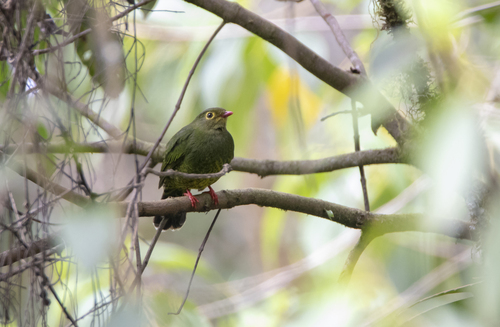 Zwartkopcotinga
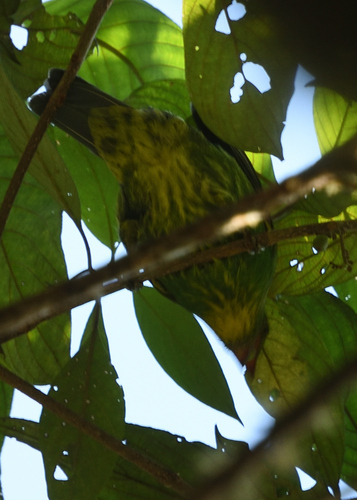 Goudbuikcotinga
Kort gezegd
Het meest betrouwbare veldkenmerk om de Zwartkopcotinga van de Goudbuikcotinga te scheiden, is de aanwezigheid van een duidelijke zwarte band nabij de punt van de staart bij de Zwartkopcotinga (alle leeftijden), die de Goudbuikcotinga volledig mist. Volwassen mannelijke Zwartkopcotinga heeft ook een zwarte kop en bovenborst met een dunne gele kraag, terwijl mannelijke Goudbuikcotinga een groene kop en een heldere gele keel en borst heeft. Vrouwtjes zijn lastiger: vrouwtjes Zwartkopcotinga hebben een groene kop en gele onderdelen met zwarte schubben, terwijl vrouwtjes Goudbuikcotinga groen onder zijn met gele strepen. Beide soorten hebben witgetipte tertials, maar het staartpatroon en de kleur van de onderdelen zijn de beste aanwijzingen. Het verspreidingsgebied is een sterke context aanwijzing: Zwartkopcotinga komt voor in Peru en Bolivia, Goudbuikcotinga in Colombia en Venezuela.
Herkenningstips
- Staartpatroon (alle leeftijden): Zwartkopcotinga toont altijd een duidelijke zwarte band nabij de punt van de staart met witte tips op de staartveren. De staart van de Goudbuikcotinga is eenvoudig groen zonder zwarte band of witte tips. Dit is het meest betrouwbare veldkenmerk, vooral in de vlucht of wanneer de staart is opgefanned.
- Volwassen mannelijke kop en borst: Mannelijke Zwartkopcotinga heeft een volledig zwarte kop en bovenborst met een dunne gele kraag (behalve op de nek). Mannelijke Goudbuikcotinga heeft een groene kop en een heldere gele keel en borst, zonder zwart of kraag.
- Vrouwelijke onderdelen: Vrouwelijke Zwartkopcotinga heeft gele onderdelen met zwarte schubben, terwijl vrouwelijke Goudbuikcotinga groen onder is met gele strepen. Dit kan subtiel zijn, maar de aanwezigheid van geel met zwarte markeringen (Zwartkopcotinga) versus groen met gele strepen (Goudbuikcotinga) is nuttig.
- Flankkleur: Zwartkopcotinga (beide seksen) heeft groene flanken met zwarte schubben; mannelijke Goudbuikcotinga heeft groene flanken die overgaan in de gele borst, en vrouwelijke is groen met gele strepen.
- Gele kraag: Mannelijke Zwartkopcotinga (vooral ondersoort signata) toont een dunne tot gedurfde gele kraag aan de basis van de zwarte kop en bovenborst, afwezig bij Goudbuikcotinga, behalve voor een gele nekband in sommige ondersoorten (P. a. decora), maar dit is aan de zijkanten, geen volledige kraag.
- Tertiale tips: Beide soorten hebben witgetipte tertials, dus dit is geen scheiding.
- Snavel- en iris kleur: Zwartkopcotinga heeft een karmijnrode snavel (soms met een zwarte culmen) en een bruine iris; Goudbuikcotinga heeft een oranje of oranje-rode snavel en een oranje-gele iris. Deze zijn subtiel en niet altijd zichtbaar in het veld.
- Pootkleur: Zwartkopcotinga heeft rode of oranje-rode poten en voeten; Goudbuikcotinga heeft groenachtig grijze poten en voeten. Weer, subtiel en niet altijd zichtbaar.
- Grootte: Zwartkopcotinga is iets groter en robuuster, maar het verschil is klein en moet niet als primair veldkenmerk worden gebruikt.
- Verspreiding: Zwartkopcotinga komt voor in Peru en Bolivia; Goudbuikcotinga wordt alleen in Colombia en Venezuela aangetroffen. Als je je locatie kent, is dit een sterke scheiding.
- Habitat: Beide bewonen vochtige montane bossen, dus habitat alleen is niet diagnostisch tenzij gecombineerd met verspreiding.
- Gedrag: Goudbuikcotinga is waarschijnlijker om zich bij gemengde soorten flocks aan te sluiten; Zwartkopcotinga wordt hier niet specifiek voor genoemd, maar gedrag is geen sterke scheiding.
- Stem: Alleen het lied van de Zwartkopcotinga wordt beschreven; als je een reeks zeer hoge noten hoort gevolgd door een dunne, dalende fluittoon, kan dit wijzen op Zwartkopcotinga, maar afwezigheid van vocalisatie is niet nuttig.
- Variatie in ondersoorten: Wees je ervan bewust dat de ondersoort signata van de Zwartkopcotinga een veel gedurfder gele kraag kan hebben en minder zwart op de onderdelen, terwijl de ondersoorten decora en festiva van de Goudbuikcotinga meer geel op de nek of onderdelen kunnen tonen, wat het beeld verwarrend kan maken. Controleer altijd het staartpatroon ter bevestiging.
- Quiz valkuilen: Onvolwassen of vrouwelijke vogels in de vlucht kunnen bijzonder verwarrend zijn. Focus op het staartpatroon (zwarte band en witte tips voor Zwartkopcotinga, eenvoudig groen voor Goudbuikcotinga) en de kleur van de onderdelen (geschubd geel voor Zwartkopcotinga, gestreept groen/geel voor Goudbuikcotinga) voor de beste kans op een correcte identificatie.
Grootte
Zwartkopcotinga is iets groter, met een lengte van 18,5–19,5 cm en een gewicht van ongeveer 50 g, terwijl Goudbuikcotinga 16,5–17,5 cm lang is en 46–50 g weegt. Het verschil is subtiel in het veld, maar Zwartkopcotinga lijkt over het algemeen iets robuuster en met een langere staart, vooral wanneer hij zit. Beide zijn compacte, kortstaartige cotinga's, maar het grootteverschil is klein en het beste te gebruiken als ondersteunende aanwijzing.
Verenkleed
Voor alle leeftijden en seksen toont Zwartkopcotinga een diagnostische zwarte band nabij de punt van de staart, met witte tips op de staartveren; de staart van Goudbuikcotinga is eenvoudig groen zonder zwarte band of witte tips. Op de vleugel hebben beide soorten witgetipte tertials, dus dit is geen scheiding. Volwassen mannelijke Zwartkopcotinga heeft een opvallende zwarte kop en bovenborst met een dunne gele kraag (behalve op de nek), groene bovenste delen en gele onderdelen met zwarte schubben; mannelijke Goudbuikcotinga heeft een groene kop en bovenste delen, een heldere gele keel en borst, en groene flanken die overgaan in de gele. Vrouwelijke Zwartkopcotinga is groen-kopig met gele onderdelen en zwarte schubben, terwijl vrouwelijke Goudbuikcotinga groen onder is met gele strepen. Er bestaat variatie in ondersoorten: sommige Zwartkopcotinga (P. i. signata) hebben een gedurfder gele kraag en minder zwart op de onderdelen, terwijl sommige ondersoorten van Goudbuikcotinga een gele nekband (P. a. decora) of meer geel onder (P. a. festiva) kunnen tonen.
Gedrag
Beide soorten zijn voornamelijk fruiteters en foerageren in de middenlagen van het montane bos, vaak in paren. Goudbuikcotinga staat bekend om zich bij gemengde soorten flocks aan te sluiten, terwijl Zwartkopcotinga hier niet specifiek voor wordt genoemd. Beide zijn over het algemeen onopvallend en zitten stil, maar gedrag is geen sterke scheiding.
Habitat
Zwartkopcotinga wordt aangetroffen in vochtige montane bossen op de oostelijke hellingen van de Andes in Peru en Bolivia, op hoogtes meestal tussen 1.500 en 3.000 m. Goudbuikcotinga bewoont vergelijkbare montane bossen, maar is beperkt tot Colombia en Venezuela, meestal op vergelijkbare hoogtes. Er is geen overlap in verspreiding: locatie is een sterke scheiding.
Geluid
Het lied van de Zwartkopcotinga is een reeks zeer hoge noten gevolgd door een dunne, dalende fluittoon ("ti-ti-ti teeeeeeew") en zijn roep is een reeks hoge "ti" of "tswee" noten. Er is geen gedetailleerde vocale beschrijving beschikbaar voor Goudbuikcotinga, dus de stem is geen betrouwbare scheiding.