

Band-tailed Fruiteater vs Golden-breasted Fruiteater
Pipreola intermedia contro Pipreola aureopectus
Fai un quiz con Band-tailed Fruiteater e Golden-breasted Fruiteater
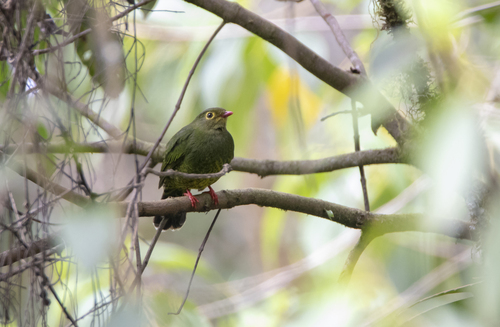 Band-tailed Fruiteater
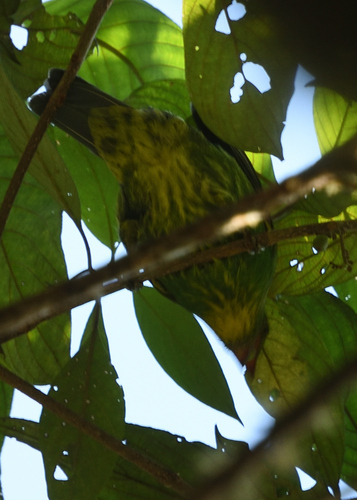 Golden-breasted Fruiteater
In breve
Il segno di campo più affidabile per separare il Band-tailed Fruiteater dal Golden-breasted Fruiteater è la presenza di una distintiva banda nera vicino alla punta della coda nel Band-tailed (tutte le età), che il Golden-breasted manca completamente. Il maschio adulto del Band-tailed mostra anche una testa nera e un petto superiore nero con un sottile collare giallo, mentre i maschi Golden-breasted hanno una testa verde e una gola e un petto giallo brillante. Le femmine sono più difficili: le femmine del Band-tailed hanno una testa verde e parti inferiori gialle con scalloping nero, mentre le femmine del Golden-breasted sono verdi sotto con striature gialle. Entrambe le specie hanno terziali con punte bianche, ma il modello della coda e la colorazione delle parti inferiori sono i migliori indizi. L'areale è un forte indizio contestuale: il Band-tailed si trova in Perù e Bolivia, il Golden-breasted in Colombia e Venezuela.
Consigli di identificazione
- Modello della coda (tutte le età): Il Band-tailed Fruiteater mostra sempre una distintiva banda nera vicino alla punta della coda con punte bianche nelle penne della coda. La coda del Golden-breasted Fruiteater è verde uniforme senza banda nera o punte bianche. Questo è il segno di campo più affidabile, specialmente in volo o quando la coda è aperta.
- Testa e petto del maschio adulto: Il maschio del Band-tailed ha una testa e un petto superiore completamente neri con un sottile collare giallo (eccetto sulla nuca). Il maschio del Golden-breasted ha una testa verde e una gola e un petto giallo brillante, senza nero o collare.
- Parti inferiori femminili: La femmina del Band-tailed ha parti inferiori gialle con scalloping nero, mentre la femmina del Golden-breasted è verde sotto con striature gialle. Questo può essere sottile, ma la presenza di giallo con segni neri (Band-tailed) rispetto a verde con striature gialle (Golden-breasted) è utile.
- Colore dei fianchi: Il Band-tailed (entrambi i sessi) ha fianchi verdi con scalloping nero; il maschio Golden-breasted ha fianchi verdi che si fondono nel petto giallo, e la femmina è verde con striature gialle.
- Collare giallo: Il maschio del Band-tailed (soprattutto la sottospecie signata) mostra un collare giallo sottile o audace alla base della testa nera e del petto superiore, assente nel Golden-breasted tranne che per una banda gialla sul collo in alcune sottospecie (P. a. decora), ma questa è sui lati, non un collare completo.
- Punte terziali: Entrambe le specie hanno terziali con punte bianche, quindi questo non è un separatore.
- Colore del becco e dell'iride: Il Band-tailed ha un becco cremisi (a volte con un culmine nero) e un'iride marrone; il Golden-breasted ha un becco arancione o arancio-rosso e un'iride arancio-gialla. Questi sono sottili e non sempre visibili sul campo.
- Colore delle gambe: Il Band-tailed ha gambe e piedi rossi o arancio-rossi; il Golden-breasted ha gambe e piedi grigio-verdastri. Ancora una volta, sottili e non sempre visibili.
- Dimensioni: Il Band-tailed è leggermente più grande e più robusto, ma la differenza è minima e non dovrebbe essere usata come segno di campo principale.
- Areale: Il Band-tailed si trova in Perù e Bolivia; il Golden-breasted è presente solo in Colombia e Venezuela. Se conosci la tua posizione, questo è un forte separatore.
- Habitat: Entrambi abitano foreste montane umide, quindi l'habitat da solo non è diagnostico a meno che non sia abbinato all'areale.
- Comportamento: Il Golden-breasted è più propenso a unirsi a stormi di specie miste; il Band-tailed non è specificamente notato per questo, ma il comportamento non è un forte separatore.
- Voce: Solo il canto del Band-tailed è descritto; se senti una serie di note molto alte seguite da un fischio sottile e discendente, potrebbe indicare il Band-tailed, ma l'assenza di vocalizzazione non è utile.
- Variazione delle sottospecie: Fai attenzione che la sottospecie signata del Band-tailed può avere un collare giallo molto più audace e meno nero sulle parti inferiori, mentre le sottospecie del Golden-breasted decora e festiva possono mostrare più giallo sul collo o sulle parti inferiori, potenzialmente confondendo l'immagine. Controlla sempre il modello della coda per conferma.
- Trappole del quiz: Gli uccelli immaturi o femminili in volo possono essere particolarmente confusi. Concentrati sul modello della coda (banda nera e punte bianche per il Band-tailed, verde uniforme per il Golden-breasted) e sulla colorazione delle parti inferiori (giallo scallopato per il Band-tailed, verde/ giallo striato per il Golden-breasted) per la migliore possibilità di una corretta identificazione.
Taglia
Il Band-tailed Fruiteater è leggermente più grande, misurando 18.5–19.5 cm di lunghezza e pesando circa 50 g, mentre il Golden-breasted Fruiteater è lungo 16.5–17.5 cm e pesa 46–50 g. La differenza è sottile sul campo, ma il Band-tailed appare generalmente un po' più robusto e con una coda più lunga, specialmente quando è posato. Entrambi sono cotingas compatti e a coda corta, ma il divario di dimensioni è minimo e meglio utilizzato come indizio di supporto.
Piumaggio
Per tutte le età e i sessi, il Band-tailed Fruiteater mostra una banda nera diagnostica vicino alla punta della coda, con punte bianche nelle penne della coda; la coda del Golden-breasted Fruiteater è verde uniforme senza banda nera o punte bianche. Sull'ala, entrambe le specie hanno terziali con punte bianche, quindi questo non è un separatore. Il maschio adulto del Band-tailed ha una testa nera e un petto superiore nero con un sottile collare giallo (eccetto sulla nuca), parti superiori verdi e parti inferiori gialle con scalloping nero; il maschio Golden-breasted ha una testa e parti superiori verdi, una gola e un petto giallo brillante, e fianchi verdi che si fondono nel giallo. La femmina del Band-tailed ha una testa verde con parti inferiori gialle e scalloping nero, mentre la femmina del Golden-breasted è verde sotto con striature gialle. Esiste una variazione delle sottospecie: alcuni Band-tailed (P. i. signata) hanno un collare giallo più audace e meno nero sulle parti inferiori, mentre alcune sottospecie del Golden-breasted mostrano una banda gialla sul collo (P. a. decora) o più giallo sotto (P. a. festiva).
Comportamento
Entrambe le specie sono principalmente frugivore e cercano cibo nei livelli medi della foresta montana, spesso in coppie. Il Golden-breasted Fruiteater è noto per unirsi a stormi di specie miste, mentre il Band-tailed non è specificamente menzionato per farlo. Entrambi sono generalmente discreti e si posano silenziosamente, ma il comportamento non è un forte separatore.
Habitat
Il Band-tailed Fruiteater si trova in foreste montane umide sui versanti orientali delle Ande in Perù e Bolivia, a elevazioni per lo più comprese tra 1.500 e 3.000 m. Il Golden-breasted Fruiteater abita foreste montane simili ma è ristretto a Colombia e Venezuela, generalmente a elevazioni simili. Non c'è sovrapposizione dell'areale: la posizione è un forte separatore.
Voce
Il canto del Band-tailed Fruiteater è una serie di note molto alte seguite da un fischio sottile e discendente ("ti-ti-ti teeeeeeew") e il suo richiamo è una serie di note alte "ti" o "tswee". Non è disponibile una descrizione vocale dettagliata per il Golden-breasted Fruiteater, quindi la voce non è un separatore affidabile.
Band-tailed Fruiteater · Golden-breasted Fruiteater · I miei uccelli difficili