

Atlantische geelneusalbatros vs Indische geelneusalbatros
Thalassarche chlororhynchos versus Thalassarche carteri
Speel een quiz met Atlantische geelneusalbatros en Indische geelneusalbatros
 Atlantische geelneusalbatros
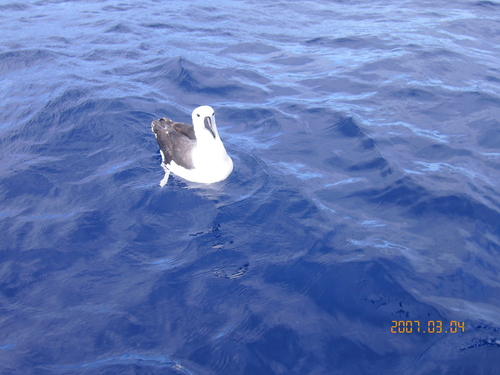 Indische geelneusalbatros
Kort gezegd
Het meest betrouwbare veldkenmerk tussen Atlantische en Indische geelneusalbatros is de kleur en toon van het hoofd: Atlantische toont een duidelijk donkerder grijs hoofd met een uitgesproken donkere oogpatch, terwijl Indische een lichter hoofd heeft, vaak bijna wit of zeer lichtgrijs. Juveniele vogels van beide soorten hebben witte hoofden en volledig zwarte snavels, waardoor ze op die leeftijd bijna niet te onderscheiden zijn. In de vlucht tonen beide een smalle zwarte rand aan de ondervleugel, maar de rand van de Atlantische is doorgaans dunner en scherper gedefinieerd. De kleur van de snavel is subtiel verschillend bij volwassenen, waarbij de Atlantische een roze punt heeft en de Indische een rode punt, maar dit is zelden zichtbaar op zee. Structuur en grootte zijn vergelijkbaar, hoewel de Indische gemiddeld iets zwaarder is.
Herkenningstips
- Hoofdkleur bij Volwassenen: Het meest consistente veldkenmerk is de hoofdkleur. Atlantische geelneusalbatros heeft een merkbaar donkerder grijs hoofd met een sterke donkere oogpatch, terwijl Indische geelneusalbatros veel lichter van hoofd is, vaak bijna wit. Dit is het meest zichtbaar bij goed licht en van dichtbij.
- Juveniele Valstrik: Juvenielen van beide soorten hebben witte hoofden en volledig zwarte snavels, waardoor ze visueel bijna onmogelijk te scheiden zijn. Probeer geen identificatie tot soort voor jonge vogels, tenzij in een bekend broedgebied.
- Onderwingpatroon: Beide soorten tonen een smalle zwarte rand rond de ondervleugel, maar de rand van de Atlantische is iets dunner en scherper gedefinieerd. Dit is een subtiel verschil en niet altijd betrouwbaar bij slecht licht of verre waarnemingen.
- Snavelkleur: Bij volwassenen hebben beide een zwarte snavel met een gele rand, maar Atlantische heeft een roze punt en Indische een rode punt. Dit verschil is extreem subtiel en zelden zichtbaar, tenzij de vogel heel dichtbij en goed verlicht is.
- Grootte en Structuur: Indische geelneusalbatros is iets zwaarder, maar beide behoren tot de kleinste mollymawks en hebben vergelijkbaar smalle vleugels. Grootte is geen betrouwbaar veldkenmerk.
- Oogpatch: Atlantische toont een meer uitgesproken donkere oogpatch door het donkerdere hoofd, terwijl het lichte hoofd van de Indische de oogpatch minder opvallend maakt.
- Bovenwing en Zadel: Beide soorten hebben een zwartachtig-grijze bovenwing en zadel, zonder betrouwbaar verschil voor veldscheiding.
- Staart en Rump: Beide hebben een donkere staart en witte romp; dit is geen scheidend kenmerk.
- Vluchtstijl: Beide soorten zweven met stijve, smalle vleugels, typisch voor mollymawks. Er is geen bekende verschil in vluchtstijl.
- Broedgebied (context alleen): Als ze in de buurt van broedeilanden worden gezien, kan het bereik helpen (Atlantische broedt in de Zuid-Atlantische Oceaan, Indische in de zuidelijke Indische Oceaan), maar op zee is dit zelden diagnostisch vanwege overlap.
- Verwarring met Andere Mollymawks: Beide kunnen worden verward met Grijskopalbatros en Salvinalbatros, maar die soorten hebben bredere vleugels of andere snavelkleur. Focus op hoofdkleur voor scheiding tussen Atlantische en Indische.
- Geslacht en Seizoen: Er is geen seksueel dimorfisme of seizoensgebonden verenkleedverandering opgemerkt bij beide soorten.
- Verenverslijting: Beide soorten kunnen vervaagde of versleten veren op zee vertonen, maar dit beïnvloedt het belangrijkste kleurverschil van het hoofd niet.
- Verlichtingseffecten: Wees je ervan bewust dat sterk zonlicht of schaduw het hoofd lichter of donkerder kan laten lijken dan het is; probeer vanuit meerdere hoeken te kijken.
- Vertrouw Niet op Stem: Er zijn geen nuttige vocale verschillen opgemerkt voor veldscheiding.
Grootte
Indische geelneusalbatros is iets zwaarder (gemiddelde lichaamsmassa 2710g vs 2060g voor Atlantische), maar beide behoren tot de kleinste mollymawks en zijn zeer dicht in lengte (Atlantische: 81 cm, Indische: 76 cm). In het veld is dit grootteverschil subtiel en geen betrouwbaar scheidingspunt. Beide hebben relatief smalle vleugels in vergelijking met andere mollymawks, maar Salvinalbatros en Grijskopalbatros hebben bredere vleugels en zullen hier waarschijnlijk niet worden verward.
Verenkleed
- Juvenielen: De juvenielen van beide soorten hebben witte hoofden en volledig zwarte snavels, waardoor ze op deze leeftijd in wezen niet te onderscheiden zijn. De patronen van de bovenvleugel en ondervleugel zijn vergelijkbaar, met een smalle zwarte rand aan de ondervleugel.
- Volwassenen: Het belangrijkste verschil is de hoofdkleur: Atlantische volwassenen hebben een donkerder grijs hoofd met een prominente donkere oogpatch, terwijl Indische volwassenen een veel lichter (bijna wit of zeer lichtgrijs) hoofd en nek hebben. Beide hebben zwartachtig-grijze bovenvleugels, zadel en staart, en overwegend witte onderdelen. De ondervleugel van beide is wit met een smalle zwarte rand, maar die van de Atlantische is dunner en scherper gedefinieerd. De snavelkleur is zwart met een gele rand bij beide, maar Atlantische heeft een roze punt en Indische een rode punt. Deze kleuren van de snavelpunten zijn subtiel en zelden diagnostisch op zee.
Gedrag
Beide soorten zijn typische mollymawks in de vlucht, die laag over de oceaan zweven met stijve, smalle vleugels. Er is geen opgemerkt gedragsverschil in vluchtstijl, houding of foerageren dat hen betrouwbaar in het veld zou scheiden. Beide zijn pelagisch en zelden dicht bij de kust te zien, behalve in de buurt van broedeilanden.
Habitat
Er is geen diagnostisch habitatverschil wanneer ze op zee worden gezien, aangezien beide pelagisch zijn en overlappen in bereik in de zuidelijke oceanen. De broedgebieden zijn verschillend (Atlantische broedt op eilanden in de Zuid-Atlantische Oceaan, Indische op eilanden in de zuidelijke Indische Oceaan), maar dit is niet nuttig voor identificatie op zee.
Atlantische geelneusalbatros · Indische geelneusalbatros · Mijn lastige vogels