

Motmot

キマユムシクイ 対 バフマユムシクイ

Phylloscopus inornatus 対 Phylloscopus humei

キマユムシクイとバフマユムシクイのクイズ
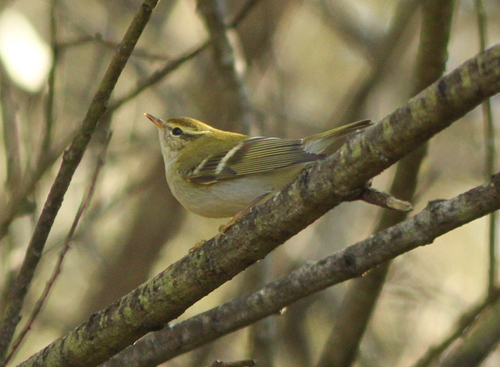
キマユムシクイ (Phylloscopus inornatus) キマユムシクイ
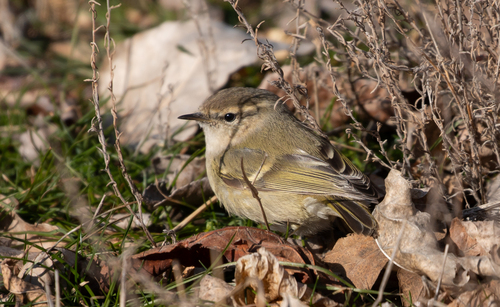
バフマユムシクイ (Phylloscopus humei) バフマユムシクイ

メディア

読み込み中…

要点

イエマユムシクイとバフマユムシクイを区別する最も信頼できるフィールドマークは、翼のバーの数と明瞭さです:イエマユムシクイは常に2つの明確な淡い翼のバーを示しますが、バフマユムシクイは通常1つの強い翼のバーしか持たず、せいぜい2つ目のかすかな痕跡があります。また、バフマユムシクイは全体的に鈍く見え、脚は暗く、下顎も暗いのに対し、イエマユムシクイは明るく、より黄色味を帯びています。両種は小さく、活発な葉ムシクイで、構造や習性は似ていますが、鳴き声はよく聞くと顕著に異なります。重なり合うゾーンでは、すべての年齢において上翼のパターンに特に注意を払ってください。これは最も実用的なフィールドマークです。

識別のコツ

  1. Wing bars (all ages, perched or in flight): イエマユムシクイは常に2つの明確な淡い翼のバー(大覆羽と中覆羽)を示します;バフマユムシクイは1つの強い翼のバーしか持たず、せいぜいかすかな2つ目のバーがあります。これはすべての羽衣において最も信頼できるフィールドマークです。
  2. Overall brightness: イエマユムシクイは上面が明らかに明るく、緑がかった色合いで、腹部はより清潔で白いです。バフマユムシクイは鈍く、灰色がかったりオリーブ色に見え、コントラストが少ないです。
  3. Leg and bill color: バフマユムシクイは明確に暗い脚と暗い下顎を持ち、イエマユムシクイの脚と下顎はより淡いです。これは良い光と近い視点で最もよく見えます。
  4. Supercilium: 両者は長い淡いスーパシリウムを持ちますが、イエマユムシクイの方が全体的に明るい羽衣のため、通常はより目立ちます。単独では主要な区別要因ではありません。
  5. Tertial edges: 両者はテールの黄色い縁を示しますが、これは両者を区別する要因ではありません。
  6. Crown stripe: 一部のイエマユムシクイは淡い中央の冠ストライプを示しますが、多くは示しません;バフマユムシクイも冠ストライプを示すことがありますが、これは信頼できるフィールドマークではありません。
  7. Call: イエマユムシクイの鳴き声は大きく、鋭く、しばしば二音節の「tseeweest」です;バフマユムシクイはより控えめで、さえずる「chwee」です。鳴き声を学ぶことは非常に役立ちますが、個体差や悪い聴取条件には注意してください。
  8. Song: イエマユムシクイは高音の笛のメドレーを歌います;バフマユムシクイの歌はよりブンブンとした高音です。歌は移動中や冬にはほとんど聞かれません。
  9. Habitat: 両者は移動中や冬に似た生息地を使用します;繁殖期を除いて生息地は信頼できる区別要因ではありません(ほとんどのヨーロッパの記録には関係ありません)。
  10. Behavior: 両種は非常に活発で、樹上性で、落ち着きがなく、行動は彼らを区別するのに役立ちません。
  11. Size and structure: 両者は小さく、短い尾を持ち、形状は似ています;サイズは有用なフィールドマークではありません。
  12. Pitfalls: 摩耗したり、暗い場所にいる鳥は鈍く見えたり、翼のバーのコントラストを失ったりすることがあり、区別が難しくなります。常に翼のバーを明確に見るようにしてください。
  13. Seasonal context: 西ヨーロッパでは、イエマユムシクイは秋と冬に非常に多く見られ、バフマユムシクイは稀な迷鳥です。しかし、識別のために稀少性だけに頼らないでください。
  14. Sex and age: 性的二形はありません;年齢の違いは主に翼のバーの明瞭さにありますが、2バー対1バーのパターンはすべての年齢に当てはまります。
  15. When in doubt: 上翼と脚の色の明確な視点を優先し、可能であれば鳴き声の録音を取得してください。

大きさ

両種は最小の旧世界のムシクイの中にあり、サイズは非常に近く、イエマユムシクイは長さ9.5–11 cm、体重4–9 gです。バフマユムシクイも同様に小さく、サイズはフィールドでの信頼できる区別要因ではありません。両者はチフチャフよりも明らかに小さく、パラスの葉ムシクイよりはわずかに大きいです。構造的な比率(くちばし、尾、翼)は、利用可能な情報源では診断的なものとして強調されていません。

羽色

重要な羽衣の違いは、すべての年齢で見られ、特に幼鳥や飛行中の鳥にとって重要なのは翼のバーのパターンです。イエマユムシクイは2つの目立つ淡い翼のバーを示します:大覆羽に長く明確なバーと、中覆羽に短いが依然として明確なバーがあります。対照的に、バフマユムシクイは1つの強い翼のバー(大覆羽)しか持たず、せいぜい2つ目のかすかな痕跡(中覆羽)があります。バフマユムシクイは全体的に鈍く、上面が緑がかっているのに対し、上面と下面のコントラストが少ないです。両種は黄色い縁のあるテールと長い淡いスーパシリウムを持ちますが、バフマユムシクイは全体的に明るさが劣ります。バフマユムシクイの脚と下顎は、イエマユムシクイのより淡い色合いよりも明確に暗いです。一部のイエマユムシクイは淡い中央の冠ストライプを示すことがありますが、これは変動があり、主要な区別要因ではありません。

行動

両種は非常に活発で、樹上性で、ほとんど静止せず、しばしば木の外側の枝で餌を食べ、常に動き回っています。彼らの行動や姿勢は非常に似ており、両者は落ち着きがないため、観察が難しいことがあります。どちらの種も特に臆病ではありませんが、小さなサイズと樹冠の習性により、双眼鏡で追うのが難しいです。診断的な行動の違いは強調されていません。

生息環境

イエマユムシクイは東パレアールティックの低地および山地の森林で繁殖し、主に熱帯南アジアおよび東南アジアで越冬しますが、西ヨーロッパでも定期的に見られます。バフマユムシクイは内アジアの山々で繁殖し、主にインドで越冬します。重なり合うゾーン(西サヤン山脈)では、両者が一緒に見られることがありますが、移動中や冬の生息地は信頼できる区別要因ではありません。両種は移動中や冬に似た森林や森林の縁の生息地を使用します。

声

鳴き声は、よく聞くと強力な区別要因です。イエマユムシクイは、サイズに対して大きく、鋭い、しばしば二音節の「tseeweest」という鳴き声を出し、高音の笛のような歌を持っています。バフマユムシクイは、よりブンブンとした高音の歌と、よりさえずる二音節の「chwee」という鳴き声を持っています。鳴き声は経験豊富な耳には明確ですが、短いまたは質の悪い鳴き声しか聞こえない場合は混乱が生じる可能性があります。

より良い説明を送る

比較と同じ項目を使ってください。文章はすぐに公開されます。

The most reliable field mark to separate Yellow-browed Warbler from Hume's Warbler is the number and clarity of the wing bars: Yellow-browed Warbler consistently shows two distinct pale wing bars, while Hume's Warbler usually has only one strong wing bar and at most a faint trace of a second. Hume's also appears duller overall, with darker legs and a dark lower mandible, compared to the brighter, more yellowish Yellow-browed. Both species are small, active leaf warblers with similar structure and habits, but their calls are notably different if heard well. Pay special attention to the upperwing pattern in all ages, as this is the most practical field mark in the overlap zone.

  1. Wing bars (all ages, perched or in flight): Yellow-browed Warbler always shows two clear pale wing bars (greater and median coverts); Hume's Warbler has only one strong wing bar and at most a faint second bar. This is the single most reliable field mark in all plumages.
  2. Overall brightness: Yellow-browed Warbler is noticeably brighter and more greenish above, with a cleaner, whiter belly. Hume's Warbler appears duller and more greyish or olive, with less contrast.
  3. Leg and bill color: Hume's Warbler has distinctly dark legs and a dark lower mandible, while Yellow-browed's legs and lower mandible are paler. This is best seen in good light and close views.
  4. Supercilium: Both have a long pale supercilium, but Yellow-browed's is usually more striking due to the overall brighter plumage. Not a primary separator on its own.
  5. Tertial edges: Both show yellowish edges to the tertials, but this is not a separator between the two.
  6. Crown stripe: Some Yellow-browed Warblers show a faint pale central crown stripe, but many do not; Hume's may show a crown stripe as well, so this is not a reliable field mark.
  7. Call: Yellow-browed's call is a loud, piercing, often disyllabic 'tseeweest'; Hume's is a more subdued, chirping 'chwee'. Learning the calls is very helpful, but beware of individual variation and poor listening conditions.
  8. Song: Yellow-browed sings a high-pitched medley of whistles; Hume's song is more buzzing and high-pitched. Song is rarely heard on migration or in winter.
  9. Habitat: Both use similar habitats in migration and winter; habitat is not a reliable separator except in breeding season (not relevant for most European records).
  10. Behavior: Both species are highly active, arboreal, and restless; behavior does not help separate them.
  11. Size and structure: Both are tiny, short-tailed, and similar in shape; size is not a useful field mark.
  12. Pitfalls: Worn or poorly lit birds may appear duller or lose contrast in wing bars, making separation harder. Always try to see the wing bars clearly.
  13. Seasonal context: In western Europe, Yellow-browed is much more likely in autumn and winter; Hume's is a rare vagrant. However, do not rely on rarity alone for identification.
  14. Sex and age: No sexual dimorphism; age differences are mainly in the clarity of wing bars, but the two-bar vs. one-bar pattern holds for all ages.
  15. When in doubt: Prioritize clear views of the upperwing and leg color, and try to obtain a recording of the call if possible.

Both species are among the smallest Old World warblers and are very close in size, with Yellow-browed Warbler measuring 9.5–11 cm in length and weighing 4–9 g. Hume's Warbler is similarly small, and size is not a reliable separator in the field. Both are distinctly smaller than a chiffchaff but slightly larger than Pallas's Leaf Warbler. Structural proportions (bill, tail, wing) are not highlighted as diagnostic in the available sources.

The key plumage distinction, visible in all ages and especially critical for immatures and birds in flight, is the wing bar pattern. Yellow-browed Warbler shows two prominent pale wing bars: a long, clear bar on the greater coverts and a shorter but still obvious bar on the median coverts. Hume's Warbler, by contrast, has only one strong wing bar (greater coverts) and at most a faint, often barely visible vestige of a second (median coverts). Hume's also appears generally duller and less green above, with less contrast between upperparts and underparts. Both species have yellow-margined tertials and a long pale supercilium, but Hume's is less bright overall. The legs and lower mandible of Hume's are distinctly darker than the paler tones of Yellow-browed. Some Yellow-browed may show a faint central crown stripe, but this is variable and not a primary separator.

Both species are highly active, arboreal, and rarely still, often feeding in the outer branches of trees and constantly moving. Their behavior and jizz are very similar, and both can be difficult to observe well due to their restlessness. Neither species is particularly shy, but their small size and canopy habits make them challenging to follow in binoculars. No behavioral differences are highlighted as diagnostic.

Yellow-browed Warbler breeds across the east Palearctic in lowland and montane forests, wintering mainly in tropical South and Southeast Asia, but also regularly in western Europe. Hume's Warbler breeds in the mountains of inner Asia and winters mainly in India. In the overlap zone (western Sayan Mountains), both may occur together, but habitat is not a reliable separator in migration or winter. Both species use similar woodland and forest-edge habitats during migration and winter.

Vocalizations are a strong separator if heard well. Yellow-browed Warbler gives a piercing, often disyllabic 'tseeweest' call that is loud for its size and has a high-pitched, whistled song. Hume's Warbler has a more buzzing, high-pitched song and a more chirping, disyllabic 'chwee' call. The calls are distinct to experienced ears, but confusion is possible if only brief or poor-quality calls are heard.

変更を破棄しますか?

保存していない編集があります。今離れると失われます。

キマユムシクイ · バフマユムシクイ · 苦手な鳥