

Motmot

キゴシオウゴンチョウ 対 キガタホウオウ

Euplectes capensis 対 Euplectes macroura

キゴシオウゴンチョウとキガタホウオウのクイズ
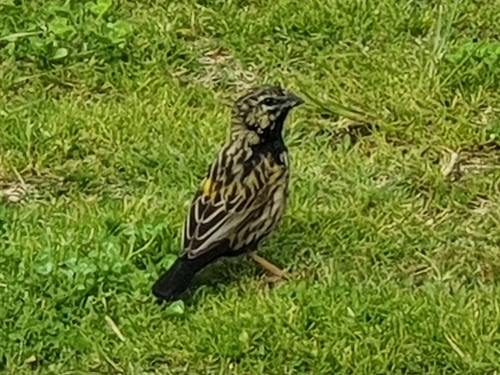
キゴシオウゴンチョウ (Euplectes capensis) キゴシオウゴンチョウ
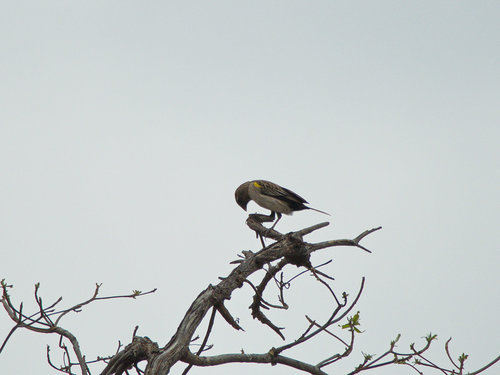
キガタホウオウ (Euplectes macroura) キガタホウオウ

メディア

読み込み中…

要点

キゴシオウゴンチョウとキガタホウオウを区別するための最も信頼できるフィールドマークは尾です:繁殖期のオスのキガタホウオウははるかに長い尾を示しますが、キゴシオウゴンチョウはすべての羽色で比較的短い尾を持っています。両種の繁殖期のオスは主に黒で、明るい黄色の肩と尾の斑点がありますが、キゴシオウゴンチョウの黄色は背中と尾に低く広がり、キガタホウオウの黄色は肩とマントに集中しています。非繁殖期と雌の羽色は非常に似ており、区別が非常に難しいですが、キゴシオウゴンチョウは尾に黄色を保持しており、雌/未熟なキガタホウオウにはそれがありません。構造、特にくちばしのサイズと体の太さも役立ちます:キゴシオウゴンチョウはより重く、がっしりとしています。幼鳥と雌は大きな落とし穴であり、両者とも肩に黄色の斑点がある縞模様の茶色ですが、尾の色と全体の形に注意を払うことで助けになるかもしれません。

識別のコツ

  1. 尾の長さは繁殖期のオスにおける最良のフィールドマークです: 繁殖期のキガタホウオウのオスは劇的に長い尾を持っていますが、キゴシオウゴンチョウの尾は常に短くて四角です。これは飛行中や尾を広げて止まっているときに最も明らかです。
  2. 尾とマントの黄色: キゴシオウゴンチョウのオス(および非繁殖期のオス)は、下背部と尾に明るい黄色を示し、止まっているときも飛んでいるときも見えます。キガタホウオウのオスはマントと肩に黄色がありますが、尾は黒です。これは微妙ですが、よく見れば診断的です。
  3. 両者の肩の斑点: 両種はすべてのオスの羽色に明るい黄色の肩の斑点を示し、雌/未熟な個体でも同様ですので、このマークだけでは区別には不十分です。
  4. 雌と幼鳥の区別は難しい: 両者とも肩に黄色の斑点がある縞模様の茶色ですが、キゴシオウゴンチョウの雌/未熟な個体だけが尾に黄色を示します。キガタホウオウでは、尾は単色の茶色または黒っぽく、黄色がありません。これは非繁殖期の鳥の主な手がかりです。
  5. くちばしのサイズと形: キゴシオウゴンチョウはより厚く、円錐形のくちばしを持ち、しばしば重い頭に見えます。くちばしのサイズは亜種によって異なることがありますが、一般的にはキガタホウオウよりも大きいです。
  6. 体の構造: キゴシオウゴンチョウはがっしりとしていて重い体を持ち、キガタホウオウはより細身です。これは微妙ですが、直接比較する際に役立ちます。
  7. 冠羽: キゴシオウゴンチョウのオスは短い冠羽を持ち、キガタホウオウにはそれがありません。
  8. 羽色の季節性: 非繁殖期には、両種とも縞模様の茶色になりますが、キゴシオウゴンチョウのオスは尾と肩に黄色を保持し、キガタホウオウのオスは肩にのみ黄色を保持します。
  9. 非繁殖羽色のくちばしの色: キゴシオウゴンチョウのくちばしは非繁殖羽色で淡くなり、キガタホウオウと区別するのに役立つかもしれません。
  10. 群れの行動: キゴシオウゴンチョウは繁殖期にはしばしば孤独またはペアで見られますが、非繁殖期には混合のEuplectesの群れに参加します。キガタホウオウのオスは繁殖期に長い尾を持って群れ(レク)でディスプレイすることがあります。
  11. 生息地の好み: キゴシオウゴンチョウは湿気の多い、より植生のある生息地(ファインボス、シダの谷)を好み、キガタホウオウはより典型的に開けた草原やサバンナに見られますが、重なることもあります。
  12. 落とし穴: 両種の雌と幼鳥は非常に似ており、尾の良い視界や直接比較なしにはほぼ区別が不可能です。疑わしい場合は、生息地と群れの構成に注意してください。
  13. 飛行中の視点: 飛行中は、黄色の尾(キゴシオウゴンチョウ)と長い尾(キガタホウオウのオス)を見て、最も迅速に区別します。
  14. 混合群れ: 非繁殖期には、両者が混合のEuplectesの群れで一緒に見られることがあり、非オスの識別が特に難しくなります。
  15. 信頼できる声の違いは確認されていません: 声は利用可能なメモの中で有用なフィールドマークとして記述されていません。

大きさ

キゴシオウゴンチョウはキガタホウオウ(平均22g)よりもかなり重く、がっしりしています(平均33.95g)[wikidata]。フィールドでは、キゴシオウゴンチョウはよりがっしりしていて、厚い円錐形のくちばしと短い尾を持っているように見えますが、キガタホウオウはより細身で、繁殖期のオスははるかに長い尾を持っています。このサイズの違いは、両種が並んで見られるときに最も明らかですが、距離がある場合や光が悪い場合には微妙です。

羽色

行動

キゴシオウゴンチョウは繁殖期には通常孤独またはペアで見られますが、非繁殖期には他のEuplectesと混合種の群れを形成します。キガタホウオウの社会的行動はメモに詳しく記載されていませんが、未亡人鳥として、オスは繁殖期にレクや開けた場所で長い尾を持ってディスプレイしているのがよく見られます。両者は主に種子や昆虫を食べます。

生息環境

キゴシオウゴンチョウはファインボス、湿った草原、シダに覆われた谷など、より湿気の多い植生のある地域を好み、海面から高地までのさまざまな高度で見られます。キガタホウオウの生息地はここでは詳しく説明されていませんが、一般的には開けた草原やサバンナに見られ、時にはキゴシオウゴンチョウと重なることがありますが、しばしばやや乾燥したり開けた環境にいます。両者は非繁殖期に混合群れで見られることがあります。

より良い説明を送る

比較と同じ項目を使ってください。文章はすぐに公開されます。

The most reliable field mark for separating Yellow Bishop from Yellow-mantled Widowbird is the tail: breeding male Yellow-mantled Widowbirds show a much longer tail, while Yellow Bishops have a relatively short tail in all plumages. Both species' breeding males are mostly black with bright yellow shoulder and rump patches, but the Yellow Bishop's yellow extends lower onto the back and rump, while the Yellow-mantled Widowbird's yellow is concentrated on the mantle and shoulders. Non-breeding and female plumages are extremely similar and notoriously difficult to separate, but Yellow Bishops retain yellow on the rump, which is absent in female/immature Yellow-mantled Widowbirds. Structure, especially bill size and body bulk, can also help: Yellow Bishop is heavier and stockier. Juveniles and females are a major pitfall, as both are streaky brown with yellow shoulder patches, but careful attention to rump color and overall shape may help.

  1. Tail length is the best single field mark in breeding males: Yellow-mantled Widowbird males have a dramatically long tail in breeding season, while Yellow Bishop's tail is always short and square. This is most obvious in flight or when perched with the tail spread.
  2. Yellow on the rump vs. mantle: Yellow Bishop males (and non-breeding males) show bright yellow on the lower back and rump, visible both perched and in flight. Yellow-mantled Widowbird males have yellow on the mantle and shoulders, but the rump is black. This is subtle but diagnostic if seen well.
  3. Shoulder patches in both: Both species show bright yellow shoulder patches in all male plumages, and even in females/immatures, so this mark alone is not sufficient for separation.
  4. Female and juvenile separation is difficult: Both are streaky brown with yellow shoulder patches, but only Yellow Bishop females/immatures show yellow on the rump. In Yellow-mantled Widowbird, the rump is plain brown or blackish, lacking yellow. This is the main clue for non-breeding birds.
  5. Bill size and shape: Yellow Bishop has a thicker, more conical bill, often appearing heavy-headed. Bill size can vary between races, but is generally larger than in Yellow-mantled Widowbird.
  6. Body structure: Yellow Bishop is stockier and heavier-bodied, while Yellow-mantled Widowbird is more slender. This is subtle but can help in direct comparison.
  7. Crest: Yellow Bishop males have a short crest, which is lacking in Yellow-mantled Widowbird.
  8. Plumage seasonality: In non-breeding season, both species become streaky brown, but Yellow Bishop males retain yellow on the rump and shoulders, while Yellow-mantled Widowbird males retain yellow only on the shoulders.
  9. Bill color in non-breeding plumage: Yellow Bishop's bill becomes pale in non-breeding plumage, which may help separate from Yellow-mantled Widowbird if seen well.
  10. Group behavior: Yellow Bishop is often solitary or in pairs during breeding, but joins mixed Euplectes flocks in non-breeding season. Yellow-mantled Widowbird males may display in groups (leks) with long tails.
  11. Habitat preference: Yellow Bishop prefers moister, more vegetated habitats (fynbos, bracken valleys), while Yellow-mantled Widowbird is more typical of open grassland and savanna, though overlap can occur.
  12. Pitfall: Females and juveniles of both species are very similar and can be nearly impossible to separate without a good view of the rump or direct comparison. When in doubt, note the habitat and flock composition.
  13. Flight views: In flight, look for the yellow rump (Yellow Bishop) versus long tail (Yellow-mantled Widowbird male) as the quickest separation.
  14. Mixed flocks: In non-breeding season, both may occur together in mixed Euplectes flocks, making identification especially challenging for non-males.
  15. No reliable vocal differences noted: Voice is not described as a useful field mark in the available notes.

Yellow Bishop is considerably heavier and bulkier (average 33.95g) than Yellow-mantled Widowbird (average 22g) [wikidata]. In the field, Yellow Bishop appears stockier with a thicker conical bill and a shorter tail, while Yellow-mantled Widowbird is more slender and, in breeding males, has a much longer tail. This size difference is most obvious when the two species are seen side by side, but can be subtle at a distance or in poor light.

  • Juveniles and females: Both species are streaky brown with yellow shoulder patches, but Yellow Bishop females/immatures retain yellow on the rump and lower back, while Yellow-mantled Widowbird females/immatures do not. Both lack the black and yellow contrast of breeding males.
  • Breeding males: Both are mostly black with bright yellow shoulder patches. Yellow Bishop males have yellow extending onto the lower back and rump, and a short crest; Yellow-mantled Widowbird males have yellow on the mantle and shoulders, but the rump is black. The tail is dramatically longer in breeding male Yellow-mantled Widowbird, while Yellow Bishop's tail remains short.
  • Non-breeding males: Both become streaky brown, but Yellow Bishop males retain yellow on the rump and shoulders, while Yellow-mantled Widowbird males retain yellow on the shoulders only. Bill color also changes: Yellow Bishop's bill becomes pale in non-breeding plumage, while Yellow-mantled Widowbird's bill color is not specified but is likely less contrasting.

Yellow Bishop is typically solitary or in pairs during the breeding season, but forms mixed-species flocks with other Euplectes in the non-breeding season. Yellow-mantled Widowbird's social behavior is less detailed in the notes, but as a widowbird, males are often seen displaying with long tails in leks or open areas during breeding. Both feed mainly on seeds and some insects.

Yellow Bishop prefers less arid, vegetated areas such as fynbos, moist grassland, and bracken-covered valleys, often at a range of altitudes from sea level to highlands. Yellow-mantled Widowbird's habitat is not detailed here, but it is generally found in open grassland and savanna, sometimes overlapping with Yellow Bishop but often in slightly drier or more open settings. Both can occur in mixed flocks outside the breeding season.

変更を破棄しますか?

保存していない編集があります。今離れると失われます。

キゴシオウゴンチョウ · キガタホウオウ · 苦手な鳥