

Obispo Culigualdo vs Obispo Dorsiamarillo
Euplectes capensis frente a Euplectes macroura
Juega un quiz con Obispo Culigualdo y Obispo Dorsiamarillo
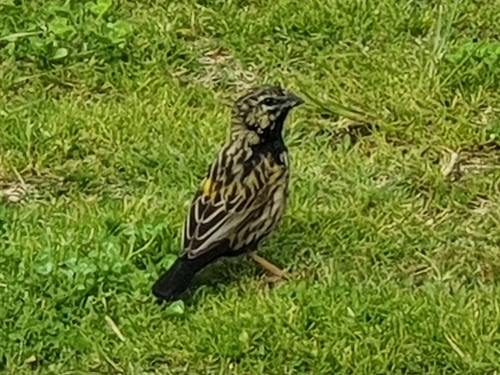 Obispo Culigualdo
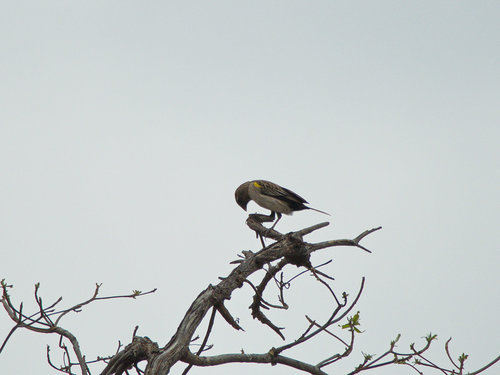 Obispo Dorsiamarillo
En breve
La marca de campo más confiable para separar al Obispo Culigualdo del Obispo Dorsiamarillo es la cola: los machos reproductores de Obispo Dorsiamarillo muestran una cola mucho más larga, mientras que los Obispos Culigualdo tienen una cola relativamente corta en todos los plumajes. Los machos reproductores de ambas especies son en su mayoría negros con parches de hombro y rabadilla de un amarillo brillante, pero el amarillo del Obispo Culigualdo se extiende más abajo en la espalda y la rabadilla, mientras que el amarillo del Obispo Dorsiamarillo se concentra en el manto y los hombros. Los plumajes de no reproducción y hembras son extremadamente similares y notoriamente difíciles de separar, pero los Obispos Culigualdo retienen el amarillo en la rabadilla, que está ausente en las hembras/inmaduras de Obispo Dorsiamarillo. La estructura, especialmente el tamaño del pico y la corpulencia del cuerpo, también puede ayudar: el Obispo Culigualdo es más pesado y robusto. Los juveniles y las hembras son un gran obstáculo, ya que ambos son marrones estriados con parches amarillos en los hombros, pero una atención cuidadosa al color de la rabadilla y la forma general puede ayudar.
Consejos de identificación
- La longitud de la cola es la mejor marca de campo en machos reproductores: Los machos de Obispo Dorsiamarillo tienen una cola dramáticamente larga en la temporada de cría, mientras que la cola del Obispo Culigualdo es siempre corta y cuadrada. Esto es más obvio en vuelo o cuando están posados con la cola extendida.
- Amarillo en la rabadilla vs. manto: Los machos de Obispo Culigualdo (y machos no reproductores) muestran un amarillo brillante en la parte baja de la espalda y la rabadilla, visible tanto posados como en vuelo. Los machos de Obispo Dorsiamarillo tienen amarillo en el manto y los hombros, pero la rabadilla es negra. Esto es sutil pero diagnóstico si se ve bien.
- Parches en los hombros en ambos: Ambas especies muestran parches de hombro amarillos brillantes en todos los plumajes masculinos, e incluso en hembras/inmaduras, por lo que esta marca por sí sola no es suficiente para la separación.
- La separación de hembras y juveniles es difícil: Ambos son marrones estriados con parches amarillos en los hombros, pero solo las hembras/inmaduras de Obispo Culigualdo muestran amarillo en la rabadilla. En el Obispo Dorsiamarillo, la rabadilla es marrón simple o negruzca, careciendo de amarillo. Esta es la pista principal para las aves no reproductoras.
- Tamaño y forma del pico: El Obispo Culigualdo tiene un pico más grueso y cónico, que a menudo parece tener una cabeza pesada. El tamaño del pico puede variar entre razas, pero generalmente es más grande que en el Obispo Dorsiamarillo.
- Estructura del cuerpo: El Obispo Culigualdo es más robusto y de cuerpo más pesado, mientras que el Obispo Dorsiamarillo es más esbelto. Esto es sutil pero puede ayudar en la comparación directa.
- Cresta: Los machos de Obispo Culigualdo tienen una cresta corta, que falta en el Obispo Dorsiamarillo.
- Estacionalidad del plumaje: En la temporada de no reproducción, ambas especies se vuelven marrones estriados, pero los machos de Obispo Culigualdo retienen amarillo en la rabadilla y los hombros, mientras que los machos de Obispo Dorsiamarillo retienen amarillo solo en los hombros.
- Color del pico en plumaje de no reproducción: El pico del Obispo Culigualdo se vuelve pálido en el plumaje de no reproducción, lo que puede ayudar a separarlo del Obispo Dorsiamarillo si se ve bien.
- Comportamiento en grupo: El Obispo Culigualdo es a menudo solitario o en parejas durante la cría, pero se une a bandadas mixtas de Euplectes en la temporada de no reproducción. Los machos de Obispo Dorsiamarillo pueden exhibirse en grupos (leks) con colas largas.
- Preferencia de hábitat: El Obispo Culigualdo prefiere hábitats más húmedos y vegetados (fynbos, valles de helechos), mientras que el Obispo Dorsiamarillo es más típico de praderas abiertas y sabanas, aunque puede haber superposición.
- Trampa: Las hembras y los juveniles de ambas especies son muy similares y pueden ser casi imposibles de separar sin una buena vista de la rabadilla o comparación directa. Cuando haya dudas, anote el hábitat y la composición de la bandada.
- Vistas en vuelo: En vuelo, busque la rabadilla amarilla (Obispo Culigualdo) frente a la cola larga (macho de Obispo Dorsiamarillo) como la separación más rápida.
- Bandadas mixtas: En la temporada de no reproducción, ambas pueden ocurrir juntas en bandadas mixtas de Euplectes, haciendo que la identificación sea especialmente desafiante para los no machos.
- No se han notado diferencias vocales confiables: La voz no se describe como una marca de campo útil en las notas disponibles.
Tamaño
El Obispo Culigualdo es considerablemente más pesado y robusto (promedio 33.95g) que el Obispo Dorsiamarillo (promedio 22g) [wikidata]. En el campo, el Obispo Culigualdo parece más robusto con un pico cónico más grueso y una cola más corta, mientras que el Obispo Dorsiamarillo es más esbelto y, en machos reproductores, tiene una cola mucho más larga. Esta diferencia de tamaño es más obvia cuando las dos especies se ven una al lado de la otra, pero puede ser sutil a distancia o en luz pobre.
Plumaje
- Juveniles y hembras: Ambas especies son marrones estriados con parches amarillos en los hombros, pero las hembras/inmaduras de Obispo Culigualdo retienen amarillo en la rabadilla y la parte baja de la espalda, mientras que las hembras/inmaduras de Obispo Dorsiamarillo no. Ambas carecen del contraste negro y amarillo de los machos reproductores.
- Machos reproductores: Ambos son en su mayoría negros con parches amarillos brillantes en los hombros. Los machos de Obispo Culigualdo tienen amarillo que se extiende hacia la parte baja de la espalda y la rabadilla, y una cresta corta; los machos de Obispo Dorsiamarillo tienen amarillo en el manto y los hombros, pero la rabadilla es negra. La cola es dramáticamente más larga en el macho reproductor de Obispo Dorsiamarillo, mientras que la cola del Obispo Culigualdo permanece corta.
- Machos no reproductores: Ambos se vuelven marrones estriados, pero los machos de Obispo Culigualdo retienen amarillo en la rabadilla y los hombros, mientras que los machos de Obispo Dorsiamarillo retienen amarillo solo en los hombros. El color del pico también cambia: el pico del Obispo Culigualdo se vuelve pálido en el plumaje de no reproducción, mientras que el color del pico del Obispo Dorsiamarillo no se especifica pero probablemente es menos contrastante.
Comportamiento
El Obispo Culigualdo es típicamente solitario o en parejas durante la temporada de cría, pero forma bandadas de especies mixtas con otros Euplectes en la temporada de no reproducción. El comportamiento social del Obispo Dorsiamarillo está menos detallado en las notas, pero como un viudo, los machos a menudo se ven exhibiéndose con colas largas en leks o áreas abiertas durante la cría. Ambos se alimentan principalmente de semillas y algunos insectos.
Hábitat
El Obispo Culigualdo prefiere áreas vegetadas menos áridas, como fynbos, praderas húmedas y valles cubiertos de helechos, a menudo en un rango de altitudes desde el nivel del mar hasta tierras altas. El hábitat del Obispo Dorsiamarillo no se detalla aquí, pero generalmente se encuentra en praderas abiertas y sabanas, a veces superponiéndose con el Obispo Culigualdo, pero a menudo en entornos ligeramente más secos o abiertos. Ambos pueden ocurrir en bandadas mixtas fuera de la temporada de cría.
Obispo Culigualdo · Obispo Dorsiamarillo · Mis aves difíciles