

Yellow Bishop vs Yellow-mantled Widowbird
Euplectes capensis contro Euplectes macroura
Fai un quiz con Yellow Bishop e Yellow-mantled Widowbird
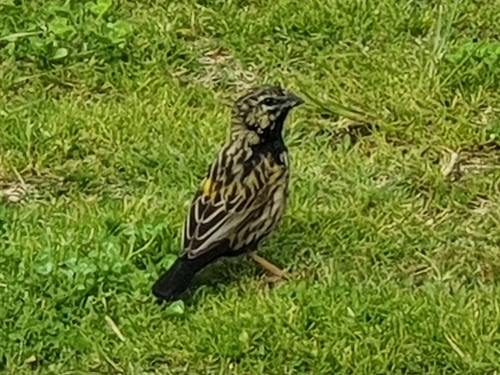 Yellow Bishop
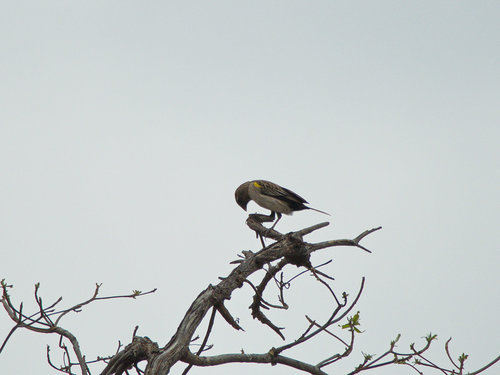 Yellow-mantled Widowbird
In breve
Il segno di campo più affidabile per separare il Yellow Bishop dal Yellow-mantled Widowbird è la coda: i maschi adulti di Yellow-mantled Widowbird mostrano una coda molto più lunga, mentre i Yellow Bishops hanno una coda relativamente corta in tutte le livree. I maschi adulti di entrambe le specie sono per lo più neri con macchie gialle brillanti sulle spalle e sul sopraccoda, ma il giallo del Yellow Bishop si estende più in basso sulla schiena e sul sopraccoda, mentre il giallo del Yellow-mantled Widowbird è concentrato sul mantello e sulle spalle. Le livree non riproduttive e femminili sono estremamente simili e notoriamente difficili da separare, ma i Yellow Bishops mantengono il giallo sul sopraccoda, che è assente nelle femmine/immaturi di Yellow-mantled Widowbird. La struttura, in particolare la dimensione del becco e la robustezza del corpo, può anche aiutare: il Yellow Bishop è più pesante e robusto. I giovani e le femmine rappresentano un grande problema, poiché entrambi sono marroni striati con macchie gialle sulle spalle, ma un'attenzione particolare al colore del sopraccoda e alla forma generale può aiutare.
Consigli di identificazione
- La lunghezza della coda è il miglior segno di campo nei maschi adulti: I maschi di Yellow-mantled Widowbird hanno una coda drammaticamente lunga durante la stagione di riproduzione, mentre la coda del Yellow Bishop è sempre corta e quadrata. Questo è più evidente in volo o quando sono posati con la coda aperta.
- Giallo sul sopraccoda vs. mantello: I maschi di Yellow Bishop (e i maschi non riproduttivi) mostrano un giallo brillante sulla parte bassa della schiena e sul sopraccoda, visibile sia posati che in volo. I maschi di Yellow-mantled Widowbird hanno giallo sul mantello e sulle spalle, ma il sopraccoda è nero. Questo è sottile ma diagnostico se visto bene.
- Macchie sulle spalle in entrambi: Entrambe le specie mostrano macchie gialle brillanti sulle spalle in tutte le livree maschili, e anche nelle femmine/immaturi, quindi questo segno da solo non è sufficiente per la separazione.
- La separazione di femmine e giovani è difficile: Entrambi sono marroni striati con macchie gialle sulle spalle, ma solo le femmine/immaturi di Yellow Bishop mostrano giallo sul sopraccoda. Nel Yellow-mantled Widowbird, il sopraccoda è marrone uniforme o nerastro, privo di giallo. Questo è l'indizio principale per gli uccelli non riproduttivi.
- Dimensione e forma del becco: Il Yellow Bishop ha un becco più spesso e conico, che appare spesso pesante. La dimensione del becco può variare tra le razze, ma è generalmente più grande rispetto al Yellow-mantled Widowbird.
- Struttura del corpo: Il Yellow Bishop è più robusto e pesante, mentre il Yellow-mantled Widowbird è più snello. Questo è sottile ma può aiutare nel confronto diretto.
- Cresta: I maschi di Yellow Bishop hanno una cresta corta, che manca nel Yellow-mantled Widowbird.
- Stagionalità della livrea: Nella stagione non riproduttiva, entrambe le specie diventano marroni striati, ma i maschi di Yellow Bishop mantengono il giallo sul sopraccoda e sulle spalle, mentre i maschi di Yellow-mantled Widowbird mantengono il giallo solo sulle spalle.
- Colore del becco nella livrea non riproduttiva: Il becco del Yellow Bishop diventa pallido nella livrea non riproduttiva, il che può aiutare a separarlo dal Yellow-mantled Widowbird se visto bene.
- Comportamento di gruppo: Il Yellow Bishop è spesso solitario o in coppie durante la riproduzione, ma si unisce a stormi misti di Euplectes nella stagione non riproduttiva. I maschi di Yellow-mantled Widowbird possono esibirsi in gruppi (leks) con lunghe code.
- Preferenza dell'habitat: Il Yellow Bishop preferisce habitat più umidi e vegetati (fynbos, valli di felci), mentre il Yellow-mantled Widowbird è più tipico di praterie aperte e savane, anche se possono verificarsi sovrapposizioni.
- Trappola: Le femmine e i giovani di entrambe le specie sono molto simili e possono essere quasi impossibili da separare senza una buona vista del sopraccoda o un confronto diretto. In caso di dubbio, annotare l'habitat e la composizione del gruppo.
- Viste in volo: In volo, cerca il sopraccoda giallo (Yellow Bishop) rispetto alla lunga coda (maschio di Yellow-mantled Widowbird) come la separazione più rapida.
- Stormi misti: Nella stagione non riproduttiva, entrambe possono verificarsi insieme in stormi misti di Euplectes, rendendo l'identificazione particolarmente impegnativa per i non maschi.
- Nessuna differenza vocale affidabile notata: La voce non è descritta come un segno di campo utile nelle note disponibili.
Taglia
Il Yellow Bishop è considerevolmente più pesante e robusto (media 33,95 g) rispetto al Yellow-mantled Widowbird (media 22 g) [wikidata]. Sul campo, il Yellow Bishop appare più robusto con un becco conico più spesso e una coda più corta, mentre il Yellow-mantled Widowbird è più snello e, nei maschi adulti, ha una coda molto più lunga. Questa differenza di dimensioni è più evidente quando le due specie sono viste fianco a fianco, ma può essere sottile a distanza o in scarsa illuminazione.
Piumaggio
- Giovani e femmine: Entrambe le specie sono marroni striati con macchie gialle sulle spalle, ma le femmine/immaturi di Yellow Bishop mantengono il giallo sul sopraccoda e sulla parte bassa della schiena, mentre le femmine/immaturi di Yellow-mantled Widowbird non lo fanno. Entrambi mancano del contrasto nero e giallo dei maschi adulti.
- Maschi adulti: Entrambi sono per lo più neri con macchie gialle brillanti sulle spalle. I maschi di Yellow Bishop hanno giallo che si estende sulla parte bassa della schiena e sul sopraccoda, e una cresta corta; i maschi di Yellow-mantled Widowbird hanno giallo sul mantello e sulle spalle, ma il sopraccoda è nero. La coda è drammaticamente più lunga nei maschi adulti di Yellow-mantled Widowbird, mentre la coda del Yellow Bishop rimane corta.
- Maschi non riproduttivi: Entrambi diventano marroni striati, ma i maschi di Yellow Bishop mantengono il giallo sul sopraccoda e sulle spalle, mentre i maschi di Yellow-mantled Widowbird mantengono il giallo solo sulle spalle. Anche il colore del becco cambia: il becco del Yellow Bishop diventa pallido nella livrea non riproduttiva, mentre il colore del becco del Yellow-mantled Widowbird non è specificato ma è probabilmente meno contrastante.
Comportamento
Il Yellow Bishop è tipicamente solitario o in coppie durante la stagione di riproduzione, ma forma stormi misti con altre specie di Euplectes nella stagione non riproduttiva. Il comportamento sociale del Yellow-mantled Widowbird è meno dettagliato nelle note, ma come vedova, i maschi sono spesso visti esibirsi con lunghe code in leks o aree aperte durante la riproduzione. Entrambi si nutrono principalmente di semi e alcuni insetti.
Habitat
Il Yellow Bishop preferisce aree vegetate meno aride come fynbos, praterie umide e valli coperte di felci, spesso a una gamma di altitudini dal livello del mare agli altipiani. L'habitat del Yellow-mantled Widowbird non è dettagliato qui, ma si trova generalmente in praterie aperte e savane, a volte sovrapponendosi al Yellow Bishop ma spesso in ambienti leggermente più secchi o aperti. Entrambi possono verificarsi in stormi misti al di fuori della stagione di riproduzione.
Yellow Bishop · Yellow-mantled Widowbird · I miei uccelli difficili