

Motmot

ノドジロシロメジリハチドリ 対 フジノドハチドリ

Lampornis castaneoventris 対 Philodice mitchellii

ノドジロシロメジリハチドリとフジノドハチドリのクイズ
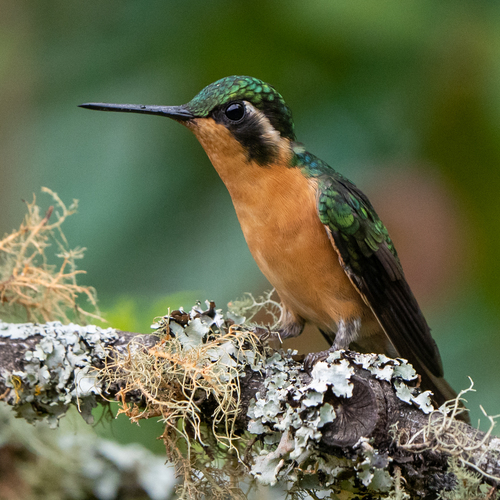
ノドジロシロメジリハチドリ (Lampornis castaneoventris) ノドジロシロメジリハチドリ
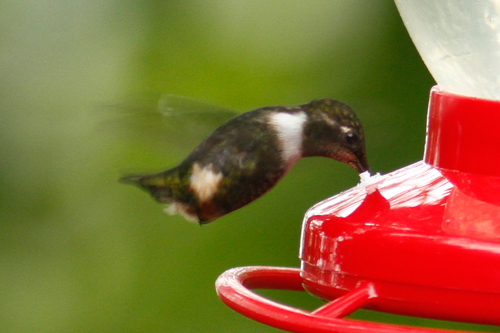
フジノドハチドリ (Philodice mitchellii) フジノドハチドリ

メディア

読み込み中…

要点

これら二種を区別する最も信頼できるフィールドマークはサイズです:ノドジロシロメジリハチドリは小さなフジノドハチドリのほぼ2倍の長さと重さです。白い喉と明るい緑の上面を持つハチドリ(オス)や、赤褐色の腹と緑の背を持つメスを見たら、くちばしの長さと全体のサイズを確認してください—ノドジロシロメジリハチドリははるかに大きくてがっしりしています。飛んでいるとき、フジノドハチドリの短い二股の尾と白い尾羽の斑点は特徴的ですが、ノドジロシロメジリハチドリはまっすぐで暗い尾を持ち、白い尾羽はありません。両種の性別は異なるので、喉の色と腹の色調に注意してください。両方はパナマで見られますが、コスタリカではノドジロシロメジリハチドリのみが見られます。

識別のコツ

  1. サイズが最も早い区別点です: 鳥が小さく、蜂のようで、典型的なハチドリよりもはるかに小さい場合、それはフジノドハチドリです;中型でがっしりしている場合、それはノドジロシロメジリハチドリです。これはすべての年齢と性別に当てはまります。
  2. 飛行中の尾の形: フジノドハチドリのオスは深く二股に分かれた茶色がかった紫の尾を持ち、メスは黒い帯のあるシナモン色の外尾羽を持ちます。ノドジロシロメジリハチドリの尾はまっすぐで暗い(オス)か、青銅色の緑で外側が淡い(メス)ですが、決して二股にはなりません。
  3. 白い尾羽の斑点: フジノドハチドリの両性は、飛行中や止まっているときに見える明らかな白い斑点を尾の側に示します。ノドジロシロメジリハチドリは尾に白を示しません。
  4. くちばしの長さ: ノドジロシロメジリハチドリは中程度の長さのまっすぐな黒いくちばしを持ち、フジノドハチドリのくちばしは明らかに短くてまっすぐです。サイズを判断するのが難しいときにこれを使用します。
  5. オスの喉の色: ノドジロシロメジリハチドリのオスは白い顎と喉を持ち、フジノドハチドリのオスは下に白い帯のある光沢のある紫色のゴルゲットを持ちます。これは成鳥のオスの診断に役立ちます。
  6. メスの喉と腹: ノドジロシロメジリハチドリのメスは暗い赤褐色の喉と腹を持ち、フジノドハチドリのメスは薄い白い喉に暗い斑点があり、下に白い帯、緑の下胸、赤褐色の腹を持ちます。白い喉と帯はフジノドハチドリのメスにとって重要です。
  7. 上面: ノドジロシロメジリハチドリのオスはエメラルドグリーンの冠と暗い青銅色の緑の上面を持ち、フジノドハチドリの上面は暗い青銅色の緑ですが、明るい冠はありません。
  8. 顔の模様: 両方とも目の後ろに白いマークがありますが、フジノドハチドリのオスでは小さな斑点で、メスでは曲線のラインです。ノドジロシロメジリハチドリは目の後ろに白いストライプがありますが、これだけでは診断にはなりません。
  9. 生息地と範囲: コスタリカでは、ノドジロシロメジリハチドリのみが可能です。パナマでは、標高と生息地を確認してください:ノドジロシロメジリハチドリは高地のオークの森を好み、フジノドハチドリは低い標高や広範囲の生息地で見られます。
  10. 行動: フジノドハチドリはホバリングし、急速に飛び回り、しばしば昆虫のように見えます。ノドジロシロメジリハチドリは飛行中により安定していてがっしりしており、しばしば花のパッチを守ります。
  11. 声: ノドジロシロメジリハチドリの声のみが記述されています(高音の「ziit」または「ziip」);フジノドハチドリの声の欠如は、これが信頼できる区別点ではないことを意味します。
  12. 性差: 常に喉と腹の色を確認して性別を判断してください。両種は強い性差を示します。
  13. 季節的変化: どちらの種にも重要な季節的羽毛の変化は記載されていないため、これらのマークは年間を通じて機能します。
  14. 落とし穴: メスのノドジロシロメジリハチドリとフジノドハチドリは、どちらも緑の上面と赤褐色の腹を示すことがあります;喉の色と白い尾羽の斑点を使用して区別します。幼鳥のマークは記載されていないため、未熟な鳥のサイズ、尾、尾羽の斑点に頼ってください。
  15. 疑わしい場合: 鳥が非常に小さく、二股の尾と白い尾羽の斑点を持っている場合、それはフジノドハチドリです。もしそれが大きく、白い喉(オス)または赤褐色の喉と腹(メス)を持ち、白い尾羽がない場合、それはノドジロシロメジリハチドリです。

大きさ

ノドジロシロメジリハチドリは中型のハチドリで、約12 cmの長さで、重さは5〜6 gです。フジノドハチドリははるかに小さく、わずか6.8〜7.5 cmで、3.0〜3.3 gです。この違いはフィールドで明らかです:ノドジロシロメジリハチドリは頑丈で、ほとんどのハチドリよりも明らかに大きく見えますが、フジノドハチドリは小さく、コンパクトで、飛行中は「蜂のように」見えます。くちばしの長さも異なります:ノドジロシロメジリハチドリのくちばしは中程度でまっすぐ、フジノドハチドリのくちばしは短くてまっすぐです。

羽色

行動

ノドジロシロメジリハチドリのオスは領土的で、しばしば花のパッチを守り、森林の内部で餌を食べますが、メスはより茂った場所で餌を食べます。彼らは小さなハチドリに対して優位です。フジノドハチドリははるかに小さいため、優位になる可能性は低く、花の間を素早く飛び回るのが見られることが多く、しばしば蜂のようにホバリングします。フジノドハチドリの飛行は通常迅速で機敏で、頻繁にホバリングし、素早くダッシュしますが、ノドジロシロメジリハチドリは飛行中により安定していてがっしりしています。

生息環境

ノドジロシロメジリハチドリは、高地のオークの森、エッジ、茂みのあるクリアリング、そして西パナマとコスタリカ南中部の近くの庭に制限されており、標高は1,500 mから木の限界までです。フジノドハチドリはパナマ、コロンビア、エクアドルに生息しますが、コスタリカにはおらず、高い標高に制限されていません。重複はパナマでのみ可能で、ノドジロシロメジリハチドリは山地の森林にいる可能性が高く、フジノドハチドリはより広範囲の生息地にいます。

声

ノドジロシロメジリハチドリは高音の「ziit」または「ziip」の呼び声と、泡立つような歌を発します。フジノドハチドリの声の詳細はノートに記載されていないため、声はここでの信頼できる区別点ではありません。

より良い説明を送る

比較と同じ項目を使ってください。文章はすぐに公開されます。

The most reliable field mark to separate these two is size: the White-throated Mountain-gem is nearly twice as long and heavy as the tiny Purple-throated Woodstar. If you see a hummingbird with a white throat and bright green upperparts (male), or a female with a rufous belly and green back, check the bill length and overall size—mountain-gem is much larger and bulkier. In flight, the woodstar's short, forked tail and white rump patches are distinctive, while the mountain-gem has a straighter, darker tail and lacks any white rump. Sexes differ in both species, so note throat color and belly tone. Both can occur in Panama, but only the mountain-gem is found in Costa Rica.

  1. Size is the quickest separator: If the bird looks tiny, bee-like, and much smaller than a typical hummingbird, it's a Purple-throated Woodstar; if it appears medium-sized and robust, it's a White-throated Mountain-gem. This works for all ages and sexes.
  2. Tail shape in flight: Woodstar males have a deeply forked, brownish purple tail; females have cinnamon outer tail feathers with a black band. Mountain-gem tails are straighter and darker (male) or bronze-green with paler outers (female), never forked or cinnamon.
  3. White rump patches: Both sexes of woodstar show obvious white patches on the sides of the rump, visible in flight and often when perched. Mountain-gem never shows white on the rump.
  4. Bill length: Mountain-gem has a medium-length straight black bill; woodstar's bill is noticeably shorter and straight. Use this when size is hard to judge.
  5. Male throat color: Mountain-gem males have a white chin and throat; woodstar males have a shining violet-purple gorget with a white band below. This is diagnostic for adult males.
  6. Female throat and belly: Mountain-gem females have a dark rufous throat and belly; woodstar females have a buffy white throat with dusky speckles, a white band below, green lower breast, and rufous belly. The white throat and band are key for woodstar females.
  7. Upperparts: Mountain-gem males have an emerald green crown and dark bronzy green upperparts; woodstar upperparts are dusky bronze-green but lack the bright crown.
  8. Facial markings: Both have a white mark behind the eye, but in woodstar males it's a small spot, and in females a curved line. Mountain-gem has a white stripe behind the eye, but this alone is not diagnostic.
  9. Habitat and range: In Costa Rica, only mountain-gem is possible. In Panama, check elevation and habitat: mountain-gem prefers highland oak forests, woodstar can occur at lower elevations and in a wider range of habitats.
  10. Behavior: Woodstars hover and dart rapidly, often appearing insect-like. Mountain-gems are steadier and more robust in flight, often defending flower patches.
  11. Voice: Only mountain-gem's voice is described (high-pitched 'ziit' or 'ziip'); lack of woodstar vocalization means this is not a reliable separator.
  12. Sex differences: Always check throat and belly color for sexing, as both species show strong sexual dimorphism.
  13. Seasonal variation: No significant seasonal plumage changes are noted for either species, so these marks work year-round.
  14. Pitfalls: Female mountain-gems and woodstars can both show green upperparts and rufous bellies; use throat color and white rump patches to separate. Juvenile marks are not described, so rely on size, tail, and rump patches for immature birds.
  15. When in doubt: If the bird looks exceptionally small, with a forked tail and white rump patches, it's a woodstar. If it's larger, with a white throat (male) or rufous throat and belly (female), and no white rump, it's a mountain-gem.

White-throated Mountain-gem is a medium-sized hummingbird, about 12 cm long and weighing 5–6 g. The Purple-throated Woodstar is much smaller, only 6.8–7.5 cm and 3.0–3.3 g. This difference is obvious in the field: the mountain-gem appears robust and noticeably larger than most hummingbirds, while the woodstar is tiny, compact, and 'bee-like' in flight. Bill length also differs: the mountain-gem's is medium and straight, the woodstar's is short and straight.

  • Juvenile/immature marks: No specific juvenile or upperwing pattern marks are described for either species, so focus on adult and sex-specific plumage.
  • Adult males: Mountain-gem males have a white chin and throat, emerald green crown, dark bronzy green upperparts, and a black to bluish tail. Woodstar males have a shining violet-purple gorget with a white band below, bronze-green upperparts, white rump patches, and a brownish purple forked tail. Their belly and flanks are rufous.
  • Adult females: Mountain-gem females have bright green upperparts, rufous throat and belly, and a tail with bronze-green central feathers and paler outers. Woodstar females have a buffy white throat with dusky speckles, a white band below, green lower breast, rufous belly, and a tail with bronze-green central feathers and cinnamon outers with a black band near the tip. Both sexes of woodstar show white rump patches, which are absent in mountain-gem.
  • Tail: Mountain-gem has a straight, dark tail (male) or bronze-green with paler outers (female). Woodstar has a forked, brownish purple tail (male) or cinnamon with black band (female).

White-throated Mountain-gem males are territorial, often defending flower patches and feeding in the forest interior, while females feed more in shrubby areas. They are dominant over smaller hummingbirds. The Purple-throated Woodstar, being much smaller, is less likely to be dominant and is more likely to be seen darting quickly between flowers, often hovering in a bee-like manner. The woodstar's flight is typically rapid and agile, with frequent hovering and quick dashes, while the mountain-gem appears steadier and bulkier in flight.

White-throated Mountain-gem is restricted to highland oak forests, edges, shrubby clearings, and nearby gardens in western Panama and south-central Costa Rica, at elevations from 1,500 m up to timberline. Purple-throated Woodstar occurs in Panama, Colombia, and Ecuador, but not Costa Rica, and is not restricted to high elevations. Overlap is possible only in Panama, where the mountain-gem is more likely in montane forest and the woodstar in a wider range of habitats.

White-throated Mountain-gem gives high-pitched 'ziit' or 'ziip' calls and a sputtery, bubbly song. No vocalization details are provided for the Purple-throated Woodstar in the notes, so voice is not a reliable separator here.

変更を破棄しますか?

保存していない編集があります。今離れると失われます。

ノドジロシロメジリハチドリ · フジノドハチドリ · 苦手な鳥