

Colibrí Ventricastaño vs Colibrí de Mitchell
Lampornis castaneoventris frente a Philodice mitchellii
Juega un quiz con Colibrí Ventricastaño y Colibrí de Mitchell
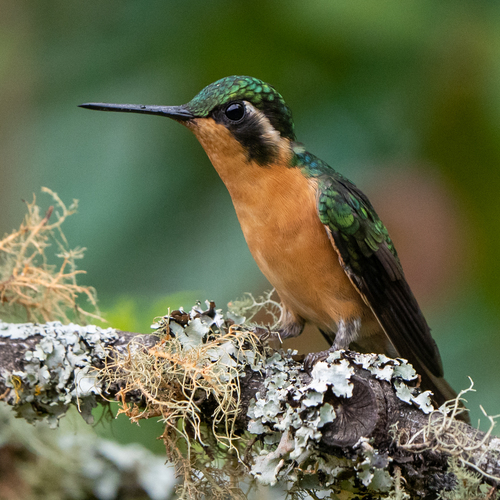 Colibrí Ventricastaño
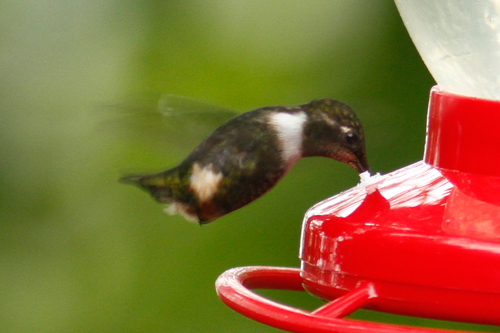 Colibrí de Mitchell
En breve
La marca de campo más confiable para separar estos dos es el tamaño: el Colibrí Ventricastaño es casi el doble de largo y pesado que el pequeño Colibrí de Mitchell. Si ves un colibrí con una garganta blanca y partes superiores de un verde brillante (macho), o una hembra con un vientre rufo y espalda verde, verifica la longitud del pico y el tamaño general: el ventricastaño es mucho más grande y robusto. En vuelo, la cola corta y bifurcada del colibrí de Mitchell y las manchas blancas en el rabadilla son distintivas, mientras que el ventricastaño tiene una cola más recta y oscura y carece de cualquier blanco en el rabadilla. Los sexos difieren en ambas especies, así que observa el color de la garganta y el tono del vientre. Ambas pueden ocurrir en Panamá, pero solo el ventricastaño se encuentra en Costa Rica.
Consejos de identificación
- El tamaño es el separador más rápido: Si el pájaro parece pequeño, similar a una abeja, y mucho más pequeño que un colibrí típico, es un Colibrí de Mitchell; si parece de tamaño mediano y robusto, es un Colibrí Ventricastaño. Esto funciona para todas las edades y sexos.
- Forma de la cola en vuelo: Los machos del colibrí de Mitchell tienen una cola profundamente bifurcada, de color púrpura marrón; las hembras tienen plumas exteriores de cola canela con una banda negra. Las colas del ventricastaño son más rectas y oscuras (macho) o verde bronce con exteriores más claros (hembra), nunca bifurcadas o canela.
- Manchas blancas en el rabadilla: Ambos sexos del colibrí de Mitchell muestran manchas blancas obvias en los lados del rabadilla, visibles en vuelo y a menudo cuando están posados. El ventricastaño nunca muestra blanco en el rabadilla.
- Longitud del pico: El ventricastaño tiene un pico recto de longitud media y negro; el pico del colibrí de Mitchell es notablemente más corto y recto. Usa esto cuando sea difícil juzgar el tamaño.
- Color de la garganta del macho: Los machos del ventricastaño tienen una barbilla y garganta blancas; los machos del colibrí de Mitchell tienen un gorjeo violeta-púrpura brillante con una banda blanca debajo. Esto es diagnóstico para machos adultos.
- Garganta y vientre de la hembra: Las hembras del ventricastaño tienen una garganta y vientre rufo oscuros; las hembras del colibrí de Mitchell tienen una garganta blanca amarillenta con manchas oscuras, una banda blanca debajo, pecho inferior verde y vientre rufo. La garganta blanca y la banda son clave para las hembras del colibrí de Mitchell.
- Partes superiores: Los machos del ventricastaño tienen una corona verde esmeralda y partes superiores de un verde bronce oscuro; las partes superiores del colibrí de Mitchell son de un verde bronce oscuro pero carecen de la brillante corona.
- Marcas faciales: Ambos tienen una marca blanca detrás del ojo, pero en los machos del colibrí de Mitchell es un pequeño punto, y en las hembras una línea curva. El ventricastaño tiene una franja blanca detrás del ojo, pero esto por sí solo no es diagnóstico.
- Hábitat y distribución: En Costa Rica, solo es posible el ventricastaño. En Panamá, verifica la elevación y el hábitat: el ventricastaño prefiere bosques de roble de tierras altas, el colibrí de Mitchell puede ocurrir a elevaciones más bajas y en una gama más amplia de hábitats.
- Comportamiento: Los colibríes de Mitchell flotan y se mueven rápidamente, a menudo apareciendo similares a insectos. Los ventricastaños son más estables y robustos en vuelo, a menudo defendiendo parches de flores.
- Voz: Solo se describe la voz del ventricastaño (llamadas agudas 'ziit' o 'ziip'); la falta de vocalización del colibrí de Mitchell significa que esto no es un separador confiable.
- Diferencias sexuales: Siempre verifica el color de la garganta y el vientre para determinar el sexo, ya que ambas especies muestran un fuerte dimorfismo sexual.
- Variación estacional: No se notan cambios significativos en el plumaje estacional para ninguna de las especies, por lo que estas marcas funcionan durante todo el año.
- Trampas: Las hembras de ventricastaño y colibrí de Mitchell pueden mostrar partes superiores verdes y vientres rufos; usa el color de la garganta y las manchas blancas en el rabadilla para separarlas. No se describen marcas juveniles, así que confía en el tamaño, la cola y las manchas en el rabadilla para aves inmaduras.
- Cuando tengas dudas: Si el pájaro parece excepcionalmente pequeño, con una cola bifurcada y manchas blancas en el rabadilla, es un colibrí de Mitchell. Si es más grande, con una garganta blanca (macho) o garganta y vientre rufos (hembra), y sin blanco en el rabadilla, es un ventricastaño.
Tamaño
El Colibrí Ventricastaño es un colibrí de tamaño mediano, de aproximadamente 12 cm de largo y pesando entre 5 y 6 g. El Colibrí de Mitchell es mucho más pequeño, solo de 6.8 a 7.5 cm y de 3.0 a 3.3 g. Esta diferencia es obvia en el campo: el ventricastaño parece robusto y notablemente más grande que la mayoría de los colibríes, mientras que el colibrí de Mitchell es pequeño, compacto y 'similar a una abeja' en vuelo. La longitud del pico también difiere: el del ventricastaño es de longitud media y recto, el del colibrí de Mitchell es corto y recto.
Plumaje
- Marcas juveniles/inmaduras: No se describen marcas específicas de patrón juvenil o de ala superior para ninguna de las especies, así que enfócate en el plumaje adulto y específico por sexo.
- Machos adultos: Los machos del ventricastaño tienen una barbilla y garganta blancas, corona verde esmeralda, partes superiores de un verde bronce oscuro y una cola negra a azulada. Los machos del colibrí de Mitchell tienen un gorjeo violeta-púrpura brillante con una banda blanca debajo, partes superiores verde bronce, manchas blancas en el rabadilla y una cola bifurcada de color púrpura marrón. Su vientre y flancos son rufos.
- Hembras adultas: Las hembras del ventricastaño tienen partes superiores de un verde brillante, garganta y vientre rufos, y una cola con plumas centrales verde bronce y exteriores más claras. Las hembras del colibrí de Mitchell tienen una garganta blanca amarillenta con manchas oscuras, una banda blanca debajo, pecho inferior verde, vientre rufo, y una cola con plumas centrales verde bronce y exteriores canela con una banda negra cerca de la punta. Ambos sexos del colibrí de Mitchell muestran manchas blancas en el rabadilla, que están ausentes en el ventricastaño.
- Cola: El ventricastaño tiene una cola recta y oscura (macho) o verde bronce con exteriores más claros (hembra). El colibrí de Mitchell tiene una cola bifurcada, de color púrpura marrón (macho) o canela con banda negra (hembra).
Comportamiento
Los machos del Colibrí Ventricastaño son territoriales, a menudo defendiendo parches de flores y alimentándose en el interior del bosque, mientras que las hembras se alimentan más en áreas arbustivas. Son dominantes sobre colibríes más pequeños. El Colibrí de Mitchell, siendo mucho más pequeño, es menos probable que sea dominante y es más probable que se vea moviéndose rápidamente entre flores, a menudo flotando de manera similar a una abeja. El vuelo del colibrí de Mitchell es típicamente rápido y ágil, con frecuentes flotaciones y rápidos dashes, mientras que el ventricastaño parece más estable y robusto en vuelo.
Hábitat
El Colibrí Ventricastaño está restringido a bosques de roble de tierras altas, bordes, claros arbustivos y jardines cercanos en el oeste de Panamá y el centro-sur de Costa Rica, a elevaciones de 1,500 m hasta la línea de árboles. El Colibrí de Mitchell ocurre en Panamá, Colombia y Ecuador, pero no en Costa Rica, y no está restringido a elevaciones altas. La superposición es posible solo en Panamá, donde el ventricastaño es más probable que se encuentre en bosques montanos y el colibrí de Mitchell en una gama más amplia de hábitats.
Voz
El Colibrí Ventricastaño emite llamadas agudas 'ziit' o 'ziip' y una canción burbujeante y chisporroteante. No se proporcionan detalles de vocalización para el Colibrí de Mitchell en las notas, por lo que la voz no es un separador confiable aquí.
Colibrí Ventricastaño · Colibrí de Mitchell · Mis aves difíciles