

White-throated Mountain-gem vs Purple-throated Woodstar
Lampornis castaneoventris contro Philodice mitchellii
Fai un quiz con White-throated Mountain-gem e Purple-throated Woodstar
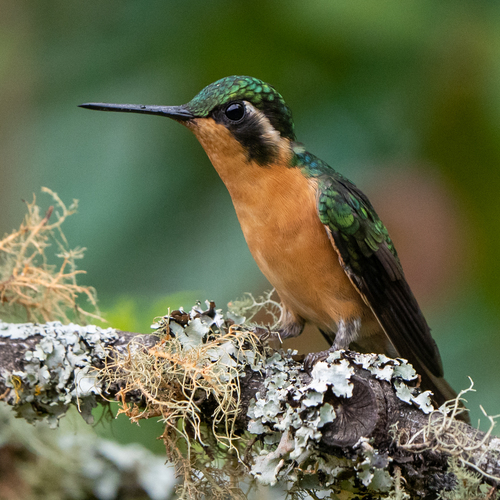 White-throated Mountain-gem
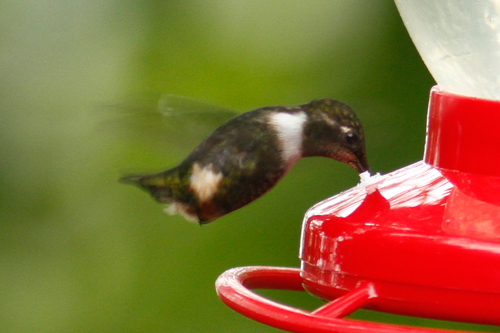 Purple-throated Woodstar
In breve
Il segno distintivo più affidabile per separare questi due è la dimensione: il White-throated Mountain-gem è quasi due volte più lungo e pesante del piccolo Purple-throated Woodstar. Se vedi un colibrì con una gola bianca e una parte superiore verde brillante (maschio), o una femmina con una pancia ruggine e un dorso verde, controlla la lunghezza del becco e la dimensione complessiva: il mountain-gem è molto più grande e massiccio. In volo, la coda corta e biforcuta del woodstar e le macchie bianche sul dorso sono distintive, mentre il mountain-gem ha una coda più dritta e scura e non ha alcun bianco sul dorso. I sessi differiscono in entrambe le specie, quindi nota il colore della gola e il tono della pancia. Entrambi possono verificarsi a Panama, ma solo il mountain-gem si trova in Costa Rica.
Consigli di identificazione
- La dimensione è il separatore più veloce: Se l'uccello sembra piccolo, simile a un'ape, e molto più piccolo di un colibrì tipico, è un Purple-throated Woodstar; se appare di dimensioni medie e robusto, è un White-throated Mountain-gem. Questo funziona per tutte le età e i sessi.
- Forma della coda in volo: I maschi del woodstar hanno una coda profondamente biforcuta, di colore viola-bruno; le femmine hanno piume esterne della coda color cannella con una banda nera. Le code del mountain-gem sono più dritte e scure (maschio) o verde bronzo con esterni più chiari (femmina), mai biforcute o color cannella.
- Macchie bianche sul dorso: Entrambi i sessi del woodstar mostrano evidenti macchie bianche sui lati del dorso, visibili in volo e spesso quando sono posati. Il mountain-gem non mostra mai bianco sul dorso.
- Lunghezza del becco: Il mountain-gem ha un becco dritto di lunghezza media e di colore nero; il becco del woodstar è notevolmente più corto e dritto. Usa questo quando è difficile giudicare la dimensione.
- Colore della gola nei maschi: I maschi del mountain-gem hanno un mento e una gola bianchi; i maschi del woodstar hanno un gorget di colore viola-porpora lucido con una banda bianca sotto. Questo è diagnostico per i maschi adulti.
- Gola e pancia delle femmine: Le femmine del mountain-gem hanno una gola e una pancia ruggine scure; le femmine del woodstar hanno una gola bianca color crema con macchie scure, una banda bianca sotto, un petto verde e una pancia ruggine. La gola bianca e la banda sono fondamentali per le femmine del woodstar.
- Parte superiore: I maschi del mountain-gem hanno una corona verde smeraldo e una parte superiore verde bronzo scuro; le parti superiori del woodstar sono di colore bronzo scuro-verde ma mancano della corona brillante.
- Segni facciali: Entrambi hanno un segno bianco dietro l'occhio, ma nei maschi del woodstar è un piccolo punto, e nelle femmine una linea curva. Il mountain-gem ha una striscia bianca dietro l'occhio, ma questa da sola non è diagnostica.
- Habitat e distribuzione: In Costa Rica, è possibile solo il mountain-gem. A Panama, controlla l'elevazione e l'habitat: il mountain-gem preferisce le foreste di quercia montane, il woodstar può verificarsi a basse elevazioni e in una gamma più ampia di habitat.
- Comportamento: I woodstar si librano e si muovono rapidamente, spesso apparendo simili a insetti. I mountain-gems sono più stabili e robusti in volo, spesso difendendo i fiori.
- Voce: Solo la voce del mountain-gem è descritta (un 'ziit' o 'ziip' acuto); la mancanza di vocalizzazione del woodstar significa che questo non è un separatore affidabile.
- Differenze sessuali: Controlla sempre il colore della gola e della pancia per determinare il sesso, poiché entrambe le specie mostrano un forte dimorfismo sessuale.
- Variazione stagionale: Non sono state notate significative variazioni nel piumaggio stagionale per entrambe le specie, quindi questi segni funzionano tutto l'anno.
- Trappole: Le femmine di mountain-gem e woodstar possono entrambe mostrare parti superiori verdi e pance ruggine; usa il colore della gola e le macchie bianche sul dorso per separarle. I segni giovanili non sono descritti, quindi fai affidamento su dimensione, coda e macchie sul dorso per gli uccelli immaturi.
- Quando hai dubbi: Se l'uccello sembra eccezionalmente piccolo, con una coda biforcuta e macchie bianche sul dorso, è un woodstar. Se è più grande, con una gola bianca (maschio) o una gola e pancia ruggine (femmina), e senza bianco sul dorso, è un mountain-gem.
Taglia
Il White-throated Mountain-gem è un colibrì di dimensioni medie, lungo circa 12 cm e pesante 5–6 g. Il Purple-throated Woodstar è molto più piccolo, solo 6.8–7.5 cm e 3.0–3.3 g. Questa differenza è evidente sul campo: il mountain-gem appare robusto e visibilmente più grande della maggior parte dei colibrì, mentre il woodstar è piccolo, compatto e 'simile a un'ape' in volo. Anche la lunghezza del becco differisce: quella del mountain-gem è media e dritta, quella del woodstar è corta e dritta.
Piumaggio
- Segni giovanili/immaturi: Non sono stati descritti segni specifici per giovanili o modelli di ali superiori per entrambe le specie, quindi concentrati sul piumaggio adulto e specifico per sesso.
- Maschi adulti: I maschi del mountain-gem hanno un mento e una gola bianchi, una corona verde smeraldo, una parte superiore verde bronzo scuro e una coda nera o blu. I maschi del woodstar hanno un gorget di colore viola-porpora lucido con una banda bianca sotto, parti superiori verde bronzo, macchie bianche sul dorso e una coda biforcuta di colore viola-bruno. La loro pancia e i fianchi sono ruggine.
- Femmine adulte: Le femmine del mountain-gem hanno parti superiori di un verde brillante, gola e pancia ruggine, e una coda con piume centrali verde bronzo e esterni più chiari. Le femmine del woodstar hanno una gola bianca color crema con macchie scure, una banda bianca sotto, un petto verde, una pancia ruggine e una coda con piume centrali verde bronzo e esterni color cannella con una banda nera vicino alla punta. Entrambi i sessi del woodstar mostrano macchie bianche sul dorso, che sono assenti nel mountain-gem.
- Coda: Il mountain-gem ha una coda dritta e scura (maschio) o verde bronzo con esterni più chiari (femmina). Il woodstar ha una coda biforcuta di colore viola-bruno (maschio) o color cannella con banda nera (femmina).
Comportamento
I maschi del White-throated Mountain-gem sono territoriali, spesso difendendo i fiori e nutrendosi nell'interno della foresta, mentre le femmine si nutrono più in aree cespugliose. Sono dominanti rispetto ai colibrì più piccoli. Il Purple-throated Woodstar, essendo molto più piccolo, è meno probabile che sia dominante ed è più probabile che venga visto muoversi rapidamente tra i fiori, spesso librandosi in modo simile a un'ape. Il volo del woodstar è tipicamente rapido e agile, con frequenti soste in volo e rapidi scatti, mentre il mountain-gem appare più stabile e massiccio in volo.
Habitat
Il White-throated Mountain-gem è limitato alle foreste di quercia montane, ai margini, alle radure cespugliose e ai giardini vicini nel Panama occidentale e nel Costa Rica centro-meridionale, a elevazioni da 1.500 m fino alla linea degli alberi. Il Purple-throated Woodstar si verifica in Panama, Colombia ed Ecuador, ma non in Costa Rica, e non è limitato a elevate altitudini. L'overlap è possibile solo a Panama, dove il mountain-gem è più probabile nelle foreste montane e il woodstar in una gamma più ampia di habitat.
Voce
Il White-throated Mountain-gem emette richiami acuti 'ziit' o 'ziip' e una canzone frizzante e gorgogliante. Non sono forniti dettagli sulla vocalizzazione del Purple-throated Woodstar nelle note, quindi la voce non è un separatore affidabile qui.
White-throated Mountain-gem · Purple-throated Woodstar · I miei uccelli difficili