

Motmot

ニシアコウザンムシクイ 対 ミナミノドジロムシクイ

Curruca iberiae 対 Curruca conspicillata

ニシアコウザンムシクイとミナミノドジロムシクイのクイズ
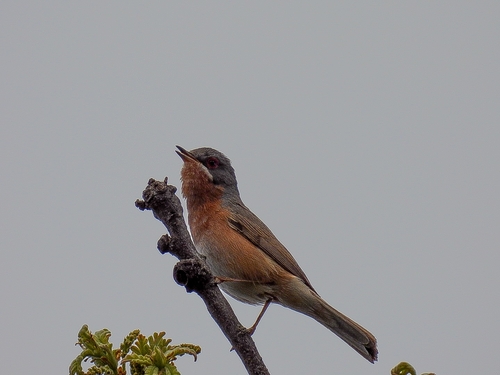
ニシアコウザンムシクイ (Curruca iberiae) ニシアコウザンムシクイ
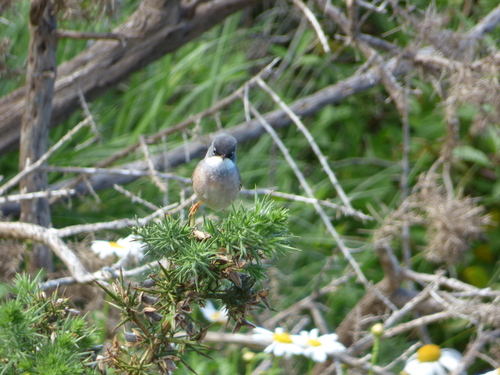
ミナミノドジロムシクイ (Curruca conspicillata) ミナミノドジロムシクイ

メディア

読み込み中…

要点

ニシアコウザンムシクイとミナミノドジロムシクイを区別するための最も信頼できるフィールドマークは、成鳥のオスのニシアコウザンムシクイの目の下にある太い白いマラーストリーク(「口ひげ」)の存在であり、対して成鳥のオスのミナミノドジロムシクイには目の周りに目立つ白いアイリングがあります。両種は特に未成熟または雌の羽色では似て見えることがありますが、繁殖状態のオスはこれらの顔の特徴によってより簡単に区別できます。両種の未成熟の鳥は非常に難解でしばしば混同されることがあり、茶色がかった上面と淡い下面を共有しているため、微妙な頭部と喉の模様に注意を払う必要があります。両種は地中海の低木の小さく活発なムシクイであり、彼らの歌は速くてガラガラとした音ですが、フィールドで耳によって信頼できる区別はできません。

識別のコツ

  1. **成鳥のオスのニシアコウザンムシクイは、目の下に太い白いマラーストリーク(「口ひげ」)を示し、灰色の頭とレンガ色の下面と対照的です。これは春と初夏において最も信頼できるマークです。
  2. **成鳥のオスのミナミノドジロムシクイは、目の周りに目立つ白いアイリングと白い喉を持ち、灰色の頭と茶色の上面を持っていますが、太い白いマラーストリークは欠けています。アイリングはこの種の重要な顔の特徴です。
  3. **両種の未成熟および雌の鳥は、上面が茶色で下面が淡く、微妙な違いしかありません。この年齢では、ミナミノドジロムシクイは淡いアイリングと栗色の翼の斑点を示すことがありますが、ニシアコウザンムシクイの雌はより灰色の頭と下面にピンクのフラッシュを持っていますが、これらは常に明白ではありません。
  4. **ミナミノドジロムシクイの栗色の翼の斑点(特にオス)は役立つことがありますが、ニシアコウザンムシクイはこの特徴を欠いています。止まっている鳥の良い光の中でこれを探してください。
  5. **白い喉は両種にありますが、ミナミノドジロムシクイではしばしばより広範囲で、淡い下面と対照的であり、ニシアコウザンムシクイではあまりはっきりと定義されていません。
  6. **成鳥のオスの下面の色:ニシアコウザンムシクイはレンガ色の下面を持ち、ミナミノドジロムシクイは淡いまたは薄い色です。
  7. **頭の色:両成鳥のオスは灰色の頭を持っていますが、ニシアコウザンムシクイの方がしばしば暗く均一であり、ミナミノドジロムシクイの方が淡く見えることがあります。
  8. **顔の模様:ニシアコウザンムシクイの白いマラーストリークは目の下の線であり、リングではありません。ミナミノドジロムシクイの白は目の周りの完全なリングです。
  9. **歌はフィールドでの信頼できる区別にはならず、両者とも速くてガラガラまたはさえずり、質が重なります。
  10. **生息地と範囲は広く重なりますので、区別のために位置だけに頼らないでください。
  11. **両種は特徴的な幼鳥または初冬の翼の模様(黒いW、淡いパネル、または対照的な後縁など)を欠いているため、未成熟の飛行ビューは区別に役立ちません。
  12. **ミナミノドジロムシクイは、ニシアコウザンムシクイよりも上面がわずかに暖かい茶色で、下面がより淡いように見えることがありますが、これは微妙で変動します。
  13. **悪い光や素早い視界では、顔の模様(マラーストリーク対アイリング)とミナミノドジロムシクイの翼に栗色のヒントがあるかどうかに焦点を当ててください。
  14. **鳥が強い白いマラーストリークを示しているがアイリングがない場合は、ニシアコウザンムシクイを優先してください。アイリングが明白で完全であれば、ミナミノドジロムシクイを優先してください。
  15. **地中海の低木で茶色がかった淡い腹のCurrucaに疑問がある場合、どちらの顔のマークも明確でない場合、フィールドで種を安全に特定できないかもしれません。

大きさ

両種はCurruca属の非常に小さなムシクイであり、利用可能な情報源によるとフィールドでの信頼できるサイズの違いはありません。構造、ビルや尾を含む、ニシアコウザンムシクイとミナミノドジロムシクイの間で診断的に異なるほど明確ではありません。両者は長さと全体の比率が似ていると予想されます。

羽色

行動

両種は地中海の低木や低い植生の活発でしばしば隠れるムシクイです。彼らの一般的な行動、採餌スタイルや動きは似ており、フィールドで信頼できる区別はできません。両者は茂みの中を飛び回り、時折開けた場所に止まってさえずる姿が見られます。

生息環境

ニシアコウザンムシクイとミナミノドジロムシクイは、南ヨーロッパと北西アフリカの最南部で繁殖し、地中海の低木や茂みの生息地を好みます。彼らの繁殖範囲と好ましい環境にはかなりの重複があるため、生息地だけでは信頼できる区別にはなりません。両者は似たような低木の多い地域に見られることがあります。

声

両種は速くてガラガラまたは高いさえずりの歌を持っています。ニシアコウザンムシクイの歌は速くてガラガラと表現され、コノドジロムシクイに似ていますが、ミナミノドジロムシクイの歌は速い高いさえずりです。これらの歌はフィールドで信頼できる区別にはならず、特に両方に不慣れなバーダーには難しいです。

より良い説明を送る

比較と同じ項目を使ってください。文章はすぐに公開されます。

The most reliable field mark to separate Western Subalpine Warbler and Spectacled Warbler is the presence of a bold white malar streak ('moustache') on adult male Western Subalpine, versus the prominent white eye ring on adult male Spectacled Warbler. Both species can appear similar, especially in immature or female plumages, but males in breeding condition are more easily told apart by these facial features. Immature birds of both species are notoriously tricky and often confused, as they share brownish upperparts and pale underparts, so careful attention to subtle head and throat pattern is required. Both species are small, active warblers of Mediterranean scrub, and their songs are fast and rattling, but not reliably separable by ear in the field.

  1. **Adult male Western Subalpine Warbler shows a bold white malar streak ('moustache') beneath the eye, contrasting with a grey head and brick-red underparts. This is the single most reliable mark in spring and early summer.
  2. **Adult male Spectacled Warbler has a prominent white eye ring and a white throat, with a grey head and brown upperparts, but lacks the bold white malar streak. The eye ring is the key facial feature for this species.
  3. **Immature and female birds of both species are brown above and pale below, with only subtle differences. In these ages, Spectacled Warbler may show a faint eye ring and chestnut wing patches, while Western Subalpine Warbler females have a greyer head and a pink flush to the underparts, but these are not always obvious.
  4. **Chestnut wing patches in Spectacled Warbler (especially males) can help, as Western Subalpine Warbler lacks this feature. Look for this in good light on perched birds.
  5. **White throat is present in both species, but in Spectacled Warbler it is often more extensive and contrasts with the buff underparts, while in Western Subalpine Warbler it is less sharply defined.
  6. **Underpart color in adult males: Western Subalpine Warbler is brick-red below, while Spectacled Warbler is buff or pale.
  7. **Head color: Both adult males have grey heads, but Western Subalpine's is often darker and more uniform, while Spectacled's may appear paler and set off by the white eye ring.
  8. **Facial pattern: Western Subalpine Warbler's white malar streak is a line below the eye, not a ring. Spectacled Warbler's white is a full ring around the eye.
  9. **Song is not a reliable separator in the field; both are fast and rattling or warbling, and overlap in quality.
  10. **Habitat and range overlap widely; do not rely on location alone for separation.
  11. **Both species lack distinctive juvenile or first-winter wing patterns (such as a black W, pale panel, or contrasting trailing edge), so flight views of immatures are not helpful for separation.
  12. **Spectacled Warbler may appear slightly warmer brown above and more buff below than Western Subalpine, but this is subtle and variable.
  13. **In poor light or quick views, focus on facial pattern (malar streak vs. eye ring) and any hint of chestnut in the wing for Spectacled.
  14. **If the bird shows a strong white malar line but no eye ring, favor Western Subalpine. If the eye ring is obvious and complete, favor Spectacled.
  15. **If in doubt with a brownish, pale-bellied Curruca in Mediterranean scrub, and neither facial mark is clear, it may not be safely identified to species in the field."

Both species are very small warblers in the genus Curruca, and there is no reliable size difference in the field according to available sources. Structure, including bill and tail, is not distinctly different enough to be diagnostic between Western Subalpine Warbler and Spectacled Warbler. Expect both to be similar in length and overall proportions.

  • Immature/juvenile birds: Both species' immatures are brown above and pale below, making them difficult to separate. Immature Spectacled Warbler can be confused with Western Subalpine Warbler, and vice versa; no distinctive upperwing pattern or flight mark is noted for either species at this age. Subtle differences may exist in head pattern, but these are not always reliable in the field.

  • Adult males (breeding): Western Subalpine Warbler males show a grey back and head, brick-red underparts, and a bold white malar streak ('moustache'). Spectacled Warbler males have a grey head, brown upperparts, buff underparts, a white throat, and a conspicuous white eye ring, but lack the strong white malar streak. Both have some white on the face, but the location and shape differ.

  • Adult females: Female Western Subalpine Warbler is mainly brown above with a greyer head and whitish underparts with a pink flush. Female Spectacled Warbler is brown above and buff below, with a white throat but less pronounced facial markings. The eye ring is less obvious than in males but may still be visible in Spectacled.

  • Wing pattern: No distinctive wing panel, triangle, or trailing edge is described for either species in any age class. Spectacled Warbler may show chestnut wing patches, which are absent in Western Subalpine.

Both species are active, often skulking warblers of Mediterranean scrub and low vegetation. Their general behavior, including foraging style and movement, is similar and not reliably separable in the field. Both may be seen flitting through bushes and occasionally perching in the open to sing.

Both Western Subalpine Warbler and Spectacled Warbler breed in southernmost Europe and northwest Africa, favoring Mediterranean scrub and bushy habitats. There is substantial overlap in their breeding ranges and preferred environments, so habitat alone is not a reliable separator. Both may be found in similar low, shrubby areas.

Both species have fast, rattling or high warbling songs. Western Subalpine Warbler's song is described as fast and rattling, similar to Lesser Whitethroat, while Spectacled Warbler's is a fast high warble. These songs are not reliably separable in the field, especially for birders unfamiliar with both.

変更を破棄しますか?

保存していない編集があります。今離れると失われます。

ニシアコウザンムシクイ · ミナミノドジロムシクイ · 苦手な鳥