

Motmot

オナガミズナギドリ 対 マミジロウ

Ardenna pacifica 対 Phalacrocorax varius

オナガミズナギドリとマミジロウのクイズ
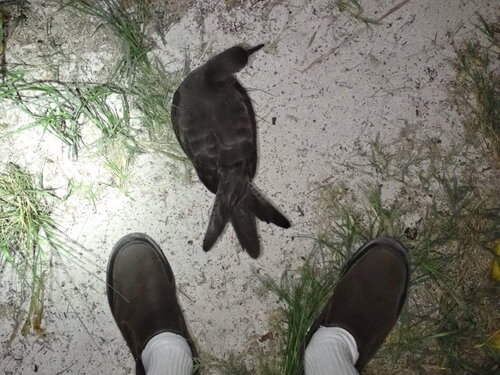
オナガミズナギドリ (Ardenna pacifica) オナガミズナギドリ
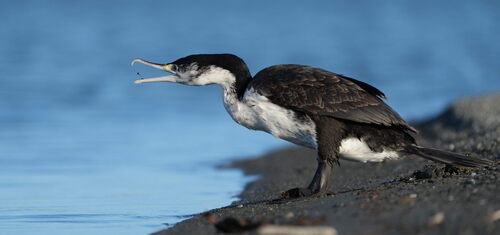
マミジロウ (Phalacrocorax varius) マミジロウ

メディア

読み込み中…

要点

オナガミズナギドリとマミジロウを区別する最も信頼できるフィールドマークは、全体的な構造と飛行スタイルです:オナガミズナギドリはスリムで長い翼を持ち、硬く迅速な翼の羽ばたきで海の上を低く滑空しますが、マミジロウははるかに重い体を持ち、遅い羽ばたきと曲がった首で飛び、しばしば岩や柱の上に直立して止まります。羽毛において、オナガミズナギドリは淡色と暗色の形態があり、しかし決してマミジロウの鋭い白黒のコントラストを示すことはありません。マミジロウは目を引く白い腹部と黒い上面を持っています。オナガミズナギドリのくさび形の尾は飛行中に診断的であり、マミジロウはより典型的な丸い尾を持っています。翼を乾かしている鳥を見たら、それはマミジロウです。サイズも重要な手がかりです:マミジロウはオナガミズナギドリの約4倍の重さです。

識別のコツ

  1. Flight style: オナガミズナギドリは硬く迅速な羽ばたきで水面近くを低く滑空します;マミジロウは遅く、深い羽ばたきを持ち、しばしば曲がった首で飛びます。これはすべての年齢と季節で強いフィールドマークです。
  2. Perching behavior: 鳥が岩、柱、または木の上に直立して止まっている場合、特に翼を広げて乾かしている場合、それはマミジロウです。オナガミズナギドリは繁殖コロニーを除いてこのように止まることはなく、翼を広げて乾かすことはありません。
  3. Tail shape: オナガミズナギドリは飛行中に見える長いくさび形の尾を持っています;マミジロウはより典型的な丸い尾を持っています。鳥がバンクしたり着陸したりする際に尾の形を探してください。
  4. Bill shape: オナガミズナギドリは海で魚を捕まえるのに適した細く暗いくちばしを持っています;マミジロウのくちばしははるかに重く、先端がフック状で、基部に黄色い斑点があります。
  5. Leg color and position: オナガミズナギドリは体の後方に配置されたサーモンピンクの脚を持っています(泳ぐために適応しています);マミジロウは中央に配置された黒い脚と足を持っています。
  6. Plumage contrast: マミジロウは鋭い二色性を持ち—上は黒、下は白、顔は白く、顔の斑点は黄色です。オナガミズナギドリは上が均一に暗いか淡いかで、下は白っぽいですが、決して鋭いコントラストや白い顔を持ちません。
  7. Facial pattern: マミジロウだけがくちばしと目の間に黄色い斑点のある白い顔を持っています;オナガミズナギドリの顔は常に無地です。
  8. Size: マミジロウはオナガミズナギドリよりもはるかに大きく、重いです。一緒に見た場合、サイズの違いは明らかです。
  9. Habitat: オナガミズナギドリは海や遠隔の繁殖コロニーでのみ見られます;マミジロウは海岸、河口、湖、川で一般的で、しばしば人工構造物に止まります。
  10. Wing drying: マミジロウだけが潜水後に翼を広げて乾かします。オナガミズナギドリはこれを決して行いません。
  11. Underwing pattern: マミジロウは黒い初級羽と対照的な白い下翼を持っています;オナガミズナギドリの下翼は決して鋭くパターン化されません。
  12. Voice: 繁殖コロニーの近くで夜に長いうめき声を聞いた場合、それはおそらくオナガミズナギドリです。そうでなければ、両種は通常フィールドでは静かです。
  13. Feeding behavior: オナガミズナギドリは飛びながら水面をついばみ、魚を捕まえます;マミジロウは水面から潜水し、魚を持って浮上するのがよく見られます。
  14. Group behavior: オナガミズナギドリはしばしば開けた海で群れで見られます;マミジロウは群れで集まることもありますが、岸や内陸で単独または小さな群れで見られることが多いです。
  15. Context: 陸から遠く、特に熱帯の水域で、スリムで滑空する鳥はおそらくオナガミズナギドリです。河口、湖、または構造物の上に止まっている場合、それはほぼ確実にマミジロウです。

大きさ

マミジロウはオナガミズナギドリよりも大幅に大きく、重いです。マミジロウは体重が約1955gで、オナガミズナギドリは465gです—4倍の違いです。マミジロウは高さ65〜85cm、翼幅110〜130cmで、オナガミズナギドリは中型から大型ですが、マミジロウよりもはるかに小さく、スリムです。フィールドでは、マミジロウのサイズと質量はすぐに明らかで、特に他の鳥の近くで止まっているときや飛んでいるときに顕著です。

羽色

どちらの種にも、飛行中に混乱を引き起こすような年齢特有の上翼パターンは記載されていません。オナガミズナギドリは2つの形態があり:淡色形態は灰褐色の上面と白っぽい下面を持ち、暗色形態は均一に暗い灰褐色です。どちらの形態も鋭い色の境界を欠いています。対照的に、マミジロウは常に鋭い二色性を持ち:上は黒(背中と上翼)、下は白(腹部と下翼)、そしてくちばしと目の間に小さな黄色い斑点のある特徴的な白い顔を持っています。マミジロウのくちばしは大きくフック状で、脚と足は黒いですが、オナガミズナギドリは細く暗いくちばしと体の後方に配置されたサーモンピンクの脚を持っています。すべての年齢と季節において、マミジロウの白黒のパターンは診断的であり、オナガミズナギドリはこのレベルのコントラストを示すことはありません。

行動

オナガミズナギドリはほぼ常に開けた海の上を低く飛んでいるのが見られ、硬く迅速な羽ばたきで滑空し、繁殖コロニーを除いてはめったに止まりません。彼らは非常に外洋性で、内陸や構造物の上に止まっているのはめったに見られません。一方、マミジロウは水の近くの岩、柱、または木の上に直立して止まっているのがよく見られ、頻繁に翼を広げて乾かします。彼らは水面から潜水して魚を捕まえ、塩水と淡水の生息地の両方で快適です。飛行中、マミジロウは遅く、深い羽ばたきを持ち、しばしば曲がった首で飛びますが、オナガミズナギドリは真っ直ぐな首で滑空します。

生息環境

オナガミズナギドリは厳密に外洋性で、熱帯および亜熱帯の海の上に見られ、繁殖コロニーでのみ陸に上がります。通常は遠隔の島に生息します。内陸や淡水域では見られません。マミジロウは沿岸および時には内陸の種で、河口、湖、川、保護された湾、そして海岸沿いに見られます。水の近くに止まっていることが多く、オナガミズナギドリよりも陸上や淡水生息地で遭遇する可能性がはるかに高いです。

声

オナガミズナギドリは繁殖コロニーでの長いうめき声で知られ、特有の吸入と呼気の成分を持っています。これらの呼び声は通常、コロニーの近くで夜に聞かれ、海では発せられません。マミジロウは巣から離れると一般的に静かで、ほとんどのバーダーが聞くことができる特有の飛行や採餌の呼び声を持っていません。したがって、声はフィールドでこれらの種を区別するのに役立つことはほとんどありません。

より良い説明を送る

比較と同じ項目を使ってください。文章はすぐに公開されます。

The most reliable field mark to separate Wedge-tailed Shearwater from Pied Cormorant is overall structure and flight style: shearwaters are slim, long-winged, and glide low over the sea with stiff, rapid wingbeats, while cormorants are much heavier-bodied, fly with slower wingbeats and a kinked neck, and often perch upright on rocks or posts. In plumage, Wedge-tailed Shearwater comes in both pale and dark morphs, but never shows the sharp black-and-white contrast of the Pied Cormorant, which has a striking white belly and black upperparts. The wedge-shaped tail of the shearwater is diagnostic in flight, while the cormorant has a more typical rounded tail. If you see a bird drying its wings, it is a cormorant. Size is also a major clue: Pied Cormorant is about four times heavier than Wedge-tailed Shearwater.

  1. Flight style: Wedge-tailed Shearwater flies with stiff, rapid wingbeats and long glides low over the water; Pied Cormorant has slower, deeper wingbeats, and often flies with a kinked neck. This is a strong field mark in all ages and seasons.
  2. Perching behavior: If the bird is perched upright on a rock, post, or tree, especially with wings spread to dry, it is a Pied Cormorant. Shearwaters do not perch in this manner except at breeding colonies, and never spread wings to dry.
  3. Tail shape: Wedge-tailed Shearwater has a long, wedge-shaped tail visible in flight; Pied Cormorant has a more typical rounded tail. Look for the tail shape when the bird banks or lands.
  4. Bill shape: The shearwater has a thin, dark bill suited for catching fish at sea; the cormorant's bill is much heavier, hooked at the tip, and pale with a yellow patch at the base.
  5. Leg color and position: Wedge-tailed Shearwater has salmon-pink legs set far back on the body (adapted for swimming); Pied Cormorant has black legs and feet, placed more centrally.
  6. Plumage contrast: Pied Cormorant is sharply bicolored—black above, white below, with a white face and yellow facial patch. Wedge-tailed Shearwater is either uniformly dark or pale above and whitish below, but never with sharp contrast or a white face.
  7. Facial pattern: Only Pied Cormorant has a white face with a yellow patch between bill and eye; shearwater's face is always plain.
  8. Size: Pied Cormorant is much larger and bulkier than Wedge-tailed Shearwater. If seen together, the size difference is obvious.
  9. Habitat: Shearwaters are only seen at sea or at remote breeding colonies; cormorants are common on coasts, estuaries, lakes, and rivers, and often perch on man-made structures.
  10. Wing drying: Only Pied Cormorant spreads its wings to dry after diving. Shearwaters never do this.
  11. Underwing pattern: Pied Cormorant has white underwings contrasting with black primaries; shearwater's underwing is never sharply patterned.
  12. Voice: If you hear long, moaning calls at night near a colony, it is likely Wedge-tailed Shearwater. Otherwise, both species are usually silent in the field.
  13. Feeding behavior: Shearwaters feed by dipping and surface seizing while flying; cormorants dive from the surface, often seen surfacing with fish.
  14. Group behavior: Shearwaters are often seen in flocks over the open ocean; cormorants may gather in groups but are more often seen singly or in small groups near shore or inland.
  15. Context: If you are far from land, especially in tropical waters, a slim, gliding bird is likely a shearwater. In estuaries, lakes, or perched on structures, it is almost certainly a cormorant.

Pied Cormorant is substantially larger and bulkier than Wedge-tailed Shearwater. The cormorant averages about 1955 g in body mass, compared to 465 g for the shearwater—a fourfold difference. Pied Cormorant stands 65–85 cm tall with a wingspan of 110–130 cm, while Wedge-tailed Shearwater is medium-large for a shearwater but still much smaller and more slender than the cormorant. In the field, the cormorant's size and mass are immediately apparent, especially when perched or flying near other birds.

No age-specific upperwing patterns are described for either species that would cause confusion in flight. Wedge-tailed Shearwater occurs in two morphs: pale morphs have grey-brown upperparts and whiter underparts, while dark morphs are uniformly dark grey-brown. Both morphs lack any sharp color boundaries. Pied Cormorant, by contrast, is always sharply bicolored: black above (back and upperwings), white below (belly and underwings), and a distinctive white face with a small yellow patch between the bill and eye. The cormorant's bill is large and hooked, and its legs and feet are black, while the shearwater has a thin, dark bill and salmon-pink legs set far back on the body. In all ages and seasons, the cormorant's black-and-white pattern is diagnostic, while the shearwater never shows this level of contrast.

Wedge-tailed Shearwaters are almost always seen flying low over the open ocean, gliding and banking with stiff, rapid wingbeats, rarely perching except at breeding colonies. They are highly pelagic and rarely seen inland or perched on structures. Pied Cormorants, on the other hand, are often seen perched upright on rocks, posts, or trees near water, frequently spreading their wings to dry. They dive from the surface to catch fish and are comfortable both in saltwater and freshwater habitats. In flight, cormorants have a slower, deeper wingbeat and often fly with a kinked neck, unlike the straight-necked, gliding shearwater.

Wedge-tailed Shearwater is strictly pelagic, found over tropical and subtropical oceans, and only comes to land at breeding colonies, usually on remote islands. It is not seen inland or on freshwater bodies. Pied Cormorant is a coastal and sometimes inland species, found around estuaries, lakes, rivers, and sheltered bays, as well as along the seashore. It is often seen perched near water and is much more likely to be encountered on land or in freshwater habitats than the shearwater.

Wedge-tailed Shearwater is known for its long, moaning calls at breeding colonies, with a distinctive inhaling and exhaling component. These calls are usually heard at night near colonies and are not given at sea. Pied Cormorant is generally silent away from the nest and does not have a distinctive flight or feeding call that would be heard by most birders. Thus, voice is rarely useful for separating these species in the field.

変更を破棄しますか?

保存していない編集があります。今離れると失われます。

オナガミズナギドリ · マミジロウ · 苦手な鳥