

Motmot

サンケイ 対 マクジャク

Lophura swinhoii 対 Pavo muticus

サンケイとマクジャクのクイズ
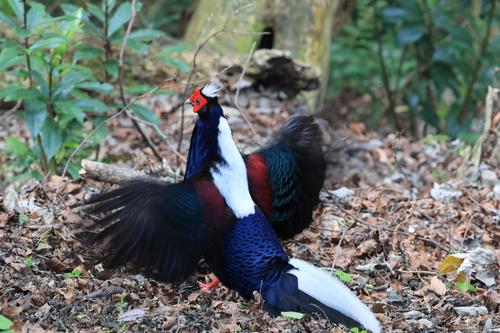
サンケイ (Lophura swinhoii) サンケイ
マクジャク (Pavo muticus) マクジャク

メディア

読み込み中…

要点

最も信頼できるフィールドマークは、オスのサンケイの白い後頭部と冠、光沢のある青紫の体、赤い脚であり、これはマクジャクでは決して見られません。対照的に、マクジャクのオスははるかに大きく、長い虹色の緑の首と胸を持ち、(換羽中でない場合)目玉模様のある壮観な尾を持っています。未成熟なサンケイは、茶色と黄色の翼の模様を持つ暗い青を示し、マクジャクの幼鳥は、鱗状の緑の首と縞模様の背中を持つ雌に非常に似ています。飛行中、マクジャクは長い翼と重い体を持ち、淡い初列風切羽が見えますが、よりコンパクトで短い尾のサンケイとは異なります。生息地と分布も強力な手がかりです:サンケイは台湾の森林に特有であり、マクジャクは東南アジアと南中国に生息しています。

識別のコツ

  1. サイズは重要な手がかりです: マクジャクは巨大で、オスは最大で3 m(尾を含む)に達し、雌は1 mを超えますが、サンケイは最大で79 cmです。もしその鳥が七面鳥サイズまたはそれ以上に見えるなら、それはマクジャクです。
  2. オスのサンケイは白い後頭部と冠を持っています: これはマクジャクでは決して見られません。頭の後ろの鋭い白いコントラストと白い冠を探してください。
  3. 脚の色: サンケイは赤い脚を持ち、歩いたりディスプレイしたりする際に見えます。マクジャクの脚は赤くありません。
  4. オスのマクジャクの尾: もし存在すれば、長い目玉模様のある尾はマクジャクの診断的特徴です。しかし、換羽後、オスは尾を欠き、性別を分けるのが難しくなります。
  5. 首と胸の色: サンケイのオスは光沢のある青紫色です;マクジャクの両性は虹色の緑で、鱗状の首と胸を持っています。
  6. 翼の覆羽: マクジャクのオスは青い肩羽、中央羽、及び大覆羽を持ち、緑の小覆羽が肩で三角形を形成します。サンケイにはこのパターンがありません。
  7. 雌/未成熟の混同: サンケイの雌は茶色で、黄色の矢印型の斑点とマルーン色の尾の縁を持っています。マクジャクの雌と未成熟個体は、首に緑の鱗状模様があり、銅色の縁取りとより多くの縞模様があります。
  8. 未成熟なサンケイ: 茶色と黄色の翼の模様を持つ暗い青の体を探してください。マクジャクの幼鳥は青を欠き、より均一な鱗状の緑と縞模様を持っています。
  9. 冠の形: 両者は冠を持っていますが、サンケイは白くてふわふわしており、マクジャクのものは細くて高い(オス)か、より広い(雌)ですが、決して白くありません。
  10. 顔の皮膚: マクジャクは二重ストライプの顔の皮膚(白青と黄色オレンジ)を示し、目の下に色付きの三角形(オスは青緑、雌は茶色)があります。サンケイにはこれらの顔のマークがありません。
  11. 尾の形: サンケイは白い尾羽(オス)を持っていますが、マクジャクの尾はオスの尾によって隠され、雌は短い緑の覆羽を持っています。
  12. 飛行のシルエット: マクジャクは長い尾を持ち、重く、飛行中に淡い初列風切羽を示します。サンケイはコンパクトで、淡い翼のパネルがありません。
  13. ディスプレイ行動: サンケイは跳ねたり、円を描いたり、尾を広げたり、翼を羽ばたかせたりしてディスプレイします。マクジャクのオスは尾を広げ(もし存在すれば)て大きな声で鳴きます。
  14. 鳴き声: 大きく、遠くまで響く鳴き声はマクジャクを示します。サンケイはほとんど静かです。
  15. 生息地と分布: サンケイは台湾の森林にのみ生息しています。マクジャクは東南アジアと南中国に見られ、通常はより開けたまたは草の多い生息地に生息しています。

大きさ

マクジャクはサンケイよりも劇的に大きいです。成鳥のオスのマクジャクは、尾を含めて1.8〜3 mの全長に達し、翼幅は最大1.6 m、雌は約1〜1.1 mの長さです。サンケイのオスは最大79 cmの長さに達し、マクジャクの雌の半分にも満たないサイズです。フィールドでは、マクジャクは威圧的で長い脚を持っているように見えますが、サンケイははるかにコンパクトで鶏のようです。

羽色

行動

マクジャクはしばしば高い草やセジの中で地面に見られますが、強力で持続的な飛行が可能で、頻繁に木の高いところ(10〜15 m)に止まります。オスは孤独で領土的であり、時にはハーレムを形成しますが、レクスではディスプレイしません。サンケイのオスは、跳ねたり、円を描いて走ったり、尾を広げたり、翼を羽ばたかせたりしてディスプレイし、通常は地面で行います。サンケイは開けた場所で見られる可能性が低く、森林の下草により結びついています。

生息環境

サンケイは台湾に特有であり、その森林にのみ生息しています。マクジャクは東南アジアと南中国に自生し、熱帯の森林、高い草原、開けた森林に生息しています。台湾で見られた場合、その鳥はほぼ確実にサンケイであり、東南アジアの他の場所、特に開けたまたは草の多い生息地では、マクジャクがはるかに可能性が高いです。

声

マクジャクは非常に鳴き声が多く、オスは夜明けと夕暮れに大きく繰り返し「キワオ」と鳴き、雌は最初の音節に強調を置いて「AOw-aa」と鳴きます。サンケイのディスプレイは主に視覚的で、翼を羽ばたかせることを含みますが、情報源には特に目立つ大きな鳴き声は記載されていません。したがって、大きく遠くまで響く鳴き声はマクジャクを指し示します。

より良い説明を送る

比較と同じ項目を使ってください。文章はすぐに公開されます。

The most reliable field mark is the male Swinhoe's Pheasant's white nape and crest, glossy blue-purple body, and red legs, which are never seen on Green Peafowl. In contrast, Green Peafowl males are much larger, with a long, iridescent green neck and breast, and (when not in molt) a spectacular train with eyespots. Immature Swinhoe's Pheasants show dark blue with brown and yellow wing markings, while Green Peafowl juveniles closely resemble females with scaly green necks and barred backs. In flight, Green Peafowl appear long-winged and heavy, with pale primaries visible, unlike the more compact, short-tailed Swinhoe's. Habitat and range are also strong clues: Swinhoe's is endemic to Taiwan's forests, while Green Peafowl occur in Southeast Asia and southern China.

  1. Size is a major clue: Green Peafowl are huge, with males reaching up to 3 m (including train) and females over 1 m, while Swinhoe's Pheasant maxes out at 79 cm. If the bird looks turkey-sized or larger, it's a Green Peafowl.
  2. Male Swinhoe's Pheasant has a white nape and crest: This is never seen on Green Peafowl. Look for the sharp white contrast at the back of the head and a white crest.
  3. Leg color: Swinhoe's Pheasant has red legs, visible when walking or displaying. Green Peafowl legs are not red.
  4. Male Green Peafowl train: If present, the long, eyespotted train is diagnostic for Green Peafowl. However, after molt, males lack the train and sexes are harder to separate.
  5. Neck and breast color: Swinhoe's Pheasant males are glossy blue-purple; Green Peafowl of both sexes have iridescent green, scaly-looking neck and breast.
  6. Wing coverts: Green Peafowl males have blue scapular, median, and greater coverts, with green lesser coverts forming a triangle at the shoulder. Swinhoe's lacks this pattern.
  7. Female/immature confusion: Swinhoe's Pheasant females are brown with yellow arrow-shaped spots and maroon tail edges. Green Peafowl females and immatures are green-scaled on the neck, with copper fringes and more barring on the back and wings.
  8. Juvenile Swinhoe's Pheasant: Look for dark blue body with brown and yellow wing patterns. Green Peafowl juveniles lack blue and have more uniform scaly green and barring.
  9. Crest shape: Both have crests, but Swinhoe's is white and fluffy, Green Peafowl's is thin and tall (male) or broader (female), and never white.
  10. Facial skin: Green Peafowl shows double-striped facial skin (white-blue and yellow-orange) and a colored triangle below the eye (bluish-green in males, brown in females). Swinhoe's Pheasant lacks these facial marks.
  11. Tail shape: Swinhoe's Pheasant has white tail feathers (male), while Green Peafowl's tail is hidden by the train in males, and females have short green coverts.
  12. Flight silhouette: Green Peafowl is long-tailed, heavy, and shows pale primaries in flight. Swinhoe's is compact, with no pale wing panels.
  13. Display behavior: Swinhoe's Pheasant displays with hopping, circling, and wing-whirring. Green Peafowl males display by fanning their train (if present) and calling loudly.
  14. Vocalizations: Loud, far-carrying calls indicate Green Peafowl. Swinhoe's Pheasant is mostly silent.
  15. Habitat and range: Swinhoe's Pheasant is only in Taiwan forests. Green Peafowl is found in Southeast Asia and southern China, usually in more open or grassy habitats.

Green Peafowl are dramatically larger than Swinhoe's Pheasant. Adult male Green Peafowl reach 1.8–3 m in total length (including their train), with a wingspan up to 1.6 m, and females are about 1–1.1 m long. Swinhoe's Pheasant males reach up to 79 cm in length, making them less than half the size of even a female Green Peafowl. In the field, Green Peafowl look imposing and long-legged, while Swinhoe's Pheasant is much more compact and chicken-like.

  • Juveniles/immatures: Swinhoe's Pheasant juvenile males are dark blue with brown and yellow wing patterns, while Green Peafowl juveniles resemble females, with scaly green necks and more barring on the back, primaries, and alula. Green Peafowl young lack the blue and white contrasts of Swinhoe's.
  • Adult males: Swinhoe's Pheasant males have a glossy blue-purple chest, belly, and rump, a white nape and crest, white tail feathers, and red wattles and legs. Green Peafowl males have an iridescent green neck and breast, blue scapular and wing coverts, and (outside molt) a long train with eyespots. Their facial skin is double-striped with white-blue and yellow-orange, and their crest is tall and thin.
  • Adult females: Swinhoe's Pheasant females are brown with yellow arrow-shaped spots and maroon outer tail feathers. Green Peafowl females are green-scaled on the neck, blue lesser wing coverts, copper fringes on neck scales, and more barring overall. Both sexes of Green Peafowl have a crest, but the female's is broader.
  • In flight: Green Peafowl show pale vermilion or buff primaries and a long, heavy silhouette. Swinhoe's Pheasant is shorter-tailed and more compact, lacking pale flight feathers.

Green Peafowl are often seen on the ground in tall grasses and sedges, but are capable of strong, sustained flight and frequently roost high in trees (10–15 m). Males are solitary and territorial, sometimes forming harems, but do not display in leks. Swinhoe's Pheasant males display by hopping, running in circles, fanning their tail, and wing-whirring, usually on the ground. Swinhoe's is less likely to be seen in open areas and more tied to forest undergrowth.

Swinhoe's Pheasant is endemic to Taiwan and found only in its forests. Green Peafowl are native to Southeast Asia and southern China, inhabiting tropical forests, tall grasslands, and open woodlands. If seen in Taiwan, the bird is almost certainly Swinhoe's; elsewhere in Southeast Asia, especially in open or grassy habitats, Green Peafowl is much more likely.

Green Peafowl are highly vocal, with males giving a loud, repeated 'ki-wao' at dawn and dusk, and females calling 'AOw-aa' with emphasis on the first syllable. Swinhoe's Pheasant's display is mostly visual and includes wing-whirring, but no distinctive loud calls are noted in the sources. Thus, a loud, far-carrying call points to Green Peafowl.

変更を破棄しますか?

保存していない編集があります。今離れると失われます。

サンケイ · マクジャク · 苦手な鳥