

Swinhoe's Pheasant vs Green Peafowl
Lophura swinhoii contro Pavo muticus
Fai un quiz con Swinhoe's Pheasant e Green Peafowl
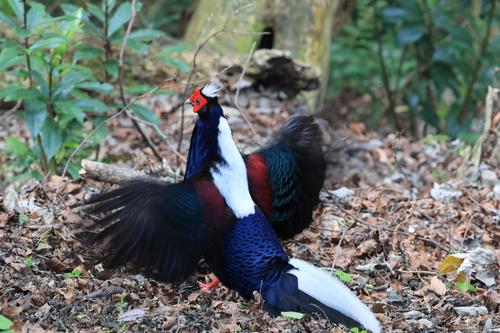 Swinhoe's Pheasant
 Green Peafowl
In breve
Il segno distintivo più affidabile è la nuca e la cresta bianche del maschio di Swinhoe's Pheasant, il corpo blu-viola lucido e le gambe rosse, che non si vedono mai nei Green Peafowl. Al contrario, i maschi di Green Peafowl sono molto più grandi, con un lungo collo e petto verde iridescenti e (quando non sono in muta) un treno spettacolare con ocelli. I giovani Swinhoe's Pheasant mostrano blu scuro con marcature alari marroni e gialle, mentre i giovani Green Peafowl somigliano molto alle femmine con colli verdi squamosi e schiene barrate. In volo, i Green Peafowl appaiono con ali lunghe e pesanti, con primarie chiare visibili, a differenza dei più compatti e con coda corta Swinhoe's. L'habitat e l'areale sono anche forti indizi: Swinhoe's è endemico delle foreste di Taiwan, mentre i Green Peafowl si trovano nel sud-est asiatico e nel sud della Cina.
Consigli di identificazione
- La dimensione è un indizio importante: I Green Peafowl sono enormi, con maschi che raggiungono fino a 3 m (incluso il treno) e femmine oltre 1 m, mentre lo Swinhoe's Pheasant arriva a un massimo di 79 cm. Se l'uccello sembra delle dimensioni di un tacchino o più grande, è un Green Peafowl.
- Il maschio di Swinhoe's Pheasant ha una nuca e una cresta bianche: Questo non si vede mai nei Green Peafowl. Cerca il forte contrasto bianco sul retro della testa e una cresta bianca.
- Colore delle gambe: Lo Swinhoe's Pheasant ha gambe rosse, visibili quando cammina o si esibisce. Le gambe dei Green Peafowl non sono rosse.
- Treno del maschio di Green Peafowl: Se presente, il lungo treno con ocelli è diagnostico per i Green Peafowl. Tuttavia, dopo la muta, i maschi mancano del treno e i sessi sono più difficili da separare.
- Colore del collo e del petto: I maschi di Swinhoe's Pheasant sono blu-viola lucido; i Green Peafowl di entrambi i sessi hanno un collo e un petto verdi iridescenti e dall'aspetto squamoso.
- Copritrici alari: I maschi di Green Peafowl hanno copritrici blu scapolari, mediane e maggiori, con copritrici minori verdi che formano un triangolo alla spalla. Lo Swinhoe's non ha questo schema.
- Confusione femminile/immatura: Le femmine di Swinhoe's Pheasant sono marroni con macchie gialle a forma di freccia e bordi della coda color bordeaux. Le femmine e gli immaturi di Green Peafowl hanno un collo squamoso verde, con frange di rame e più barrature sulla schiena e sulle ali.
- Giovane Swinhoe's Pheasant: Cerca un corpo blu scuro con modelli alari marroni e gialli. I giovani Green Peafowl mancano di blu e hanno un verde squamoso più uniforme e barrature.
- Forma della cresta: Entrambi hanno creste, ma quella di Swinhoe's è bianca e soffice, mentre quella di Green Peafowl è sottile e alta (maschio) o più larga (femmina), e mai bianca.
- Pelle facciale: I Green Peafowl mostrano una pelle facciale a strisce doppie (bianco-blu e giallo-arancio) e un triangolo colorato sotto l'occhio (bluastro-verde nei maschi, marrone nelle femmine). Lo Swinhoe's Pheasant manca di questi segni facciali.
- Forma della coda: Lo Swinhoe's Pheasant ha penne della coda bianche (maschio), mentre la coda dei Green Peafowl è nascosta dal treno nei maschi, e le femmine hanno copritrici verdi corte.
- Silhouette in volo: Il Green Peafowl ha una coda lunga, pesante e mostra primarie chiare in volo. Lo Swinhoe's è compatto, con nessun pannello alare chiaro.
- Comportamento di display: Lo Swinhoe's Pheasant si esibisce saltando, girando in cerchio e frullando le ali. I maschi di Green Peafowl si esibiscono aprendo il loro treno (se presente) e chiamando ad alta voce.
- Vocalizzazioni: Chiamate forti e lontane indicano i Green Peafowl. Lo Swinhoe's Pheasant è per lo più silenzioso.
- Habitat e areale: Lo Swinhoe's Pheasant si trova solo nelle foreste di Taiwan. I Green Peafowl si trovano nel sud-est asiatico e nel sud della Cina, di solito in habitat più aperti o erbosi.
Taglia
I Green Peafowl sono notevolmente più grandi dello Swinhoe's Pheasant. I maschi adulti di Green Peafowl raggiungono 1,8–3 m di lunghezza totale (incluso il loro treno), con un'apertura alare fino a 1,6 m, e le femmine sono lunghe circa 1–1,1 m. I maschi di Swinhoe's Pheasant raggiungono fino a 79 cm di lunghezza, rendendoli meno della metà delle dimensioni anche di una femmina di Green Peafowl. Sul campo, i Green Peafowl appaiono imponenti e con gambe lunghe, mentre lo Swinhoe's Pheasant è molto più compatto e simile a un pollo.
Piumaggio
- Giovani/immaturi: I giovani maschi di Swinhoe's Pheasant sono blu scuro con modelli alari marroni e gialli, mentre i giovani Green Peafowl somigliano alle femmine, con colli verdi squamosi e più barrature sulla schiena, primarie e alula. I giovani Green Peafowl mancano dei contrasti blu e bianchi di Swinhoe's.
- Maschi adulti: I maschi di Swinhoe's Pheasant hanno un petto, una pancia e un posteriore blu-viola lucido, una nuca e una cresta bianche, penne della coda bianche e caruncole e gambe rosse. I maschi di Green Peafowl hanno un collo e un petto verdi iridescenti, copritrici blu scapolari e alari, e (fuori dalla muta) un lungo treno con ocelli. La loro pelle facciale è a strisce doppie con bianco-blu e giallo-arancio, e la loro cresta è alta e sottile.
- Femmine adulte: Le femmine di Swinhoe's Pheasant sono marroni con macchie gialle a forma di freccia e penne esterne della coda color bordeaux. Le femmine di Green Peafowl sono squamose verdi sul collo, con copritrici alari blu, frange di rame sulle squame del collo e più barrature in generale. Entrambi i sessi di Green Peafowl hanno una cresta, ma quella della femmina è più larga.
- In volo: I Green Peafowl mostrano primarie color vermiglio pallido o buff e una silhouette lunga e pesante. Lo Swinhoe's Pheasant è più corto di coda e più compatto, mancando di penne alari chiare.
Comportamento
I Green Peafowl vengono spesso visti a terra in alte erbe e giunchi, ma sono capaci di un volo forte e sostenuto e frequentemente si posano in alto sugli alberi (10–15 m). I maschi sono solitari e territoriali, a volte formando arene, ma non si esibiscono in lek. I maschi di Swinhoe's Pheasant si esibiscono saltando, correndo in cerchio, aprendo la coda e frullando le ali, di solito a terra. Lo Swinhoe's è meno probabile che venga visto in aree aperte e più legato alla vegetazione forestale.
Habitat
Lo Swinhoe's Pheasant è endemico di Taiwan e si trova solo nelle sue foreste. I Green Peafowl sono nativi del sud-est asiatico e del sud della Cina, abitano foreste tropicali, alte praterie e boschi aperti. Se visto a Taiwan, l'uccello è quasi certamente uno Swinhoe's; altrove nel sud-est asiatico, specialmente in habitat aperti o erbosi, è molto più probabile che sia un Green Peafowl.
Voce
I Green Peafowl sono molto vocali, con maschi che emettono un forte e ripetuto 'ki-wao' all'alba e al crepuscolo, e femmine che chiamano 'AOw-aa' con enfasi sulla prima sillaba. La manifestazione dello Swinhoe's Pheasant è per lo più visiva e include il frullare delle ali, ma non sono notate chiamate forti distintive nelle fonti. Pertanto, una chiamata forte e lontana indica un Green Peafowl.
Swinhoe's Pheasant · Green Peafowl · I miei uccelli difficili