

Motmot

クロスジオジロハチドリ 対 ルリノドハチドリ

Eupherusa eximia 対 Chrysuronia coeruleogularis

クロスジオジロハチドリとルリノドハチドリのクイズ
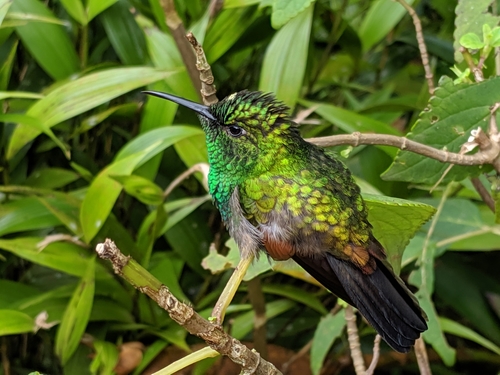
クロスジオジロハチドリ (Eupherusa eximia) クロスジオジロハチドリ
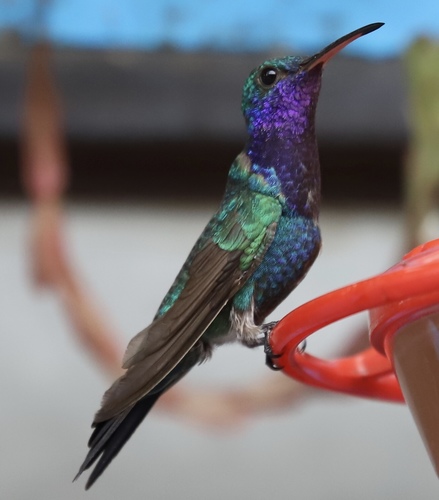
ルリノドハチドリ (Chrysuronia coeruleogularis) ルリノドハチドリ

メディア

読み込み中…

要点

ストライプテールとルリノドハチドリの最も信頼できるフィールドマークは尾です:ストライプテールは外側の尾羽に大胆な白を示し(特に飛行中や扇状に広げたときに明らか)、ルリノドハチドリは黒い先端と白がない深く分かれた暗い尾を持っています。オスは喉の色で簡単に区別できます—ルリノドハチドリのオスは広く、輝く青い斑点を持ち、ストライプテールのオスは均一な緑の喉を持っています。メスは腹部で異なります:ストライプテールのメスは下側が茶色がかった灰色で、側面に緑の斑点がありますが、ルリノドハチドリのメスは下側が白で、胸の側面に緑の斑点があります。くちばしの色と形は似ていますが、ルリノドハチドリのオスはピンクがかった下顎を示すことがあります。両方とも上面は金属的な緑ですが、文脈、尾、喉が区別の鍵です。

識別のコツ

  1. Tail pattern in flight or fanned: ストライプテールハチドリは常に外側の尾羽に大胆な白を示します(両性、すべての年齢)、一方、ルリノドハチドリは深く分かれた暗い尾を持ち、黒い先端と白がありません。これは最も信頼できるフィールドマークです。
  2. Tail shape: ルリノドハチドリの尾は明確に分かれており、特に飛行中に長く、より深く切れ込んでいるように見えます。ストライプテールの尾はそれほど深く分かれておらず、広げたときに白いストライプがはっきりと見えます。
  3. Male throat color: オスのストライプテールは下側が均一な金属的緑ですが、オスのルリノドハチドリは広く、輝く青(亜種によっては紫青からトルコ石色)の喉の斑点を示します。これは良い光の中で明らかです。
  4. Female underparts: メスのストライプテールは下側が茶色がかった灰色で、側面に緑の斑点があります;メスのルリノドハチドリは喉から肛門まで白で、胸の側面にのみ緑の斑点があります。この違いは良い視界で明確です。
  5. Bill color: 両方ともまっすぐで短いくちばしを持っていますが、ルリノドハチドリのオスは黒い先端のピンクがかった下顎を示すことがありますが、ストライプテールのくちばしは両性ともに全て黒です。これは微妙で、常に見えるわけではありません。
  6. Upperparts: 両方とも上面は金属的な緑なので、これは区別には役立ちません。
  7. Tail pattern in perched birds: 側に止まっているときでも、ストライプテールは外側の尾羽に白を示すことが多く、特に尾がわずかに広がっている場合はそうです。ルリノドハチドリは尾に白を示すことはありません。
  8. Subspecies variation: 一部のストライプテール亜種(例:E. e. egregia)は、黒い尾の先端があまりはっきりと定義されていないか、より黄緑がかった下部を持っていますが、尾の白は常に存在します。ルリノドハチドリの亜種は主に喉の色調(暗い青からトルコ石色)で異なりますが、すべて尾に白がありません。
  9. Habitat context: 山地の森林内部や高地ではストライプテールがより可能性が高く、マングローブ、開けた低木、または低地の森林の端ではルリノドハチドリがより可能性が高いです。しかし、両方ともコスタリカや西パナマの一部で一緒に発生することがあります。
  10. Aggressive behavior: ストライプテールのオスは花のパッチを積極的に守っているのが見られることがありますが、これは診断的ではありません。
  11. Voice: ノートには記載されていません;分離のために声に頼らないでください。
  12. Juvenile/immature birds: どちらの種にも特有の幼鳥の翼や上翼のパターンは記載されていないため、幼い鳥には大人と同様に尾と腹部を使用してください。
  13. Perched vs. flight views: 尾のパターンは飛行中または鳥が尾を扇ぐときに最もよく見えますが、止まっている鳥でも時々見えることがあります。喉の色は良い光と正面からの視界で最もよく見えます。
  14. Pitfalls: 光が悪いと、両種は単に「緑」に見えることがありますが、ストライプテールの白い尾のフラッシュは飛行中に見逃すことは難しいです。メスのストライプテール(下側が茶色がかった灰色)とメスのルリノドハチドリ(下側が白)を混同しないように注意してください;この違いは微妙ですが一貫しています。
  15. Size: 両方ともサイズと構造が似ており、サイズを区別に使用しないでください。

大きさ

両種はサイズが似ており、ストライプテールハチドリは9–10.5 cm、重さは4–4.5 g、ルリノドハチドリは8.5–9.5 cm、重さは4–4.5 gです。フィールドでは、サイズは信頼できる区別にはならず、測定値はほぼ完全に重なります。構造も似ており、両方ともまっすぐで短いくちばしを示します。

羽色

行動

両種は孤独で非常に活発で、さまざまな高さで蜜を探しています。ストライプテールのオスは花のパッチを積極的に守ることが多いですが、ルリノドハチドリは孤独な習性があり、群れを形成しません。両方とも高い代謝のために頻繁に餌を必要としますが、行動はフィールドでの信頼できる区別にはなりません。

生息環境

ストライプテールハチドリは湿った山地、半落葉樹、松-オークの森林に生息し、通常は海面近くから2,450 mまでの標高で見られ、南東メキシコから西パナマの高地で最も一般的です。ルリノドハチドリはマングローブ、低木、軽い森林を好み、パナマとコロンビアからコスタリカにかけて見られ、通常は低い標高で見られます。コスタリカや西パナマでは重なりが可能ですが、ストライプテールは高い標高や森林内部でより可能性が高く、ルリノドハチドリは開けた低地や端の生息地でより一般的です。

より良い説明を送る

比較と同じ項目を使ってください。文章はすぐに公開されます。

The most reliable field mark between Stripe-tailed and Sapphire-throated Hummingbird is the tail: Stripe-tailed shows bold white in the outer tail feathers (especially obvious in flight or when fanned), while Sapphire-throated has a deeply forked, dark tail with black tips and no white. Males are easily separated by throat color—Sapphire-throated males have a broad, glistening blue patch, while Stripe-tailed males have a uniform green throat. Females differ in underparts: Stripe-tailed females are brownish-gray below with green spots on the sides, while Sapphire-throated females are white below with green spots along the breast sides. Bill color and shape are similar, but Sapphire-throated males may show a pinkish lower mandible. Both are metallic green above, but context, tail, and throat are key for separation.

  1. Tail pattern in flight or fanned: Stripe-tailed Hummingbird always shows bold white in the outer tail feathers (both sexes, all ages), while Sapphire-throated Hummingbird has a deeply forked, dark tail with black tips and no white. This is the single most reliable field mark.
  2. Tail shape: Sapphire-throated's tail is distinctly forked and appears longer and more deeply notched, especially in flight. Stripe-tailed's tail is less deeply forked and shows the white stripes clearly when spread.
  3. Male throat color: Male Stripe-tailed is uniform metallic green below, while male Sapphire-throated shows a broad, glistening blue (violet-blue to turquoise, depending on subspecies) throat patch. This is obvious in good light.
  4. Female underparts: Female Stripe-tailed is brownish-gray below with green spots on the sides; female Sapphire-throated is white below from throat to vent, with green spots only along the breast sides. This difference is clear with a good view.
  5. Bill color: Both have straight, short bills, but Sapphire-throated males may show a pinkish lower mandible tipped black, while Stripe-tailed's bill is all black in both sexes. This is subtle and not always visible.
  6. Upperparts: Both are metallic green above, so this is not useful for separation.
  7. Tail pattern in perched birds: Even when perched, Stripe-tailed often shows white in the outer tail feathers, especially if the tail is slightly fanned. Sapphire-throated never shows white in the tail.
  8. Subspecies variation: Some Stripe-tailed subspecies (e.g., E. e. egregia) have less sharply defined black tail tips or more yellowish-green underparts, but the white in the tail is always present. Sapphire-throated subspecies differ mainly in throat color tone (from dark blue to turquoise), but all lack white in the tail.
  9. Habitat context: In montane forest interiors or high elevations, Stripe-tailed is more likely; in mangroves, open scrub, or lowland forest edge, Sapphire-throated is more likely. However, both can occur together in parts of Costa Rica and western Panama.
  10. Aggressive behavior: Stripe-tailed males may be seen actively defending flower patches, but this is not diagnostic.
  11. Voice: Not described in the notes; do not rely on vocalizations for separation.
  12. Juvenile/immature birds: No unique juvenile wing or upperwing pattern is described for either species; use tail and underparts for young birds as for adults.
  13. Perched vs. flight views: Tail pattern is best seen in flight or when the bird fans its tail, but can sometimes be glimpsed on perched birds. Throat color is best seen in good light and frontal views.
  14. Pitfalls: In poor light, both species can appear simply 'green', but Stripe-tailed's white tail flashes are hard to miss in flight. Beware of confusing female Stripe-tailed (brownish-gray below) with female Sapphire-throated (white below); the difference is subtle but consistent.
  15. Size: Both are similar in size and structure; do not use size for separation.

Both species are similar in size, with Stripe-tailed Hummingbird measuring 9–10.5 cm and weighing 4–4.5 g, and Sapphire-throated Hummingbird at 8.5–9.5 cm and 4–4.5 g. In the field, size is not a reliable separator, as their measurements overlap almost completely. Structure is also similar, with both showing a straight, short bill.

  • Juvenile/Immature/Non-breeding: No specific juvenile or immature upperwing pattern is described for either species, so tail and underparts remain the best age-independent marks.
  • Adult males: Stripe-tailed males are bright metallic grass green above and below, with a distinctive tail pattern—three inner tail pairs are bronze-green, but the outer two pairs have black outer webs and white inner webs with black tips, forming a bold white tail stripe. Sapphire-throated males are metallic green overall, but with a broad, glistening blue throat patch and a deeply notched, dark tail tipped black, lacking any white.
  • Adult females: Stripe-tailed females are green above, brownish-gray below with metallic green spots on the sides, and have a tail similar to the male but with dusky to black tips on the inner feathers. Sapphire-throated females are green above, but have entirely white underparts from throat to vent, with green spots along the breast sides, and a deeply forked, dark tail with black tips and no white.
  • Tail in flight: Stripe-tailed shows white in the outer tail feathers (both sexes, all ages), especially when the tail is spread. Sapphire-throated always shows a dark, deeply forked tail with black tips.

Both species are solitary and highly active, foraging for nectar at various heights. Stripe-tailed males often defend flower patches aggressively, while Sapphire-throated is noted for solitary habits and does not form flocks. Both require frequent feeding due to high metabolism, but behavior is not a reliable separator in the field.

Stripe-tailed Hummingbird is found in humid montane, semi-deciduous, and pine-oak forests, often at elevations from near sea level up to 2,450 m, and is most common in the highlands from southeastern Mexico to western Panama. Sapphire-throated Hummingbird prefers mangroves, scrubs, and light forests, and is found from Panama and Colombia into Costa Rica, typically at lower elevations. Overlap is possible in Costa Rica and western Panama, but Stripe-tailed is more likely at higher elevations and forest interiors, while Sapphire-throated is more common in open, lowland, or edge habitats.

変更を破棄しますか?

保存していない編集があります。今離れると失われます。

クロスジオジロハチドリ · ルリノドハチドリ · 苦手な鳥