

Motmot

イシチドリ 対 ヨーロッパムナグロ

Burhinus oedicnemus 対 Pluvialis apricaria

イシチドリとヨーロッパムナグロのクイズ
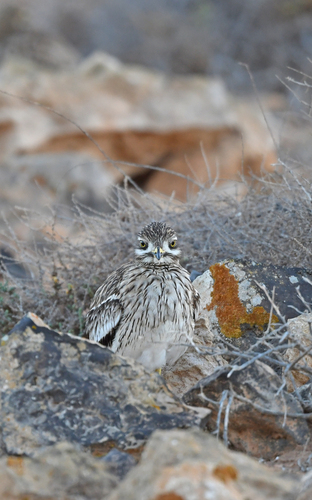
イシチドリ (Burhinus oedicnemus) イシチドリ
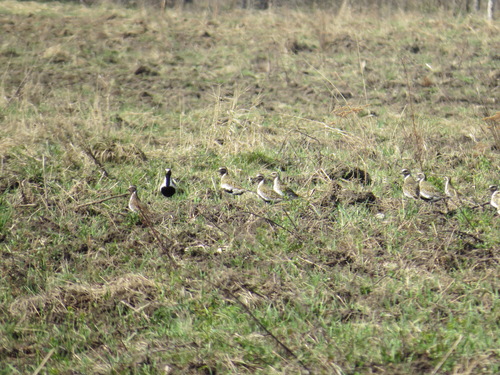
ヨーロッパムナグロ (Pluvialis apricaria) ヨーロッパムナグロ

メディア

読み込み中…

要点

イシチドリとヨーロッパムナグロを区別する最も信頼できるフィールドマークは、イシチドリの飛行中の際立った黒と白の翼のパターンであり、これはヨーロッパムナグロにはありません。イシチドリは、強い黄色と黒のくちばしと大きく見開いた黄色の目を持つ、より重くてがっしりとした鳥であり、ヨーロッパムナグロはよりコンパクトで、短いくちばしと繁殖羽衣の顔と側面に特徴的な白い「S」字型の帯を持っています。両種は止まっているときに暗色系の羽毛を示すことがありますが、構造、飛行スタイル、顔の特徴は非常に異なります。未熟な鳥や非繁殖の鳥は、特に静止時に混乱を招くことがあるため、飛行時の視点と構造的な手がかりに注目してください。

識別のコツ

  1. In flight, look for bold black-and-white wing markings: イシチドリは、すべての年齢と季節で翼に強い黒と白のコントラストを示します。ヨーロッパムナグロはこれを欠き、上翼は無地です。
  2. Check the eyes: イシチドリは非常に大きく、見開いた黄色の目を持ち、「ゴーグルアイ」のように見えます。ヨーロッパムナグロの目は暗く、目立ちません。
  3. Bill color and shape: イシチドリは強い黄色と黒のくちばしを持ち、ヨーロッパムナグロの短くて細い全黒のくちばしよりも太くて長いです。
  4. Facial pattern: 繁殖羽衣の時、ヨーロッパムナグロは額から側面にかけて白い「S」字型の帯を持っています。イシチドリはこれを欠き、淡い眉斑を持つより均一で暗色系の顔をしています。
  5. Legs and stance: イシチドリはより高く立ち、目立つ太い「膝」(脛骨関節)と長い脚を持っています。ヨーロッパムナグロはよりコンパクトで、地面に対して低く立っています。
  6. Body shape: イシチドリはがっしりとしていて、体が長いです。ヨーロッパムナグロはずんぐりしていますが、全体的には小さいです。
  7. Plumage above: ヨーロッパムナグロは繁殖羽衣の時に金色の斑点のある上面を示します。イシチドリは上面が無地の茶色と淡色で、斑点はありません。
  8. Underwing color: 飛行中、ヨーロッパムナグロは白い腋(脇の下)を持っていますが、これは微妙で、イシチドリの翼のパターンほど目立ちません。
  9. Behavior: イシチドリはしばしば単独または小さな群れで見られ、昼間は動かずに隠れており、夕暮れや夜に活動します。ヨーロッパムナグロは群れで見られる可能性が高く、昼間に活動します。
  10. Habitat: イシチドリは乾燥した石や砂の地面に生息します。ヨーロッパムナグロは開けた湿地や草地を好みます。
  11. Voice: イシチドリの鳴き声は大きく、悲鳴のようで、通常は夜に聞かれます。ヨーロッパムナグロは柔らかく、下降する「トゥー」という声を出し、通常は昼間です。
  12. Size in mixed flocks: 一緒に見られる場合、イシチドリはヨーロッパムナグロよりもはるかに大きく、重いです。
  13. Juvenile confusion: 未熟なヨーロッパムナグロは大胆な繁殖の顔の帯を欠き、鈍い色合いですが、イシチドリの黄色い目と翼のパターンは依然として欠けています。
  14. Perched birds: もし静止しているのしか見えない場合は、目の色、くちばしの形、脚の長さに注目してください。羽毛だけでは、鈍い光や距離では誤解を招くことがあります。
  15. When in doubt: 飛行時の視点や鳴き声を待ってください。これらは区別するための最も信頼できる手段です。

大きさ

イシチドリはヨーロッパムナグロよりもかなり大きく、重いです。イシチドリは長さ38〜46 cm、翼幅76〜88 cm、体重290〜535 g [wikipedia]であり、ヨーロッパムナグロは約175 g [wikidata]で小さく、軽いです。フィールドでは、イシチドリはより細長く、頑丈に見え、脚が長く、頭が大きいのに対し、ヨーロッパムナグロはよりコンパクトでずんぐりとした体型です。

羽色

行動

イシチドリはしばしば直立して動かずに立っているのが見られ、暗色系の羽毛でカモフラージュを利用し、主に夕暮れや夜に活動します。ゆっくりとした慎重な歩き方をし、大きな群れで見られることは少ないです。飛行中は、ゆっくりとした深い翼の打撃と目立つ黒と白の翼のパターンを示します。ヨーロッパムナグロは昼間により活動的で、しばしば群れで見られ、急速で力強い飛行をし、定期的な翼の打撃を持っています。地面では、よりコンパクトに見え、開けた場所で走ったり立ち止まったりするのが頻繁に見られます。

生息環境

イシチドリは乾燥した開けた石や砂の地面を好み、しばしばヒース、休耕地、または砂利の多い地域に生息します。湿った草地を避け、干潟ではめったに見られません。ヨーロッパムナグロは開けた湿地、ツンドラ、繁殖シーズン外では湿った草地、畑、時には干潟を好みます。開けた地面での重複は可能ですが、イシチドリは乾燥した石の生息地により強く結びついています。

声

イシチドリは大きく、悲鳴のようで不気味な鳴き声を持ち、夜によく聞かれます。これはヨーロッパムナグロの柔らかく、下降する単音の「トゥー」とは非常に異なります。イシチドリの鳴き声はより鋭く、特徴的であり、ムナグロの鳴き声はより哀愁を帯びており、遠くまで届きません。

より良い説明を送る

比較と同じ項目を使ってください。文章はすぐに公開されます。

The most reliable field mark to separate Stone-curlew from European Golden Plover is the Stone-curlew’s striking black-and-white wing pattern in flight, which is absent in the golden plover. Stone-curlew is a heavier, bulkier bird with a strong yellow-and-black bill and large, staring yellow eyes, while European Golden Plover is more compact, with a short bill and a distinctive white 'S'-shaped band on the face and flanks in breeding plumage. Both species can show cryptic, earth-toned plumage when perched, but their structure, flight style, and facial features are very different. Immature and non-breeding birds may be especially confusing at rest, so focus on flight views and structural cues.

  1. In flight, look for bold black-and-white wing markings: Stone-curlew shows strong black and white contrast on the wings, visible in all ages and seasons; European Golden Plover lacks this and has plain upperwings.
  2. Check the eyes: Stone-curlew has very large, staring yellow eyes, giving a 'goggle-eyed' look; Golden Plover’s eyes are dark and less prominent.
  3. Bill color and shape: Stone-curlew has a strong yellow-and-black bill, thicker and longer than the plover’s short, fine, all-dark bill.
  4. Facial pattern: In breeding plumage, European Golden Plover has a white 'S'-shaped band from forehead to flanks; Stone-curlew lacks this and has a more uniform, cryptic face with a pale supercilium.
  5. Legs and stance: Stone-curlew stands taller, with prominent thick 'knees' (tibiotarsal joints) and longer legs; Golden Plover is more compact and stands lower to the ground.
  6. Body shape: Stone-curlew is bulkier and longer-bodied; Golden Plover is thickset but smaller overall.
  7. Plumage above: Golden Plover shows golden-spangled upperparts in breeding plumage; Stone-curlew is plain brown and buff above, with no spangling.
  8. Underwing color: In flight, Golden Plover has white axillaries (armpits), but this is subtle and not as striking as Stone-curlew’s wing pattern.
  9. Behavior: Stone-curlew is often solitary or in small groups, motionless and cryptic by day, active at dusk/night; Golden Plover is more likely to be seen in flocks, active by day.
  10. Habitat: Stone-curlew is found on dry, stony or sandy ground; Golden Plover prefers open moorland or wet grassland.
  11. Voice: Stone-curlew’s call is loud and wailing, usually at night; Golden Plover gives a soft, descending 'tuu', usually by day.
  12. Size in mixed flocks: If seen together, Stone-curlew is much larger and heavier than Golden Plover.
  13. Juvenile confusion: Immature Golden Plovers lack the bold breeding face band and are duller, but still lack Stone-curlew’s yellow eye and wing pattern.
  14. Perched birds: If only seen at rest, focus on eye color, bill shape, and leg length; plumage alone can be misleading in dull light or at distance.
  15. When in doubt: Wait for flight views or vocalizations, as these are the most reliable for separation.

Stone-curlew is significantly larger and heavier than European Golden Plover. Stone-curlew measures 38–46 cm in length with a wingspan of 76–88 cm and weighs 290–535 g [wikipedia], while European Golden Plover is smaller and lighter at around 175 g [wikidata]. In the field, Stone-curlew appears lankier and more robust, with longer legs and a bigger head, compared to the plover’s more compact, thickset build.

  • Juvenile/immature and flight views: Stone-curlew of all ages shows bold black and white wing markings in flight, which are diagnostic and absent in European Golden Plover. Golden Plovers lack strong wing patterning; their underwing is pale, and adults have white axillaries, but the upperwing is plain.

  • Adults in breeding plumage: European Golden Plover is distinctive with a white 'S'-shaped band from forehead to flanks and golden-spangled upperparts. Stone-curlew is much plainer, with cryptic brown and buff plumage, and lacks any golden spangling or white facial band.

  • Non-breeding/immature birds: Both species become duller, but Stone-curlew retains its yellow eye and strong facial pattern, while Golden Plover loses the bold face band but remains more finely marked above and lacks the Stone-curlew’s strong bill and eye contrast.

Stone-curlew is often seen standing upright and motionless, relying on its cryptic plumage for camouflage, and is mostly active at dusk or night. It has a slow, deliberate walk and is less likely to be seen in large flocks. In flight, it shows slow, deep wingbeats and prominent black-and-white wing pattern. European Golden Plover is more active by day, often found in flocks, and has a rapid, powerful flight with regular wingbeats. On the ground, it appears more compact and is frequently seen running and pausing in open areas.

Stone-curlew prefers dry, open, stony or sandy ground, often in heaths, fallow fields, or gravelly areas. It avoids wet grasslands and is rarely found on mudflats. European Golden Plover favors open moorland, tundra, and, outside the breeding season, wet grasslands, fields, and sometimes mudflats. Overlap is possible on open ground, but Stone-curlew is much more tied to dry, stony habitats.

Stone-curlew has a loud, wailing, and eerie call, often heard at night, which is very different from the European Golden Plover’s soft, descending, monosyllabic 'tuu'. The Stone-curlew’s call is more piercing and distinctive, while the plover’s is more plaintive and less far-carrying.

変更を破棄しますか?

保存していない編集があります。今離れると失われます。

イシチドリ · ヨーロッパムナグロ · 苦手な鳥