

Motmot

ツルシギ 対 オオキアシシギ

Tringa erythropus 対 Tringa melanoleuca

ツルシギとオオキアシシギのクイズ
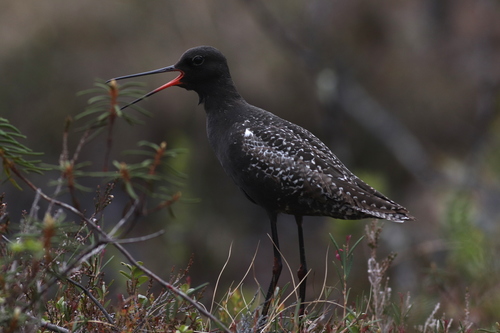
ツルシギ (Tringa erythropus) ツルシギ
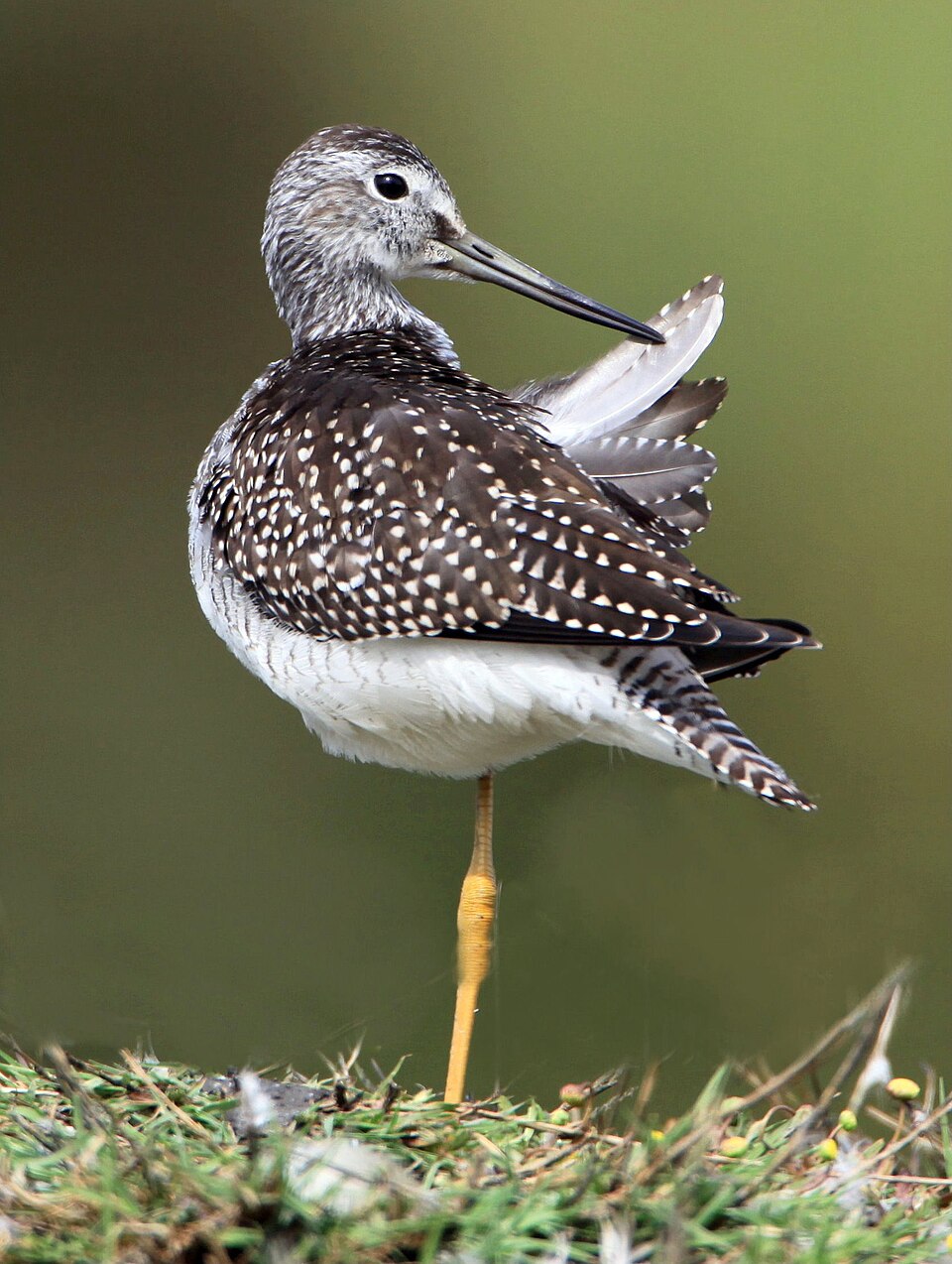
オオキアシシギ (Tringa melanoleuca) オオキアシシギ

メディア

読み込み中…

要点

ツルシギとオオキアシシギの最も信頼できるフィールドマークは脚の色です:ツルシギは赤い脚を持ち(繁殖羽衣では時々暗くなることがあります)、オオキアシシギは常に明るい黄色の脚を示します。飛行中、ツルシギは背中に特徴的な白い楕円形を示しますが、オオキアシシギは白い尻を持っていますが、この楕円形はありません。幼鳥のツルシギは上面が細かく斑点模様で、下面は横縞模様があり、幼鳥のオオキアシシギの粗い縞模様とは対照的です。どちらも大きく、細身のトリンガの水鳥ですが、これらの詳細、特に脚の色と飛行パターンに注意を払うことで、ほとんどの条件で区別できます。

識別のコツ

  1. 脚の色は最も一貫したフィールドマークです: ツルシギは赤い脚を持ち(繁殖羽衣では時々灰色に暗くなることがあります)、オオキアシシギは常に明るい黄色の脚を持っています。良い光の下で脚の色を確認してください—泥や水がこれを隠すことがあるので、疑わしい場合は他のマークで確認してください。
  2. 飛行パターン: ツルシギは飛行中に背中に特徴的な白い楕円形を示します(すべての年齢)、オオキアシシギは白い尻を示しますが、背中の楕円形はありません。鳥が飛び立つときや通り過ぎるときにこのマークを探してください。
  3. 幼鳥/未成熟の上面: 幼鳥のツルシギは上面が細かく白い斑点模様で、下面は淡い、細かい横縞模様があります。幼鳥のオオキアシシギは上面が灰色がかった茶色ですが、胸と首に粗い、暗い縞模様があり、細かい斑点模様はありません。
  4. 繁殖羽衣: ツルシギは繁殖期にほぼ完全に黒から暗灰色で白い斑点があります(脚も暗くなります)、オオキアシシギは決して黒ではありません—胸と背中に重い、鮮明な縞模様と斑点があり、常に白い腹部と黄色の脚を持っています。
  5. くちばしの構造: 両者とも長くて細いくちばしを持っていますが、オオキアシシギのくちばしはしばしばわずかに上向きで、頭よりも長いです;ツルシギのくちばしはまっすぐまたはわずかに垂れ下がっており、長いです。くちばしの形は微妙で、遠くからは常に信頼できるわけではありません。
  6. 体の構造: 両者とも細身で長い脚を持っていますが、ツルシギはオオキアシシギよりもわずかに優雅で頑丈でないように見えることがあります。これは主観的であり、他のマークと併用するのが最良です。
  7. 下面の模様(非繁殖): ツルシギは全体的に色が薄く、オオキアシシギの暗く鮮明な胸の模様と比較して、胸の縞模様は粗くありません。
  8. 声: よく聞こえれば、ツルシギはきしむ、アジサシのような笛音を出し、オオキアシシギは大きく、明瞭な三音の笛音を出します。警戒音も異なりますが、両者とも遠くからは混乱を招く鋭い音を出すことがあります。
  9. 生息地と分布: ヨーロッパとアジアでは、ツルシギが期待されます;オオキアシシギは迷鳥です。北アメリカでは逆が真です。分布はあくまで補助的な手がかりとして使用してください。
  10. 換羽のタイミング: ツルシギの成鳥は7月から10月の間に完全に換羽し、春の体の換羽は3月から5月です。幼鳥は8月から2月にかけて部分的に換羽します。オオキアシシギの換羽のタイミングはここでは詳しく説明されていないので、これを区別のために使用しないでください。
  11. 白い尻と白い背中の楕円形: 両者とも飛行中に後部に白を示しますが、ツルシギだけが背中に楕円形を持っています。オオキアシシギの白は尻に限られています。
  12. コキアシシギとの混同: 両種はコキアシシギと混同されることがありますが、オオキアシシギだけが構造と羽衣が非常に似ています。ツルシギはコキアシシギよりも大きく、構造が異なります。
  13. 性差: 両種に強い性的二形性はなく、すべてのマークは両性に適用されます。
  14. 文脈と群れ: 両者は単独または他の水鳥と混合した群れで見られることがあります。両方が存在する場合は直接比較を使用してください。
  15. 落とし穴: 泥だらけの脚、悪い光、または遠くからの視界は脚の色を隠すことがあります。脚の色が見えない場合は、飛行パターン、下面のマーク、声の組み合わせに依存してください。

大きさ

両種はトリンガの水鳥の中で最も大きいものであり、体のサイズはかなり重なっています。オオキアシシギは平均してわずかに重い(170 g対151.5 gのツルシギ [wikidata])ですが、両者の長さは似ています(ツルシギは29〜31 cm、オオキアシシギは29〜40 cm [wikipedia])。フィールドでは、サイズだけでは信頼できる区別にはならず、両者とも同じくらい背が高く、細身に見えることがあります。

羽色

行動

両種は浅い水で餌を探し、しばしば活発に水をかき分けます。オオキアシシギは餌を取る際にくちばしで水をかき混ぜることで知られています。ツルシギは動きがわずかに優雅で、あまり慌ただしくないように見えることがありますが、行動の違いは微妙で、一貫して診断的ではありません。

生息環境

ツルシギは湿地のタイガで繁殖し、ユーラシアとアフリカで越冬しますが、オオキアシシギは北アメリカの北方湿地で繁殖し、アメリカ大陸の南部で越冬します。ヨーロッパでは、ツルシギは通常見られますが、オオキアシシギは珍しい迷鳥です。北アメリカでは逆が真です。両者は浅い湿地や泥の縁に生息しているため、生息地は強い区別要因ではありません。

声

ツルシギはきしむような笛音「テウイット」と警戒音「キップキップキップ」を出します。オオキアシシギは飛行中に非常に大きく、明瞭で、厳しい三音の笛音を出し、第三の音節は低音です。音声はよく聞こえればかなり異なりますが、両者とも遠くから混乱を招く鋭い音を出すことがあります。

より良い説明を送る

比較と同じ項目を使ってください。文章はすぐに公開されます。

The most reliable field mark between Spotted Redshank and Greater Yellowlegs is leg color: Spotted Redshank has red legs (sometimes darkening in breeding plumage), while Greater Yellowlegs always shows bright yellow legs. In flight, Spotted Redshank shows a distinctive white oval on the back, whereas Greater Yellowlegs has a white rump but lacks this oval. Juvenile Spotted Redshank are finely speckled above and barred below, contrasting with the coarser streaking on juvenile Greater Yellowlegs. Both are large, slim Tringa waders, but careful attention to these details—especially leg color and flight pattern—will separate them in most conditions.

  1. Leg color is the most consistent field mark: Spotted Redshank has red legs (sometimes darkening to grey in breeding plumage), while Greater Yellowlegs always has bright yellow legs. Check leg color in good light—mud or water can obscure this, so confirm with other marks if in doubt.
  2. Flight pattern: Spotted Redshank shows a distinctive white oval on the back in flight (all ages), while Greater Yellowlegs shows a white rump but lacks the back oval. Look for this mark when birds flush or fly past.
  3. Juvenile/immature upperparts: Juvenile Spotted Redshank are finely speckled white above, with pale, finely barred underparts. Juvenile Greater Yellowlegs are grey-brown above but with coarser, darker streaking on the breast and neck, and lack the fine speckling.
  4. Breeding plumage: Spotted Redshank is almost entirely black to dark grey with white spots in breeding season (legs also darken), while Greater Yellowlegs is never black—look for heavy, crisp streaking and spotting on the breast and back, but always with a white belly and yellow legs.
  5. Bill structure: Both have long, thin bills, but Greater Yellowlegs' bill is often slightly upturned and longer than the head; Spotted Redshank's bill is straight to slightly drooping and also long. Bill shape is subtle and not always reliable at a distance.
  6. Body structure: Both are slim and long-legged, but Spotted Redshank may appear slightly more elegant and less robust than Greater Yellowlegs. This is subjective and best used with other marks.
  7. Underpart pattern (non-breeding): Spotted Redshank is paler overall, with less coarse streaking on the breast compared to the dark, crisp breast pattern of Greater Yellowlegs.
  8. Voice: If heard well, Spotted Redshank gives a creaking, tern-like whistle, while Greater Yellowlegs gives a loud, clear three-note whistle. Alarm calls differ as well, but both can give sharp notes that are confusing at a distance.
  9. Habitat and range: In Europe and Asia, Spotted Redshank is expected; Greater Yellowlegs is a vagrant. In North America, the reverse is true. Use range only as a supporting clue.
  10. Molt timing: Spotted Redshank adults molt completely between July and October, with spring body molt March–May. Juveniles have a partial molt August–February. Greater Yellowlegs' molt timing is not detailed here, so do not use this as a separator.
  11. White rump vs. white back oval: Both show white in the rear in flight, but only Spotted Redshank has the oval on the back. Greater Yellowlegs' white is limited to the rump.
  12. Confusion with Lesser Yellowlegs: Both species can be confused with Lesser Yellowlegs, but only Greater Yellowlegs is closely similar in structure and plumage. Spotted Redshank is larger and structurally different from Lesser Yellowlegs.
  13. Sex differences: No strong sexual dimorphism in either species; all marks apply to both sexes.
  14. Context and flocking: Both may occur singly or in mixed flocks with other waders. Use direct comparison if both are present.
  15. Pitfalls: Muddy legs, poor light, or distant views can obscure leg color. Rely on a combination of flight pattern, underpart markings, and voice when leg color is not visible.

Both species are among the largest Tringa waders, and their body sizes overlap considerably. Greater Yellowlegs averages slightly heavier (170 g vs. 151.5 g for Spotted Redshank [wikidata]), but both are similar in length (29–31 cm for Spotted Redshank, 29–40 cm for Greater Yellowlegs [wikipedia]). In the field, size alone is not a reliable separator, as both can appear equally tall and slender.

  • Juveniles/immatures: Spotted Redshank juveniles are grey-brown above with fine white speckling and have pale, finely barred underparts. In contrast, Greater Yellowlegs juveniles are grey-brown above but show a coarser, darker streaking on the breast and neck, and their upperparts lack the fine speckling of Spotted Redshank.
  • Adults (non-breeding): Both species are pale below and grey-brown above, but Spotted Redshank is generally paler overall, especially in winter. The white oval on the back of Spotted Redshank is visible in flight in all plumages, while Greater Yellowlegs shows a white rump but not a back oval.
  • Adults (breeding): Spotted Redshank is strikingly black to dark grey with white spots in breeding plumage, while Greater Yellowlegs is never black—its breeding plumage features a coarsely streaked breast and neck with much black on the shoulders and back, but always with a white belly and yellow legs.
  • Leg color: Spotted Redshank has red legs (sometimes dark grey in breeding), Greater Yellowlegs always has bright yellow legs.

Both species forage in shallow water, often wading actively. Greater Yellowlegs is noted for stirring up water with its bill while feeding. Spotted Redshank may appear slightly more elegant and less frenetic in its movements, but behavioral differences are subtle and not consistently diagnostic.

Spotted Redshank breeds in boggy taiga and winters across Eurasia and Africa, while Greater Yellowlegs breeds in boreal wetlands of North America and winters further south into the Americas. In Europe, Spotted Redshank is regular; Greater Yellowlegs is a rare vagrant. In North America, the reverse is true. Both occur in shallow wetlands and muddy margins, so habitat is not a strong separator unless you are far outside the expected range of one species.

Spotted Redshank gives a creaking whistle 'teu-it' and an alarm 'kyip-kyip-kyip.' Greater Yellowlegs has a much louder, clearer, and harsher three-syllable whistle in flight, with the third syllable lower pitched. Calls are quite different if heard well, but both can give sharp, piping notes that may confuse at a distance.

変更を破棄しますか?

保存していない編集があります。今離れると失われます。

ツルシギ · オオキアシシギ · 苦手な鳥