

Motmot

ヨコジマテリカッコウ 対 アカメテリカッコウ

Chalcites lucidus 対 Chalcites minutillus

ヨコジマテリカッコウとアカメテリカッコウのクイズ
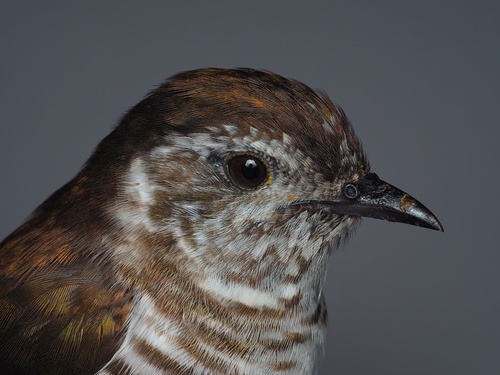
ヨコジマテリカッコウ (Chalcites lucidus) ヨコジマテリカッコウ
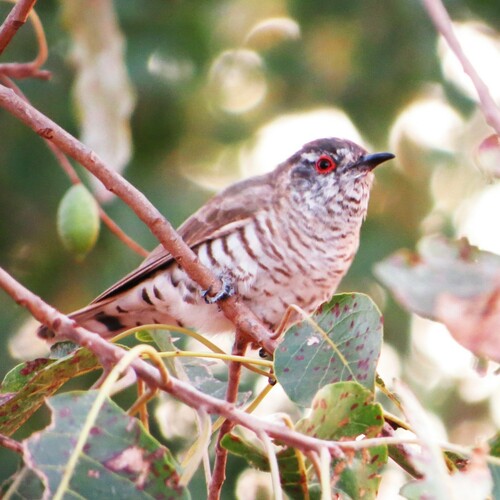
アカメテリカッコウ (Chalcites minutillus) アカメテリカッコウ

メディア

読み込み中…

要点

ヨコジマテリカッコウとアカメテリカッコウを区別する最も信頼できるフィールドマークは、アカメテリカッコウの目の後ろにある太い白い斑点の存在であり、これはヨコジマテリカッコウにはありません。両種は金属的な緑の上面と暗い縞模様のある白い下面を示しますが、ヨコジマテリカッコウはやや大きく、銅色または金色の光沢があります。一方、アカメテリカッコウはより青銅色の緑で、明らかに小柄で細身です。両方の雌と幼鳥は見分けるのが難しいですが、ヨコジマテリカッコウの白い頬とより広範な縞模様は、アカメテリカッコウの白い眼後斑点と細身の体型と対照的です。飛んでいるときや止まっているときは、微妙な色の違いに頼る前に、構造と顔の模様の組み合わせを探してください。

識別のコツ

  1. 白い眼後斑点: アカメテリカッコウは常に目の後ろに明確な白い斑点を示し、すべての年齢と性別で見ることができます。ヨコジマテリカッコウはこのマークを完全に欠いています。
  2. 顔の模様: ヨコジマテリカッコウは白い頬を持ち、眼後斑点のないより均一な顔をしています。アカメテリカッコウの顔は白い斑点を除いては地味です。
  3. 上面の色: ヨコジマテリカッコウは金属的な金色または銅色の緑で、特に良い光の下で顕著です。アカメテリカッコウは青銅色の緑で、金色や銅色のトーンを欠いています。
  4. 下面の縞模様: 両方とも暗い縞模様のある白い下面を持っていますが、ヨコジマテリカッコウの縞模様は暗い緑で、雌では青銅色がかることがあります。アカメテリカッコウの縞模様は暗いですが、全体的に下面は明るさが少ないです、特に幼鳥では。
  5. サイズと構造: ヨコジマテリカッコウは大きくてがっしりしており、翼幅が長く、体重も重いです。アカメテリカッコウは明らかに小さく、軽く、細身で、サイズに対して比例的に長い尾を持っています。
  6. くちばしと足: 両方とも暗いくちばしを持っていますが、ヨコジマテリカッコウは足の裏が黄色です(フィールドではめったに見えません)。くちばしの形は強い区別要因ではありません。
  7. オスの眼窩リング: 成熟したオスのアカメテリカッコウは赤い眼窩リングを持っていますが、ヨコジマテリカッコウにはありません。これは微妙で、遠くからは見えないことがあります。
  8. 冠と後頭部の光沢(雌): 雌のヨコジマテリカッコウは冠と後頭部に紫がかった光沢を示し、下面の縞模様は青銅色がかることがあります。アカメテリカッコウの雌はオスに似ていますが、やや大きいです。
  9. 幼鳥の明るさ: 幼鳥のアカメテリカッコウは鈍く、側面のまだら模様が欠けることがありますが、白い眼後斑点は持っています。幼鳥のヨコジマテリカッコウは下面が明るく、斑点がありません。
  10. 飛行スタイル: アカメテリカッコウは飛行中により敏捷で波打つような動きをし、より小さく軽い体型を反映しています。ヨコジマテリカッコウはより直接的で、あまりひらひらしません。
  11. 宿主の文脈: 両方ともGerygoneの巣を寄生するため、文脈は診断的ではありませんが、ヨコジマテリカッコウはニュージーランドやいくつかの太平洋の島々で見られる可能性が高いです。
  12. 地理的重複: ニュージーランドで観察された場合、ほぼ確実にヨコジマテリカッコウです。オーストラリア北部とニューギニアでは、両方とも可能です。
  13. 生息地: 両方とも密な葉のある森林地域を好むため、生息地は強い区別要因ではありません。
  14. 羽毛の落とし穴: 両方とも悪い光や距離で似て見えることがありますが、アカメテリカッコウの白い眼後斑点が最も信頼できるフィールドマークです。顔が明確に見えない限り、縞模様や光沢の微妙な違いに頼らないでください。
  15. 性差: オスのアカメテリカッコウのみが赤い眼窩リングを示します。雌と幼鳥の違いは微妙で、白い斑点と全体的なサイズ/構造によって最もよく区別されます。

大きさ

ヨコジマテリカッコウは2種の中で大きく、長さは13〜18 cm、体重は約25 g、翼幅は25〜32 cmです。アカメテリカッコウは世界で最も小さなカッコウで、長さは15〜16 cm、体重は14.5〜17 gです。長さの範囲は重なりますが、ヨコジマテリカッコウは一般的にがっしりしており、翼が長いのに対し、アカメテリカッコウは明らかに軽く、細身で、サイズに対して比例的に長い尾を持っています。アカメテリカッコウの雌はオスよりやや大きいことがありますが、全体的にはヨコジマテリカッコウより小さいです。

羽色

行動

両種は秘密主義で、見るよりも聞く方が容易で、密な葉の中を素早く移動します。アカメテリカッコウは小さく細身で、特に敏捷で、直接的だが微妙に波打つ飛行で植生を素早く操ると説明されています。ヨコジマテリカッコウも活発ですが、ややがっしりしていて動きが繊細ではないように見えます。両方とも小型の通過鳥、特にGerygone種のドーム型の巣に寄生し、通常は単独またはペアで見られ、群れでは見られません。

生息環境

両種はオーストラリアとニューギニアのほとんどの範囲で重なり合い、両方とも宿主種が巣を作る森林生息地を好みます。ヨコジマテリカッコウはより広い分布を持ち、ニュージーランド、ニューカレドニア、バヌアツ、ソロモン諸島に達しますが、アカメテリカッコウはより制限されているものの、オーストラレーシア全体に広く分布しています。両方ともGerygoneや他の小型の昆虫食性宿主が一般的な生息地に関連しています。生息地だけでは両者を区別することはできません。

より良い説明を送る

比較と同じ項目を使ってください。文章はすぐに公開されます。

The most reliable field mark to separate Shining Bronze-Cuckoo from Little Bronze-Cuckoo is the presence of a bold white spot behind the eye on Little Bronze-Cuckoo, which is lacking in Shining Bronze-Cuckoo. Both species show metallic green upperparts and white underparts with dark barring, but Shining Bronze-Cuckoo is slightly larger and has a coppery or golden sheen, while Little Bronze-Cuckoo is more bronze-green and notably more petite and slender. Females and immatures of both can be tricky, but the white cheek and more extensive barring on Shining Bronze-Cuckoo, versus the white post-ocular spot and slimmer build of Little Bronze-Cuckoo, are key. In flight or perched, look for the combination of structure and face pattern before relying on subtle color differences.

  1. White post-ocular spot: Little Bronze-Cuckoo always shows a distinct white spot behind the eye, visible in all ages and sexes. Shining Bronze-Cuckoo lacks this mark entirely.
  2. Face pattern: Shining Bronze-Cuckoo has white cheeks and a more uniform face without a post-ocular spot. Little Bronze-Cuckoo's face is plainer except for the white spot.
  3. Upperparts color: Shining Bronze-Cuckoo is metallic golden or coppery green above, especially in good light. Little Bronze-Cuckoo is bronze-green, lacking the golden or coppery tones.
  4. Underparts barring: Both have white underparts with dark barring, but Shining Bronze-Cuckoo's barring is dark green and can be bronzer-tinged in females. Little Bronze-Cuckoo's barring is dark but the underparts are less bright overall, especially in juveniles.
  5. Size and structure: Shining Bronze-Cuckoo is larger and bulkier, with a longer wingspan and heavier build. Little Bronze-Cuckoo is noticeably smaller, lighter, and more slender, with a proportionally longer tail.
  6. Bill and feet: Both have dark bills, but Shining Bronze-Cuckoo has yellow undersides to the feet (rarely visible in the field). Bill shape is not a strong separator.
  7. Male orbital ring: Adult male Little Bronze-Cuckoo has a red orbital ring, which is absent in Shining Bronze-Cuckoo. This is subtle and may not be visible at distance.
  8. Crown and nape sheen (females): Female Shining Bronze-Cuckoo may show a purplish sheen on the crown and nape, and bronzer-tinged barring below. Little Bronze-Cuckoo females are similar to males but slightly larger.
  9. Juvenile brightness: Juvenile Little Bronze-Cuckoo is duller and may lack flank mottling, but still has the white post-ocular spot. Juvenile Shining Bronze-Cuckoo is brighter below and lacks the spot.
  10. Flight style: Little Bronze-Cuckoo is more agile and undulating in flight, reflecting its smaller, lighter build. Shining Bronze-Cuckoo is more direct and less fluttery.
  11. Host context: Both parasitize Gerygone nests, so context is not diagnostic, but Shining Bronze-Cuckoo is more likely in New Zealand and some Pacific islands.
  12. Geographic overlap: If observed in New Zealand, it is almost certainly Shining Bronze-Cuckoo. In northern Australia and New Guinea, both are possible.
  13. Habitat: Both prefer wooded areas with dense foliage, so habitat is not a strong separator.
  14. Plumage pitfalls: Both can appear similar in poor light or at distance, but the white post-ocular spot on Little Bronze-Cuckoo is the most reliable field mark. Do not rely on subtle differences in barring or sheen unless the face is clearly visible.
  15. Sex differences: Only male Little Bronze-Cuckoo shows a red orbital ring. Female and juvenile differences are subtle and best separated by the white spot and overall size/structure.

Shining Bronze-Cuckoo is the larger of the two, measuring 13–18 cm in length and weighing around 25 g, with a wingspan of 25–32 cm. Little Bronze-Cuckoo is the world's smallest cuckoo, at 15–16 cm and 14.5–17 g. While their length ranges overlap, Shining Bronze-Cuckoo is generally bulkier and longer-winged, whereas Little Bronze-Cuckoo is distinctly lighter and more slender, with a proportionally longer tail for its size. Females of Little Bronze-Cuckoo can be slightly larger than males, but still smaller than Shining Bronze-Cuckoo overall.

  • Juveniles/Immatures: Both species have white underparts with dark barring, but Little Bronze-Cuckoo juveniles are less bright overall and may lack mottling on the flanks. The key difference is the white spot behind the eye in Little Bronze-Cuckoo of all ages, which Shining Bronze-Cuckoo never shows. No distinctive age-specific upperwing patterns are described for either species, so rely on face and body plumage.
  • Adults: Shining Bronze-Cuckoo has metallic golden or coppery green upperparts, white cheeks, and dark green barring below. Females have a purplish sheen to the crown and nape and bronzer-tinged barring. Little Bronze-Cuckoo adults are bronze-green above, with a white post-ocular spot, white underparts with dark barring, and a red orbital ring in males. Both have dark bills and legs, but Shining Bronze-Cuckoo's feet have yellow undersides. The overall impression is that Shining Bronze-Cuckoo is brighter and more coppery, while Little Bronze-Cuckoo is duller and greener.

Both species are secretive and often easier to hear than see, moving quickly through dense foliage. Little Bronze-Cuckoo, being smaller and more slender, is especially agile and described as maneuvering swiftly through vegetation with a direct but subtly undulating flight. Shining Bronze-Cuckoo is also active but appears slightly bulkier and less delicate in movement. Both parasitize dome-shaped nests of small passerines, especially Gerygone species, and are typically found alone or in pairs rather than flocks.

Both species overlap in much of their range, especially in Australia and New Guinea, and both favor wooded habitats where their host species nest. Shining Bronze-Cuckoo has a broader distribution, reaching New Zealand, New Caledonia, Vanuatu, and the Solomon Islands, while Little Bronze-Cuckoo is more restricted but still widespread in Australasia. Both are associated with habitats where Gerygone and other small insectivorous hosts are common. Habitat alone is not diagnostic between the two.

変更を破棄しますか?

保存していない編集があります。今離れると失われます。

ヨコジマテリカッコウ · アカメテリカッコウ · 苦手な鳥