

Motmot

アカメジュズカケバト 対 ミドリマダラバト

Streptopelia semitorquata 対 Turtur chalcospilos

アカメジュズカケバトとミドリマダラバトのクイズ
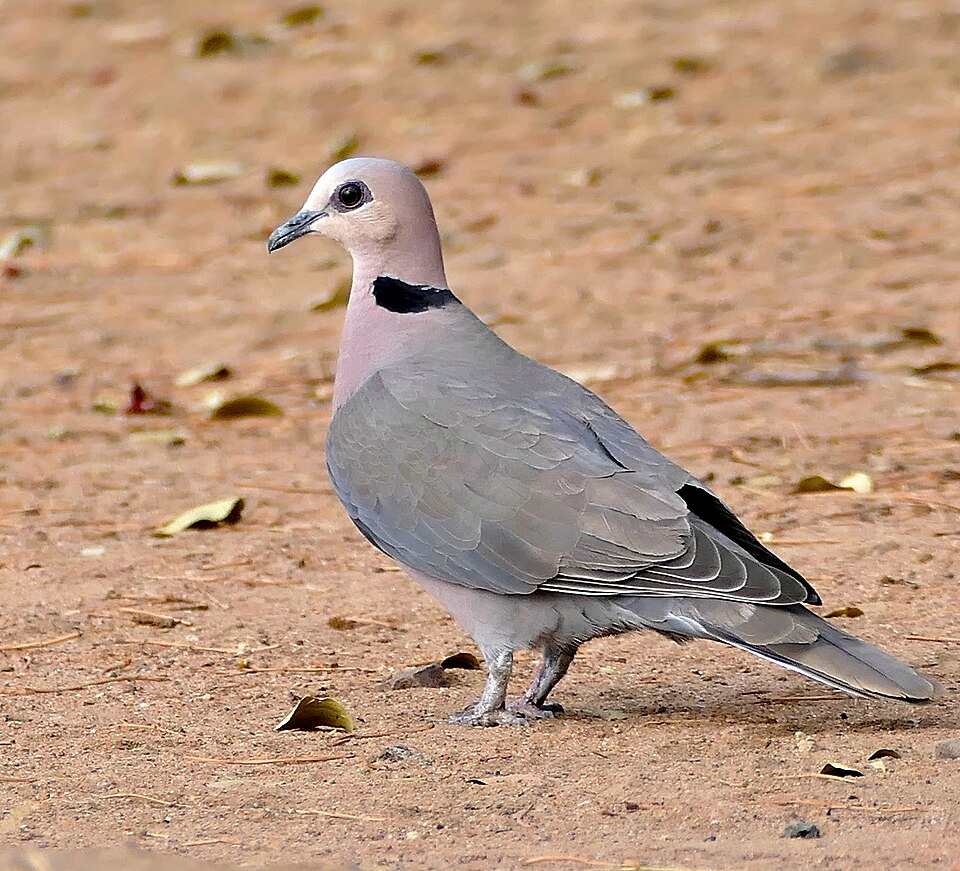
アカメジュズカケバト (Streptopelia semitorquata) アカメジュズカケバト
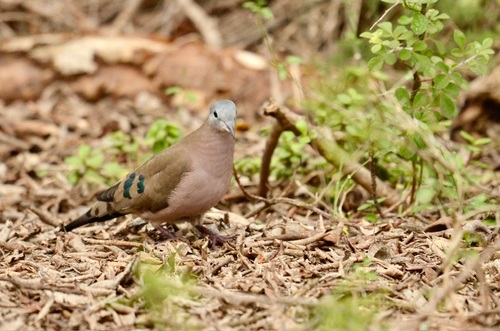
ミドリマダラバト (Turtur chalcospilos) ミドリマダラバト

メディア

読み込み中…

要点

アカメジュズカケバトとミドリマダラバトを区別する最も信頼できるフィールドマークはサイズです:アカメジュズカケバトははるかに大きく、がっしりしており、体が明らかに長く、重いです。飛んでいるときや止まっているとき、アカメジュズカケバトは首に特徴的な黒いハーフカラーを示し、ミドリマダラバトの明るい緑の翼の斑点はありません。両種の幼鳥は鈍い色合いですが、ミドリマダラバトのエメラルドグリーンの翼の斑点(幼鳥では muted でも)はアカメジュズカケバトには決して見られません。赤みがかったまたはワイン色の腹部と暗い首のカラーを持つ中型から大型の鳩を見たら、それはアカメジュズカケバトです;金属的な緑の翼の斑点を持つ小さくてふっくらした鳩はミドリマダラバトです。

識別のコツ

  1. サイズは最も迅速な区別要素です: アカメジュズカケバトはミドリマダラバトよりもはるかに大きく、がっしりしています。鳥が小さくてコンパクトに見える場合、それはほぼ確実にミドリマダラバトです。
  2. 金属的な緑の翼の斑点: ミドリマダラバトだけが折りたたまれた翼に明るい緑の金属的な斑点を示します(成鳥とほとんどの幼鳥)。アカメジュズカケバトの翼には決して緑はありません。
  3. 首のカラー: アカメジュズカケバトは首の側に黒いハーフカラーを示します(成鳥とほとんどの幼鳥)、一方ミドリマダラバトには首のカラーはありません。
  4. 腹部の色: アカメジュズカケバトは首と胸に特に暗いマウブピンクからワインレッドの腹部を持ち、ミドリマダラバトはより淡いピンクがかったマウブで、腹部は白にフェードします。
  5. 頭と顔: アカメジュズカケバトの額は淡い青灰色で、より暗い冠に融合しています;ミドリマダラバトは青灰色の額、冠、後頭部を持ちますが、全体的により淡いです。
  6. 尾のパターン: ミドリマダラバトは下背部と尾に黒っぽい帯がありますが、アカメジュズカケバトの尾羽は基部が暗い灰色で、先端が淡い茶色がかった灰色で、強い帯はありません。
  7. くちばしの色: 両者ともに暗いくちばしを持っていますが、ミドリマダラバトのくちばしは黒っぽく、赤い基部があり、近くで見ると見えることがあります;アカメジュズカケバトのくちばしは完全に黒です。
  8. 脚と眼窩の皮膚: 両者ともに紫がかった赤い脚と眼窩の皮膚を持っていますが、これらは非常に良く見ない限りフィールドでは信頼できません。
  9. 幼鳥の混乱: 幼いミドリマダラバトは鈍い緑の翼の斑点とバフの羽毛の縁を持っていますが、緑はまだ存在します。幼いアカメジュズカケバトは全体的に鈍く、茶色がかっていますが、決して緑の翼の斑点を示しません。
  10. 飛行スタイル: アカメジュズカケバトは強く、規則的な翼の羽ばたきと時折の鋭いフリックで飛びます;ミドリマダラバトの飛行はあまり記述されていませんが、一般的に小さいため、より弱く、よりフラッターします。
  11. 生息地の文脈: 開けた乾燥した森林ではミドリマダラバトがより可能性が高く、湿った密な森林や水の近くではアカメジュズカケバトがより期待されますが、両者は一部の地域で重なることがあります。
  12. 止まっている姿勢: アカメジュズカケバトはしばしば高くて直立して止まり、長い首と重い外観を持ちます。ミドリマダラバトは地面や低い茂みで見られる可能性が高く、コンパクトで短い首に見えます。
  13. 鳴き声: もし三部構成の引き延ばされたクーイングのシーケンス(2つの長いクー、下降するシリーズ、次に速いクー)を聞いたら、それはミドリマダラバトです。アカメジュズカケバトの鳴き声はここでは記述されていないので、ミドリマダラバトの鳴き声が聞かれた場合のみ使用してください。
  14. 性別は似ています: 両種は性的二形がほとんどないため、すべてのフィールドマークはオスとメスの両方に適用されます。
  15. 地理的変異: ミドリマダラバトは単型で、クライン変異のみがあります;アカメジュズカケバトはエチオピア高地でより大きいですが、これは地域的に個体群を比較しない限りフィールドマークではありません。

大きさ

アカメジュズカケバトは劇的に大きく、平均体重は235gで、ミドリマダラバトはわずか56gです [wikidata]。アカメジュズカケバトは約30cmの長さに達し、その範囲で最も大きな「リングネック」鳩となりますが、ミドリマダラバトは約20cmとかなり小さいです。フィールドではその違いは明らかです:アカメジュズカケバトは長い体と頑丈に見え、ミドリマダラバトはコンパクトで短い尾を持っています。距離があっても混合した群れの中でも、サイズのギャップは際立っており、しばしば最初の手がかりとなります。

羽色

幼鳥と未熟な鳥:両種は若いときは鈍いですが、重要なマークは持続します。幼いミドリマダラバトは翼に鈍い緑の斑点とバフの羽毛の縁を持っていますが、緑の金属的な斑点はまだ見えますが、あまり鮮やかではありません。アカメジュズカケバトの幼鳥は全体的に成鳥よりも茶色がかり鈍いですが、決して緑の翼の斑点を示しません;彼らの最も特徴的な特徴は首の暗いハーフカラーで、これは存在しますが若い鳥ではあまり鮮明ではありません。

成鳥:アカメジュズカケバトは淡い青灰色の額がより暗い冠に融合し、暗いマウブピンクからワインレッドの首と腹部、灰色がかった茶色の上面、そして首に黒いハーフカラーを持っています。翼は暗いスレートブルーで黒い初列羽を持ち、下翼は青灰色です。ミドリマダラバトは上面が淡い灰色がかった茶色で、青灰色の額と冠、ピンクがかった灰色の喉、そして腹部が白にフェードするマウブピンクの腹部を持っています。最も診断的な特徴は、折りたたまれた翼に見える金属的な緑の斑点で、最も鈍い幼鳥を除くすべての羽色で見られます。ミドリマダラバトの尾には黒っぽい帯があり、くちばしは黒っぽく赤い基部を持ち、アカメジュズカケバトのくちばしは黒です。両種ともに腹部に赤みがかったまたはピンクのトーンを持っていますが、アカメジュズカケバトは色がはるかに暗く、豊かです。

行動

両種は通常、大きな群れではなく、単独またはペアで見られますが、ミドリマダラバトは水場で小さな群れを作ることがあります。アカメジュズカケバトはしばしば木の高いところに止まり、強く、規則的な翼の羽ばたきと時折の鋭いフリックで飛ぶのが見られ、これは鳩の典型です。ミドリマダラバトは主に地面で種を探し、目立って止まっているのはあまり見られません。両種は木や低木に棒の巣を作り、2つの卵を産みますが、これらの行動はフィールドでの区別には役立ちません。

生息環境

アカメジュズカケバトはサハラ以南のアフリカ全域の広範囲な森林生息地に広く分布し、一般的です。川の近くの森林、庭、森林のある都市部でよく見られます。ミドリマダラバトは開けた乾燥した落葉樹林と二次成長を好み、常緑雨林や本物の砂漠を避けます。密な森林や水の近くにいる場合、アカメジュズカケバトがより可能性が高く、乾燥した開けた森林、特に散在する木や茂みがある場合、ミドリマダラバトがより期待されます。しかし、生息地には重複があるため、羽色とサイズがより信頼できます。

声

アカメジュズカケバトの鳴き声は提供されたメモには記述されていません。ミドリマダラバトは特徴的な三部構成の鳴き声を持っています:2つの柔らかい長いクー、約10秒続く遅い下降するクーのシリーズ、そして4秒間の急速なクーの最後のバーストで、音量が減少します。この複雑で引き延ばされたクーイングのシーケンスを聞いたら、それはミドリマダラバトを指します。アカメジュズカケバトの声の記述がないため、鳴き声はミドリマダラバトのユニークなパターンを聞いた場合のみ診断的です。

より良い説明を送る

比較と同じ項目を使ってください。文章はすぐに公開されます。

The most reliable field mark to separate Red-eyed Dove from Emerald-spotted Wood-Dove is size: the Red-eyed Dove is much larger and bulkier, with a noticeably longer body and heavier build. In flight or perched, Red-eyed Dove shows a distinctive black half-collar on the neck and lacks the bright green wing spots of the wood-dove. Juveniles of both species are duller, but the emerald-green wing patches of the wood-dove (even if muted in immatures) are never matched by Red-eyed Dove. If you see a medium-to-large dove with reddish or wine-colored underparts and a dark neck collar, it's Red-eyed Dove; a small, plump dove with metallic green wing spots is Emerald-spotted Wood-Dove.

  1. Size is the quickest separator: Red-eyed Dove is much larger and bulkier than Emerald-spotted Wood-Dove. If the bird looks small and compact, it's almost certainly the wood-dove.
  2. Metallic green wing spots: Only Emerald-spotted Wood-Dove shows bright green metallic patches on the folded wings (adults and most immatures). Red-eyed Dove never has green on the wings.
  3. Neck collar: Red-eyed Dove shows a black half-collar on the side of the neck (adults and most juveniles), while Emerald-spotted Wood-Dove lacks any neck collar.
  4. Underpart color: Red-eyed Dove has dark mauve-pink to wine-red underparts, especially on the neck and breast, while Emerald-spotted Wood-Dove is paler pinkish-mauve, fading to white on the belly.
  5. Head and face: Red-eyed Dove's forehead is pale bluish-grey merging into a darker crown; Emerald-spotted Wood-Dove has a bluish-grey forehead, crown, and nape, but is overall paler.
  6. Tail pattern: Emerald-spotted Wood-Dove has blackish bands on the lower back and tail, while Red-eyed Dove's rectrices are dark grey basally and light brownish-grey distally, lacking strong banding.
  7. Bill color: Both have dark bills, but Emerald-spotted Wood-Dove's bill is blackish with a red base, which may be visible at close range; Red-eyed Dove's bill is entirely black.
  8. Leg and orbital skin: Both have purplish red legs and orbital skin, but these are not reliable in the field unless seen very well.
  9. Juvenile confusion: Juvenile Emerald-spotted Wood-Dove has duller green wing spots and buff feather fringes, but the green is still present. Juvenile Red-eyed Dove is overall duller and browner, but never shows green wing spots.
  10. Flight style: Red-eyed Dove flies with strong, regular wingbeats and occasional sharp flicks; Emerald-spotted Wood-Dove's flight is less described but is generally weaker and more fluttery due to its smaller size.
  11. Habitat context: In open, dry woodland, Emerald-spotted Wood-Dove is more likely; in wetter, denser woodland or near water, Red-eyed Dove is more expected, but both can overlap in some areas.
  12. Perched posture: Red-eyed Dove often perches high and upright, appearing long-necked and heavy. Emerald-spotted Wood-Dove is more likely to be seen on the ground or low in bushes, looking compact and short-necked.
  13. Vocalization: If you hear a three-part, drawn-out cooing sequence (two long coos, descending series, then rapid coos), it's Emerald-spotted Wood-Dove. Red-eyed Dove's call is not described here, so use this only if the wood-dove's call is heard.
  14. Sexes similar: Both species show little sexual dimorphism, so all field marks apply to both males and females.
  15. Geographical variation: Emerald-spotted Wood-Dove is monotypic with only clinal variation; Red-eyed Dove is larger in the Ethiopian Highlands, but this is not a field mark unless comparing populations regionally.

Red-eyed Dove is dramatically larger, with an average body mass of 235 g versus just 56 g for Emerald-spotted Wood-Dove [wikidata]. Red-eyed Dove reaches about 30 cm in length, making it the largest 'ringneck' dove in its range, while Emerald-spotted Wood-Dove is much smaller at around 20 cm. The difference is obvious in the field: Red-eyed Dove appears long-bodied and robust, while Emerald-spotted Wood-Dove is compact and short-tailed. Even at a distance or in mixed flocks, the size gap is striking and is often the first clue.

Juvenile and immature birds: Both species are duller when young, but key marks persist. Juvenile Emerald-spotted Wood-Doves have duller green spots on the wings and buff fringes to the feathers, but the green metallic patches are still visible, though less vibrant. Red-eyed Dove juveniles are overall browner and duller than adults, but never show any green wing spots; their most distinctive feature is the dark half-collar on the neck, which is present but less crisp in young birds.

Adults: Red-eyed Dove has a pale bluish-grey forehead blending into a darker crown, dark mauve-pink to wine-red neck and underparts, greyish brown upperparts, and a black half-collar on the neck. Its wings are dark slaty blue with black primaries, and the underwing is bluish-grey. Emerald-spotted Wood-Dove is pale grey-brown above, with a bluish-grey forehead and crown, pinkish-grey throat, and mauve-pink underparts fading to white on the belly. The most diagnostic feature is the metallic green spots on the folded wings, visible in all plumages except the dullest juveniles. The tail of the wood-dove has blackish bands, and the bill is blackish with a red base, while Red-eyed Dove's bill is black. Both species have some reddish or pink tones on the underparts, but Red-eyed Dove is much darker and richer in color.

Both species are typically seen singly or in pairs rather than large flocks, but Emerald-spotted Wood-Dove may gather in small groups at waterholes. Red-eyed Dove often perches higher in trees and may be seen flying with strong, regular wingbeats and occasional sharp flicks, typical of pigeons. Emerald-spotted Wood-Dove forages mostly on the ground for seeds and is less likely to be seen perched prominently. Both species build stick nests in trees or shrubs and lay two eggs, but these behaviors are not useful for field separation.

Red-eyed Dove is widespread and common in a wide range of wooded habitats across sub-Saharan Africa, except for deserts. It is often found in forests near rivers, gardens, and wooded urban areas. Emerald-spotted Wood-Dove prefers open, drier deciduous woodland and secondary growth, avoiding evergreen rainforest and true desert. If you are in dense forest or close to water, Red-eyed Dove is more likely; in drier, open woodland, especially with scattered trees and bush, Emerald-spotted Wood-Dove is more expected. However, there is some habitat overlap, so plumage and size are more reliable.

Red-eyed Dove's call is not described in the provided notes. Emerald-spotted Wood-Dove has a distinctive three-part call: two soft long coos, a series of slow descending coos lasting about 10 seconds, and a final burst of rapid coos for 4 seconds, decreasing in volume. If you hear this complex, drawn-out cooing sequence, it points to Emerald-spotted Wood-Dove. In the absence of a description for Red-eyed Dove's voice, vocalization is only diagnostic if you hear the wood-dove's unique pattern.

変更を破棄しますか?

保存していない編集があります。今離れると失われます。

アカメジュズカケバト · ミドリマダラバト · 苦手な鳥