

ネズミヤマシトド 対 ハイムネヤマシトド
Geospizopsis unicolor 対 Geospizopsis plebejus
ネズミヤマシトドとハイムネヤマシトドのクイズ
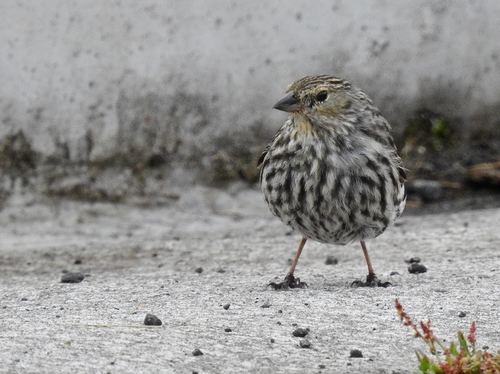 ネズミヤマシトド
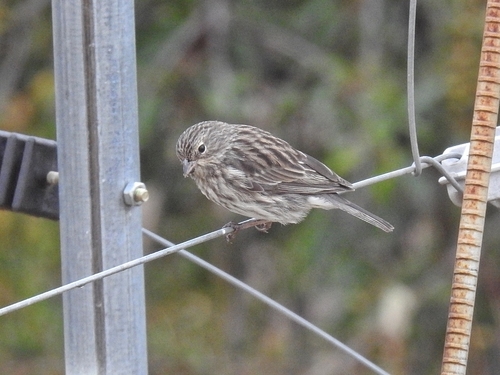 ハイムネヤマシトド
要点
The most reliable way to separate Plumbeous Sierra Finch from Ash-breasted Sierra Finch is by overall coloration: Plumbeous is a uniform lead-gray, while Ash-breasted shows a paler gray breast and often browner or darker wings and tail, especially in some subspecies. Both species overlap in much of their Andean range and habitat, but Ash-breasted prefers drier shrublands in addition to grasslands. Structure and size are similar, but subtle differences in wing and tail color, especially in flight, can help. Immature and regional variation in Ash-breasted can cause confusion, so focus on the uniformity of gray and lack of contrast in Plumbeous versus the more patterned, often two-toned look of Ash-breasted.
識別のコツ
- Uniformity of gray (all ages): Plumbeous Sierra Finch is nearly monochrome lead-gray, with little to no contrast between head, breast, back, wings, and tail. If the bird looks evenly gray everywhere, Plumbeous is likely.
- Contrast in plumage (all ages): Ash-breasted Sierra Finch usually shows a paler gray breast and belly, with distinctly darker wings and tail. Look for this two-toned effect, especially in perched birds.
- Wing and tail color (adults, all seasons): In Ash-breasted, the wings and tail are often blackish or dark brown, standing out against the paler body. Plumbeous has wings and tail that blend smoothly with the rest of the plumage.
- Flank and upperpart color (regional subspecies): Some Ash-breasted subspecies (notably G. p. naroskyi and G. p. ocularis) show darker flanks and a more grayish, less brownish upperpart, but still maintain more contrast than Plumbeous. Be cautious in areas where these forms occur.
- Streaking (mainly Ash-breasted, nominate): The nominate Ash-breasted (northern Andes) may show faint streaking on the upperparts, unlike the plain Plumbeous.
- Bill shape and size: Both species have similar short, finch-like bills; bill structure is not a reliable separator in the field.
- Size: Both are small, stocky finches of similar length and mass. Do not rely on size for separation.
- Habitat context: In pure high-altitude grassland or pasture, Plumbeous may be more likely; in drier, shrubby slopes or valleys, Ash-breasted is favored. However, both can occur together, so use habitat only as a supporting clue.
- Perched vs. flight views: In flight, look for the contrast between body and wings/tail in Ash-breasted; Plumbeous should remain uniformly gray. No distinctive wing panels or edges are reported for either species.
- Sex and season: No strong sexual dimorphism or seasonal change is noted in these sources; both sexes and all seasons should follow the basic patterns above.
- Juvenile/immature confusion: No specific juvenile marks are given, but young Ash-breasted may be browner or more streaked above, while young Plumbeous should still appear more uniform.
- Pitfalls: Beware of regional variation in Ash-breasted, especially in the southern Andes where birds can be grayer and less brown. Always check for contrast, not just overall grayness.
- Flock composition: Both species may mix in flocks, so check each bird individually rather than assuming all are the same.
- Voice: No distinctive vocal differences are provided in these notes; do not rely on calls or song for separation.
- Lighting effects: In poor light, Ash-breasted may appear more uniformly gray, so always look for subtle contrast in wings and tail before concluding Plumbeous.
大きさ
Both species are small sierra-finches and very close in size. Ash-breasted Sierra Finch is reported at 11–11.5 cm in length and 13–17.4 g in weight [wikipedia]. No direct measurements are given for Plumbeous Sierra Finch in these notes, but field experience and references suggest they are similarly sized, so size is not a reliable separator in the field.
羽色
-
Juvenile/Immature/First-winter plumage: No explicit details are provided for juvenile or immature wing patterns for either species, so there are no known age-specific flight marks to use.
-
Adult plumage: Plumbeous Sierra Finch is strikingly uniform lead-gray overall, with little to no contrast between head, breast, back, wings, and tail. Ash-breasted Sierra Finch, by contrast, has a paler gray breast and belly, with darker wings and tail; some subspecies (notably G. p. naroskyi and G. p. ocularis) are more grayish and less brown, but still show more contrast than Plumbeous. Ash-breasted also often shows darker flanks and a blackish tail and wings, especially in the southern subspecies. The upperparts of Ash-breasted may be faintly streaked or show a browner cast in some forms, unlike the plain gray of Plumbeous.
行動
Both species are ground-foraging finches of high-altitude open areas, often seen in small flocks. There is no strong behavioral difference noted in these sources; both perch on rocks or low shrubs and feed on seeds and insects. Flight style and social behavior are not diagnostic.
生息環境
Both species overlap extensively in the Andes of Argentina, Bolivia, Chile, Ecuador, and Peru. Plumbeous Sierra Finch is more strictly associated with high-altitude grassland and pastureland, while Ash-breasted Sierra Finch also uses dry and high-altitude shrubland in addition to grassland. If you find the bird in a shrubby, arid slope or dry valley, Ash-breasted is more likely, but both can occur together in mixed open habitats.