

ニュージーランドオウギビタキ 対 ハイムネメジロ
Rhipidura fuliginosa 対 Zosterops lateralis
ニュージーランドオウギビタキとハイムネメジロのクイズ
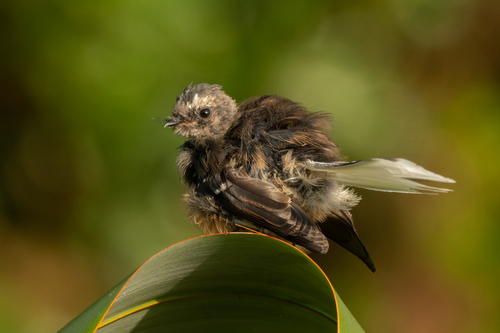 ニュージーランドオウギビタキ
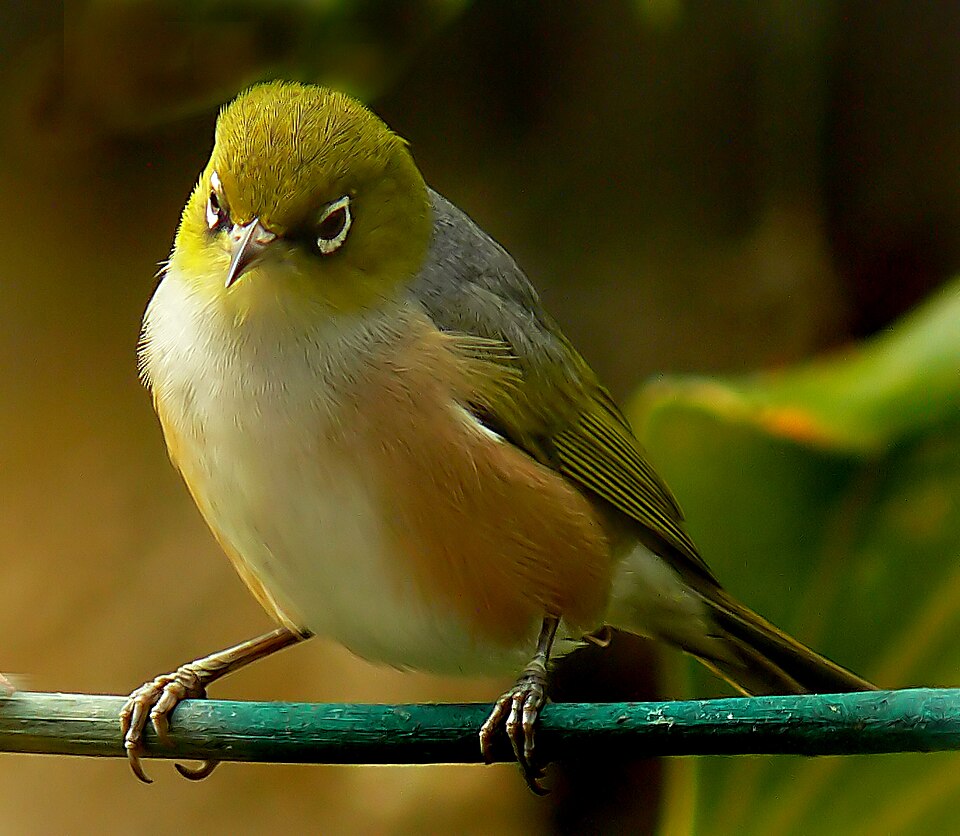 ハイムネメジロ
要点
The most reliable field mark to separate New Zealand Fantail from Silvereye is the fantail’s broad, fan-shaped tail—often dramatically fanned and showing contrasting white outer feathers—versus the Silvereye’s short, rounded tail and bold white eye-ring. Juvenile fantails can be browner, but still show the same tail shape and restless, flitting behavior. Silvereye lacks the fan tail entirely and is more compact, with olive-green upperparts and chestnut or buff flanks. Both species are small and active, but the fantail’s constant tail-fanning and erratic flight are unique in New Zealand. If you see a bird with a white eye-ring and no tail fanning, it’s a Silvereye.
識別のコツ
- Tail shape and behavior: The New Zealand Fantail always shows a long, fan-shaped tail, frequently fanned out to reveal white outer feathers and dark central feathers. This is visible in all ages and is diagnostic in New Zealand. Silvereye has a short, rounded tail and never fans it.
- Eye-ring: Silvereye of all ages shows a bold, complete white eye-ring, which is never present on the New Zealand Fantail (though the fantail may have a white eyebrow or spot behind the eye, especially in the black morph).
- Chest band: Adult fantails have a dark band across the chest below a white throat, which is absent in Silvereye. This band is less distinct in juveniles but the overall pattern is still different.
- Upperparts color: Fantail is mid to dark grey or grey-brown above, sometimes with a yellowish or orange wash below. Silvereye is olive-green above, with a more uniform appearance and no chest band.
- Flank color: Silvereye shows chestnut to pale buff flanks, a feature never seen in fantail.
- Underparts: Fantail has yellowish or orange underparts with a white throat and chest band; Silvereye has lighter underparts, sometimes yellowish, but no banding or strong contrast.
- Tail in flight: In flight, the fantail’s tail is long and often fanned, creating a broad, paddle-like shape. Silvereye’s tail is short and does not show any fanning or strong contrast.
- Juvenile confusion: Juvenile fantails are browner and less marked but still show the fan tail. Juvenile Silvereyes are not detailed here, but the eye-ring is present from a young age and the tail remains short.
- Black morph fantail: Rarely, a black morph fantail may be seen (especially in the South Island). It is all dark except for a white spot behind the eye, but still has the fan tail—never a feature of Silvereye.
- Behavioral cues: Fantails are restless, flitting, and often approach people, especially in forest or garden settings. Silvereyes are active but move more smoothly and are less likely to fan their tails or sally after insects in the open.
- Feeding behavior: Fantails catch insects in flight, often following people to snatch disturbed prey. Silvereyes are omnivorous, feeding on fruit, nectar, and insects, and are often seen at feeders.
- Group size: Silvereyes often form larger flocks, especially in late summer and winter. Fantails are more solitary or in pairs, though may gather in small groups in cold weather.
- Vocalization: If heard, the fantail’s metallic chattering is distinctive. Silvereye calls are less diagnostic and more generic for small songbirds.
- Size impression: Fantail appears longer and more delicate due to its tail, while Silvereye is more compact and rounded.
- Habitat overlap: Both species can occur together, especially in gardens and forests, so rely on structural and plumage features rather than habitat alone.
大きさ
Both species are small, but the New Zealand Fantail is slightly lighter (7.2 g [wikidata]) and longer (up to 16 cm, half of which is tail [wikipedia]) compared to the Silvereye (11–13 cm in length, around 10 g [wikipedia]). The fantail’s length is mostly due to its long, fanned tail, while the Silvereye is more compact and rounded overall. In the field, the fantail often appears more elongated and delicate, especially when the tail is spread.
羽色
-
Juvenile/immature birds: Juvenile New Zealand Fantails are browner overall with less distinct body markings, but still show the characteristic fan-shaped tail with pale outer feathers. Silvereye juveniles are not described in detail here, but all ages show the white eye-ring and lack any tail fanning.
-
Adults: New Zealand Fantail adults are mid to dark grey or grey-brown above, yellowish or orange below, with a dark chest band below a white throat and bold white markings above the eye. The tail, when fanned, shows white outer feathers and dark central feathers. The rare black morph is all dark except for a white spot behind the eye, but still has the fan tail. Silvereye adults have olive-green wings and back, a conspicuous white eye-ring, lighter throat (yellow or grey), and chestnut to pale buff flanks. Their tail is short and never fanned. Underparts are lighter, and the undertail may be white or yellow. No Silvereye morph shows a fan tail or chest band.
行動
New Zealand Fantails are almost never still, constantly flitting from perch to perch, often fanning their tails and sallying after insects. They are bold around people, often approaching closely. Silvereyes are also active and quick, foraging busily in flocks, but move more smoothly through foliage and do not display the same erratic, tail-fanning flight. Silvereyes may form larger flocks in late summer and migrate, while fantails are more solitary or in small groups and do not migrate long distances.
生息環境
Both species are common in a wide range of habitats across New Zealand, including forests, scrub, gardens, and urban areas. Silvereye is especially versatile, found in any vegetated area except open grasslands, and is often seen at bird tables in winter. Fantails are also widespread but are more likely to be seen actively foraging in the open, especially where insects are disturbed.
声
The New Zealand Fantail gives a metallic 'cheek' call, often repeated as a chattering sequence. Silvereye calls are not described in detail here, but they are noted for frequent calling and busy foraging sounds. In practice, the fantail’s metallic chattering is distinctive if heard, but vocalizations are less useful than visual cues for separation.