

Motmot

ズアカアメリカムシクイ 対 ノドグロアメリカムシクイ

Leiothlypis ruficapilla 対 Geothlypis philadelphia

ズアカアメリカムシクイとノドグロアメリカムシクイのクイズ
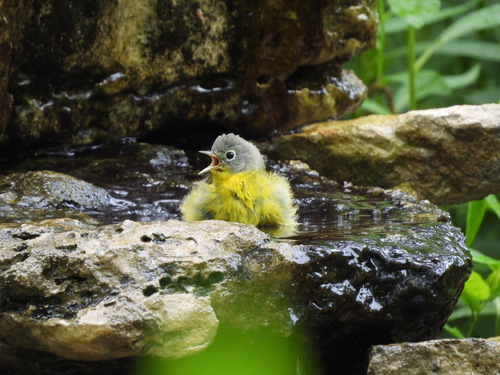
ズアカアメリカムシクイ (Leiothlypis ruficapilla) ズアカアメリカムシクイ
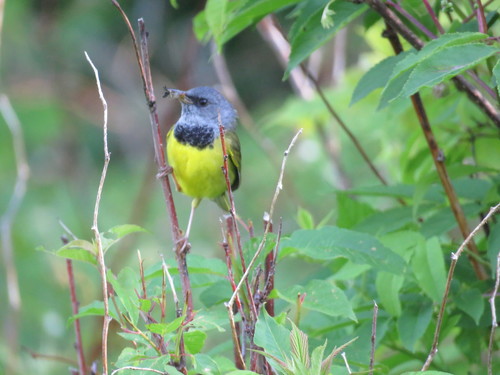
ノドグロアメリカムシクイ (Geothlypis philadelphia) ノドグロアメリカムシクイ

メディア

読み込み中…

要点

ナッシュビルムシクイとノドグロアメリカムシクイの最も信頼できるフィールドマークは目のリングです:ナッシュビルムシクイは常に完全で大胆な白い目のリングを示しますが、ノドグロアメリカムシクイは決して示しません—成鳥は目のリングを全く持たず、幼鳥はかすかな壊れた目のリングしか示しません。さらに、ナッシュビルムシクイはきれいな黄色の喉と胸を持ち、灰色の頭と緑がかった背中と対照的です。一方、ノドグロアメリカムシクイのオスは灰色のフードと暗い(黒っぽい)喉の斑点を持ち、メスと幼鳥は鈍い黄色または灰色の喉を示し、部分的な目のリングしか持ちません。ノドグロアメリカムシクイはまた、明らかにがっしりとしていて体が長いです。これらの違いは年齢や季節を通じて保持されますが、秋や若い鳥では微妙な場合があるため、目のリングと喉の色に注意を払うことが重要です。

識別のコツ

  1. 目のリングは最も良いマークです: ナッシュビルムシクイはすべての羽衣と年齢で常に完全で大胆な白い目のリングを示します。ノドグロアメリカムシクイの成鳥は目のリングを全く持たず、幼鳥はかすかな壊れた目のリングしか示しません。完全で壊れていない目のリングが見えたら、それはナッシュビルです。
  2. 喉の色: ナッシュビルムシクイはきれいで明るい黄色の喉と胸を持ち、灰色の頭と鮮やかに対照的です。ノドグロアメリカムシクイのオスは灰色のフードと喉と胸に黒い斑点を持ち、メスと幼鳥は黄色がかった灰色またはオリーブ色の喉を持ち、ナッシュビルのようにきれいでも明るくもありません。
  3. 頭の模様: ナッシュビルの頭は単純な灰色(時にはオスに隠れた錆色の冠の斑点があることもあります)で、緑がかった背中と対照的です。ノドグロのオスは灰色のフードと黒い顔面を持ち、メス/幼鳥は鈍い不完全な目のリングを持つ灰褐色の頭を持っています。
  4. 腹部: ナッシュビルは白い腹と黄色の肛門を示し、黄色の胸からの明確な区分があります。ノドグロの腹部は黄色ですが鈍く、明確に区分されておらず、メス/幼鳥の胸にはしばしば茶色またはオリーブ色の色合いがあります。
  5. 背中とマントル: ナッシュビルの背中は緑がかっており、灰色の頭と対照的です(特に東部亜種で)。ノドグロの上面はオリーブグリーンですが、特にメス/幼鳥では頭により滑らかに溶け込んでいます。
  6. サイズと構造: ノドグロアメリカムシクイは明らかに大きく、がっしりとしており、体が重く、翼が長いです。ナッシュビルは全体的に小さく、スリムで、より繊細です。
  7. くちばしと脚: 両種とも細く尖ったくちばしを持っていますが、ノドグロアメリカムシクイはピンクの脚を持ち、これは微妙な補助的なマークとなることがあります。
  8. 活動レベル: ノドグロアメリカムシクイはより活発で動きが力強く、しばしば密なカバーの中で低く採餌します。ナッシュビルはあまり活発ではなく、しばしば尾を振ります。
  9. 翼の帯: 両種とも翼の帯を持たないため、これは分離のための有用なマークではありません。
  10. 性別と年齢の落とし穴: メスと幼鳥のノドグロアメリカムシクイはナッシュビルと混同されることがありますが、常にナッシュビルの完全な目のリングときれいな黄色の喉を確認してください。ノドグロの不完全な目のリングと鈍い喉が重要です。
  11. 季節の変化: 秋には、ノドグロアメリカムシクイのオスはフードと喉の斑点の大胆さを失いますが、依然として完全な目のリングときれいな黄色の喉を欠いています。ナッシュビルは明るく対照的であり続けますが、メス/幼鳥は鈍くなります。
  12. 生息地の文脈: 特に東部では、密な再生二次成長や藪の中でノドグロがより可能性があります。特に北部や西部では、より開けた森や藪のある地域でナッシュビルが好まれます。
  13. 亜種の変異: 西部のナッシュビルムシクイ(カラベラス)は、対照的なマントルと頭が少ないですが、依然として完全な目のリングと黄色の腹部を示します。
  14. 独特の飛行や上翼の模様はなし: どちらの種も飛行中に独特の翼の模様を示さないため、頭と腹部のマークに頼る必要があります。
  15. 直接比較: 両種が存在する場合は、より小さく、明るく、より鮮明にマークされたナッシュビルと、より大きく、鈍く、よりがっしりしたノドグロを探してください。

大きさ

ノドグロアメリカムシクイは常にナッシュビルムシクイよりも大きく、重いです。ノドグロは体重が約11.9 gで、ナッシュビルは8.8 gです [avonet]。フィールドでは、ノドグロはよりがっしりとしていて体が長く(長さ10〜15 cm、翼幅18 cm)、ナッシュビルは小さく、より繊細です(長さ11〜13 cm、翼幅17〜20 cm) [wikipedia, wikidata]。距離では微妙な違いですが、並べて見るとノドグロはがっしりしていて翼が長いです。

羽色

すべての年齢において、目のリングは診断的です:ナッシュビルムシクイは常に完全で大胆な白い目のリングを示しますが、ノドグロアメリカムシクイの成鳥は目のリングを全く持たず、幼鳥はかすかな壊れた目のリングしか示しません。成鳥のオスのナッシュビルは灰色の頭、オリーブグリーンの背中、黄色の喉と胸、白い腹を持ち、通常は隠れた錆色の冠の斑点があります。メスと幼鳥は鈍いですが、依然として完全な目のリングと黄色の腹部を示します。ノドグロアメリカムシクイの成鳥のオスは灰色のフード、黒い顔面、喉と胸に黒い斑点を持ち、秋にはこのフードと斑点があまり明確でなくなりますが、依然として存在します。メスと幼鳥は灰褐色の頭、不完全な目のリング、胸に茶色またはオリーブ色の色合いを持つ黄色がかった灰色の喉を持っています。ノドグロはナッシュビルのようにきれいな黄色の喉を示さず、腹部は明確に区分されていません。両者とも翼の帯を持たず、ナッシュビルの羽衣は全体的に明るく、対照的です。どちらの種にも年齢特有の上翼の模様は記載されていません。

行動

ナッシュビルムシクイは低木や低い木で採餌し、しばしば尾を振り、特に冬には混成群れに加わることがあります。ノドグロアメリカムシクイも密な植生の中で低く採餌しますが、一般的に動きがより活発で力強いです。ナッシュビルはノドグロよりもあまり活発ではないとされ、これが直接比較に役立つかもしれません。両種とも昆虫食ですが、ノドグロは獲物を食べる前に脚と翼を取り除くことで知られています。

生息環境

ナッシュビルムシクイは北部および西部のアメリカと南部のカナダで繁殖し、開けた森や藪のある地域を好み、南カリフォルニア、テキサス、メキシコ、中米で越冬します。ノドグロアメリカムシクイは北アメリカの東部および中央部で繁殖し、密な二次成長の森、藪、再生した空き地を好み、さらに南の中米および南米で越冬します。渡りの際、両者は藪や茂みのある生息地で重なることがありますが、ノドグロは特に繁殖期に密な再生地域により結びついています。

より良い説明を送る

比較と同じ項目を使ってください。文章はすぐに公開されます。

The most reliable field mark between Nashville and Mourning Warblers is the eye ring: Nashville Warbler always shows a complete, bold white eye ring, while Mourning Warbler never does—adults lack any eye ring, and immatures show only a faint, broken one. In addition, Nashville Warbler has a clean yellow throat and breast, contrasting with its gray head and greenish back, whereas Mourning Warbler males have a gray hood and a dark (blackish) throat patch, with females and immatures showing a duller, yellowish or grayish throat and only a partial eye ring. Mourning Warbler is also noticeably bulkier and longer-bodied. These differences hold across ages and seasons, but can be subtle in fall or in young birds, so careful attention to the eye ring and throat color is key.

  1. Eye ring is the single best mark: Nashville Warbler always shows a complete, bold white eye ring in all plumages and ages. Mourning Warbler adults lack an eye ring entirely; immatures show only a faint, broken eye ring. If you see a full, unbroken eye ring, it's Nashville.
  2. Throat color: Nashville Warbler has a clean, bright yellow throat and breast, sharply set off from the gray head. Mourning Warbler males have a gray hood and a black patch on the throat and breast; females and immatures have a yellow-gray or olive-tinged throat, never as clean or bright as Nashville's.
  3. Head pattern: Nashville's head is plain gray (sometimes with a hidden rusty crown patch in males), contrasting with a greenish back. Mourning males have a gray hood and black lores; females/immatures have a gray-brown head with a duller, incomplete eye ring.
  4. Underparts: Nashville shows a white belly and yellow vent, with a sharp division from the yellow breast. Mourning's underparts are yellow but duller and less sharply divided, often with a brown or olive tint on the breast in females/immatures.
  5. Back and mantle: Nashville's back is greenish, contrasting with the gray head (especially in the eastern subspecies). Mourning's upperparts are olive-green but blend more smoothly into the head, especially in females/immatures.
  6. Size and structure: Mourning Warbler is noticeably larger and more robust, with a heavier body and longer wings. Nashville is smaller, slimmer, and more delicate overall.
  7. Bill and legs: Both have thin, pointed bills, but Mourning Warbler has pink legs, which can be a subtle supporting mark.
  8. Activity level: Mourning Warbler is more active and robust in movement, often foraging low in dense cover. Nashville is less active and often flicks its tail.
  9. Wing bars: Both species lack wing bars, so this is not a useful mark for separation.
  10. Sex and age pitfalls: Female and immature Mourning Warblers can be confused with Nashville, but always check for the complete eye ring and clean yellow throat of Nashville. Mourning's incomplete eye ring and duller throat are key.
  11. Seasonal changes: In fall, Mourning Warbler males lose some of the boldness in their hood and throat patch, but still lack a complete eye ring and clean yellow throat. Nashville remains bright and contrasting, though females/immatures are duller.
  12. Habitat context: In dense, regenerating second-growth or thickets, especially in the east, Mourning is more likely. In more open woods or shrubby areas, especially in the north or west, Nashville is favored.
  13. Subspecies variation: Western Nashville Warblers (Calaveras) have a less contrasting mantle and head, but still show the complete eye ring and yellow underparts.
  14. No distinctive flight or upperwing pattern: Neither species shows a unique wing pattern in flight, so rely on head and underpart marks.
  15. Direct comparison: If both species are present, look for the smaller, brighter, and more sharply marked Nashville versus the larger, duller, and more robust Mourning.

Mourning Warbler is consistently larger and heavier than Nashville Warbler. Mourning averages about 11.9 g in body mass, compared to Nashville's 8.8 g [avonet]. In the field, Mourning appears more robust and longer-bodied (10–15 cm length, 18 cm wingspan), while Nashville is smaller and more delicate (11–13 cm length, 17–20 cm wingspan) [wikipedia, wikidata]. The difference is subtle at a distance, but side-by-side, Mourning is bulkier and longer-winged.

For all ages, the eye ring is diagnostic: Nashville Warbler always shows a complete, bold white eye ring, while Mourning Warbler adults lack any eye ring and immatures have only a faint, broken one. Adult male Nashville has a gray head, olive-green back, yellow throat and breast, and a white belly, with a usually hidden rusty crown patch. Females and immatures are duller but still show the complete eye ring and yellow underparts. Mourning Warbler adult males have a gray hood, black lores, and a black patch on the throat and breast; in fall, this hood and patch become less distinct but are still present. Females and immatures have a gray-brown head, incomplete eye ring, and a yellow-gray throat with a brown or olive tint to the breast. Mourning never shows a clean yellow throat like Nashville, and the underparts are less sharply divided. Both lack wing bars, but Nashville's plumage is brighter and more contrasting overall. No age-specific upperwing pattern is described for either species.

Nashville Warbler forages by gleaning in lower trees and shrubs, often flicking its tail and sometimes joining mixed-species flocks, especially in winter. Mourning Warbler also forages low in dense vegetation, but is generally more active and robust in its movements. Nashville is described as less active than Mourning, which may help in direct comparison. Both species are insectivorous but Mourning is noted for removing legs and wings from prey before eating.

Nashville Warbler breeds in northern and western U.S. and southern Canada, favoring open woods and shrubby areas, and winters in southern California, Texas, Mexico, and Central America. Mourning Warbler breeds in eastern and central North America, preferring dense second-growth forests, thickets, and regenerating clearings, and winters further south into Central and South America. In migration, both can overlap in brushy or shrubby habitats, but Mourning is more tied to dense, regenerating areas, especially during breeding.

変更を破棄しますか?

保存していない編集があります。今離れると失われます。

ズアカアメリカムシクイ · ノドグロアメリカムシクイ · 苦手な鳥