

Motmot

ズアカアメリカムシクイ 対 ハイムネアメリカムシクイ

Leiothlypis ruficapilla 対 Oporornis agilis

ズアカアメリカムシクイとハイムネアメリカムシクイのクイズ

ズアカアメリカムシクイ (Leiothlypis ruficapilla) ズアカアメリカムシクイ
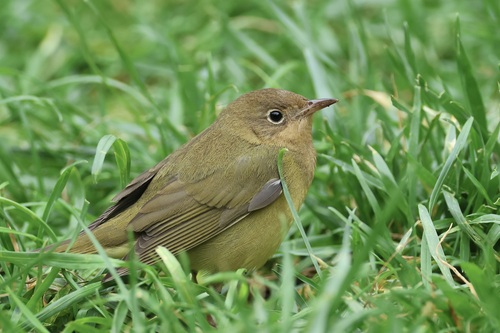
ハイムネアメリカムシクイ (Oporornis agilis) ハイムネアメリカムシクイ

メディア

読み込み中…

要点

The most reliable field mark between Nashville and Connecticut Warbler is the combination of head color and throat: Nashville Warbler of all ages shows a complete white eye-ring, gray head, and bright yellow throat, while Connecticut Warbler has a paler, less contrasting eye-ring, a gray or brown hood (depending on age/sex), and a yellow belly with a whitish or grayish throat in females and immatures. Connecticut is noticeably larger and longer-tailed, with a heavier, more ground-walking jizz, while Nashville is smaller, more active, and often flicks its tail. In flight or perched, check for the Nashville's compact, short-tailed look and bolder contrast between head and back, versus the Connecticut's long tail, larger size, and less contrast between head and back. Juvenile/immature plumages can be confusing, but the throat and eye-ring remain key.

識別のコツ

  1. Eye-ring: Nashville Warbler of all ages shows a complete, bold white eye-ring; Connecticut's is paler, thinner, and less conspicuous. This is often the quickest field mark at close range.
  2. Head color: Nashville has a gray head (males with a hidden rusty crown patch), sharply contrasting with the olive-green back (especially in eastern birds). Connecticut adult males have a gray hood, but it extends lower and is less sharply defined; females/immatures are brownish-olive on the head.
  3. Throat color: Nashville always shows a yellow throat (brighter in adults, duller in immatures), while Connecticut has a whitish or grayish throat in females/immatures and a paler throat in adult males (never as bright yellow as Nashville).
  4. Underparts: Nashville's underparts are yellow on the throat and breast, fading to white on the belly. Connecticut's underparts are yellow on the belly, but the throat is paler and the transition is less crisp.
  5. Back and mantle: Nashville (especially eastern subspecies) has an olive-green back that contrasts with the gray head; Connecticut's olive back blends more smoothly into the hood, with less contrast.
  6. Tail: Connecticut Warbler has a longer tail and appears longer and bulkier overall; Nashville is compact and short-tailed.
  7. Bill: Both species have thin, pointed bills, but Connecticut's may appear slightly heavier and longer in proportion to the head, especially on a larger bird.
  8. Leg color: Connecticut Warbler has pink legs, which can be a subtle but helpful mark if seen well; Nashville's legs are dark.
  9. Behavior: Nashville is active, flicks its tail, and forages in low shrubs and trees; Connecticut walks on the ground, bobs its tail, and moves more slowly and deliberately.
  10. Flight jizz: Nashville appears compact, short-tailed, and quick; Connecticut is larger, longer-tailed, and heavier in flight.
  11. Habitat: In migration, Connecticut is often found in dense, wet thickets or on the ground; Nashville prefers shrubby edges and low trees.
  12. Sex/age pitfalls: Immature and female Connecticuts are browner on the head and have a whitish throat, which can be confused with duller Nashvilles, but the eye-ring and throat color remain reliable.
  13. No wing bars: Both species lack wing bars and strong upperwing patterns; do not rely on wing markings for separation.
  14. Seasonal context: Connecticut is rare and local in migration through much of the US; Nashville is more widespread and common in migration and winter.
  15. Size: If seen together or with reference, Connecticut's larger, bulkier size and longer tail are apparent, but beware of size illusions in the field.

大きさ

Connecticut Warbler is distinctly larger and heavier than Nashville Warbler. Connecticut averages 13–15 cm in length and can weigh up to 15 g as an adult (sometimes much more pre-migration), with a wingspan of 22–23 cm. Nashville Warbler is smaller, at 11–13 cm in length, 8.8 g average mass, and a wingspan of 17–20 cm. In the field, Connecticut appears bulkier and longer-tailed, while Nashville is compact and light. This size difference is often apparent when seen side-by-side or with reference to nearby foliage.

羽色

Juvenile and immature plumages: Both species lack wing bars and have olive upperparts, but Nashville Warbler of all ages shows a complete, bold white eye-ring and a yellow throat, while Connecticut Warbler's eye-ring is paler and thinner, and the throat is whitish or grayish in females/immatures (not yellow). Adult male Nashville has a gray head with a sometimes-concealed rusty crown patch, olive-green back, and bright yellow underparts; females/immatures are duller but still show the gray head and yellow throat. Connecticut adult males have a gray hood and yellow belly, but the throat is paler (not bright yellow), and the hood extends lower onto the chest. Females and immatures are browner on the head and have a whitish throat, blending into yellow belly, with less contrast overall. Both species have olive backs, but Nashville's is more contrasting with the head (especially in the eastern subspecies), while Connecticut's back and hood blend more smoothly. Neither species shows wing bars or strong upperwing patterns in any age.

行動

Nashville Warbler is active, often flicking its tail and foraging in lower trees and shrubs, sometimes joining mixed-species flocks in winter. Connecticut Warbler is more solitary, forages mainly by walking on the ground, and also bobs its tail but tends to move with a slower, more deliberate gait. Connecticut's ground-walking, long-legged jizz is distinctive, while Nashville is more arboreal and quick-moving. In migration, Connecticut may join small groups or mixed flocks, but is rarely as active or arboreal as Nashville.

生息環境

Nashville Warbler breeds in northern and western US and southern Canada, favoring shrubby or young forest habitats, and winters in southern California, Texas, Mexico, and northern Central America. Connecticut Warbler breeds farther north in boreal or mixedwood forests, and is a rare migrant through much of the US. In migration, Connecticut is often found in dense, wet thickets or on the ground in weedy fields, while Nashville is more likely in shrubby edges, second growth, or low trees. Habitat overlap is possible in migration, but Connecticut's preference for ground cover and denser, wetter habitats can be a clue.

より良い説明を送る

比較と同じ項目を使ってください。文章はすぐに公開されます。

The most reliable field mark between Nashville and Connecticut Warbler is the combination of head color and throat: Nashville Warbler of all ages shows a complete white eye-ring, gray head, and bright yellow throat, while Connecticut Warbler has a paler, less contrasting eye-ring, a gray or brown hood (depending on age/sex), and a yellow belly with a whitish or grayish throat in females and immatures. Connecticut is noticeably larger and longer-tailed, with a heavier, more ground-walking jizz, while Nashville is smaller, more active, and often flicks its tail. In flight or perched, check for the Nashville's compact, short-tailed look and bolder contrast between head and back, versus the Connecticut's long tail, larger size, and less contrast between head and back. Juvenile/immature plumages can be confusing, but the throat and eye-ring remain key.

  1. Eye-ring: Nashville Warbler of all ages shows a complete, bold white eye-ring; Connecticut's is paler, thinner, and less conspicuous. This is often the quickest field mark at close range.
  2. Head color: Nashville has a gray head (males with a hidden rusty crown patch), sharply contrasting with the olive-green back (especially in eastern birds). Connecticut adult males have a gray hood, but it extends lower and is less sharply defined; females/immatures are brownish-olive on the head.
  3. Throat color: Nashville always shows a yellow throat (brighter in adults, duller in immatures), while Connecticut has a whitish or grayish throat in females/immatures and a paler throat in adult males (never as bright yellow as Nashville).
  4. Underparts: Nashville's underparts are yellow on the throat and breast, fading to white on the belly. Connecticut's underparts are yellow on the belly, but the throat is paler and the transition is less crisp.
  5. Back and mantle: Nashville (especially eastern subspecies) has an olive-green back that contrasts with the gray head; Connecticut's olive back blends more smoothly into the hood, with less contrast.
  6. Tail: Connecticut Warbler has a longer tail and appears longer and bulkier overall; Nashville is compact and short-tailed.
  7. Bill: Both species have thin, pointed bills, but Connecticut's may appear slightly heavier and longer in proportion to the head, especially on a larger bird.
  8. Leg color: Connecticut Warbler has pink legs, which can be a subtle but helpful mark if seen well; Nashville's legs are dark.
  9. Behavior: Nashville is active, flicks its tail, and forages in low shrubs and trees; Connecticut walks on the ground, bobs its tail, and moves more slowly and deliberately.
  10. Flight jizz: Nashville appears compact, short-tailed, and quick; Connecticut is larger, longer-tailed, and heavier in flight.
  11. Habitat: In migration, Connecticut is often found in dense, wet thickets or on the ground; Nashville prefers shrubby edges and low trees.
  12. Sex/age pitfalls: Immature and female Connecticuts are browner on the head and have a whitish throat, which can be confused with duller Nashvilles, but the eye-ring and throat color remain reliable.
  13. No wing bars: Both species lack wing bars and strong upperwing patterns; do not rely on wing markings for separation.
  14. Seasonal context: Connecticut is rare and local in migration through much of the US; Nashville is more widespread and common in migration and winter.
  15. Size: If seen together or with reference, Connecticut's larger, bulkier size and longer tail are apparent, but beware of size illusions in the field.

Connecticut Warbler is distinctly larger and heavier than Nashville Warbler. Connecticut averages 13–15 cm in length and can weigh up to 15 g as an adult (sometimes much more pre-migration), with a wingspan of 22–23 cm. Nashville Warbler is smaller, at 11–13 cm in length, 8.8 g average mass, and a wingspan of 17–20 cm. In the field, Connecticut appears bulkier and longer-tailed, while Nashville is compact and light. This size difference is often apparent when seen side-by-side or with reference to nearby foliage.

Juvenile and immature plumages: Both species lack wing bars and have olive upperparts, but Nashville Warbler of all ages shows a complete, bold white eye-ring and a yellow throat, while Connecticut Warbler's eye-ring is paler and thinner, and the throat is whitish or grayish in females/immatures (not yellow). Adult male Nashville has a gray head with a sometimes-concealed rusty crown patch, olive-green back, and bright yellow underparts; females/immatures are duller but still show the gray head and yellow throat. Connecticut adult males have a gray hood and yellow belly, but the throat is paler (not bright yellow), and the hood extends lower onto the chest. Females and immatures are browner on the head and have a whitish throat, blending into yellow belly, with less contrast overall. Both species have olive backs, but Nashville's is more contrasting with the head (especially in the eastern subspecies), while Connecticut's back and hood blend more smoothly. Neither species shows wing bars or strong upperwing patterns in any age.

Nashville Warbler is active, often flicking its tail and foraging in lower trees and shrubs, sometimes joining mixed-species flocks in winter. Connecticut Warbler is more solitary, forages mainly by walking on the ground, and also bobs its tail but tends to move with a slower, more deliberate gait. Connecticut's ground-walking, long-legged jizz is distinctive, while Nashville is more arboreal and quick-moving. In migration, Connecticut may join small groups or mixed flocks, but is rarely as active or arboreal as Nashville.

Nashville Warbler breeds in northern and western US and southern Canada, favoring shrubby or young forest habitats, and winters in southern California, Texas, Mexico, and northern Central America. Connecticut Warbler breeds farther north in boreal or mixedwood forests, and is a rare migrant through much of the US. In migration, Connecticut is often found in dense, wet thickets or on the ground in weedy fields, while Nashville is more likely in shrubby edges, second growth, or low trees. Habitat overlap is possible in migration, but Connecticut's preference for ground cover and denser, wetter habitats can be a clue.

変更を破棄しますか?

保存していない編集があります。今離れると失われます。

ズアカアメリカムシクイ · ハイムネアメリカムシクイ · 苦手な鳥