

Reinita de Nashville vs Reinita de Connecticut
Leiothlypis ruficapilla frente a Oporornis agilis
Juega un quiz con Reinita de Nashville y Reinita de Connecticut
 Reinita de Nashville
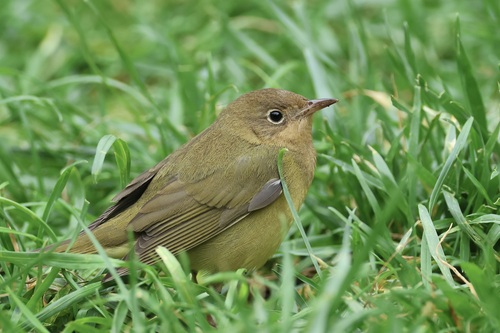 Reinita de Connecticut
En breve
La marca de campo más confiable entre la Reinita de Nashville y la Reinita de Connecticut es la combinación del color de la cabeza y la garganta: la Reinita de Nashville de todas las edades muestra un anillo ocular blanco completo, cabeza gris y garganta amarilla brillante, mientras que la Reinita de Connecticut tiene un anillo ocular más pálido y menos contrastante, una capucha gris o marrón (dependiendo de la edad/sexo) y un vientre amarillo con una garganta blanquecina o grisácea en hembras e inmaduros. La Reinita de Connecticut es notablemente más grande y de cola más larga, con una apariencia más pesada y de caminar más cerca del suelo, mientras que la Reinita de Nashville es más pequeña, más activa y a menudo mueve su cola. En vuelo o posada, verifica el aspecto compacto y de cola corta de la Reinita de Nashville y el contraste más audaz entre la cabeza y la espalda, en comparación con la cola larga, mayor tamaño y menor contraste entre la cabeza y la espalda de la Reinita de Connecticut. Los plumajes juveniles/inmaduros pueden ser confusos, pero la garganta y el anillo ocular siguen siendo clave.
Consejos de identificación
- Anillo ocular: La Reinita de Nashville de todas las edades muestra un anillo ocular blanco completo y audaz; el de Connecticut es más pálido, más delgado y menos conspicuo. Esta es a menudo la marca de campo más rápida a corta distancia.
- Color de la cabeza: Nashville tiene una cabeza gris (los machos con un parche de corona oxidada oculto), que contrasta marcadamente con la espalda verde oliva (especialmente en aves del este). Los machos adultos de Connecticut tienen una capucha gris, pero se extiende más abajo y está menos definida; las hembras/inmaduros son de color marrón oliva en la cabeza.
- Color de la garganta: Nashville siempre muestra una garganta amarilla (más brillante en adultos, más opaca en inmaduros), mientras que Connecticut tiene una garganta blanquecina o grisácea en hembras/inmaduros y una garganta más pálida en machos adultos (nunca tan amarilla brillante como Nashville).
- Partes inferiores: Las partes inferiores de Nashville son amarillas en la garganta y el pecho, desvaneciéndose a blanco en el vientre. Las partes inferiores de Connecticut son amarillas en el vientre, pero la garganta es más pálida y la transición es menos nítida.
- Espalda y manto: Nashville (especialmente la subespecie del este) tiene una espalda verde oliva que contrasta con la cabeza gris; la espalda oliva de Connecticut se mezcla más suavemente con la capucha, con menos contraste.
- Cola: La Reinita de Connecticut tiene una cola más larga y parece más larga y robusta en general; Nashville es compacta y de cola corta.
- Pico: Ambas especies tienen picos delgados y puntiagudos, pero el de Connecticut puede parecer ligeramente más pesado y largo en proporción a la cabeza, especialmente en un ave más grande.
- Color de las patas: La Reinita de Connecticut tiene patas rosadas, que pueden ser una marca sutil pero útil si se ven bien; las patas de Nashville son oscuras.
- Comportamiento: Nashville es activa, mueve su cola y busca alimento en arbustos y árboles bajos; Connecticut camina por el suelo, mueve su cola y se mueve más lentamente y deliberadamente.
- Aspecto en vuelo: Nashville parece compacta, de cola corta y rápida; Connecticut es más grande, de cola más larga y más pesada en vuelo.
- Hábitat: En migración, Connecticut se encuentra a menudo en matorrales densos y húmedos o en el suelo; Nashville prefiere bordes arbustivos y árboles bajos.
- Trampas de sexo/edad: Las Reinita de Connecticut inmaduras y hembras son más marrones en la cabeza y tienen una garganta blanquecina, lo que puede confundirse con las Nashville más opacas, pero el anillo ocular y el color de la garganta siguen siendo confiables.
- Sin barras alares: Ambas especies carecen de barras alares y patrones fuertes en la parte superior del ala; no confíes en las marcas alares para la separación.
- Contexto estacional: Connecticut es rara y local en migración a través de gran parte de los EE. UU.; Nashville es más extendida y común en migración e invierno.
- Tamaño: Si se ven juntas o con referencia, el tamaño más grande y robusto de Connecticut y su cola más larga son evidentes, pero ten cuidado con las ilusiones de tamaño en el campo.
Tamaño
La Reinita de Connecticut es claramente más grande y pesada que la Reinita de Nashville. Connecticut promedia 13–15 cm de longitud y puede pesar hasta 15 g como adulto (a veces mucho más antes de la migración), con una envergadura de 22–23 cm. La Reinita de Nashville es más pequeña, con 11–13 cm de longitud, 8.8 g de masa promedio y una envergadura de 17–20 cm. En el campo, Connecticut parece más robusta y de cola más larga, mientras que Nashville es compacta y ligera. Esta diferencia de tamaño es a menudo evidente cuando se ven lado a lado o con referencia a la vegetación cercana.
Plumaje
Plumajes juveniles e inmaduros: Ambas especies carecen de barras alares y tienen partes superiores de color oliva, pero la Reinita de Nashville de todas las edades muestra un anillo ocular blanco completo y audaz y una garganta amarilla, mientras que el anillo ocular de la Reinita de Connecticut es más pálido y delgado, y la garganta es blanquecina o grisácea en hembras/inmaduros (no amarilla). El macho adulto de Nashville tiene una cabeza gris con un parche de corona oxidada a veces oculto, espalda verde oliva y partes inferiores amarillas brillantes; las hembras/inmaduros son más opacas pero aún muestran la cabeza gris y la garganta amarilla. Los machos adultos de Connecticut tienen una capucha gris y un vientre amarillo, pero la garganta es más pálida (no amarilla brillante), y la capucha se extiende más abajo en el pecho. Las hembras y los inmaduros son más marrones en la cabeza y tienen una garganta blanquecina, que se mezcla con el vientre amarillo, con menos contraste en general. Ambas especies tienen espaldas de color oliva, pero la de Nashville contrasta más con la cabeza (especialmente en la subespecie del este), mientras que la espalda y la capucha de Connecticut se mezclan más suavemente. Ninguna de las especies muestra barras alares o patrones fuertes en la parte superior del ala en ninguna edad.
Comportamiento
La Reinita de Nashville es activa, a menudo moviendo su cola y buscando alimento en árboles y arbustos bajos, a veces uniéndose a bandadas de especies mixtas en invierno. La Reinita de Connecticut es más solitaria, busca alimento principalmente caminando por el suelo, y también mueve su cola pero tiende a moverse con un paso más lento y deliberado. La apariencia de caminar por el suelo y las patas largas de Connecticut es distintiva, mientras que Nashville es más arbórea y de movimiento rápido. En migración, Connecticut puede unirse a pequeños grupos o bandadas mixtas, pero rara vez es tan activa o arbórea como Nashville.
Hábitat
La Reinita de Nashville cría en el norte y oeste de EE. UU. y el sur de Canadá, favoreciendo hábitats de arbustos o bosques jóvenes, y pasa el invierno en el sur de California, Texas, México y el norte de América Central. La Reinita de Connecticut cría más al norte en bosques boreales o de madera mixta, y es un migrante raro a través de gran parte de EE. UU. En migración, Connecticut se encuentra a menudo en matorrales densos y húmedos o en el suelo en campos de maleza, mientras que Nashville es más probable que se encuentre en bordes arbustivos, crecimiento secundario o árboles bajos. Es posible que haya superposición de hábitats en migración, pero la preferencia de Connecticut por la cobertura del suelo y hábitats más densos y húmedos puede ser una pista.
Reinita de Nashville · Reinita de Connecticut · Mis aves difíciles