

マダガスカルカンムリサギ 対 ムラサキサギ
Ardeola idae 対 Ardea purpurea
マダガスカルカンムリサギとムラサキサギのクイズ
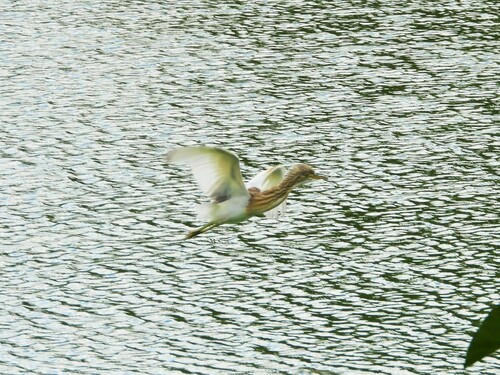 マダガスカルカンムリサギ
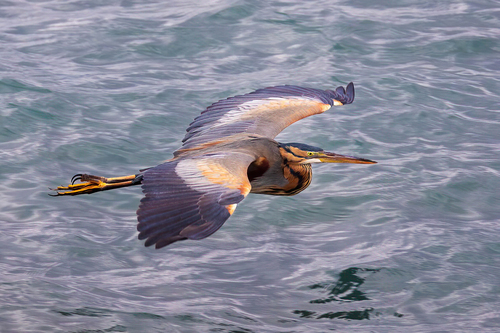 ムラサキサギ
要点
The most reliable field mark is overall size and structure: Purple Heron is much larger and more slender, with a long neck and legs, while Malagasy Pond Heron is compact and short-necked. In flight, Malagasy Pond Heron (of all ages) shows mostly white wings, especially obvious in non-breeding and juvenile plumages, while Purple Heron has dark, brownish-grey wings with no white. Juvenile Malagasy Pond Heron has a dull orange bill and pale green eyes, unlike any Purple Heron. Adult breeding Malagasy Pond Heron is strikingly white overall, while Purple Heron is never white and always shows reddish-brown and grey tones. If you see a heron with a white or mostly white appearance, especially in Madagascar or the western Indian Ocean, it's Malagasy Pond Heron; a large, chestnut and grey heron with a long neck is Purple Heron.
識別のコツ
- Size and structure: Purple Heron is much larger, taller, and more slender, with a long neck and legs. Malagasy Pond Heron is compact and short-necked. Use this as a first check, especially when seen side-by-side with other herons or egrets.
- Wing pattern in flight (all ages): Malagasy Pond Heron shows mostly white wings (both above and below), while Purple Heron’s wings are always dark brownish-grey. This is the fastest field mark if you see the bird flying.
- Juvenile bill and eye color: Juvenile Malagasy Pond Heron has a dull orange bill and pale green eyes, unique among herons in the region. Purple Heron juveniles have a brownish-yellow bill and yellow iris.
- Adult breeding plumage: Malagasy Pond Heron becomes almost entirely white with a deep blue bill during breeding. Purple Heron is never white and always has reddish-brown, grey, and chestnut tones.
- Non-breeding/immature plumage: Malagasy Pond Heron is brown with buff and black on the crown, but still shows white flight feathers. Purple Heron is darker, with a black crown and chestnut neck, and never shows white in the wings.
- Crest and head pattern: Purple Heron has a black crown with a dark stripe down the neck and a slender, dangling crest. Malagasy Pond Heron lacks this strong black crown and crest, especially outside breeding.
- Bill color in adults: Malagasy Pond Heron has a green bill with a black tip (non-breeding) or deep azure blue (breeding). Purple Heron’s bill is brownish-yellow, brighter in breeding, but never blue or green.
- Leg color: Purple Heron has brown legs in front and yellowish behind. Malagasy Pond Heron leg color is not distinctive in the sources.
- Neck pattern: Purple Heron has a long, slender, snake-like neck with dark streaks and lines; Malagasy Pond Heron’s neck is shorter and lacks strong streaking.
- Behavior: Malagasy Pond Heron is more solitary and territorial, rarely seen in groups except at breeding colonies. Purple Heron is secretive but may be seen in colonies or with other large herons.
- Habitat and range: If seen in Madagascar, Réunion, or Seychelles, especially in small wetlands or mixed heron colonies, consider Malagasy Pond Heron. In large reedbeds or wetlands across Africa/Europe/Asia, Purple Heron is far more likely.
- Posture: Purple Heron often adopts an oblique neck posture and appears hollow-chested. Malagasy Pond Heron is more compact and upright.
- Voice: If heard, Purple Heron gives a harsh, high-pitched "frarnk"; Malagasy Pond Heron’s call is not distinctive in the sources.
- Association: Malagasy Pond Heron often nests with other herons in small, mixed colonies; Purple Heron may also be colonial but is more likely to be found in larger, single-species or mixed colonies in extensive reedbeds.
- Pitfalls: Do not confuse a white or mostly white heron for Purple Heron at any age or season. Any heron with dark, reddish-brown and grey plumage, especially with a long neck, is Purple Heron.
大きさ
Purple Heron is dramatically larger: 78–97 cm in length, standing up to 94 cm tall, with a wingspan of 120–152 cm and weighing 0.5–1.35 kg [wikipedia][avonet]. Malagasy Pond Heron is much smaller and more compact, at 45–50 cm in length and 250–350 g [wikipedia][avonet]. The difference is obvious in the field, especially when both species are seen together or compared to common egrets/herons. Purple Heron’s long neck and legs make it appear even larger and more elongated, while Malagasy Pond Heron is short-necked and stocky.
羽色
-
Juvenile/immature (pre-adult): Malagasy Pond Heron juveniles have a dull orange bill and pale green eyes, with a mix of buff, brown, and black on the crown and upperparts. Their wings in flight are mostly white, a key mark at all ages. Purple Heron juveniles are never white; they are brownish with chestnut and grey tones, and their wings are dark above and below, matching the adult pattern. No white is shown in the wings in flight.
-
Non-breeding adult: Malagasy Pond Heron is brown overall with buff and black on the crown/posterior, but still shows white flight feathers in flight. Bill is green with a black tip, iris yellow. Purple Heron is darker, with a black crown, chestnut neck with dark stripes, and brownish-grey upperparts; wings are always dark, never white.
-
Breeding adult: Malagasy Pond Heron becomes almost entirely snow white with a deep azure blue bill. Purple Heron does not change much in breeding, remaining reddish-brown, grey, and chestnut, with a black crown and crest. Never white.
-
Key in flight: Any heron with white wings (especially above) is Malagasy Pond Heron; any heron with dark, brownish-grey wings is Purple Heron.
行動
Malagasy Pond Heron is territorial and often solitary or in very small groups, especially outside the breeding season. It is inconspicuous, keeps distance from other birds, and forages inland away from nesting sites. Purple Heron is also secretive but can be seen in colonies, especially in reedbeds, and is more likely to be found skulking in dense vegetation. Both species breed colonially but Malagasy Pond Heron colonies are now very small and often mixed with other herons. Purple Heron is less robust and appears hollow-chested, often adopting an oblique neck posture.
生息環境
Malagasy Pond Heron breeds in Madagascar, Réunion, and Seychelles, using reedbeds, papyrus, and coastal islands, and winters in eastern mainland Africa. It is highly localized and endangered, often found in mixed heron colonies. Purple Heron is widespread across Africa, Europe, and Asia, breeding in large reedbeds, canebrakes, or low bushes near extensive wetlands. In Africa, both can occur, but Malagasy Pond Heron is much rarer and more restricted to specific habitats, while Purple Heron is more widespread and likely to be found in larger, more open wetland areas.
声
Purple Heron gives a harsh "frarnk" call, quieter and higher-pitched than Grey Heron, but is generally not very noisy. No distinctive vocalization is described for Malagasy Pond Heron in the sources, so voice is not a reliable separator.
マダガスカルカンムリサギ · ムラサキサギ · 苦手な鳥