

Motmot

コアホウドリ 対 マユグロアホウドリ

Phoebastria immutabilis 対 Thalassarche melanophris

コアホウドリとマユグロアホウドリのクイズ
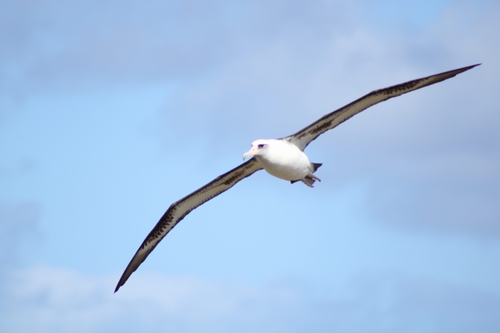
コアホウドリ (Phoebastria immutabilis) コアホウドリ
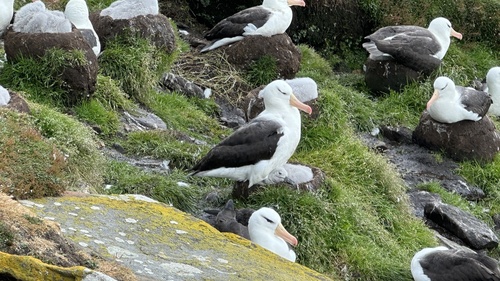
マユグロアホウドリ (Thalassarche melanophris) マユグロアホウドリ

メディア

読み込み中…

要点

コアホウドリとマユグロアホウドリを区別する最も信頼できるフィールドマークは、アンダーウィングパターンです:Laysanは変動があり、通常は狭い黒い縁とアンダーウィングカバーにいくつかの黒が見られますが、Black-browedは特に成鳥においてアンダーウィングに広く大胆な黒いエッジがあります。両種の幼鳥はより暗いアンダーウィングを持っていますが、Black-browedのものはより広範囲にわたって均一に暗いエッジがあります。構造的には、Laysanはわずかに小さく、暗い先端を持つピンクのくちばしを持っていますが、Black-browedはより暗いオレンジの先端を持つ黄色-オレンジのくちばしを持っています。止まっている時や近くから見ると、Laysanの黒い目の汚れはBlack-browedの強い暗い眉よりも目立ちません。両者は大きな二色のアホウドリですが、アンダーウィングパターン、くちばしの色、顔のマーキングに注意を払えば、ほぼすべてのフィールド状況で区別できます。

識別のコツ

  1. Underwing pattern in flight (all ages): Laysanは狭く変動する黒い縁とアンダーウィングカバーにいくつかの黒を示します; Black-browedはアンダーウィングに広く大胆で不規則な黒いエッジを持っています。これは特に距離がある場合や飛行中に最も信頼できるマークです。
  2. Juvenile underwing: 幼鳥のBlack-browedは広い黒い縁を持つより広範囲に暗いアンダーウィングを持っていますが、幼鳥のLaysanは斑点状であまり大胆ではありません。飛行中に見られる未成熟個体にこれを使用してください。
  3. Bill color (adults): Laysanは暗い先端を持つピンクのくちばしを持っています; Black-browedはより暗いオレンジの先端を持つ黄色-オレンジのくちばしを持っています。これは近距離では明らかですが、海上では判断が難しいことがあります。
  4. Bill color (juveniles): 幼鳥のLaysanは灰色のくちばしを持っています; 幼鳥のBlack-browedは暗い角のような色のくちばしを持ち、暗い先端があります。灰色のくちばしを見たら、Laysanを考えてください。
  5. Facial markings: Laysanは目の周りに黒い汚れがありますが、Black-browedはより目立つ暗い眉(「眉」)を持っており、より印象的な顔の表情を与えます。眉が大胆で明らかであれば、それはBlack-browedです。
  6. Head and collar (juveniles): 幼鳥のBlack-browedは灰色の頭と襟を示しますが、Laysanの幼鳥は暗い目の汚れだけを持つ白い頭を持っています。
  7. Upperwing and back: 両者は暗い上翼を持っていますが、Laysanのマントルと背中は黒っぽい灰色で、白い頭と腹部を持っています。Black-browedの上翼は暗い灰色で、白い尾と腹部を持っていますが、これは微妙で単独では診断的ではありません。
  8. Rump color: Laysanは白い下尾を持っています; Black-browedは暗いサドルと対照的な白い尾を持っていますが、これはよく見ない限り強いフィールドマークではありません。
  9. Size and structure: Black-browedはわずかに大きく、よりがっしりしており、翼幅が長いですが、違いは微妙で、両者が一緒にいる場合でないと信頼できません。
  10. Habitat and range: 北太平洋では、Laysanが圧倒的に多く見られます; Black-browedは南極海の種であり、北太平洋では真の迷い鳥です。範囲を強力な手がかりとして使用してください。
  11. Behavior at colony: Black-browedは騒がしく、鳴き声やカッカッという声を出し、ディスプレイで扇状の尾を使用します。Laysanの求愛は華やかですが、ノートには騒がしいとは記載されていません。
  12. Sex and age effects: 両種は性別によるサイズの二形性を示します(オスが大きい)が、これはフィールドでは役に立ちません。幼鳥と未成熟のマーク(アンダーウィング、くちばしの色、頭のパターン)は成鳥の違いよりも信頼性があります。
  13. Hybridization: Laysanはクロアシアホウドリと交雑することができますが、Black-browedとは交雑しません; ここではハイブリッドは問題ではありません。
  14. Pitfalls: 全体の暗さやサイズだけに頼らないでください。自信を持って区別するために、アンダーウィングパターン、くちばしの色、顔のマーキングに焦点を当ててください。
  15. When marks fail: 照明が悪い場合や極端な距離では、範囲とアンダーウィングパターンが最良の手がかりです。北太平洋にいる場合は、アンダーウィングと眉がBlack-browedに完璧に一致しない限り、Laysanをデフォルトとして考えてください。

大きさ

コアホウドリはわずかに小さく、平均81 cmの長さで、195–203 cmの翼幅を持ち、オスは2.4–4.1 kg(メスは1.9–3.6 kg)です [wikipedia][avonet]。マユグロアホウドリは80–95 cmの長さで、200–240 cmの翼幅を持ち、2.9–4.7 kgの重さです [wikipedia][avonet]。重なりはかなりありますが、Black-browedは通常、よりがっしりしており、特にメスのLaysanと比較して翼が長いです。フィールドでは、サイズだけでは診断的であることは稀で、両種が並んでいる場合でないと信頼できません。

羽色

行動

両種はコロニーネスターであり、長く硬い翼で滑空しているのを見ることができます。Laysanは飛行中に「カモメのような」と表現され、二色の外観とやや浮力のある飛行を持っています。Black-browedはコロニーで鳴き声やカッカッという声を出しているのがよく見られ、求愛のディスプレイで扇状の尾を使用します。フィールドでは、飛行スタイルは非常に似ており、強い区別要因ではありませんが、Black-browedは直接比較でわずかに重く、より力強く見えることがあります。

生息環境

コアホウドリは圧倒的に北太平洋、特に北西ハワイ諸島周辺で見られ、ハワイで2番目に一般的な海鳥です [wikipedia][ebird]。マユグロアホウドリは南極海の種で、亜南極の島々で繁殖し、北大西洋や北太平洋に迷い鳥として現れることは稀です。北太平洋で見られる場合、Laysanが圧倒的に多く、Black-browedはそこでは真の珍しい存在です。両種はコロニーで巣を作りますが、Black-browedは急な草地や崖を使用することが多く、Laysanは砂地や植生のある低い島に巣を作ります。

声

マユグロアホウドリは騒がしいコロニーで知られ、特に領土防衛や求愛中に鳴き声や厳しいカッカッという声を出します。Laysanの鳴き声は提供されたノートには記載されておらず、海上での区別のための信頼できるフィールドマークではありません。

より良い説明を送る

比較と同じ項目を使ってください。文章はすぐに公開されます。

The most reliable field mark to separate Laysan Albatross from Black-browed Albatross is the underwing pattern: Laysan shows variable, usually narrow black margins and some black in the underwing coverts, while Black-browed has broad, bold black edges to the underwing, especially in adults. Juveniles of both species have darker underwings, but Black-browed's are more extensively and uniformly dark-edged. Structurally, Laysan is slightly smaller and has a pink bill with a dark tip, while Black-browed has a yellow-orange bill with a darker orange tip. In perched or close views, Laysan's black eye smudge is less pronounced than the Black-browed's strong dark eyebrow. Both are large, two-toned albatrosses, but careful attention to underwing pattern, bill color, and facial markings will separate them in almost all field situations.

  1. Underwing pattern in flight (all ages): Laysan shows narrow, variable black margins and some black in the underwing coverts; Black-browed has a broad, bold, irregular black edge to the underwing. This is the single most reliable mark, especially at a distance or in flight.
  2. Juvenile underwing: Juvenile Black-browed has more extensively dark underwings with broad black margins, while juvenile Laysan's are patchier and less bold. Use this for immatures seen in flight.
  3. Bill color (adults): Laysan has a pink bill with a dark tip; Black-browed has a yellow-orange bill with a darker orange tip. This is obvious at close range but can be hard to judge at sea.
  4. Bill color (juveniles): Juvenile Laysan has a gray bill; juvenile Black-browed has a dark horn-colored bill with a dark tip. If you see a gray bill, think Laysan.
  5. Facial markings: Laysan has a black smudge around the eye, but Black-browed has a much more pronounced dark eyebrow (the 'brow'), giving a more striking facial expression. If the eyebrow is bold and obvious, it's Black-browed.
  6. Head and collar (juveniles): Juvenile Black-browed shows a gray head and collar, while Laysan juveniles have a white head with only a dark eye smudge.
  7. Upperwing and back: Both have dark upperwings, but Laysan's mantle and back are blackish-gray with a white head and underparts. Black-browed's upperwing is dark gray with a white rump and underparts, but this is subtle and not diagnostic alone.
  8. Rump color: Laysan has a white lower rump; Black-browed has a white rump that contrasts with the dark saddle, but this is not a strong field mark unless seen well.
  9. Size and structure: Black-browed is slightly larger and bulkier, with a longer wingspan, but the difference is subtle and not reliable unless both are together.
  10. Habitat and range: In the North Pacific, Laysan is vastly more likely; Black-browed is a Southern Ocean species and a true vagrant in the North Pacific. Use range as a strong supporting clue.
  11. Behavior at colony: Black-browed is noisy, braying and cackling, and uses its fanned tail in displays. Laysan's courtship is elaborate but not described as noisy in the notes.
  12. Sex and age effects: Both species show sexual size dimorphism (males larger), but this is not useful in the field. Juvenile and immature marks (underwing, bill color, head pattern) are more reliable than adult differences.
  13. Hybridization: Laysan can hybridize with Black-footed Albatross, but not with Black-browed; hybrids are not a concern here.
  14. Pitfalls: Do not rely on overall darkness or size alone. Focus on underwing pattern, bill color, and facial markings for confident separation.
  15. When marks fail: In poor light or at extreme distance, range and underwing pattern are your best clues. If in the North Pacific, default to Laysan unless the underwing and eyebrow are a perfect match for Black-browed.

Laysan Albatross is slightly smaller, averaging 81 cm in length with a 195–203 cm wingspan and males weighing 2.4–4.1 kg (females 1.9–3.6 kg) [wikipedia][avonet]. Black-browed Albatross is 80–95 cm long, with a 200–240 cm wingspan and weighs 2.9–4.7 kg [wikipedia][avonet]. The overlap is considerable, but Black-browed is usually bulkier and longer-winged, especially compared to female Laysans. In the field, size alone is rarely diagnostic unless both species are side by side.

  • Juvenile/immature plumage (flight views):
  • Laysan juveniles have a gray bill, dark upper rump, and variable black in the underwing coverts, but the black is usually less extensive than in Black-browed. Their underwing margins are narrower and more variable, sometimes appearing patchy or uneven.
  • Black-browed juveniles have a dark horn-colored bill with a dark tip, a gray head and collar, and dark underwings with broad, irregular black margins—much more extensive and bold than in Laysan. The head and collar can appear dusky, and the underwing pattern is a strong field mark at all ages.
  • Adult plumage:
  • Laysan adults have a white head and underparts, blackish-gray upperwings and back, and a pink bill with a dark tip. The black eye smudge is present but not as bold as Black-browed's eyebrow. Underwing pattern is variable but never as broad-edged as Black-browed.
  • Black-browed adults have a striking dark eyebrow, white head, and a yellow-orange bill with a darker tip. The underwing is white with a broad, irregular black margin—this is the key mark. The upperwing saddle is dark gray, contrasting with a white rump and underparts.
  • Key contrast: Underwing pattern (especially in flight) is the most reliable: Laysan = narrow, variable black; Black-browed = broad, bold black edge.

Both species are colonial nesters and can be seen soaring over the ocean with long, stiff-winged glides. Laysan is described as 'gull-like' in flight, with a two-toned appearance and slightly more buoyant flight. Black-browed is often seen braying and cackling at colonies, using its fanned tail in courtship displays. In the field, flight style is very similar and not a strong separator, but Black-browed may appear slightly heavier and more powerful in direct comparison.

Laysan Albatross is overwhelmingly found in the North Pacific, especially around the Northwestern Hawaiian Islands, and is the second most common seabird in Hawaii [wikipedia][ebird]. Black-browed Albatross is a Southern Ocean species, breeding on subantarctic islands and rarely appearing as a vagrant in the North Atlantic or Pacific. If seen in the North Pacific, Laysan is vastly more likely; Black-browed is a true rarity there. Both species nest colonially, but Black-browed often uses steep grassy slopes or cliffs, while Laysan nests on sandy or vegetated low islands.

Black-browed Albatross is noted for its noisy colonies, with braying and harsh cackling calls, especially during territory defense and courtship. Laysan's vocalizations are not described in the provided notes, and are not a reliable field mark for separation at sea.

変更を破棄しますか?

保存していない編集があります。今離れると失われます。

コアホウドリ · マユグロアホウドリ · 苦手な鳥