

Motmot

オオカモメ 対 オオセグロカモメ

Larus marinus 対 Larus schistisagus

オオカモメとオオセグロカモメのクイズ
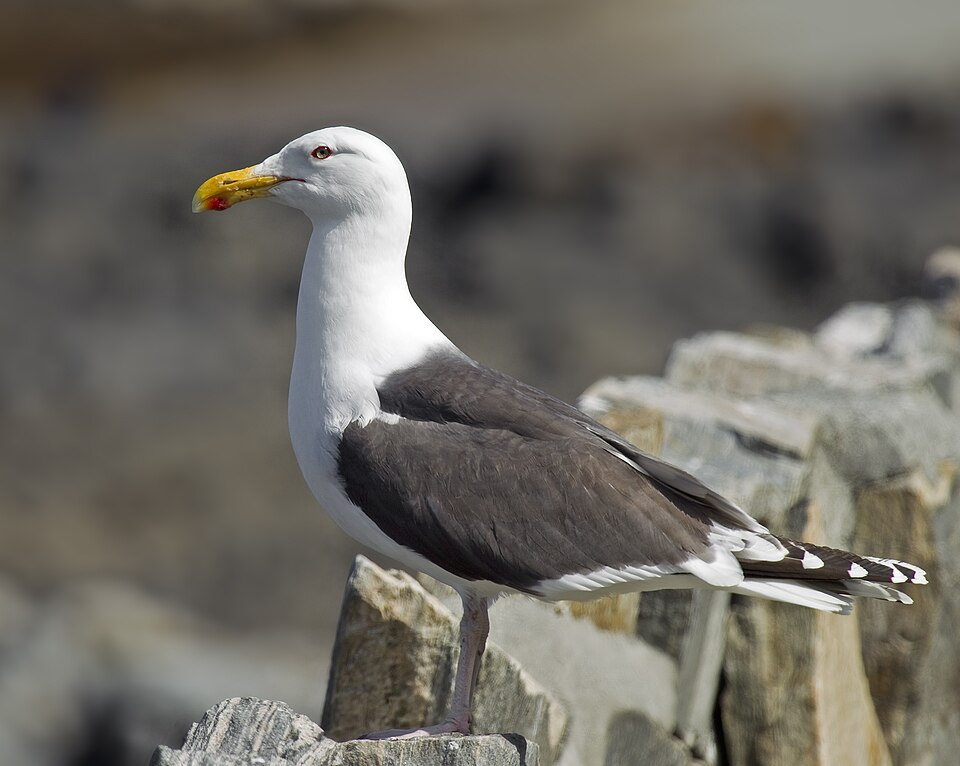
オオカモメ (Larus marinus) オオカモメ
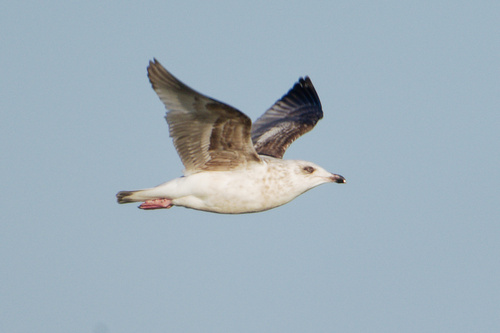
オオセグロカモメ (Larus schistisagus) オオセグロカモメ

メディア

読み込み中…

要点

幼鳥と未成熟のオオカモメ (GBBG) は、オオセグロカモメ (SBG) よりも大胆で、よりチェック模様のある上翼と尾のパターンを示します。SBG の未成熟はより淡く、Herring Gull に似ています。成鳥の GBBG は、ジェットブラックの上翼と背中を持つ非常に大きな北大西洋のカモメの唯一の種であり、成鳥の SBG はやや淡いスレートグレーの背中と、飛行中の翼に診断的な「真珠のネックレス」白いパターンがあります。GBBG はよりがっしりしていて脚が長く、くちばしが重く、声がより深く、共鳴します。両者は大きな白い頭のカモメで、ピンクの脚を持っていますが、翼のパターン、構造、マントルの色合いに注意を払うことで、すべての羽色で区別できます。

識別のコツ

  1. 幼鳥/未成熟の上翼と尾のパターン: GBBG の未成熟は、大胆でチェック模様のある黒褐色の上面と、ジグザグのバンディングと強い破損した黒いバンドのある白い尾を持ち、飛行中に非常に特徴的です。SBG の未成熟は淡い茶色で、あまりはっきりとした模様がなく、Herring Gull に非常に似ており、GBBG の大胆なチェック模様と尾のパターンが欠けています。これは非成鳥にとって最も信頼できる特徴です。
  2. 成鳥の上翼と背中の色: GBBG の成鳥は、北大西洋のカモメの中で最も暗いジェットブラックの上翼と背中を持っています。SBG の成鳥はやや淡く、スレートグレーのマントルと背中を持っています。直射日光の下では、GBBG は常により黒く見えます。
  3. 飛行中の成鳥の翼のパターン: SBG の成鳥は、翼の広い白い後縁と「真珠のネックレス」を示し、ミッドプライマリーに沿った白い三日月の列と、外側のプライマリー (p9, p10) に大きな白いミラーがあります。GBBG の成鳥は、翼に白があまり広がっておらず、真珠のネックレスが欠けていて、後縁はそれほど広くもはっきりしていません。
  4. 脚の色と構造: 両種ともピンクの脚を持っていますが、GBBG の脚は長くて頑丈で、SBG の脚は短く、止まっているときに腹が出たように見えます。
  5. くちばしの構造: GBBG は、より厚く、重く、より強力なくちばしを持ち、遠くからでも巨大に見えることがよくあります。SBG のくちばしは大きいですが、あまり威圧的ではありません。
  6. 目と眼窩のリング: SBG の成鳥は、紫から深いピンクの眼窩の皮膚を持つ黄色い目を持ち、近くで見ることができます。GBBG の目の色は、情報源では特に診断的ではありません。
  7. 全体的なサイズと印象: GBBG は最大のカモメで、常に SBG よりもがっしりしていて、脚が長く、威圧的に見えます。SBG はまだ大きいですが、よりコンパクトで腹が出たように見えます。
  8. 行動: GBBG はしばしば支配的で攻撃的で捕食的であり、時には他の鳥を狩ったり、略奪したりするのが見られます。SBG は特に攻撃的ではありません。
  9. 声: 深く、轟音のような、牛のような「kaa-ga-ga」という呼び声は GBBG を指し示します。SBG の声は特に特徴的ではありません。
  10. 生息地と範囲: 北大西洋では、非常に大きな黒い背中のカモメはほぼ確実に GBBG です。SBG はこの地域ではまれで、北西太平洋でより期待されます。常に地元の豊富さを考慮してください。
  11. Herring Gull との混同: SBG の未成熟は、より淡く、模様が少ない羽毛のため、GBBG ではなく Herring Gull と簡単に混同されます。GBBG の未成熟ははるかに暗く、コントラストが強いです。
  12. 季節の変化: 両種とも成鳥の羽毛に達するまでに数年かかりますが、GBBG の移行は遅く、より長く暗いままです。SBG の未成熟はより早く淡くなります。
  13. 止まっているときと飛行中: 多くの重要な特徴(翼のパターン、後縁、真珠のネックレス)は、飛行中に最もよく見えます。止まっているときは、マントルの色合い、脚の長さ、全体的なサイズに頼ってください。
  14. 落とし穴: 鳥が並んでいない限り、サイズだけに頼らないでください。光はマントルの色合いに影響を与える可能性があります。良い光の中で、真珠のネックレス (SBG) またはジェットブラックの上翼 (GBBG) を常に探してください。
  15. 性別と年齢: 明確な性的二形性はありません。上記のすべての年齢比較は両性に適用されます。

大きさ

オオカモメは世界で最大のカモメで、オオセグロカモメよりも明らかにがっしりしていて重いです。GBBG は長さ、翼幅、質量で平均的に大きく、(GBBG: 最大 2 kg [wikipedia]、SBG: 1.05–1.7 kg [wikipedia])。GBBG はより頑丈で強力な体型を持ち、脚が長く、より厚く、威圧的なくちばしを持っています。SBG は依然として非常に大きなカモメですが、よりコンパクトに見え、タルサスが短く、腹が出たように見えます。直接比較すると、GBBG は常により巨大で威圧的な鳥に見えます。

羽色

行動

GBBG は非常に攻撃的で支配的なカモメで、しばしば猛禽類のように振る舞い、積極的に狩り、略奪し、時には他の鳥を殺すこともあります。彼らはしばしば他のカモメや海鳥を威圧したり、追い出したりするのが見られます。SBG はあまり攻撃的ではなく、同じ捕食行動で知られていません。彼らの餌を取る行動や相互作用は、大きなカモメの典型的なものです。GBBG の支配は、死骸や混合カモメの群れの中でしばしば明らかです。

生息環境

GBBG は北大西洋の海岸や島で繁殖し、冬を越し、岩の多い海岸、港、都市の水辺を好みます。SBG は北西太平洋(北東の古生代)で繁殖し、大西洋ではまれです。北アメリカでは漂流者として最もよく見られ、特に太平洋沿岸で、典型的な GBBG の生息地では見られにくいです。一緒に見られた場合、文脈は北大西洋で GBBG を支持し、北西太平洋で SBG を支持しますが、漂流は可能です。

声

GBBG は深く、共鳴する「笑い声」(kaa-ga-ga)を持ち、最初の音は時々引き延ばされ、ほぼ牛のように聞こえます。ほとんどのカモメよりも明らかに深いです。SBG の声は情報源で詳細に説明されていませんが、特に深いまたは診断的であるとは記載されていません。非常に深く、轟音のようなカモメの呼び声を聞いた場合、GBBG の可能性が高いです。

より良い説明を送る

比較と同じ項目を使ってください。文章はすぐに公開されます。

Juvenile and immature Great Black-backed Gulls (GBBG) show a bolder, more checkered upperwing and tail pattern than Slaty-backed Gulls (SBG), whose immatures are paler and more like Herring Gull. Adult GBBG is the only very large North Atlantic gull with jet-black upperwings and back, while adult SBG has a slightly paler, slaty-gray back and a diagnostic 'string of pearls' white pattern on the wing in flight. GBBG is bulkier and longer-legged, with a heavier bill and a deeper, more resonant voice. Both are large, white-headed gulls with pink legs, but careful attention to wing pattern, structure, and mantle shade will separate them in all plumages.

  1. Juvenile/immature upperwing and tail pattern: GBBG immatures have bold, checkered black-brown upperparts and a white tail with zigzag barring and a strong, broken black band—very distinctive in flight. SBG immatures are paler brown, less crisply marked, and closely resemble Herring Gull, lacking the bold checkering and tail pattern of GBBG. This is the most reliable mark for non-adults.
  2. Adult upperwing and back color: GBBG adults have jet-black upperwings and back, the darkest of any North Atlantic gull. SBG adults are slightly paler, with a slaty-gray mantle and back. In direct sunlight, GBBG will always look blacker.
  3. Adult wing pattern in flight: SBG adults show a broad white trailing edge to the wing and a 'string of pearls'—a row of white crescents along the mid-primaries, plus large white mirrors on the outer primaries (p9, p10). GBBG adults have less extensive white on the wing, lacking the string of pearls, and the trailing edge is not as broad or crisp.
  4. Leg color and structure: Both species have pink legs, but GBBG's legs are longer and more robust, while SBG's are shorter and give the bird a pot-bellied, squat appearance when perched.
  5. Bill structure: GBBG has a thicker, heavier, more powerful bill, often appearing massive even at a distance. SBG's bill is large but less imposing.
  6. Eye and orbital ring: SBG adults have yellow eyes with purple to deep pink orbital skin, which can be visible at close range. GBBG's eye color is not specifically diagnostic in the sources.
  7. Overall size and jizz: GBBG is the largest gull, always appearing bulkier, longer-legged, and more imposing than SBG. SBG is still large but more compact and pot-bellied.
  8. Behavior: GBBG is often dominant, aggressive, and predatory, sometimes seen hunting or pirating from other birds. SBG is not notably aggressive.
  9. Voice: A deep, booming, cow-like 'kaa-ga-ga' call points to GBBG; SBG's voice is not distinctive.
  10. Habitat and range: In the North Atlantic, a very large, black-backed gull is almost certainly GBBG. SBG is rare in this region and more expected in the northwest Pacific; always consider local abundance.
  11. Confusion with Herring Gull: SBG immatures are easily confused with Herring Gull, not GBBG, due to their paler, less patterned plumage. GBBG immatures are much darker and more contrasting.
  12. Seasonal changes: Both species take several years to reach adult plumage, but GBBG's transition is slower and remains darker longer. SBG immatures become paler more quickly.
  13. Perched vs. in flight: Many key marks (wing pattern, trailing edge, string of pearls) are most visible in flight. When perched, rely on mantle shade, leg length, and overall size.
  14. Pitfalls: Do not rely solely on size unless birds are side by side. Lighting can affect mantle shade; always look for the string of pearls (SBG) or jet-black upperwings (GBBG) in good light.
  15. Sex and age: No strong sexual dimorphism; all age comparisons above apply to both sexes.

Great Black-backed Gull is the largest gull in the world, noticeably bulkier and heavier than Slaty-backed Gull. GBBG averages larger in length, wingspan, and mass (GBBG: up to 2 kg [wikipedia], SBG: 1.05–1.7 kg [wikipedia]). GBBG has a more robust, powerful build, longer legs, and a thicker, more imposing bill. SBG is still a very large gull but appears more compact, with a shorter tarsus and a pot-bellied look. In direct comparison, GBBG will always look the more massive and imposing bird.

  • Juvenile/First-year: GBBG juveniles are boldly checkered black-brown above, with a white tail base marked by zigzag bars and a strong, broken black band near the tip. Their wing coverts and flight feathers are dark, and the overall effect is high-contrast and striking. SBG immatures are paler brown, less crisply marked, and closely resemble Herring Gull immatures; their upperwing is less checkered and lacks the strong tail band and zigzag pattern of GBBG.
  • Second/Third-year: GBBG immatures remain darker and more contrasting, with a dirtier, streakier look as they approach adulthood. SBG immatures continue to look paler and less patterned, with a more uniform brownish tone.
  • Adult: GBBG adults have jet-black upperwings and back, with white head, underparts, and tail. SBG adults have a slightly paler, slaty-gray back and wings, with a broad white trailing edge to the wing and a distinctive 'string of pearls' (white crescents) along the mid-primaries in flight. SBG also shows large white mirrors on p9 and p10. Both have pink legs, but SBG's are shorter and the bird appears more pot-bellied.

GBBG is a highly aggressive, dominant gull, often behaving more like a raptor—actively hunting, pirating, and even killing other birds, including adult waterfowl and seabirds. It is often seen intimidating or displacing other gulls and seabirds. SBG is less aggressive and not known for the same predatory behavior; its feeding and interactions are more typical of large gulls. GBBG's dominance is often apparent at carcasses or among mixed gull flocks.

GBBG breeds and winters along North Atlantic coasts and islands, favoring rocky shores, harbors, and urban waterfronts. SBG breeds in the northwestern Pacific (northeastern Palearctic) and is rare in the Atlantic; it is most often encountered as a vagrant in North America, especially on the Pacific coast, and is less likely in typical GBBG haunts. If seen together, context favors GBBG in the North Atlantic and SBG in the northwest Pacific, but vagrancy is possible.

GBBG has a deep, resonant, 'laughing' call (kaa-ga-ga), with the first note sometimes drawn out and almost cow-like—distinctly deeper than most gulls. SBG's voice is not described in detail in the sources, but it is not noted as particularly deep or diagnostic. If you hear a very deep, booming gull call, GBBG is more likely.

変更を破棄しますか?

保存していない編集があります。今離れると失われます。

オオカモメ · オオセグロカモメ · 苦手な鳥