

Motmot

アカリュウキュウガモ 対 キアシセグロカモメ

Dendrocygna bicolor 対 Larus michahellis

アカリュウキュウガモとキアシセグロカモメのクイズ
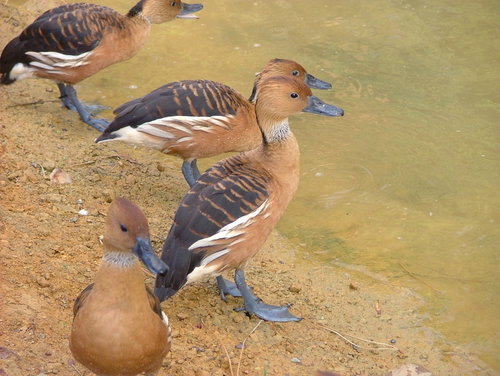
アカリュウキュウガモ (Dendrocygna bicolor) アカリュウキュウガモ
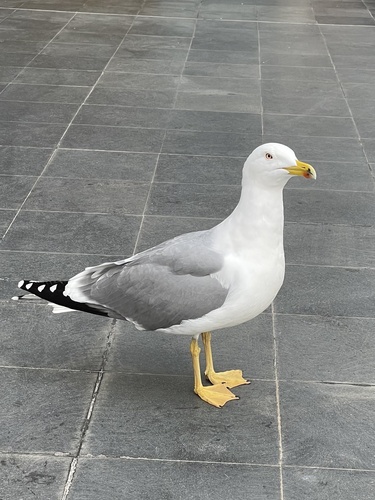
キアシセグロカモメ (Larus michahellis) キアシセグロカモメ

メディア

読み込み中…

要点

フィールドでの最も信頼できる区別は、全体の構造と飛行パターンです:アカリュウキュウガモは、白い尾羽の三日月と黒い尾を持つ、長い脚と長い首を持つ赤褐色のカモです。一方、キアシセグロカモメは、黄色い脚、灰色の上面、黒と白の翼先を持つ、大きくて広い翼のカモメです。幼鳥と未成熟の羽毛は非常に異なります:若いアカリュウキュウガモは、淡い腹部を持つ鈍い茶色です。一方、1年目のキアシセグロカモメは、暗い尾帯と暗い飛行羽を持つ、重い模様の茶色がかった灰色です。くちばしの形と脚の色も重要です:カモは長く、灰色で平らなくちばしと灰色の脚を持っています。カモメは、厚くて鉤状のくちばしと、黄色(成鳥)またはピンクがかった(未成熟)脚を持っています。生息地と行動も彼らをさらに区別します:アカリュウキュウガモは湿地の専門家で、密な植生の中や緩い群れで飛んでいるのがよく見られます。一方、キアシセグロカモメは沿岸や都市の一般的な種で、オープンエリアでよく滑空したり、休んだりします。

識別のコツ

  1. 幼鳥/未成熟の翼と尾の模様: 1年目のキアシセグロカモメは、暗い尾帯、暗い飛行羽、斑点のある茶色の上翼を示します。アカリュウキュウガモの幼鳥は、ずっとシンプルで、均一な茶色の翼と飛行中の白い尾羽の三日月を持っています。これは未成熟の最も信頼できるマークです。
  2. 白い尾羽の三日月(すべての年齢、カモ): 飛行中、アカリュウキュウガモは常に尾羽に白い三日月と黒い尾を示し、カモメには一致しません。
  3. 翼の模様(成鳥): 成鳥のキアシセグロカモメは、小さな白い斑点のある黒い翼先と灰色の上翼を持っています。アカリュウキュウガモは、翼に白がない茶色の上翼を持っています。
  4. 脚の色: 成鳥のキアシセグロカモメは黄色い脚を持っています(未成熟はピンクがかった灰色)。アカリュウキュウガモはすべての年齢で灰色の脚を持っています。
  5. くちばしの形と色: カモは長く、平らな灰色のくちばしを持っています。カモメは厚く、鉤状のくちばしを持っています(成鳥は黄色に赤い斑点、未成熟は暗いです)。
  6. 頭と首: アカリュウキュウガモは、首の後ろに暗いストライプを持つ豊かなバフィーの頭と首を持っています。キアシセグロカモメは、白または淡い頭(成鳥)または斑点のある茶色(未成熟)を持ち、決して首のストライプはありません。
  7. 冠の色(幼鳥): 幼鳥のアカリュウキュウガモは決して黒っぽい冠を持ちません。キアシセグロカモメの未成熟は、より暗い冠に見えることがありますが、常に全体的にもっと模様があります。
  8. 体の形と姿勢: カモは長い首と長い脚を持ち、しばしば直立して立っています。カモメはより大きく、短い首を持ち、より水平に立っています。
  9. 飛行スタイル: アカリュウキュウガモは安定した浅い羽ばたきと長い脚を引きずって飛びます。キアシセグロカモメは頻繁に滑空し、広い翼と短い脚を持っています。
  10. 生息地: カモはほぼ常に密な湿地の植生の中または近くにいます。カモメはオープンエリア、沿岸、都市、さらには内陸のゴミ捨て場に見られます。
  11. 声: カモは明確で、笛のような鳴き声を出します。カモメは大きく、厳しい鳴き声を出します。
  12. 羽毛の色: カモは全体的に赤褐色でバフィーのトーンを持っています。カモメは成鳥として灰色と白、未成熟として茶色と白です。
  13. 性別と年齢の違い: メスのアカリュウキュウガモはオスよりもわずかに小さく、鈍いですが、これは微妙です。カモメは年齢に関連する羽毛の変化がより明らかです。
  14. 文脈: ダブリングカモの群れの中で見られた場合、カモである可能性が高いです。他のカモメやスカベンジングの中にいる場合、それはカモメです。
  15. 落とし穴: 遠くからの視界や逆光のビューは、カモを暗く見せることがありますが、白い尾羽の三日月と長い首/脚は依然として良い手がかりです。未成熟のカモメは他の大きなカモメと混同されることがありますが、カモの構造や飛行スタイルを示すことはありません。

大きさ

アカリュウキュウガモは中型のカモで、平均体重は約682 gです。キアシセグロカモメは一般的に大きく、重く、成鳥は550から1,600 gの範囲です。また、全長も目立って長く(52–68 cm対カモの45–53 cm)、フィールドではカモメはより大きく見え、翼幅も長く(120–155 cm対カモの85–93 cm)、翼も広く、より頑丈な体型をしています。ただし、一部の雌のカモメはカモのサイズに近づくことがあるため、構造と比率はサイズ単独よりも信頼性があります。

羽色

幼鳥と未成熟の羽毛は最も診断的です:

行動

アカリュウキュウガモは通常、密な湿地の植生の中または近くで見られ、しばしばペアまたは緩い群れで、植物材料をついばんだり、草を食べたりします。飛行中は、まっすぐな首と長い脚のシルエットを示し、しばしば遅くて浅い羽ばたきをします。キアシセグロカモメははるかに多才です:オープンエリア、沿岸、港、都市、ゴミ捨て場などで滑空したり、滑ったり、休んだりするのがよく見られます。カモメは機会主義的で、しばしばスカベンジングや捕食を行い、大きくて騒がしい群れで見られることがあります。カモは水や密なカバーから遠くに出ることはほとんどなく、カモメは広範囲のオープンな生息地で快適です。

生息環境

アカリュウキュウガモは湿地の専門家で、熱帯および亜熱帯地域に見られ、浅い湖、湿地、稲作地、密な水生植物のある地域を好みます。水から離れた場所や都市部ではほとんど見られません。対照的に、キアシセグロカモメはヨーロッパ、中東、北アフリカの一般的な種で、沿岸、内陸の湖、川、都市、さらには建物や木に巣を作ることもあります。都市、ゴミ捨て場、またはオープンな土地の上を滑空している鳥を見た場合、それはほぼ確実にカモメです。湿地や稲作地の奥深くにいる鳥は、カモである可能性が高いです。

声

アカリュウキュウガモは、飛行中および地上で聞かれる明確で笛のような「キーウィーオー」という鳴き声を出し、一般的に騒がしいです、特に夜間。争っている鳥は、厳しい、繰り返される「キー」を出します。これらの鳴き声は特徴的で、カモメとはかなり異なります。キアシセグロカモメは、典型的な大きくて厳しいカモメの鳴き声や叫び声を出し、笛のような声は出しません。明確で音楽的な笛の音を聞いた場合、それはカモです。騒がしい、笑ったり叫んだりする鳴き声を聞いた場合、それはカモメです。

より良い説明を送る

比較と同じ項目を使ってください。文章はすぐに公開されます。

The most reliable separation in the field is overall structure and flight pattern: Fulvous Whistling-Duck is a long-legged, long-necked, reddish-brown duck with a white rump crescent and black tail in flight, while Yellow-legged Gull is a large, broad-winged gull with yellow legs, grey upperparts, and black-and-white wing tips. Juvenile and immature plumages are very different: young Fulvous Whistling-Ducks are duller brown with pale underparts, while first-year Yellow-legged Gulls are heavily patterned brownish-grey with a dark tail band and dark flight feathers. Bill shape and leg color are also key: the duck has a long, grey, flat bill and grey legs; the gull has a thick, hooked bill and yellow (adult) or pinkish (immature) legs. Habitat and behavior further separate them: Fulvous Whistling-Duck is a wetland specialist, often seen in dense vegetation or flying in loose flocks, while Yellow-legged Gull is a coastal and urban generalist, often soaring or loafing in open areas.

  1. Juvenile/immature wing and tail pattern: First-year Yellow-legged Gull shows a dark tail band, dark flight feathers, and mottled brown upperwings; Fulvous Whistling-Duck juveniles are much plainer, with uniform brown wings and a white rump crescent in flight. This is the most reliable mark for immatures.
  2. White rump crescent (all ages, duck): In flight, Fulvous Whistling-Duck always shows a white crescent across the rump and a black tail, never matched by the gull.
  3. Wing pattern (adult): Adult Yellow-legged Gull has black wingtips with small white spots and grey upperwings; Fulvous Whistling-Duck has brown upperwings with no white in the wing.
  4. Leg color: Adult Yellow-legged Gull has yellow legs (immatures pinkish-grey); Fulvous Whistling-Duck has grey legs at all ages.
  5. Bill shape and color: The duck has a long, flat, grey bill; the gull has a thick, hooked bill (yellow with red spot in adult, dark in immatures).
  6. Head and neck: Fulvous Whistling-Duck has a rich buffy head and neck with a dark stripe down the back of the neck; Yellow-legged Gull has a white or pale head (adult) or mottled brown (immature), never with a neck stripe.
  7. Crown color (juvenile): Juvenile Fulvous Whistling-Duck never has a blackish crown; Yellow-legged Gull immatures may appear darker-capped but are always much more patterned overall.
  8. Body shape and posture: The duck is long-necked, long-legged, and often stands upright; the gull is bulkier, shorter-necked, and stands more horizontally.
  9. Flight style: Fulvous Whistling-Duck flies with steady, shallow wingbeats and long legs trailing; Yellow-legged Gull soars and glides frequently, with broader wings and shorter legs.
  10. Habitat: Duck is almost always in or near dense wetland vegetation; gull is found in open areas, coasts, cities, and even inland rubbish tips.
  11. Voice: Duck gives a clear, whistling call; gull gives loud, harsh cries.
  12. Plumage color: Duck is overall reddish-brown with buffy tones; gull is grey and white as adult, brown and white as immature.
  13. Sex and age differences: Female Fulvous Whistling-Duck is slightly smaller and duller than male, but this is subtle; gulls show more obvious age-related plumage changes.
  14. Context: If seen in a flock of dabbling ducks, it's likely the duck; if among other gulls or scavenging, it's the gull.
  15. Pitfalls: Distant or backlit views can make the duck appear darker, but the white rump crescent and long neck/legs are still good clues. Immature gulls can be confused with other large gulls, but never show the duck's structure or flight style.

Fulvous Whistling-Duck is a medium-sized duck, with an average body mass of about 682 g [wikidata]. Yellow-legged Gull is generally larger and heavier, with adults ranging from 550 to 1,600 g [wikipedia], and noticeably longer in total length (52–68 cm vs. 45–53 cm for the duck). In the field, the gull appears bulkier, with a longer wingspan (120–155 cm vs. 85–93 cm for the duck), broader wings, and a more robust build. However, some female gulls can approach the duck's size, so structure and proportions are more reliable than size alone.

Juvenile and immature plumages are the most diagnostic:

  • Juvenile Fulvous Whistling-Duck is a duller, paler version of the adult, with buffy underparts and a generally uniform brown appearance. In flight, all ages show a distinctive white crescent across the rump contrasting with a black tail, and brown upperwings with no white in the wing. The crown is never blackish, and the neck has a dark stripe down the back [wikipedia].

  • First-year Yellow-legged Gull is much more patterned: brownish-grey overall with a paler head and underparts, dark flight feathers, and a well-defined black tail band. The upperwings are mottled, and the rump is pale. By second winter, the gull becomes paler below, but still shows patterned wing coverts and a black bill tip. Adults are grey above, white below, with black wingtips and yellow legs, and a red spot on the bill. In flight, adults show black primaries with small white spots, grey upperwings, and a white tail.

  • Adult Fulvous Whistling-Duck is rich reddish-brown with a buffy head and neck, dark brown flight feathers, and a white rump crescent. The bill and legs are grey. There is no black-and-white wingtip pattern as in the gull.

Fulvous Whistling-Duck is typically seen in or near dense wetland vegetation, often in pairs or loose flocks, and feeds by dabbling or grazing on plant material. In flight, it shows a straight-necked, long-legged silhouette, often with slow, shallow wingbeats. Yellow-legged Gull is much more versatile: it is often seen soaring, gliding, or loafing in open areas, including coasts, harbors, cities, and rubbish tips. Gulls are opportunistic, often scavenging or predating, and may be seen in large, noisy groups. The duck rarely ventures far from water or dense cover, while the gull is comfortable in a wide range of open habitats.

Fulvous Whistling-Duck is a wetland specialist, found in tropical and subtropical regions, favoring shallow lakes, marshes, rice fields, and areas with dense aquatic vegetation [wikipedia]. It is rarely found away from water or in urban areas. Yellow-legged Gull, by contrast, is a generalist of Europe, the Middle East, and North Africa, found along coasts, inland lakes, rivers, cities, and even nesting on buildings or trees. If you see a bird in a city, on a rubbish tip, or soaring over open land, it is almost certainly the gull; a bird deep in a marsh or rice paddy is likely the duck.

Fulvous Whistling-Duck gives a clear, whistling 'kee-wee-ooo' call, heard both in flight and on the ground, and is generally noisy, especially at night. Quarrelling birds give a harsh, repeated 'kee.' The calls are distinctive and quite unlike any gull. Yellow-legged Gull gives typical loud, harsh gull cries and yelps, not whistling. If you hear a clear, musical whistle, it is the duck; if you hear raucous, laughing or screaming calls, it is the gull.

変更を破棄しますか?

保存していない編集があります。今離れると失われます。

アカリュウキュウガモ · キアシセグロカモメ · 苦手な鳥