

Motmot

セリン 対 カナリア

Serinus serinus 対 Serinus canaria

セリンとカナリアのクイズ
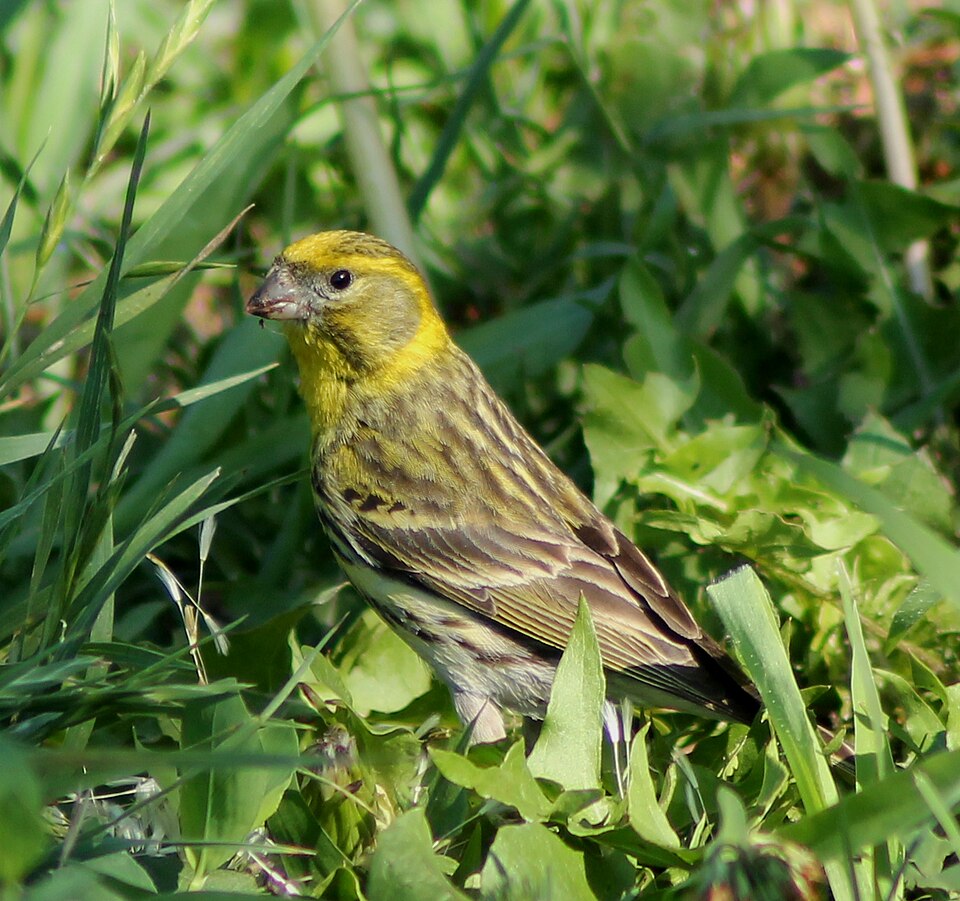
セリン (Serinus serinus) セリン
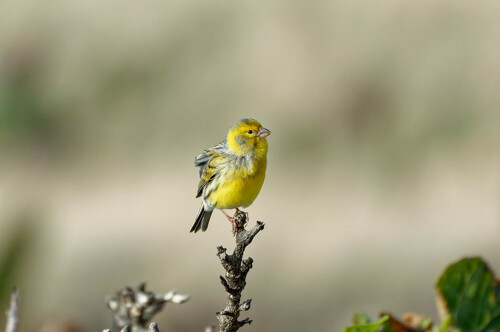
カナリア (Serinus canaria) カナリア

メディア

読み込み中…

要点

ヨーロッパセリンとカナリアの最も信頼できるフィールドマークは、全体のサイズと色のコントラストです:セリンは明らかに小さく、よりコンパクトで、特に顔と胸が非常に明るい黄色ですが、カナリアは大きく、長く、鈍い色合いで、より多くの灰色と茶色のトーンがあります。成鳥のオスのセリンは、明るい黄色の顔、胸、尾羽を示し、暗い筋模様と対照的です。一方、カナリアは、より黄色い額と眉斑を持っていますが、一般的には黄色があまり鮮やかではなく、筋模様がより拡散しています。幼鳥のカナリアは特に混同されやすく、茶色で筋模様がありますが、サイズが大きく、セリンの強い黄色がありません。両種は似たようなフィンチの構造を持っていますが、セリンは尾が短く、よりコンパクトです。飛んでいるときや止まっているときは、セリンの明るい黄色と小さいサイズを探し、カナリアの長く、灰色がかり、茶色がかりの外観と比較してください。

識別のコツ

  1. サイズと構造:セリンは最小のヨーロッパのフィンチで、カナリアよりも明らかに小さく、よりコンパクトです。カナリアは約10%大きく、より長く、重い体と長い翼と尾を持っています。この違いは、距離があっても明らかです。
  2. 尾と翼の形:セリンは短い尾とコンパクトで太めの外観を持っています。カナリアは長い尾と翼を持ち、特に飛んでいるときにより細長い外観を与えます。
  3. 成鳥のオスの羽色:オスのセリンは顔、胸、尾羽が強い黄色で、上と下に鋭い暗い筋模様があり、黄色の翼帯と尾の側面を示します。オスのカナリアは黄色がかった緑色で、より黄色い額と顔を持っていますが、黄色はあまり明るくなく、より拡散しており、尾羽は鈍い黄色です。
  4. メスと幼鳥の羽色:メスのセリンはまだかなり黄色ですが、オスよりも鈍く、強い筋模様があります。メスのカナリアはより灰色がかりで茶色がかりで、黄色が少なく、筋模様がより拡散しています。幼鳥のカナリアは茶色で筋模様があり、黄色がなく、若いセリンと混同されることがありますが、常に大きく、コンパクトではありません。
  5. 尾羽の色:セリンは特にオスで明るい黄色の尾羽を示します。カナリアの尾羽は鈍い黄色で目立ちません。
  6. 顔の模様:セリンのオスは明るい黄色の顔を持っています。カナリアのオスはより黄色い額と眉斑を持っていますが、セリンほど明るく対照的ではありません。
  7. 筋模様:セリンの筋模様は鋭く、特に胸と側面で対照的です。カナリアの筋模様はより拡散しており、定義があまりありません。
  8. 上面と背中:セリンは暗い筋模様のある灰緑色の上面を持っています。カナリアは上面により多くの灰色と茶色を持ち、特に背中と頭に顕著です。
  9. 下面:セリンの下面は黄色で、重い筋模様があります。カナリアの下面は黄色がかった緑色で、白っぽい腹部と尾羽の下部を持ち、側面にはいくつかの暗い筋模様があります。
  10. くちばし:両者は典型的なフィンチのくちばしを持っていますが、セリンの方が小さいため、やや細く見えるかもしれません。
  11. 飛行の印象:セリンは飛行中にコンパクトで敏捷に見え、短い尾を持っています。カナリアは長く、より緩慢に見え、長い翼と尾を持っています。
  12. 生息地と分布:ヨーロッパ本土では、セリンは開けた森林や耕作地で期待される種です。野生のカナリアはマカロネシアにのみ自生しており、ヨーロッパで見られるものは逃げたものの可能性が高いです。
  13. 群れの行動:セリンは繁殖期以外に他のフィンチと混合した群れを形成することが多いですが、カナリアはペアや小さなグループで見られることが多いです。
  14. 声:両者は似たような速いツイッターの歌を持っています。歌だけに頼らないでください、両者に非常に慣れていない限り。
  15. 落とし穴:幼鳥のカナリアは鈍く筋模様のあるセリンのように見えることがありますが、サイズ、構造、黄色の欠如を確認してください。光が悪いと、セリンの黄色はあまり目立たないかもしれないので、サイズと形をバックアップとして使用してください。

大きさ

カナリアはヨーロッパセリンより約10%大きく、体重は平均約15.3g(セリンは最小のヨーロッパのフィンチです)。カナリアの長さは10〜12cmですが、セリンは11〜12cmですが、セリンははるかにコンパクトで短い尾に見えます。カナリアはまた、著しく長い翼幅(21〜23.7cm)を持ち、より重く、頑丈な外観をしています。フィールドでは、セリンは通常、より華奢で活発に見え、カナリアはより大きく、長い体を持っています。

羽色

幼鳥と未熟な鳥は主な落とし穴です:幼鳥のカナリアは主に茶色で暗い筋模様があり、あまり黄色がなく、若いセリンに似ることがありますが、カナリアは常に大きく、コンパクトではありません。成鳥のオスのセリンは顔、胸、尾羽が強い黄色で、上と下に重い暗い筋模様があり、黄色の翼帯と尾の側面を示します。成鳥のオスのカナリアは黄色がかった緑色の頭と下面を持ち、より黄色い額、顔、眉斑がありますが、黄色はあまり明るくなく、より拡散しており、尾羽は鈍い黄色です。両種のメスは鈍いですが、メスのカナリアは全体的により灰色がかりで茶色がかりで、メスのセリンよりも黄色が少ないです。両種は筋模様のある上面を持っていますが、セリンの筋模様はより鋭く定義され、黄色との対比が強いです。カナリアは羽色においてより多くの灰色と茶色を示し、特に背中と頭において、セリンの明るい黄色の尾羽と顔が欠けています。すべての年齢において、セリンはより鮮やかな黄色で、より強く筋模様があります。カナリアは鈍く、灰色がかりで茶色がかりで、特に幼鳥とメスにおいて顕著です。

行動

セリンは活発で、しばしば目立つ鳥で、繁殖期以外に飛び回って群れを形成することがよく見られます。カナリアも社交的ですが、動きがあまり慌ただしくなく、より意図的に見える傾向があります。セリンは群れの中で他のフィンチと混ざることが多いですが、カナリアはペアや小さなグループで見られることが多いです。飛行中、セリンはよりコンパクトで敏捷に見えますが、カナリアの長い翼と尾はより細長いシルエットを与えます。

生息環境

ヨーロッパセリンは、南ヨーロッパと北アフリカの開けた森林や耕作地で繁殖し、しばしばいくつかの針葉樹があります。地中海の風景では馴染みのある鳥です。カナリアはカナリア諸島、アゾレス、マデイラに自生しており、ヨーロッパ本土には自然には存在しません。ヨーロッパの野生で見られた場合、カナリアは逃げたものか野生化したものの可能性が高いです。セリンは大陸ヨーロッパで見られる可能性が高く、特に散在する木や低木のある開けた日当たりの良い生息地で見られます。

声

両種は似たような歌を持っています:速い、銀色のツイッターまたはブズブズのトリル。セリンの歌は地中海地域でよく知られたブズブズのトリルであり、カナリアの歌は銀色のツイッターで、似ていますが、もしかしたらあまり厳しくないかもしれません。歌だけでは信頼できる区別にはならないので、両者に非常に慣れていない限り、呼び声は簡単に混同されます。

より良い説明を送る

比較と同じ項目を使ってください。文章はすぐに公開されます。

The most reliable field mark between European Serin and Atlantic Canary is overall size and color contrast: Serin is noticeably smaller, more compact, and much brighter yellow, especially on the face and breast, while Canary is larger, longer, and duller, with more grey and brown tones. Adult male Serins show a very bright yellow face, breast, and rump, contrasting with dark streaks, whereas Canaries have a yellower forehead and supercilium but generally less saturated yellow and more diffuse streaking. Juvenile Canaries are especially prone to confusion, being brown and streaky, but they are larger and lack the Serin's intense yellow. Both species have similar finch structure, but Serin is shorter-tailed and more compact. In flight or perched, look for the Serin's brighter yellow and smaller size versus the Canary's longer, greyer, and browner appearance.

  1. Size and Structure: Serin is the smallest European finch, noticeably smaller and more compact than Canary. Canary is about 10% larger, with a longer, heavier body and longer wings and tail. This difference is apparent even at a distance.
  2. Tail and Wing Shape: Serin has a short tail and a compact, stubby appearance. Canary has a longer tail and wings, giving it a more elongated look, especially in flight.
  3. Adult Male Plumage: Male Serin is intensely yellow on the face, breast, and rump, with sharp dark streaks above and below, and yellow wingbars and tail sides. Male Canary is yellow-green with a yellower forehead and face, but the yellow is less bright and more diffuse, and the rump is dull yellow.
  4. Female and Juvenile Plumage: Female Serin is still fairly yellow, though duller than the male, with strong streaking. Female Canary is greyer and browner, with less yellow and more diffuse streaks. Juvenile Canary is brown and streaked, lacking yellow, and can be confused with young Serin, but is always larger and less compact.
  5. Rump Color: Serin shows a bright yellow rump, especially in males. Canary's rump is dull yellow and less conspicuous.
  6. Face Pattern: Serin males have a bright yellow face; Canary males have a yellower forehead and supercilium but not as bright or contrasting as Serin.
  7. Streaking: Serin's streaks are sharper and more contrasting, especially on the breast and flanks. Canary's streaks are more diffuse and less defined.
  8. Upperparts and Back: Serin has dark-streaked greyish-green upperparts. Canary has more grey and brown in the upperparts, especially on the back and head.
  9. Underparts: Serin's underparts are yellow with heavy streaking; Canary's underparts are yellow-green with a whitish lower belly and undertail, and only some dark streaks on the sides.
  10. Bill: Both have typical finch bills, but Serin's may appear slightly finer due to its smaller size.
  11. Flight Jizz: Serin appears compact and agile in flight, with a short tail. Canary appears longer and more languid, with longer wings and tail.
  12. Habitat and Range: In mainland Europe, Serin is the expected species in open woodland and cultivated areas. Wild Canaries are native only to Macaronesia; any seen in Europe are likely escapes.
  13. Flock Behavior: Serin often forms mixed flocks with other finches outside breeding season; Canary is more likely in pairs or small groups.
  14. Voice: Both have similar rapid twittering songs; do not rely on song alone unless very familiar with both.
  15. Pitfalls: Juvenile Canary can look like a dull, streaky Serin, but check for size, structure, and lack of yellow. In poor light, Serin's yellow may be less obvious, so use size and shape as backup.

Atlantic Canary is about 10% larger than European Serin, with a body mass averaging around 15.3 g (vs. Serin, which is the smallest European finch). Canary measures 10–12 cm in length, while Serin is 11–12 cm, but Serin appears much more compact and short-tailed. Canary also has a notably longer wingspan (21–23.7 cm) and a heavier, more robust look. In the field, Serin typically looks daintier and more active, while Canary is bulkier and longer-bodied.

Juvenile and immature birds are the main pitfall: juvenile Canaries are largely brown with dark streaks, lacking much yellow, and can resemble young Serins, but Canaries are always larger and less compact. Adult male Serins are intensely yellow on the face, breast, and rump, with heavy dark streaking above and below, and show yellow wingbars and tail sides. Adult male Canaries have a yellow-green head and underparts, with a yellower forehead, face, and supercilium, but the yellow is less bright and more diffuse, and the rump is dull yellow. Females of both species are duller, but female Canary is greyer and browner overall, with less yellow than female Serin. Both species have streaked upperparts, but Serin's streaks are more sharply defined and contrast more with the yellow. Canary shows more grey and brown in plumage, especially on the back and head, and lacks the Serin's bright yellow rump and face. In all ages, Serin is more vividly yellow and more strongly streaked; Canary is duller, greyer, and browner, especially in juveniles and females.

Serin is an active, often conspicuous bird, frequently seen flitting about and forming flocks outside the breeding season. Canary is also social but tends to appear less frenetic and more deliberate in its movements. Serin often mixes with other finches in flocks, while Canary is more likely to be seen in pairs or small groups. In flight, Serin appears more compact and agile, while Canary's longer wings and tail give it a more elongated silhouette.

European Serin breeds in open woodland and cultivated areas, often with some conifers, across southern and central Europe and North Africa. It is a familiar bird in Mediterranean landscapes. Atlantic Canary is native to the Canary Islands, Azores, and Madeira, and is not naturally found in mainland Europe. If seen in the wild in Europe, Canary is likely an escapee or feral. Serin is much more likely in continental Europe, especially in open, sunlit habitats with scattered trees or shrubs.

Both species have similar songs: a rapid, silvery twittering or buzzing trill. Serin's song is a familiar, buzzy trill in Mediterranean regions, while Canary's song is a silvery twitter, similar but perhaps less harsh. Song alone is not a reliable separator unless you are very familiar with both, as their calls are easily confused.

変更を破棄しますか?

保存していない編集があります。今離れると失われます。

セリン · カナリア · 苦手な鳥